
Separate the wastewater streams before selecting equipment
A Cuauhtémoc data center should specify two independent treatment trains: one for cooling-tower blowdown and one for sanitary wastewater. The decision for discharge with pretreatment, partial or full reuse, or zero-liquid discharge depends on the site’s makeup-water chemistry, blowdown flow, reuse target, and permitted discharge route. Cooling blowdown requires solids removal, biological control, and membrane-compatible chemistry before RO; sanitary wastewater requires biological treatment. A 12-month water analysis and confirmation of CONAGUA, sewer, and reuse requirements should precede equipment sizing.
Keep cooling-tower blowdown and workforce sewage hydraulically separate. A blowdown train is designed around dissolved solids, suspended solids, treatment chemicals, and biofouling; a sanitary train is designed around biological oxygen demand, suspended solids, and nutrients. Combining the streams subjects the RO membranes to a contaminant profile they were not selected to handle and undermines control of the cooling-water chemistry program (HydropureWater, “Data Center Wastewater & Cooling Blowdown Treatment in Ecatepec de Morelos,” 2025).
The blowdown design basis supplied by that 2025 source reports total dissolved solids of 1,200–6,000 mg/L, or 4–8 times the makeup-water concentration, and suspended solids of 10–50 mg/L despite side-stream filtration. At four cycles of concentration, blowdown equals 25–30% of makeup flow. Both figures make the cooling-water balance central to equipment sizing rather than an ancillary operating calculation.
| Design basis | Cooling-tower blowdown | Sanitary wastewater |
|---|---|---|
| Primary treatment need | Side-stream filtration, biological control and RO pretreatment | Biological treatment |
| Supplied characterization | TDS 1,200–6,000 mg/L; TSS 10–50 mg/L; 4–8 times makeup concentration | Population and fixture inputs remain site-specific |
| Sizing driver | Makeup flow, cycles of concentration and reuse target | Sanitary flow and reuse or sewer-discharge route |
| Candidate treatment | Filtration, optional softening or NF, RO, and possibly MVC or crystallization | MBR system for data-center sanitary wastewater or a permitted sewer route |
For sanitary reuse, the product catalog describes an MBR option covering 10–2,000 m³/day and filtration below 1 μm, with near-reuse-quality effluent. It also lists a WSZ package plant covering 1–80 m³/h where biological treatment and a sewer route are sufficient. These are catalog capacities, not a Cuauhtémoc selection: the sanitary flow must be calculated from the actual workforce, visitor, and canteen loads.
Choose discharge, reuse or zero-liquid discharge
An industrial sewer discharge route and permit must be confirmed before proceeding with side-stream filtration followed by RO. The supplied 2025 baseline targets 60–75% blowdown reuse while discharging the RO concentrate within the applicable permit limits. That option is appropriate only after the receiving authority confirms the route, discharge quality, monitoring requirements, and tariff; it is not a presumption that Cuauhtémoc industrial discharge is currently available.
Where discharge volume is constrained but a sewer route remains, evaluate nanofiltration where softening is needed, followed by RO and mechanical vapor compression on the concentrate. The source reports 85–95% overall recovery for this partial-ZLD arrangement without a crystallizer (HydropureWater, 2025). This route reduces liquid discharge but leaves a residual stream that still needs an authorized destination.
Where discharge is unavailable, or the project has adopted a water-positive objective, evaluate RO, mechanical vapor compression, and a crystallizer. The supplied source reports 95–99% overall recovery, capital cost of US$3–8 million, and operating cost of US$5–15 per thousand gallons for full ZLD (HydropureWater, 2025). These are preliminary benchmark values, not a Cuauhtémoc quotation. A mechanical-vapor-compression solution should be evaluated through the broader discharge, partial-reuse and cooling-reuse comparison.
| Decision condition | Candidate route | Output and remaining requirement |
|---|---|---|
| Permitted industrial sewer route is confirmed | Side-stream filtration plus RO | 60–75% blowdown reuse; concentrate discharge remains subject to permit conditions (HydropureWater, 2025). |
| Discharge volume is constrained and sewer route remains | Optional NF plus RO plus MVC | 85–95% overall recovery without a crystallizer; concentrate or residual discharge still requires authorization (HydropureWater, 2025). |
| No discharge route or water-positive objective applies | RO plus MVC plus crystallizer | 95–99% overall recovery; solid salt cake requires a disposal route (HydropureWater, 2025). |
Water-risk assessment should begin early. The BBC reports more than US$10 billion in forecast Querétaro data-center investment over the next decade and notes that Querétaro experienced its worst drought in a century (BBC, “AI demand means data centres are worsening drought in Mexico,” 2025). These facts support early assessment of local water availability, but they do not establish a Cuauhtémoc permit condition, allocation limit, or discharge entitlement.
Use the industrial RO system for cooling-blowdown reuse only after selecting the route and completing the site water balance. An RO quotation without a confirmed concentrate route is incomplete because the membrane system determines both the recovered-water yield and the residual stream.
Build the cooling-blowdown pretreatment train
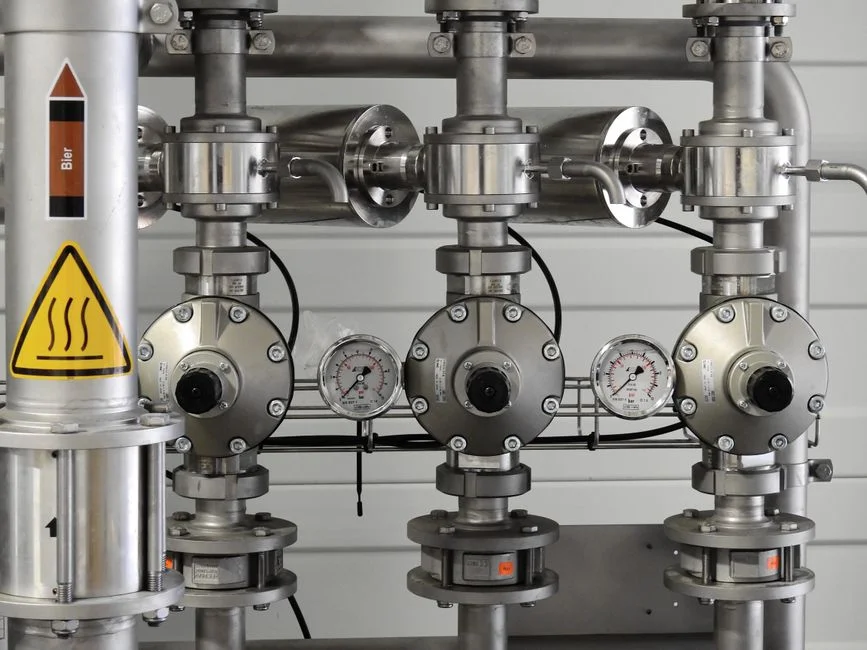
Side-stream filtration is the first guard for an RO-based blowdown train: it removes suspended solids and reduces biological loading before the membrane feed. The sequence should then use multi-media filtration where required to reduce particulates, followed by controlled antiscalant and biocide dosing. The supplied 2025 source identifies multi-media pretreatment and an antiscalant-biocide skid as membrane-protection measures and advises controlling the membrane feed rather than treating an uncontrolled cooling-loop stream.
| Unit | Supplied parameter | Procurement requirement |
|---|---|---|
| Side-stream and multi-media filtration | TSS of 10–50 mg/L is reported despite basin filtration | Define required feed TSS, particle-size distribution and solids-disposal route |
| RO | 95–99% TDS rejection; 10–50 mg/L permeate TDS; 50–85% blowdown recovery; 150–400 psi (HydropureWater, 2025) | Size from site chemistry, not a generic recovery figure |
| Softening or NF | Softening may be required where hardness or sulfate constrains RO recovery | Require media, pressure and reject-quality alternatives in the bid |
| Chemical control | Antiscalant, biocide and pH control are identified as membrane protections (HydropureWater, 2025) | Define dose, duty cycle, interlocks and cooling-chemical compatibility |
RO performance in the supplied range is 95–99% TDS rejection, permeate TDS of 10–50 mg/L, and 50–85% recovery from blowdown at 150–400 psi (HydropureWater, 2025). Hardness, silica, sulfate, and other constituents can reduce practical recovery, so the final guarantee must be tied to the submitted feed analysis.
Where softening is needed, the twin-tank softener catalog gives a 1–45 T/h range. This is a catalog limit rather than evidence of Cuauhtémoc demand. The requested automatic chemical-dosing system should integrate antiscalant, biocide, and pH control, including alarms, tank-level interlocks, and a defined chemical-changeover plan.
Turn the site inputs into a vendor-ready scope
Require a minimum 12-month site-water analysis covering TDS, hardness, silica, chloride, sulfate, iron, and manganese before final equipment sizing (HydropureWater, 2025). The analysis should represent makeup water and cooling-loop conditions, identify seasonal variability, and document the cooling-water chemistry program. Request a vendor-ready scope that keeps unresolved local inputs visible rather than converting assumptions into equipment guarantees.
The bid should identify the permitted discharge point, sewer or receiving-water route, reuse authorization, concentrate route, and backup-discharge strategy. Obtain these items from the relevant authority and local counsel. Do not infer a Cuauhtémoc obligation from generic information about NOM-001-SEMARNAT-1996.
| Fillable procurement field | Supplier response | Owner evidence or authority |
|---|---|---|
| 12-month site-water analysis | List all analyses, sampling dates and data gaps | Owner laboratory reports and cooling-system records |
| Measured makeup and blowdown flows | State design flow, turndown and peak conditions | Owner flow records and water-balance calculation |
| Cycles of concentration and reuse target | Show water balance, recovery and concentrate volume | Owner cooling design basis |
| Discharge or reuse authority and route | Identify assumed permit and tariff; list exclusions | Written authority confirmation and local-counsel review |
| Sanitary flow and treatment boundary | Size the biological train separately from blowdown | Workforce, visitor and canteen inputs |
| Acceptance criteria | Guarantee permeate quality, recovery, membrane life and ZLD performance where applicable | Signed performance schedule |
| Operations and service | List training, spares, controls, alarms and local service support | Vendor schedule and service agreement |
The supplied Mexico City engineering article states that NOM-001-SEMARNAT-1996 sets pH at 5–9, BOD at or below 120 mg/L for sewer discharge or 60 mg/L for receiving waters, and oils and greases at or below 50 mg/L (HydropureWater, “Data Center Cooling Blowdown Treatment in Mexico City: 2026 Engineering,” 2026). Confirm the current values, receiving-water classification, toxicity requirements, and applicability to the actual Cuauhtémoc route before incorporating them into the equipment specification.
Require guarantees for permeate quality, system recovery, membrane life, and, if ZLD is selected, MVC specific energy consumption and salt-cake volume (HydropureWater, 2025). The supplied US$250,000–500,000 installed cost and US$1.50–3.00 per thousand gallons operating cost for a 50,000 GPD RO system are preliminary comparison benchmarks only. They are not a Cuauhtémoc quotation.
Frequently Asked Questions
What will the wastewater and cooling-blowdown treatment package cost in Cuauhtémoc?
Do not use a generic price as the procurement budget. The supplied benchmarks are US$250,000–500,000 installed and US$1.50–3.00 per thousand gallons operating cost for a 50,000 GPD RO system, compared with US$3–8 million capital cost and US$5–15 per thousand gallons operating cost for full ZLD (HydropureWater, 2025). Request itemized quotations for filtration, pretreatment, RO, chemical dosing, MVC, crystallization, utilities, civil works, sludge or salt-cake disposal, commissioning, and service support. Exclude Cuauhtémoc-specific tariffs until the authority confirms them.
How should the treatment train be sized?
Size from measured makeup and blowdown flows, at least 12 months of water chemistry, the selected cycles of concentration, and the reuse target—not from campus power capacity alone (HydropureWater, 2025). Size the sanitary train from workforce, visitor, and canteen inputs. Require bidders to show their water balance, equipment turns, peak-flow assumptions, concentrate volume, and sensitivity to seasonal chemistry changes.
What should be checked when selecting an equipment supplier?
Require a performance schedule covering permeate quality, recovery, membrane life, chemical-control scope, and—if full ZLD is selected—MVC specific energy consumption and salt-cake volume (HydropureWater, 2025). Also check operator training, control narratives, alarm interlocks