Confirm the Stuttgart discharge route
Domestic sewage treatment in Stuttgart begins with determining whether the site can discharge to the municipal network or requires a decentralized plant. Stadtentwässerung Stuttgart (SES) is responsible for wastewater drainage and treatment across the city, nine neighboring municipalities, Stuttgart Airport and Messe Stuttgart, using four wastewater treatment plants in Mühlhausen, Möhringen, Plieningen and Ditzingen (Stuttgart Municipal Drainage, S3). If sewer access is unavailable or unsuitable, compare an A/O package plant with an MBR system. The WSZ combines A/O contact oxidation, sedimentation and disinfection in a buried unit at 1–80 m³/h; the MBR combines activated sludge with submerged PVDF membrane filtration at 10–2,000 m³/day. Site conditions, flow, discharge route and reuse requirements determine the practical choice.
Stadtentwässerung Stuttgart’s operating area covers Stuttgart, the catchment areas of nine neighboring cities, Stuttgart Airport and Messe Stuttgart. SES plans, builds, operates and maintains the sewer system, wastewater pumping stations and sewage treatment plants (Stuttgart Municipal Drainage, S3). That responsibility does not, by itself, establish that a particular property has a usable connection.
Request written confirmation from SES or the relevant approving authority covering:
- Whether the address is within the public drainage operating area.
- Whether a connection is legally and technically available.
- Whether capacity, sewer condition or downstream treatment capacity constrains the proposed discharge.
- Applicable discharge requirements, connection procedures and charges.
- Whether the project requires a new lateral, pumping arrangement or other infrastructure.
The supplied evidence provides no Stuttgart-specific connection charges, site flow limits or permit limits. Those items must remain open until confirmed in writing. The public sewer versus package-plant decision applies as a screening method, but the municipal facts must come from Stuttgart—not Munich.
Define the wastewater duty and treatment objective
A valid equipment comparison begins with a verified wastewater duty, not a product capacity selected from a brochure. Obtain the average and peak domestic sewage flow, wastewater characteristics, retention requirements, anticipated expansion and the intended destination of the treated water. For each item, document whether it is measured, calculated, scheduled or still an assumption.
Use the documented equipment bands only as first-pass screening boundaries. The verified HydropureWater catalog specifies 1–80 m³/h for the WSZ underground package sewage treatment plant and 10–2,000 m³/day for the MBR membrane bioreactor system (HydropureWater verified product catalog, 2026). These ranges do not establish compliance, because the operating basis and regulatory conditions are project-specific. The following table identifies the necessary data to clarify these requirements.
| Input | Evidence to obtain | Why it affects route selection |
|---|---|---|
| Hydraulic duty | Average flow, peak flow, retention requirements and expansion | Determines the screening band and whether pumping or equalization is required. |
| Wastewater characteristics | Domestic wastewater composition and any site-specific contaminants | Sets treatment objectives and identifies whether the comparison is appropriate. |
| Discharge destination | Public sewer, permitted receiving location or on-site reuse | Determines the receiving route and applicable approval path. |
| Reuse objective | Discharge, reuse or irrigation, with the required water quality | Adds treatment, storage and distribution requirements. |
Academic research has examined rapid filtration as supplementary domestic sewage treatment and vermifiltration as a decentralizable domestic treatment option (Rapid filtration as a supplementary treatment of domestic sewage, University of Helsinki Institutional Repository, 1985; Application of Vermifiltration for Domestic Sewage Treatment, IntechOpen, 2025). These sources provide research context, not Stuttgart procurement standards, and they do not replace the project-specific comparison. Further method selection is discussed in the A/O package plant versus MBR comparison.
Compare A/O package and MBR treatment
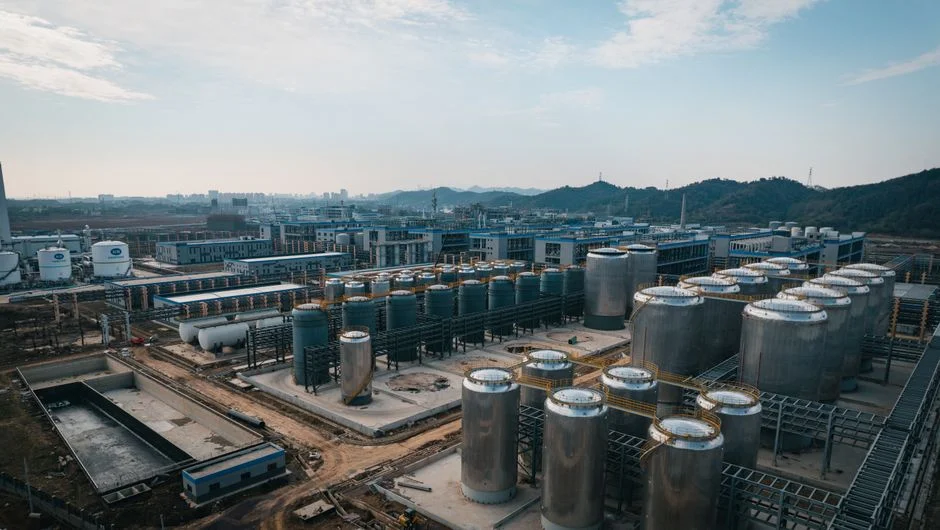
The WSZ integrates anoxic/aerobic A/O biological contact oxidation, sedimentation and disinfection in one buried package unit and is fully automated (HydropureWater verified product catalog, 2026). The MBR combines activated sludge with submerged PVDF membrane filtration; the catalog specifies 10–2,000 m³/day and a footprint 60% smaller than conventional systems (HydropureWater verified product catalog, 2026). These are different process configurations, so the comparison must follow the confirmed effluent and reuse requirements rather than headline capacity.
The WSZ is marketed for residential communities, hotels, hospitals, factories and rural applications. It can be installed below grade with landscaping above or mounted on a trailer for mobile deployment (HydropureWater verified product catalog, 2026). The underground A/O package sewage treatment plant presents a compact, integrated route for sites where subsurface installation and a defined treatment train suit the duty.
The MBR membrane bioreactor system adds membrane separation to the activated-sludge process. During supplier clarification, compare process complexity, footprint, automation, maintenance access, effluent objectives and reuse requirements against the same project inputs.
| Criterion | A/O package plant | MBR system |
|---|---|---|
| Documented process | Anoxic/aerobic A/O biological contact oxidation, sedimentation and disinfection in one buried unit | Activated sludge with submerged PVDF membrane filtration |
| Documented capacity band | 1–80 m³/h | 10–2,000 m³/day |
| Footprint statement | Buried package format; project footprint must be confirmed | Catalog states 60% smaller footprint than conventional systems |
| Automation | Fully automated with no operator required | Ask suppliers to define controls, membrane operation and routine attendance. |
| Procurement focus | Confirm subsurface installation, access and treatment-train suitability. | Confirm membrane objectives, maintenance, replacement strategy and reuse quality. |
Neither configuration is universally preferable. A simple approved discharge route may justify less equipment than a reuse application, while stricter reuse objectives can change the process comparison. Require suppliers to state the treatment objective they priced rather than infer it from the technology name.
Screen the site for installation and lifecycle constraints
Site constraints can eliminate an otherwise technically suitable package before price is compared. Obtain the available footprint, burial depth, access route, groundwater level, soil conditions, flood exposure, power supply and utility connections. The supplied research does not quantify these conditions for Stuttgart-area sites, so do not fill the gaps with assumed ranges or site tolerances.
Confirm noise, odor, visual-impact, traffic and maintenance-access requirements for the proposed location. For a buried installation, define how equipment is delivered, installed and removed without damaging the site. For an MBR installation, include membrane-service access in the maintenance plan.
Issue each supplier the same site information and ask for a delivered scope separating:
- The treatment package.
- Pumping and equalization.
- Controls and power requirements.
- Sludge handling and disinfection.
- Installation and civil works.
- Commissioning and testing.
- Long-term operation, maintenance and spare parts.
The wastewater plant buyer’s decision guide provides a structure for separating those boundaries, even though its Munich context is not a source of Stuttgart requirements. Also identify who owns the equipment after handover, who performs maintenance, how performance is measured and how failures are escalated.
Build the supplier comparison and acceptance checklist
Comparable bids require identical inputs. Send every supplier the verified flow, wastewater characteristics, discharge destination, reuse objective, site constraints, applicable compliance requirements and installation boundaries. If one input is unresolved, identify it explicitly rather than allowing each supplier to assume a different duty.
Require each proposal to state design flow, treatment process, effluent target, dimensions, utility demand, automation scope, installation boundaries, commissioning tests, warranty, spare parts and routine service needs. A capacity statement without a corresponding design basis is not comparable.
| Check | Supplier response required | Buyer acceptance action |
|---|---|---|
| Design basis | Design flow, wastewater duty and expansion basis | Reconcile against the verified site brief. |
| Performance | Proposed process, effluent target and test method | Confirm that the target matches the receiving or reuse requirement. |
| Physical fit | Dimensions, burial depth, access and utility connections | Check against measured site constraints. |
| Scope | Package, pumping, equalization, controls, sludge handling, installation and commissioning | List exclusions and assign responsibility. |
| Operations | Automation, maintenance, spare parts, service support and failure response | Schedule the handover and service plan. |
| Commercial and compliance | Price basis, warranty, permits and test requirements | Compare written terms and unresolved local inputs. |
Treat Stuttgart sewer charges, permit requirements, project-specific civil works and lifecycle costs as open procurement inputs until confirmed in writing. The supplied evidence provides no prices or local limits. Require each bid to state exclusions, assumptions, validity period and proposed acceptance criteria. A lower equipment price is not a complete comparison if pumping, sludge disposal, controls, maintenance or civil works remain unallocated.
Frequently Asked Questions
When is public sewer preferable to a package plant for a property in Stuttgart?
Public sewer is the first route to test because SES maintains the municipal sewer system, pumping stations and sewage treatment plants within its operating area (Stuttgart Municipal Drainage, S3). Prefer it only after the relevant authority confirms in writing that the property is eligible, connection capacity is available, applicable discharge requirements can be met and the total infrastructure and connection implications are acceptable.
What information is needed to size an A/O or MBR package plant?
Provide verified average and peak flows, wastewater characteristics, retention requirements, expansion plans, discharge destination and reuse objective. Use the documented 1–80 m³/h WSZ band and 10–2,000 m³/day MBR band as screening boundaries only (HydropureWater verified product catalog, 2026), then ask each supplier to state the design basis and proposed treatment train for the actual site duty.
How should A/O and MBR bids be compared on cost?
Request a delivered-scope price that separates equipment, pumping, equalization, controls, sludge handling, disinfection, civil works, installation, commissioning, routine service, consumables and warranty. Require written assumptions and exclusions. Do not use an unexplained package price for comparison, and obtain Stuttgart connection charges and other local costs separately before evaluating the municipal route.
Which supplier and compliance checks matter before ordering?
Check the supplier’s installation experience, service capability, spare-parts plan, commissioning tests, performance guarantee and allocation of permit responsibility. Require the permit authority, applicable effluent requirements, testing method and discharge or reuse conditions to be confirmed in writing. The supplied research does not provide Stuttgart-specific permit limits, so a generic compliance statement is not an adequate substitute for local approval.