

Start with the discharge route and local approval
For domestic sewage treatment in Munich, the first decision is whether the site can discharge into the municipal sewer under an approved connection or permit. Germany generally prohibits untreated wastewater discharge, and wastewater from private households is the responsibility of local authorities; around 97 percent of the population is connected to public sewage systems. If sewer access is impractical, the WSZ underground A/O package treatment plant covers 1–80 m³/h in one buried unit, while the integrated MBR wastewater treatment system covers 10–2,000 m³/day and filters below 1 μm. Selection should follow verified flow, wastewater characteristics, space, effluent destination and authority requirements.
Before designing equipment, establish whether the project belongs on the public-sewer route or requires decentralized sewage treatment. Germany’s Federal Water Act framework requires wastewater pollution loads to be reduced to the lowest level achievable in line with best available technology, and the Waste Water Ordinance sets the specific requirements for municipal, industrial and commercial wastewater, according to the Federal Environment Ministry’s wastewater overview. The same source states that wastewater management for private households is a local-authority responsibility.
Munich’s sewer remains the baseline because approximately 97 percent of Germany’s population is connected to the public wastewater system, according to the Federal Environment Ministry’s wastewater overview. For a property in Munich, however, that national figure does not establish that a connection is technically or legally available. Obtain the property drainage plan, confirm the location and available capacity of the public sewer, and submit drainage plans for approval before constructing or modifying the property drainage system. The municipal drainage department must also be notified before work on property drainage begins.
Do not assume that domestic sewage and other wastewater streams share the same permission route. Munich states that a discharge permit is required for wastewater from activities such as surface cleaning before it enters the municipal sewer. The authority must therefore determine whether the proposed stream needs a discharge permit, indirect-discharge conditions or another approval. Record that route before comparing treatment equipment.
| Screening item | Evidence to obtain | Decision consequence |
|---|---|---|
| Public sewer access | Property drainage plan, sewer location, connection route and authority confirmation | Proceed with municipal sewer connection if feasible and approved. |
| Property drainage works | Drainage plans submitted for advance approval; municipal drainage department notified before work starts | Do not construct or modify drainage before those steps are completed. |
| Wastewater stream | Source and composition of the wastewater to be discharged | Ask the authority whether a sewer discharge permit or other authorization is required. |
| Baseline route | Evidence that public sewer drainage is available | Use decentralized sewage treatment only when the sewer route is unavailable, impractical or demonstrably unsuitable. |
Screen the site for a decentralized treatment decision
A decentralized plant is justified by verified site constraints, not by a preference for private equipment. Collect average and peak domestic wastewater flow, wastewater characteristics, available footprint, soil conditions, power access and the intended effluent destination. If drainage access is infeasible, document that finding with the property drainage plan, authority correspondence and site survey before asking suppliers to quote equipment.
Compare equipment on one basis. The verified WSZ product catalog states a capacity of 1–80 m³/h, while the verified MBR product catalog states a range of 10–2,000 m³/day. Do not place those labels side by side without converting the MBR daily figure into an hourly design basis and assessing peak demand. This distinction matters because a nominal daily capacity does not demonstrate performance during the highest wastewater period or peak-flow conditions.
Also identify what happens to the treated effluent. A decentralized system does not remove the need for an approved discharge route: treated water might enter the municipal sewer, discharge to surface water, support a defined reuse application, or require another destination. Confirm the applicable authority route and required effluent quality before selecting a process. A reuse objective must also identify whether the intended use is irrigation, process water, toilet flushing or another application; the receiving standard determines the treatment and verification requirements.
| Site input | Information required for comparison | If the information is missing |
|---|---|---|
| Flow | Average daily flow, peak flow and applicable peak factor | Do not shortlist either technology; both require a common design-flow basis. |
| Wastewater | Analysis covering the pollutants relevant to the proposed discharge or reuse | Request representative sampling and analysis before process selection. |
| Space and installation | Available footprint, burial depth, access, soil and groundwater conditions | Reserve equipment layout and installation assumptions for supplier clarification. |
| Utilities and operation | Power availability, control access, sludge removal and maintenance access | Require operating assumptions, utilities and maintenance obligations in the RFQ. |
| Effluent destination | Municipal sewer, surface water or named reuse application | Do not specify final effluent quality without confirming the route. |
| Drainage justification | Property drainage plan and evidence that municipal connection is unavailable or impractical | Continue the municipal-sewer assessment rather than default to a package plant. |
For a small site, the WSZ option may merit review where the required design flow falls within its stated range and the treatment scope matches the discharge. The MBR option should be assessed when its larger capacity band and membrane filtration are relevant to the verified flow and reuse or polishing objective. A useful technical background is available in this decentralized domestic sewage treatment guide, but it does not replace site-specific flow, authority or effluent data for Munich.
Compare A/O package treatment with MBR
The WSZ and MBR architectures solve different process problems: the WSZ combines several treatment stages in a buried package, while the MBR separates activated-sludge treatment from submerged membrane filtration. Select the architecture after fixing the design flow, effluent destination and reuse objective.
The verified WSZ product catalog describes an integrated A/O biological treatment arrangement combining anoxic and aerobic contact oxidation, sedimentation and disinfection in one fully automated buried package, with no full-time operator required. Its stated capacity is 1–80 m³/h. The catalog positions the system for residential communities, hotels, hospitals, factories and rural areas. It can also be installed below grade with landscaping above or mounted on a trailer for mobile deployment. For a Munich site, the relevant issue is not whether those uses are plausible; it is whether the verified domestic flow, treatment objectives, footprint and authority route fit the selected configuration.
The integrated MBR wastewater treatment system combines activated-sludge treatment with submerged PVDF membrane filtration. Its verified product scope covers municipal sewage, industrial process water and reuse projects, with a stated capacity of 10–2,000 m³/day and filtration performance below 1 μm. Choose MBR when the specified reuse or polishing requirement justifies membrane filtration. If the requirement is ordinary biological treatment followed by the specified receiving route, do not use the filtration figure alone as proof that MBR is the appropriate architecture.
| Decision criterion | WSZ underground A/O package plant | Integrated MBR system |
|---|---|---|
| Stated process scope | Anoxic/aerobic contact oxidation, sedimentation and disinfection in one buried package | Activated sludge treatment with submerged PVDF membrane filtration |
| Verified capacity label | 1–80 m³/h | 10–2,000 m³/day |
| Capacity comparison method | Compare with the site’s peak-hour basis | Convert the daily label to an hourly basis, then test it against the site peak |
| Installation concept | Single buried unit; also available as a trailer-mounted system | Supplier must define the complete plant arrangement and footprint |
| Automation statement | Fully automated; no full-time operator required | Supplier must specify controls, membrane operations, cleaning and attendance requirements |
| Primary selection trigger | Applicable flow, required treatment train, space and installation conditions | Defined reuse or polishing requirement, verified capacity and membrane-system operating envelope |
| Evidence limitation | Catalog scope and capacity do not establish a Munich discharge approval | Catalog scope and filtration performance do not establish compliance for a specific discharge or reuse use |
The comparison of A/O package plants and MBR systems provides another decision framework. For procurement, require each bidder to map its proposed train to the discharge objective: biological removal, solids separation, disinfection, membrane filtration and reuse preparation must be explicit rather than implied by the equipment name.
Set performance evidence and acceptance criteria
Acceptance criteria should state the duty, receiving standard and evidence method; they should not rely on generic statements such as “suitable for sewage treatment.” The supplier must state design flow, daily load, treatment objectives, the receiving-water or reuse standard and the applicable German approval pathway. Where no numerical effluent limit has been established for the site, record that as an unresolved authority item rather than inserting an assumed limit.
Academic performance can show what evidence may look like, but it cannot guarantee a Munich installation. A 2.5-year compost-bed study published by Sustainability in September 2023 reported 98 percent BOD reduction and 99.5 percent ammonium-nitrogen reduction under its stated conditions. The tested system used 1 m² per inhabitant and a daily hydraulic load of about 100 L/m². Those values describe that pilot installation; they are not Munich design requirements and do not establish the performance of either WSZ or MBR equipment.
Request evidence that addresses the actual site and loading. It should explain sampling points, parameters, frequency, analytical methods, normalized operating conditions and the treatment of abnormal events. Munich urban-scale research published in iScience on 22 July 2026 showed that precipitation, viral decay, normalization strategies and sampling protocols affect interpretation of wastewater data. Although its purpose was wastewater-based surveillance rather than treatment-plant acceptance, the engineering lesson applies: monitoring design must state how site conditions affect the result and how the data will be interpreted.
Separate three acceptance layers:
- Capacity: verify that the complete plant handles the agreed average and peak flow and the stated daily load.
- Process performance: test the parameters required by the confirmed receiving or reuse standard, including treatment train performance and any membrane-related criteria.
- Operation: demonstrate automatic controls, alarms, sampling provision, sludge handling, maintenance access and the handover documentation.
Do not present general reductions, filtration performance or supplier catalog statements as site guarantees. Require the supplier to identify the standard, test method, operating condition and evidence behind every performance claim.
Build a procurement-ready equipment specification
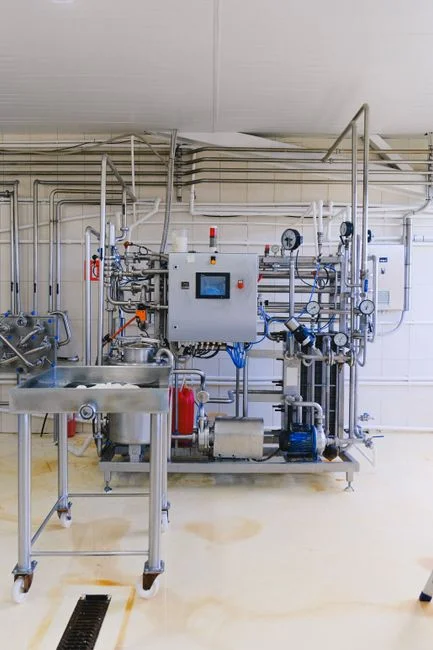
A comparable RFQ turns the selected route into measurable supplier obligations. Give every bidder the same design basis and require a complete response rather than an equipment name and headline flow rate.
- State the average daily flow, peak flow, peak factor, wastewater analysis, treatment objectives and effluent destination.
- Define the required treatment train, automation, footprint, burial or installation constraints, utilities, sludge handling, disinfection and monitoring.
- Identify the legal discharge route, required permits, approving authority and expected interface with the municipal drainage department.
- Require documentary evidence for every capacity and performance claim, including design assumptions, test methods and operating conditions.
- Make acceptance conditional on verified capacity, treatment performance, automatic controls, documentation and handover.
For the WSZ route, ask bidders to identify the selected unit within the stated 1–80 m³/h range and confirm the integrated anoxic/aerobic treatment, sedimentation and disinfection scope. For the MBR route, require the common flow basis, membrane configuration, cleaning provisions and the evidence supporting the stated filtration performance. The MBR versus activated-sludge cost and ROI decision framework can help structure lifecycle questions, but a Munich supplier must still substantiate project-specific assumptions.
| RFQ item | Required supplier response | Acceptance evidence |
|---|---|---|
| Design basis | One common average-flow, peak-flow and daily-load basis | Capacity calculation and equipment selection against the same inputs |
| Wastewater and objective | Analysis, treatment train, receiving-water or reuse standard | Documented parameter targets and test methods |
| Compliance route | Permits, approving authority and responsibilities of each party | Authority correspondence and permit applications where required |
| Installation | Footprint, access, utilities, civil works, sludge and maintenance arrangements | Layout, installation manual and handover plan |
| Controls and monitoring | Automation, alarms, sampling and reporting | Functional demonstration and agreed monitoring protocol |
| Performance evidence | Source, scope and conditions for every numerical claim | Acceptance testing against agreed criteria |
Frequently Asked Questions
How much does a domestic sewage treatment system cost in Munich?
No verified project quotation was supplied for this Munich application, so a defensible price cannot be stated. Request a separated quotation for equipment, civil works, drainage connections, electrical work, commissioning, permit support, sludge handling, monitoring, maintenance and consumables. Also request the design flow, footprint, treatment objective, power requirement and effluent standard used for the price. Compare bids on that common basis rather than on headline equipment cost.
Should I choose an A/O package plant or an MBR system?
Choose an A/O package when the verified flow and required treatment train fit its stated scope and the site supports a buried package. Consider MBR when the named reuse or polishing requirement justifies membrane filtration and the project can support membrane operation, cleaning and maintenance. The supplied evidence does not establish that MBR is more economical for a particular Munich site.
How do I size a sewage treatment plant for a property in Munich?
Start with measured or credibly estimated average and peak domestic wastewater flow, then convert every candidate’s capacity to the same time basis. The WSZ catalog states 1–80 m³/h; the MBR catalog states 10–2,000 m³/day. Check the peak condition, wastewater load, treatment objectives, footprint and operating constraints before selecting a unit.
Which permits and approvals are required before installing a decentralized plant in Munich?
Submit property drainage plans for approval before constructing or modifying the drainage system and notify the municipal drainage department before property drainage work begins. For a decentralized discharge, ask the relevant authority which discharge permit, indirect-discharge requirements and reuse conditions apply. Munich specifically identifies a permit requirement for surface-cleaning wastewater entering the municipal sewer; do not transfer that statement without determining whether it applies to the project’s wastewater stream.
What information should I request from a wastewater equipment supplier?
Request one comparable response covering design flow, peak factor, wastewater analysis, treatment train, automation, footprint, utilities, installation, sludge handling, disinfection, monitoring, permits, training and handover. Require the supplier to identify the legal discharge route and provide the source, scope and test method behind every performance claim. For a WSZ proposal, also request confirmation of the selected capacity and integrated A/O, sedimentation and disinfection scope.
Related Equipment
- WSZ underground A/O package treatment plant — specifications, capacity range, and technical data
- integrated MBR wastewater treatment system — specifications, capacity range, and technical data