Confirm Whether a Public Sewer Connection Is Feasible
The first step for domestic sewage treatment in Cologne is determining whether the property can connect to the public sewer. If a connection is unavailable or impractical, an on-site treatment plant is the relevant alternative. HydropureWater’s WSZ underground package plant combines anoxic/aerobic biological contact oxidation, sedimentation and disinfection in one buried unit, handles 1–80 m³/h and can be installed below grade with landscaping above. Academic evidence also identifies small treatment plants as suitable for individual houses and small facilities without centralized sewer access. Cologne-specific connection, permit, cost and site-condition data must be verified before selecting a route.
A usable public-sewer connection must be confirmed by the relevant Cologne authority or asset operator; general German or European practice cannot establish parcel-specific availability. Ask whether a connection exists, which route it would follow, what capacity remains, whether pretreatment is required and what approvals apply. Request written confirmation of connection fees and project charges, as no Cologne tariff or project timetable was provided.
The point of discharge also determines the design route. A property may be technically connectable but unsuitable if the receiving network lacks capacity, the connection route requires disruptive civil work, or the authority requires additional treatment controls. Confirm these items before requesting packaged-equipment quotations.
Decentralized sewage treatment serves as a viable response where no centralized network exists. Kyriienko, Betin and Kuznetsova identified small treatment plants for individual houses, small schools, roadside cafés, restaurants, railway stations and camping sites without centralized sewage networks (Kyiv National University of Construction and Architecture, 2018-09-28). This supports evaluating on-site treatment generally, though it does not establish Cologne-specific connection rules.
| Decision input | Public sewer route | On-site package-plant route |
|---|---|---|
| Connection availability | Obtain written parcel-level confirmation and the available connection route. | Document why no usable public connection exists or why connection scope is impractical. |
| Discharge point | Confirm the authority-approved discharge point and required pretreatment. | Define the final effluent route, receiving authority or reuse user, and consent requirements. |
| Capacity and charges | Request confirmation of available network capacity, connection fees and other project charges. | Request a process-suitability quotation based on verified flow and wastewater characteristics. |
| Approval evidence | Request the applicable connection-approval procedure and responsibilities. | Request the discharge, installation and environmental-consent pathway in writing. |
Choose the On-Site Treatment Configuration
The WSZ and MBR options differ in process configuration, capacity and deployment requirements, requiring comparison against verified flow, available space and the intended effluent route. These systems should be evaluated based on specific project needs rather than generic “domestic sewage” assumptions.
The underground A/O package sewage treatment plant combines anoxic/aerobic biological contact oxidation, sedimentation and disinfection in a single buried package unit. The HydropureWater verified product catalog lists a capacity range of 1–80 m³/h and identifies residential communities, hotels, hospitals, factories and rural areas as applications. It can be installed below grade with landscaping above or mounted on a trailer for mobile deployment. These configurations make burial depth, permanent versus temporary deployment and construction access direct selection inputs.
The MBR membrane bioreactor alternative combines activated sludge with submerged PVDF membrane filtration. The supplied product catalog states filtration below 1 μm, a footprint 60% less than conventional systems, and a capacity range of 10–2,000 m³/day. These are catalog attributes, not a project-specific performance guarantee. The MBR option warrants consideration where compactness and membrane-based solids separation are priority requirements, but the selected supplier should validate the process against actual wastewater and receiving route requirements before quotation.
Use the A/O package plant versus MBR comparison as a structured method for reviewing process scope, maintenance and site constraints. The supplied research does not provide a common performance guarantee, lifecycle cost or approval comparison for either configuration.
| Selection item | WSZ A/O package plant | MBR system |
|---|---|---|
| Process configuration | Anoxic/aerobic biological contact oxidation, sedimentation and disinfection in one buried unit. | Activated sludge with submerged PVDF membrane filtration. |
| Stated capacity | 1–80 m³/h. | 10–2,000 m³/day. |
| Deployment | Permanent below-grade installation or mobile trailer mounting. | Request the proposed civil arrangement and operating configuration from the supplier. |
| Stated physical characteristic | Single buried package unit; landscaping may cover the installation. | Catalog states filtration below 1 μm and 60% less space than conventional systems. |
| Procurement check | Confirm the model’s flow envelope against verified average and peak demand. | Require process validation against verified influent, effluent and reuse requirements. |
Build the Design Basis from Verified Site Inputs
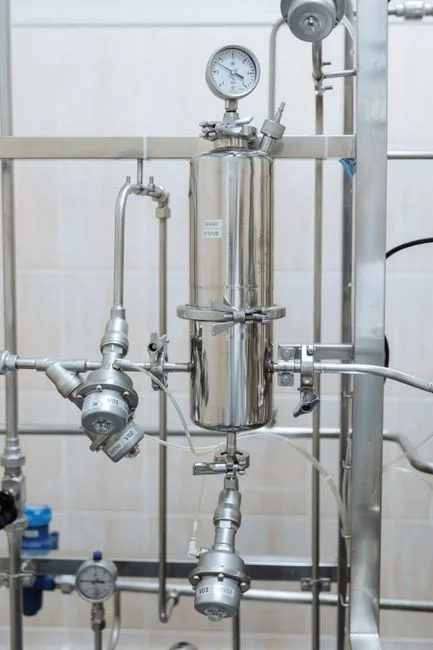
A package plant can be quoted only when the design flow, wastewater characteristics, installation envelope and effluent route are defined. The supplied research provides no Cologne influent values, design formulae, groundwater data, soil data or local discharge limits, so these must be obtained as project-specific inputs.
Collect domestic sewage flow on an average and peak basis, including wastewater temperature, pH, suspended solids, COD and BOD. Identify any industrial or commercial inflows, as they may change process selection, pretreatment requirements and operating assumptions. Confirm whether the design flow falls within the selected WSZ model’s stated 1–80 m³/h range or the proposed MBR model’s stated 10–2,000 m³/day range; these ranges come from the HydropureWater verified product catalog and cannot substitute for site-specific flow data.
Document the available footprint, burial depth, construction access and maintenance access. Record groundwater level, soil permeability and flood exposure. Specify the operating mode as either permanent buried installation or temporary mobile deployment. WSZ supports both listed configurations.
Define the effluent route before selecting equipment. State whether treated water will be discharged directly, routed to the sewer, or reused. Identify the receiving authority or reuse user and obtain their written requirements. A discharge destination, reuse demand and applicable consent cannot be inferred from the treatment process alone.
- Record verified flows, peak factors and wastewater analyses.
- Map the available footprint, access routes, burial depth, soil, groundwater and flood exposure.
- Select the discharge or reuse route and identify the responsible authority or user.
- State permanent or mobile operating requirements.
- Add electrical supply, controls, solids handling, odor control, access and commissioning responsibilities to the quotation request.
| Design-basis field | Project entry | Source or responsible party |
|---|---|---|
| Average and peak flow | Record measured or otherwise verified project values. | Owner’s wastewater records and flow verification. |
| Influent characteristics | Enter temperature, pH, suspended solids, COD, BOD and non-domestic inflows. | Owner and sampling contractor. |
| Site and installation | Enter footprint, burial depth, access, groundwater, soil and flood exposure. | Surveyor, geotechnical input and owner. |
| Effluent route | Specify direct discharge, sewer discharge or reuse and the receiving party. | Owner, authority or reuse user. |
| Operating mode | Select permanent buried or temporary mobile deployment. | Owner and selected supplier. |
| Supporting systems | Define electrical, controls, sludge, odor, maintenance and commissioning scope. | Supplier, contractor and owner. |
Compare Approval, Delivery and Lifecycle Risks
The primary procurement risk involves selecting equipment before the sewer route, discharge route and approval responsibilities are fixed. The supplied evidence contains no Cologne-specific permit, approval or sewer-connection timetable. Request written confirmation from the responsible authority rather than relying on generic timelines or an equipment supplier’s estimate of the regulatory pathway.
Compare quotations on process suitability, installation scope, commissioning, automation, operator requirements and maintenance support rather than equipment price alone. For the WSZ, require confirmation that the proposed capacity covers the verified design flow and that the quotation states every wastewater characteristic assumed or excluded. For the MBR, require the same flow check plus project-specific process validation, because the catalog attributes do not establish performance at the proposed site.
Clarify who owns the inlet and outlet works, electrical supply, civil works, sludge removal, sampling and compliance testing. Define how performance is demonstrated and the protocol if the selected treatment route is rejected or modified. These allocations should appear in the quotation and contract rather than remain verbal assumptions.
Delivery and lifecycle planning should cover installation access, spare parts, membrane or solids-related maintenance, operator training, remote or local controls, and response obligations for failures. The supplied research does not provide Cologne-specific lead times, prices or maintenance intervals, so suppliers must state them explicitly. Use public sewer versus package plant decision guidance to structure the commercial comparison, while treating it as general advice rather than local regulatory evidence.
Frequently Asked Questions
How should a package plant be sized for a Cologne property?
Size the unit from verified average and peak flow, wastewater characteristics and the selected model’s stated capacity. The WSZ catalog range is 1–80 m³/h, while the MBR catalog range is 10–2,000 m³/day. Neither range replaces a site flow assessment or establishes the required treatment capacity.
What should a buyer request when comparing equipment cost and budget?
Request itemized quotations covering equipment, civil works, installation, electrical works, controls, commissioning, operator training, maintenance and solids handling. No Cologne package-plant price or public-sewer connection charge was supplied, so a defensible budget requires quotations and written information from the relevant authority.
Which supplier and delivery commitments should be checked before ordering?
Ask the supplier to confirm the proposed capacity against verified flows, list wastewater assumptions and exclusions, identify civil and electrical interfaces, define commissioning acceptance and state the delivery schedule. For MBR, require project-specific process validation. The packaged sewage plant selection for housing illustrates the type of comparison needed, but it does not replace a supplier’s binding offer for the Cologne site.
Are sewer connection and on-site treatment permits already covered by the plant quotation?
These items are not typically covered by the plant quotation. The supplied research provides no Cologne approval procedure or timetable. Obtain written confirmation of the sewer-connection or discharge-consent route, required pretreatment and approval responsibilities from the responsible authority, and require the supplier to state which engineering support, documentation and liaison are included in its quotation.