
Identify the discharge route before selecting equipment
Fabricated-metal plants near Lakeland should establish the permitted discharge route, characterize every wastewater stream, and select DAF, pH adjustment, and sludge dewatering only against documented permit requirements. EPA’s metal-finishing regulation is process-based: a plant performing any of six covered operations may have discharges from the 46 operations listed in 40 CFR 433.10(a) covered by Part 433 standards (US EPA, Metal Finishing Effluent Guidelines). The supplied research does not identify the specific public owned treatment works serving a plant near Lakeland or establish numerical local limits, so the receiving sewer authority’s permit must be obtained before equipment sizing or acceptance criteria are finalized.
Begin with a site drainage drawing rather than a single “plant wastewater” label. Map process rinse water, wash water, floor washdown, spent cleaning solutions, cutting-fluid carryover, paint overspray, and stormwater to their actual destinations. Exclude any stream with a different regulatory route until that route is verified. Mark drains that cannot reach pretreatment as blocked or separately managed rather than assuming they are part of the permitted flow.
Request the receiving POTW’s industrial user permit, discharge parameters, POTW local limits, monitoring frequency, sampling protocol, and prohibited-discharge list. The US EPA metal-finishing scope guidance is a screening tool, not the site permit. Also check whether the facility performs chromium plating, chromium anodizing, chromic acid etching, or chromate conversion coating. EPA states that it is conducting a rulemaking for PFAS discharges from a subset of metal-finishing and electroplating facilities, with supporting materials in docket EPA-HQ-OW-2022-0869 (US EPA, Metal Finishing Effluent Guidelines). That rulemaking review should be flagged without predicting its final requirements.
| Fillable discharge-route field | Plant entry | Evidence required before design |
|---|---|---|
| Receiving POTW and sewer connection | POTW name; permit or account number; connection point | Issued industrial user permit and current local limits |
| Waste stream and source | Process, washdown, floor drainage, stormwater, or other | Approved site drainage map and sample-point list |
| Regulatory route | Industrial sewer discharge, separate treatment, or unresolved | Written POTW or authority confirmation |
| Permit controls | Parameters, monitoring frequency, sampling method, prohibited discharges | Current permit attachments and written clarifications |
| Federal scope screen | Any of the six covered operations: yes/no; operation list | Applicability review against current EPA guidance |
| PFAS review flag | Chrome plating, anodizing, etching, conversion coating: yes/no | Regulatory review of docket EPA-HQ-OW-2022-0869 |
| Missing information | Unknown local limit, flow, stream destination, or monitoring point | Named owner and due date |
Build the wastewater characterization worksheet
A treatment train should be sized from measured stream conditions rather than the term “metalworking wastewater.” Create one worksheet row for each wastewater source and separate production water from contaminated wash water. The same source can require different treatment if composition or discharge timing changes: reusable rinse water, concentrated cleaner, and floor washdown should not be averaged together without evidence.
For each stream, document average flow, peak-equivalent flow, batch frequency, operating hours, pH, total suspended solids, oil and grease where applicable, and metals identified by the permit or process knowledge. Record recurring shock loads and slug discharges separately. Include production practices that alter hydraulic loading, such as rinse-water reuse, water-saving measures, tank dumps, and concentrated cleaner dumping. The supplied research contains no verified Lakeland-area flow or pollutant values, so every absent value is a pre-design input—not a zero and not a placeholder for an assumed range.
Obtain representative analytical results from the plant rather than relying only on process descriptions. Define where each stream is sampled, how composites are formed, when samples are collected, and which laboratory performs the work. Include process-specific contaminants only where the permit requires them or representative data identifies them.
Ask operations, EHS, and maintenance to identify floor-drainage points, paint overspray, cutting-fluid carryover, dumpster-area washdown, and practices that could bypass the proposed train. The metal plant pretreatment selection method provides a useful sequence for converting permit and production data into a vendor-ready design basis.
| Worksheet field | How to populate it | Acceptance check |
|---|---|---|
| Stream ID and process source | Unique row for each source and discharge point | Matches the approved drainage map |
| Hydraulics | Average flow, peak-equivalent flow, batch frequency, operating hours | Flow study and production schedule reconciled |
| Quality | pH, TSS, oil and grease where applicable, permit-identified metals | Representative lab report attached |
| Loading character | Shock loads, slugs, cleaner dumps, cutting-fluid carryover | Operational source confirmed by operations and EHS |
| Sample basis | Sampling point, method, timing, laboratory, responsible owner | Protocol identifies how the stream is represented |
| Reuse and routing | Rinse reuse, water-saving practices, bypass-prone drains | No stream enters the train only by assumption |
| Missing-value control | Unknown, owner, required date, basis for assumption | No unresolved field used for final sizing |
Select the treatment train from contaminant and operating conditions
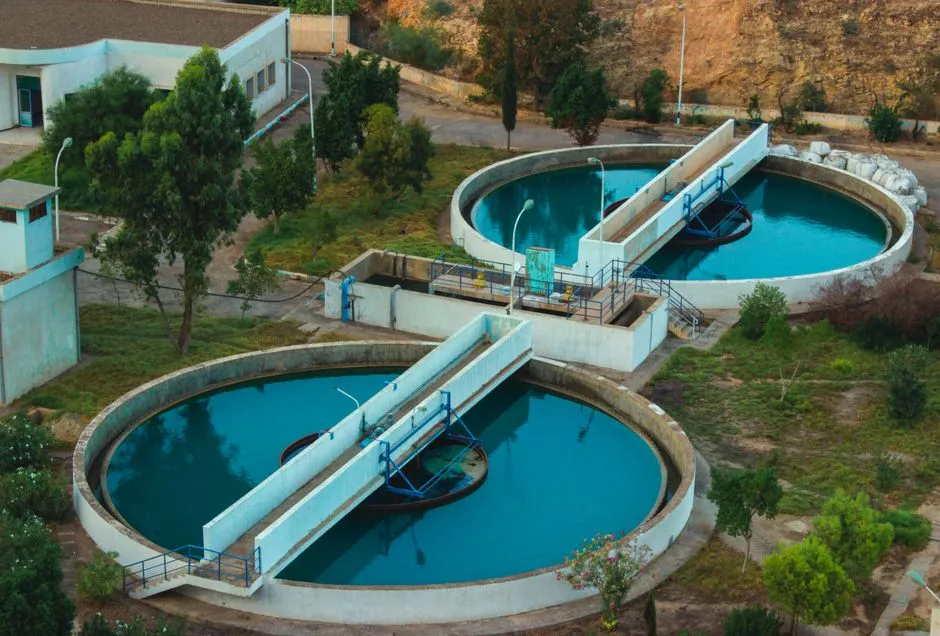
DAF is the preferred choice when the design objective includes high-efficiency removal of suspended solids, oil and grease, FOG, and colloidal material before finer treatment or sewer discharge. A DAF system for metalworking wastewater is a candidate solids-removal step, not proof that the resulting discharge meets a POTW permit. Oil and grease removal should be evaluated separately where the permit or characterization requires it.
Use automatic chemical dosing where the treatment train requires controlled coagulant, flocculant, pH adjuster, or specialty-chemical addition. Verify that the PLC-controlled chemical dosing system integrates with the DAF and pH-control strategy, including reagent storage, delivery, calibration, alarms, interlocks, and operator controls. Chemical compatibility and chemical-demand calculations must be supported by the characterization and supplier review; permit requirements alone do not establish compatibility.
Choose sludge dewatering based on the solids generated, the dewatering objective, and disposal logistics. HydropureWater offers plate-and-frame presses with filtration areas from 1 m² to 500 m², but the selected area must follow a solids-balance calculation using representative solids concentration, generation rate, operating schedule, and target cake condition. The supplied evidence does not establish a required dewatering performance or residue classification.
| Decision condition | Selected step | Evidence needed to proceed |
|---|---|---|
| Suspended solids, oil and grease, FOG, or colloidal matter must be removed | DAF as the primary solids-removal candidate | Representative characterization; hydraulic and solids balance; treatment performance basis |
| Controlled reagent or pH addition is required | Automatic chemical dosing and pH adjustment | Control narrative, reagent list, compatibility review, calibration and alarm tests |
| Residual solids require dewatering | Plate-and-frame press or another justified method | Solids balance and logistics; filtration area from the offered 1–500 m² range only after calculation |
Verify compliance with a test-and-document plan
Compliance must be demonstrated against the written permit and approved design basis, not against a general equipment description. Where the POTW requires design-stage approval, submit the wastewater characterization, process flow diagram, equipment-sizing basis, chemical list, control narrative, sludge-handling plan, and proposed monitoring points before purchase or installation. Resolve comments in writing and incorporate accepted changes into the final equipment and acceptance documents.
Define performance tests before commissioning. The plan should identify calibrated flow measurement, representative influent and effluent sampling points, laboratory methods, monitoring frequency, operating conditions, and pass/fail criteria. Use the permit’s own sampling protocol where one exists. Where the supplied research does not provide a numerical limit or test method, request it from the POTW and laboratory rather than substituting a catalog claim or generic treatment article.
Conduct an operational readiness review before acceptance. Verify chemical calibration, pH-control response, alarms, interlocks, bypass prevention, maintenance access, spare-parts availability, and operator training. A bypass is an audit event: record its activation, cause, duration, flow, response, and corrective action.
Maintain an operating log with influent and effluent results, chemical usage, flow, operating conditions, bypass events, corrective actions, and sludge-disposal records. Keep calibration records, laboratory reports, POTW correspondence, and approved revisions with that log. The federal pretreatment framework provides regulatory context, but the supplied Part 403 excerpt does not expose numerical permit limits or the requirements of the Lakeland-area POTW.
The wastewater permit compliance workflow illustrates the value of maintaining a permit-to-evidence chain. The same sequence applies here, with every acceptance value tied to the applicable permit rather than to another jurisdiction’s limits.
| Acceptance stage | Required action | Audit record |
|---|---|---|
| Design review | Submit characterization, process flow diagram, sizing basis, chemicals, controls, sludge plan, and monitoring points where required | Application, POTW comments, approved drawings, and written resolutions |
| Factory or pre-shipment review | Confirm instruments, controls, interlocks, materials, and delivery configuration | Inspection checklist, submittals, and punch-list closeout |
| Installation verification | Confirm flow paths, sampling points, drain isolation, calibration, bypass controls, and maintenance access | Installation checklist and field test records |
| Performance test | Test under defined flow and operating conditions using representative sampling and laboratory methods | Raw data, chain of custody, laboratory report, and pass/fail decision |
| Operational readiness | Test chemical calibration, alarms, bypass prevention, training, maintenance, and spares | Readiness certificate and training records |
| Ongoing operation | Maintain monitoring, chemical, flow, bypass, corrective-action, and sludge-disposal logs | Auditable operating file submitted or retained as the permit requires |
Frequently Asked Questions
How should a DAF system be sized without assuming a guaranteed treatment capacity?
Size the system by performing a hydraulic and solids-balance calculation based on representative wastewater characterization data. Do not rely on generic throughput values; instead, use the specific flow rates, influent concentrations, and permit-mandated effluent limits obtained from the receiving POTW.
What must a pretreatment supplier provide to support permit review and acceptance?
Require a process flow diagram, equipment-sizing basis, control narrative, chemical list, materials information, proposed monitoring points, commissioning plan, and acceptance criteria linked to the written permit. For DAF, ask the supplier to state its performance assumptions and test method. For sludge dewatering, require a solids-balance calculation and the evidence supporting the selected filtration area from the offered 1–500 m² range.
Why does the Lakeland-area sewer permit control the final treatment design?
The POTW permit controls because it establishes the site’s applicable discharge conditions, local limits, monitoring requirements, and prohibited discharges. EPA’s process-based metal-finishing scope can indicate whether Part 433 standards may apply, but the supplied research does not identify the receiving POTW or its numerical limits. Request the current permit and written clarification from the authority before approving equipment specifications or performance guarantees.
Can DAF alone establish compliance for fabricated metal wastewater?
No. DAF can provide suspended solids removal and can assist with oil and grease, FOG, and colloidal matter, but it does not replace required pH adjustment, sludge dewatering, or membrane treatment where those steps are required. The DAF versus lamella pretreatment comparison is useful for equipment differentiation, but final compliance must be demonstrated through the applicable permit test and document sequence.
Related Equipment
- industrial DAF system for metalworking wastewater — specifications, capacity range, and technical data