Start with the wastewater the property actually generates
A hotel or resort in Bekasi generally needs a decentralized sewage treatment system sized around its wastewater flow, available land and water-reuse objectives. The closest documented local precedent is a Johkasou installation at a Cikarang, Bekasi hotel with a 20 m³/day capacity, covering collection, sedimentation, biological treatment, final clarification, storage and sand filtration. For a 2026 decision, compare an underground A/O package plant with an MBR system. The final selection requires verified daily flow, peak demand, discharge route and reuse targets.
The 20 m³/day installation demonstrates that a decentralized treatment plant can be integrated at a hotel in the Cikarang area, though it is not a universal capacity rule for every Bekasi property. A resort with restaurants, laundry, spas, pools and fluctuating occupancy produces a wastewater profile unlike a small hotel with a stable room count. The supplier should establish the design basis from site data rather than scale the precedent by intuition.
Start by listing every wastewater source: guest rooms, occupied units, restaurant areas, laundry, kitchens, spas, swimming pools and staff facilities. Separate sanitary sewage from kitchen wastewater, laundry discharge and pool backwash or overflow. The research does not provide occupancy-based unit-generation factors for Bekasi hotels, so do not accept a capacity derived only from room count or visitor numbers. Ask the property team for operating information about discharge timing, seasonal occupancy, event use, equipment wash-down and any future expansion.
Record average daily flow and peak demand as different entries. Average flow establishes the normal treatment load; peak demand determines whether equalization, flow splitting or additional treatment capacity is needed. Also record the intended discharge point, whether a public sewer is available, and the required end use. The worksheet below is the minimum information set to send to bidders.
| Design-basis entry | Information to obtain | Procurement use |
|---|---|---|
| Property and occupancy | Rooms or units, occupancy records, restaurants, laundry, kitchens, spas, pools and staff areas | Identify wastewater sources and seasonal demand |
| Average daily flow | Verified meter data and operating-department records | Define the normal treatment load |
| Peak flow | Measured or documented peak discharge periods | Check hydraulic and equalization requirements |
| Site constraints | Available footprint, access, soil, groundwater, flood and power conditions | Screen installation method and support requirements |
| Discharge and reuse | Receiving route, irrigation, fountains, toilet flushing, laundry, cooling or other intended use | Define treatment performance and compliance route |
Request the flow evidence from the property’s water meter, occupancy records and operating departments. A complete detailed A/O package plant versus MBR comparison is only meaningful when both bids use the same verified inputs.
Choose the treatment route that matches the reuse objective
The documented Cikarang hotel train includes primary sedimentation, an anaerobic chamber, a moving-bed chamber, final sedimentation, a treated-water tank and a sand vessel. Daiki Axis Indonesia describes the resulting water as suitable for non-potable uses including irrigation and fountain water, establishing a local example of a reusable-water treatment route. To ensure success, verify that the effluent meets the specific legal standards for your project.
Define the intended end use before choosing the process. Irrigation may impose different requirements from fountains, toilet flushing, laundry or cooling. A project with several reuse destinations may need a documented treatment and disinfection train for each use rather than one broad statement that the water is “reusable.” The responsible engineer and receiving authority must identify the current environmental and receiving requirements applicable to the site.
If the project needs a compact, highly automated installation below landscaped space, review the underground A/O package sewage treatment plant. Its integrated biological, settling and disinfection arrangement is suited to decentralized deployment where installation flexibility and automatic operation are priorities.
If very fine solids separation is the principal treatment objective, review the MBR membrane bioreactor system. Membrane separation makes the MBR route relevant where the intended reuse or discharge specification places more emphasis on removing suspended solids than a conventional package route. That choice still requires verified flow and reuse requirements; membrane technology does not establish the legal destination or substitute for site-specific design.
Compare A/O package plants with MBR systems
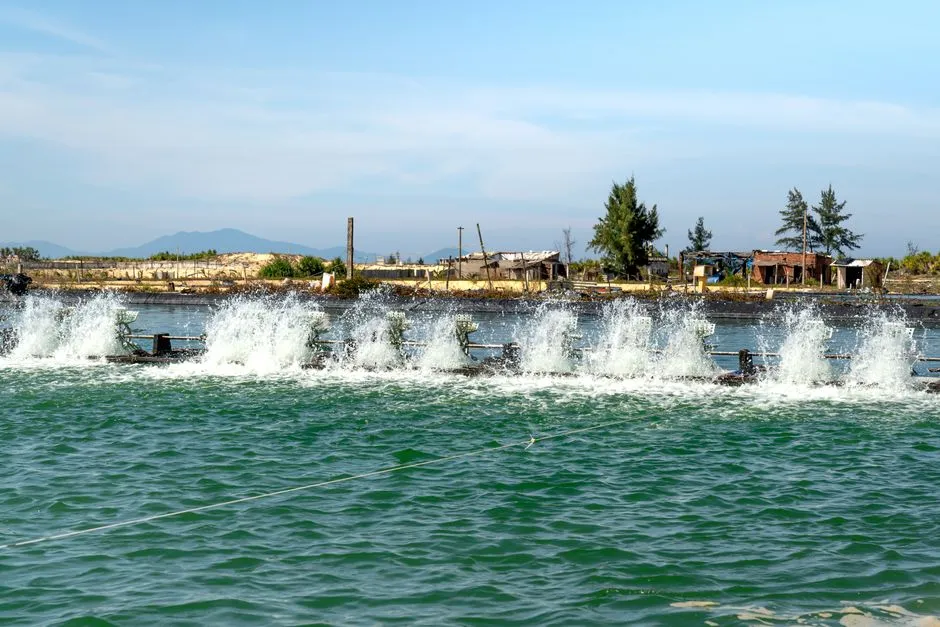
The WSZ series combines anoxic/aerobic biological contact oxidation, sedimentation and disinfection in one buried package, is fully automated, requires no operator and covers 1–80 m³/h, according to the Product Catalogue. The HydropureWater MBR system combines activated sludge with submerged PVDF membrane filtration, provides less than 1 μm filtration, is specified at 10–2,000 m³/day and is stated to have a 60% smaller footprint than conventional systems, also according to the Product Catalogue.
These are different technology emphases. The A/O package concentrates on integrated treatment, installation flexibility and automatic operation. The MBR concentrates on membrane solids separation and effluent suitable for more demanding reuse applications. The comparison below organizes the decision without treating the two systems as interchangeable.
| Selection factor | Underground A/O package plant | MBR membrane bioreactor |
|---|---|---|
| Treatment approach | Anoxic/aerobic biological contact oxidation with sedimentation and disinfection in one buried package | Activated sludge combined with submerged PVDF membrane filtration |
| Published capacity scope | 1–80 m³/h, Product Catalogue | 10–2,000 m³/day, Product Catalogue |
| Automation and operation | Fully automated; stated not to require an operator | Bidder must define controls, membrane maintenance and operating attendance |
| Solids separation | Settling within the integrated package | Less than 1 μm filtration, Product Catalogue |
| Site emphasis | Buried installation and compact underground deployment | Stated to have a 60% smaller footprint than conventional systems, Product Catalogue |
| Reuse decision | Evaluate against the confirmed end-use requirement | Evaluate where finer solids separation is needed |
Do not compare 1–80 m³/h with 10–2,000 m³/day as equivalent capacity figures. Require each bidder to state design flow in one consistent unit and identify whether the stated capacity is average, peak or another operating basis. The normalization must also be aligned with the verified property flow and the proposed equalization arrangement.
For a hotel with limited land and straightforward decentralized treatment objectives, the A/O package is normally the shorter path to evaluate. For a resort with a defined high-value reuse stream or a stringent solids-separation requirement, MBR deserves a process comparison. Neither conclusion should be locked before the bidder documents the same design flow, test conditions and effluent duties.
Apply site and compliance checks before ordering
A public sewer connection changes the procurement decision because it provides an alternative to private treatment. Compare sewer availability with decentralized treatment on capital cost, operating control, reuse and site constraints, but do not populate the comparison with unverified Bekasi tariffs or sewer-capacity assumptions. The supplied sources provide neither a connection tariff nor confirmation that a public sewer has spare capacity at the property.
Require the supplier to verify the site before fixing the installation method. The available evidence does not establish groundwater level, soil bearing conditions, excavation access, flood exposure or the usable plant footprint. Each condition can affect tank design, buoyancy control, access, construction sequence, odor management and long-term maintenance. These are inputs the buyer must obtain, not assumptions to be filled from another hotel project.
Ask the bid to identify the proposed discharge route and current environmental requirements. The 20 m³/day Cikarang precedent does not define the legal compliance path for another Bekasi property. The responsible party should confirm the applicable requirements and receiving route before final performance guarantees are inserted into the contract.
Also check power availability, standby arrangements, odor control, noise, sludge handling and maintenance access. A buried package may reduce visible equipment but still requires reliable controls, safe access and a defined solids-removal route. The public sewer versus package plant assessment provides a useful structure for that comparison, but Bekasi-specific facts must come from the project team and relevant authorities.
For wastewater treatment procurement, the bid should state which items remain unresolved and who will close them. An acceptable supplier will distinguish design assumptions from confirmed site information and will not use a remote precedent to bypass verification.
Build a procurement-ready selection and acceptance sheet
A procurement-ready sheet must put the property’s verified requirements before the proposed equipment. Ask each bidder to complete the same design basis, including average flow, peak demand, occupancy, land limits, discharge point, reuse target and required treatment process. Capacity should appear in one consistent unit so that the bids can be compared directly.
Require disclosure of the process flow, materials, controls, testing, commissioning, O&M scope and spare-parts support. Request evidence for the proposed treatment train and state how the supplier will demonstrate guaranteed effluent performance at agreed test conditions. Do not accept a performance promise based only on “high-quality effluent” or a description of filtration.
| Fillable bid item | Supplier response required |
|---|---|
| Verified average and peak flow | Enter source data; state design flow and operating basis |
| Occupancy and wastewater sources | List guest, food-service, laundry, spa, pool and staff contributions |
| Land and installation constraints | Confirm dimensions, access, soil, groundwater, flood and power assumptions |
| Discharge and reuse target | Identify route, intended use and applicable requirement source |
| Treatment train | Submit process flow, unit capacities and solids-handling route |
| Controls and maintenance | Describe automation, alarms, operator attendance, access and spares |
| Performance evidence | Define guaranteed parameters, test methods and test conditions |
| Commissioning and O&M | State deliverables, duration, responsibilities and support arrangement |
| Final acceptance criteria | Leave blank until the responsible engineer and receiving authority confirm applicable requirements |
| Guarantee documents | List proposed guarantees, exclusions, validity and remedy |
The final acceptance criteria should remain open until those requirements are confirmed. Do not convert the non-potable reuse description attached to the Cikarang precedent into a project-wide guarantee for irrigation, fountains or another destination.
Frequently Asked Questions
How should a hotel or resort in Bekasi size its wastewater treatment system?
Size it from verified property wastewater flow, peak conditions and reuse requirements, not from the documented 20 m³/day hotel precedent alone. Require bidders to state whether capacity is average or peak and use the same time basis for every proposal.
How should the A/O package plant and MBR be compared during supplier selection?
Ask each bidder to submit the design basis, normalized capacity, process flow, controls, commissioning evidence, performance test method and O&M support. Compare solids separation and reuse performance against the confirmed end-use requirement, not brochure language alone.
What should the project budget include?
Request a complete budget covering the treatment train, installation, utilities, controls, sludge handling, commissioning and maintenance. The research contains no project quotation, so require a site-specific priced scope rather than comparing equipment prices or inventing a benchmark cost.
Can the project assume discharge compliance from the Cikarang hotel installation?
No. Confirm the Bekasi receiving route and current applicable environmental requirements before finalizing acceptance criteria and guarantees. The documented 20 m³/day installation is a local precedent, not proof of legal compliance for a different discharge or reuse destination.