A package plant vs conventional decision for industrial wastewater rests on flow rate, available land, CAPEX timing, and the effluent limit you must meet. Prefabricated package units typically serve about 1–1,000 m³/day (US ~260–264,000 gpd) with install in weeks to a few months. Site-built conventional plants handle larger or highly variable loads, with higher civil cost and longer construction.
Which System Fits Industrial Wastewater Better?
Neither package nor conventional plants is universally better for industrial wastewater. Package plants fit average flows near or below 1,000 m³/day, tight sites, and installs measured in weeks to a few months. Conventional plants fit larger flows or toxic, highly variable loads needing custom tertiary trains. Effluent quality tracks the process train, not the packaging format.
Plant engineers and procurement teams size systems against permit limits, peak-to-average ratios, and staffing reality. According to US EPA (2000), package plants more commonly treat 0.01–0.25 MGD (about 38–946 m³/day), though manufacturers quote designs from 0.002–0.5 MGD. The industrial band used below still places a practical package upper limit near 1,000 m³/day when factories standardize modules rather than pour every basin on site.
Regulators care about the discharge numbers on the permit, not the marketing label on the tank. That is why the rest of this page compares footprint, money, schedule, and operability with the same ranges used in industrial screening studies.
What is a Package Wastewater Treatment Plant?
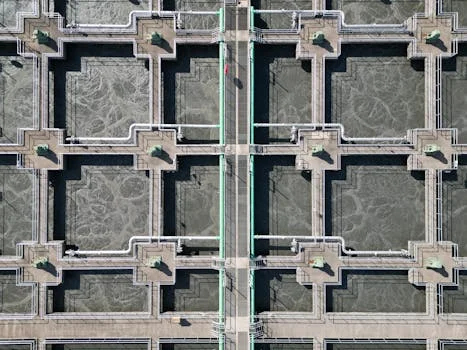
A package wastewater treatment plant is a compact, prefabricated, modular unit built off-site for on-site treatment. Most trains include screening or oil/grease removal, biological treatment such as A/O, MBR, or SBR, clarification or membrane separation, and disinfection in one tank or a short series of tanks.
Typical traits are a small footprint, factory assembly, deployment in weeks, and high automation. Most plants we size for factories, camps, and hotels run at the lower end of 1–1,000 m³/day. Discharge-ready packages often target BOD <10 mg/L and TSS <10 mg/L under stable domestic-strength or pretreated industrial feed. EPA extended-aeration performance data likewise show BOD and TSS often below 10 mg/L when the plant is seeded and loaded inside design F:M limits.
An Underground Package Sewage Treatment Plant (WSZ Series) layout is common when surface space or visual impact is constrained. Steel and FRP shells ship in one or two pieces for smaller duties; larger packages may arrive as skid modules that bolt to a prepared slab. Equalization is still worth adding when morning and evening peaks would otherwise wash out a small aeration basin.
What is a Conventional Wastewater Treatment Plant?
A conventional wastewater treatment plant is a custom-designed, site-built system engineered for a specific industrial load profile. Units are usually separate and larger: preliminary screening and grit, primary sedimentation or dissolved air flotation (see a DAF vs. sedimentation comparison), secondary biology such as activated sludge or trickling filters, tertiary filtration or advanced oxidation, disinfection, and dedicated sludge handling.
Conventional plants take a large footprint and long civil programs, often 6–24 months or more. They are sized for flows often exceeding 1,000 m³/day, including municipal-scale duties. Discharge targets such as BOD <20 mg/L and TSS <20 mg/L are routine; near-reuse quality needs extra tertiary stages. They suit large complexes and streams with wide swings in COD, toxicity, or pH.
Where industrial wastewater carries oils, fibers, or dense solids, the headworks and primary stage do more work than the biology brochure admits. That is why conventional layouts keep room for staged DAF, equalization, and chemical conditioning before the aeration basins see the load.
Operator coverage is another decision lever that buyers under-price. A package plant with remote alarming can run with part-time attendance on many industrial sites. A conventional multi-basin works usually still needs trained staff for sampling, sludge wasting, and permit reporting even when blowers and valves are automated. Price that labor into the five-year cash model before you call either option cheaper.
Package Plant vs Conventional: Engineering Comparison
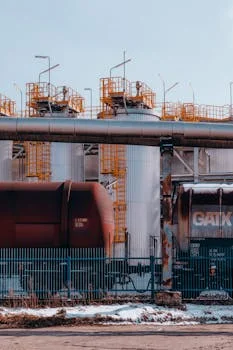
Selecting between formats needs hard metrics, not brochure language. Keep the ranges below as screening values, then replace them with vendor bids and a site-specific mass balance before you freeze CAPEX.
- Footprint: Package plants typically occupy 60–80% less land than conventional systems at similar capacity, which matters on urban industrial plots.
- Capital Expenditure (CAPEX): Package CAPEX is often 20–50% lower for capacities up to 1,000 m³/day because of standardized steel or FRP builds. Conventional custom civil and equipment packages can run 50–200% higher on large, complex sites.
- Operational Expenditure (OPEX): Automated packages cut routine labor. MBR packages can raise power for membrane scour and cleaning. Conventional works need more certified operators; energy and chemicals track the process train and scale.
- Installation and commissioning: Package install usually finishes in weeks to about 3 months. Conventional civil and integration often span 6 months to 2+ years.
- Effluent quality: Both formats can meet tight permits. MBR packages often reach BOD <5 mg/L, TSS <2 mg/L, and turbidity <1 NTU with an integrated MBR membrane bioreactor system. Conventional plants match reuse goals when tertiary filtration and disinfection are added, as covered in an industrial wastewater disinfection comparison.
- Scalability: Packages grow by adding modules; process chemistry changes are harder. Conventional designs accept deep process revisions and phased expansions.
- Automation and skill: Modern packages lean on remote monitoring and need less continuous attendance. Large conventional plants still need skilled shift coverage, even as new builds add more PLC control.
- Durability: Package service life is typically 15–25 years by material and maintenance. Conventional civil structures often exceed 25–30 years with staged equipment renewals.
| Feature | Package Wastewater Treatment Plant | Conventional Wastewater Treatment Plant |
|---|---|---|
| Footprint (Space Requirement) | Compact, 60-80% smaller for similar capacity (e.g., 20-100 m² for 100 m³/day) | Large, extensive civil works required (e.g., 100-500 m² for 100 m³/day) |
| Capital Expenditure (CAPEX) | Lower initial investment (e.g., 20-50% less for capacities up to 1,000 m³/day) | Higher initial investment (e.g., 50-200% more for large-scale custom builds) |
| Operational Expenditure (OPEX) | Lower labor costs due to automation; variable energy/chemical for advanced processes | Higher labor costs for skilled operators; variable energy/chemical based on scale/process |
| Installation & Commissioning | Rapid deployment (weeks to 3 months) due to pre-fabrication | Longer timelines (6 months to 2+ years) due to on-site construction |
| Effluent Quality & Compliance | High quality, often suitable for reuse (e.g., BOD <5 mg/L, TSS <2 mg/L with MBR) | Highly customizable for specific discharge limits; can achieve reuse quality with tertiary |
| Scalability & Flexibility | Modular – add units for capacity increase; limited process flexibility | Highly flexible for process changes; scalable with design modifications |
| Automation & Operator Skill | High automation, remote monitoring; lower operator skill required | Lower automation (historically), requires more skilled operators; increasing automation in new builds |
| Durability & Lifespan | 15-25 years with proper maintenance (material dependent) | 25-30+ years with robust civil structures and maintenance |
Read the table as a screening tool. A 200 m³/day food plant with steady shifts and a reuse goal will not land on the same answer as a 5,000 m³/day chemical complex with toxic spikes. Replace every percentage with quoted civil, mechanical, and power numbers before board approval.
Cost drivers that move bids the most are civil volume, installed blower power, membrane or clarifier selection, sludge dewatering method, and the staffing model assumed in the OPEX sheet. A package quote that omits equalization, odor control, or sludge haul will look cheap until the first peak week. A conventional estimate that ignores temporary treatment during construction will miss schedule risk the same way.
Sludge handling closes the comparison. Package plants often store aerated sludge for periodic haul-off; conventional plants more often include thickeners and dewatering when daily solids mass justifies the equipment.
Advanced Technologies in Package Plants: MBR vs. SBR
Membrane bioreactor and sequencing batch reactor packages are the two designs buyers ask about most when discharge or reuse limits tighten. Both fit inside prefabricated envelopes; they differ in solids separation and how they absorb load swings.
MBR couples activated sludge with ultrafiltration or microfiltration and drops the secondary clarifier. Higher MLSS shrinks reactor volume. Typical MBR effluent is BOD <5 mg/L, TSS <1 mg/L, and turbidity <1 NTU under stable operation, which suits reuse and sensitive receivers. CAPEX and aeration energy run higher than clarifier-based biology; long-term ROI still hinges on reuse value and footprint savings, detailed in an MBR effluent quality and cost analysis.
SBR runs fill, react, settle, and decant in one tank on a timed cycle. That batch logic handles swinging hydraulic and organic loads well, which is common on food and chemical sites. Typical SBR effluent is about BOD <10 mg/L and TSS <10 mg/L; reuse usually needs polishing. CAPEX and energy are usually lower than MBR when discharge—not reuse—is the goal. EPA package-plant guidance likewise lists SBR among the common prefabricated aerobic options for small flows with variable loading.
Which MBR membrane is better at high MLSS?
Flat-sheet membranes are usually preferred when MLSS stays high and cleaning access matters; hollow-fibre bundles pack more area per tank volume but foul faster if fibres rope or sludge is sticky. At the MLSS levels MBR packages actually run, choose the module your vendor has proven on similar COD and temperature, then verify air-scour power and chemical clean intervals on the design datasheet.
Inside package envelopes, pick MBR when reuse or very low TSS is mandatory. Pick SBR when loads swing hard and discharge limits sit near BOD/TSS 10 mg/L without a reuse driver. If nutrient limits apply, confirm anoxic or anaerobic cycle time is written into the control narrative, not left as a field improvisation.
Choosing the Right System: A Decision Framework
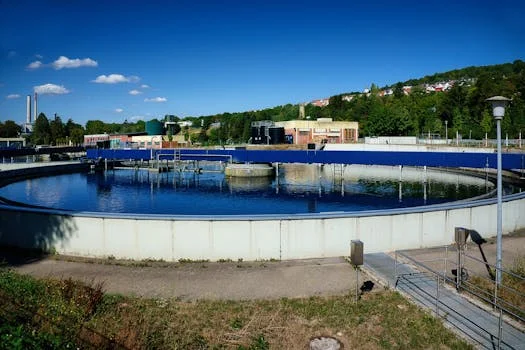
Use the checklist below before freezing CAPEX. Most plants we size for mid-scale industry start here, then stress-test peak week data against the average day used for brochure sizing.
- Flow and load variability: Stable flows below about 1,000 m³/day favor packages. Flows above 1,000 m³/day or strong shock loads usually need conventional customization.
- Land: Limited yards point to compact or underground packages. Open sites can accept multi-tank conventional layouts.
- Budget: Tight upfront budgets favor packages. Very large plants can still show better long-run unit OPEX after economies of scale—model total cost of ownership, not CAPEX alone.
- Effluent target: Reuse or sensitive discharge often lands on MBR packages. Complex pollutant suites may need conventional multi-stage pretreatment and tertiary design.
- Schedule: Weeks-level urgency favors packages. Multi-year capital programs can absorb conventional civil durations.
- Wastewater character: Moderate, pretreated streams fit packages. Toxic, metal-laden, or extreme-pH streams usually need conventional specialty stages.
- Expansion: Add package modules for stepwise growth; reserve conventional hydraulic structures when a master plan already shows major future trains.
Is aerobic or anaerobic better for small domestic flows?
Aerobic package processes are better when the effluent must meet secondary discharge limits from a small plant or septic replacement; anaerobic septic tanks alone rarely meet those limits without a drainfield or further treatment. Anaerobic stages still help as pretreatment for high-COD industrial pockets, but the packaged discharge unit for domestic-strength flow is typically extended aeration, SBR, or MBR under aerobic control.
| Industrial Requirement | Recommended System | Key Considerations |
|---|---|---|
| Flow Rate & Load Variability | Package: <1,000 m³/day, stable load Conventional: >1,000 m³/day, high variability |
Package plants ideal for consistent, smaller volumes. Conventional for large, fluctuating, or shock loads. |
| Land Availability | Package: Limited space, urban sites Conventional: Ample land available |
Package plants minimize footprint; conventional requires significant dedicated area. |
| Budget & Financial Strategy | Package: Lower CAPEX, rapid ROI Conventional: Higher CAPEX, long-term TCO focus |
Evaluate initial investment vs. long-term operational costs and maintenance. |
| Effluent Quality Requirements | Package (MBR): Water reuse, stringent discharge Conventional: Broad range, highly customizable for specific pollutants |
MBR package plants excel in high-quality output; conventional for complex, tailored solutions. |
| Installation Timeline & Urgency | Package: Rapid deployment (weeks) Conventional: Longer project timelines (months to years) |
Choose package for immediate needs; conventional for planned, long-term infrastructure. |
| Wastewater Characteristics | Package: Moderate complexity, pre-treated Conventional: Highly complex, toxic, variable composition |
Conventional plants offer robust customization for challenging industrial wastewaters. |
| Future Expansion & Scalability | Package: Modular additions Conventional: Designed with expansion capacity |
Consider ease and cost of increasing capacity as industrial operations grow. |
If two rows conflict—for example tight land plus highly toxic wastewater—treat wastewater character as the hard constraint and solve footprint with stacked or covered conventional units, not by forcing an undersized package past its process limits.
Who This Is For / Next Step
This comparison is for plant engineers, EPC leads, and procurement managers choosing between modular and site-built treatment on industrial sites. Look elsewhere if you only need a household septic upgrade or a municipal plant above several thousand m³/day with a full civil design already underway.
Bring average and peak flow, COD/BOD, oil and grease, nitrogen targets, and the discharge or reuse permit text. If those data are ready, request a package-versus-conventional sizing review so CAPEX, footprint, and power can be compared on your actual load sheet instead of generic brochure curves.
Frequently Asked Questions
What are the disadvantages of an STP?
Sewage treatment plants consume power, produce sludge that must be thickened and hauled, and need trained operators. Package STPs add volume ceilings and less room to redesign the process if influent chemistry changes sharply. Conventional STPs add higher CAPEX, longer construction, and a larger land take, which hurts constrained industrial yards.
What is a package treatment plant?
A package treatment plant is a prefabricated, modular wastewater unit built in a factory, shipped in one or more tanks, and set on a prepared pad or in a basin. It usually includes pretreatment, biology, solids separation, and disinfection in a compact envelope for small to medium flows, with install measured in weeks rather than multi-year civil programs.
Which is better, SBR or MBBR, in a package plant?
Neither SBR nor MBBR is universally better inside a package plant. SBR wins when hydraulic and organic loads swing widely and you want cycle-based control in one tank. MBBR wins when you need compact biofilm inventory and shock resilience with continuous flow; extreme load swings may still favor SBR tuning over carrier-only designs.
How long do package wastewater treatment plants last?
Industrial package plants typically last 15–25 years when steel, FRP, or concrete shells and internals are specified for the chemistry and maintained on schedule. Lifespan shortens with aggressive industrial corrosives, skipped membrane or diffuser service, and outdoor installs without corrosion protection or winterization.
Are package plants suitable for all industrial wastewaters?
No. Package plants fit moderate flows, pretreated or domestic-strength industrial streams, and sites that need fast install. Highly toxic, metal-rich, extreme-pH, or violently variable wastes usually need conventional custom pretreatment and multi-stage design before any packaged biology is even considered.