Confirm the Frankfurt route before selecting equipment
Frankfurt am Main wastewater treatment is organised around the Niederrad and Sindlingen plants, which together receive sewage from approximately 1,200,000 people (S3, Long-term monitoring of SARS-CoV-2 RNA in wastewater of the Frankfurt metropolitan area, 2021). For a property near Frankfurt, the first decision is not whether to buy a package plant: it is whether a compliant public-sewer connection is technically and legally available. If it is unavailable or unacceptable, the project moves to a decentralized treatment comparison between an A/O biological contact oxidation package and an MBR membrane bioreactor. The supplied research contains no Frankfurt connection charge, permit timeline or property-level discharge limit, so those items must be confirmed before procurement.
Service boundaries can extend beyond the municipal core. The research states that the Griesheim sewer enters the Niederrad influent through a separate channel before merging with the main flow (S3, Frankfurt metropolitan wastewater monitoring study, 2021). That is not evidence that every nearby property has a sewer connection, but it does show why the responsible asset owner or authority should confirm the exact drainage route rather than assuming one from the postal address.
Ask the authority or network operator to establish, in writing:
- whether a public sewer is physically available at the property;
- who owns the connecting infrastructure and who remains responsible for operation and maintenance;
- which pretreatment, sampling or discharge obligations apply at the point of connection;
- how the project must be coordinated with any future public-sewer extension; and
- which connection, design or approval costs apply to this site.
That information establishes the baseline against which the public sewer versus package plant decision can be made. It also prevents a decentralized system from being priced before the site has been shown to require one.
Collect the inputs that change the treatment choice
The treatment decision should be based on a measured project brief, not a catalogue flow rate. The supplied research gives no Frankfurt design-flow range, property effluent specification or reuse requirement. The buyer must therefore obtain a daily average flow, a peak-flow basis, wastewater characteristics, the proposed discharge route and the intended reuse or irrigation demand from the project brief before comparing quotations.
Site constraints determine whether an integrated treatment system is practical. Record the available footprint, required burial depth, access for maintenance, electrical supply, power-quality requirements and the operator’s routine maintenance capability. Where reuse is proposed, identify whether the water will be discharged, used for irrigation, used for another specified application, or subject to a future quality requirement. The output specification then becomes a procurement criterion rather than an optional technical feature.
| Project input | Evidence or document required | Decision affected |
|---|---|---|
| Hydraulic load | Daily average and peak domestic sewage flow, with the basis stated | Route and equipment capacity |
| Wastewater quality | Project-specific characteristics and any sampling evidence | Process selection and pretreatment |
| Effluent and reuse | Discharge route plus project-defined effluent and reuse criteria | Public sewer, A/O package or MBR |
| Site and installation | Footprint, burial depth, access, power and construction constraints | Physical arrangement and installation method |
| Operations | Owner, maintenance interval, residual handling and monitoring capability | Whole-life suitability |
| Local approval | Written authority and sewer-operator requirements | Permitting and compliance risk |
Natural-system feasibility studies provide data for specific site conditions. The pilot reported by Water used a septic tank, compost beds, and denitrification, phosphorus and active-carbon beds. Its active treatment area was 3 m² per person, and the pilot treated domestic sewage from a building with three permanent residents and up to five employees (S2, Water, 2021). That is research evidence for that pilot, not a Frankfurt design standard, and it does not establish the footprint required for an A/O package or MBR route.
Use the collected inputs in the A/O package plant versus MBR comparison only after confirming the required flow, output and maintenance model.
Compare public sewer, A/O package plant and MBR
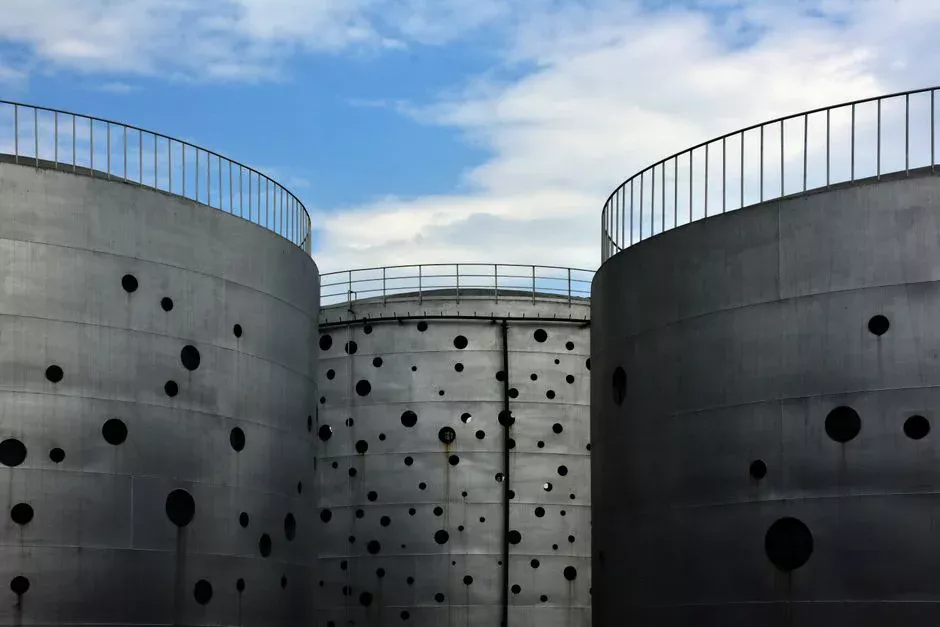
Public sewer is the conventional route when a connection is technically available and the project can meet the authority’s access, ownership and pretreatment requirements. The supplied research identifies Frankfurt’s two major wastewater treatment plants, but it provides no property-level connection criteria. A/O package and MBR systems should therefore be treated as alternatives to be justified, not as default replacements for an available sewer.
The WSZ is an underground package sewage treatment plant combining anoxic/aerobic A/O biological contact oxidation, sedimentation and disinfection in one buried unit. The verified product catalogue states a capacity of 1–80 m³/h, fully automatic operation without an operator, below-grade installation with landscaping above, or trailer mounting for mobile deployment (HydropureWater verified product catalog, 2026). The underground A/O package sewage treatment plant is therefore most relevant where the verified flow range fits, a compact below-grade arrangement is valuable and the specified output can be met by the integrated process.
The MBR wastewater treatment system combines activated sludge with submerged PVDF membrane filtration. Its catalogue range is 10–2,000 m³/day, and the catalogue states a 60% smaller footprint than conventional systems (HydropureWater verified product catalog, 2026). MBR is the stronger candidate when the project-defined effluent or reuse specification justifies membrane treatment and the owner can support the associated operation and maintenance requirements.
| Decision criterion | Public sewer | A/O package plant | MBR |
|---|---|---|---|
| Primary condition | Connection is technically and legally available | Verified project flow is within 1–80 m³/h and the integrated process meets the output specification | Verified project flow is within 10–2,000 m³/day and membrane treatment is justified |
| Process basis | Off-site municipal treatment | A/O biological contact oxidation, sedimentation and disinfection in one buried package | Activated sludge with submerged PVDF membrane filtration |
| Site arrangement | Connection infrastructure remains subject to authority confirmation | Below-grade package or trailer-mounted configuration | Compact installation; catalogue states 60% smaller footprint than conventional systems |
| Main procurement question | Is connection feasible, and what obligations attach to it? | Can the stated process guarantee the project effluent and reuse criteria? | Do the specified effluent and reuse criteria justify membrane operation and maintenance? |
| Critical information not supplied | Frankfurt property connection criteria, charge and permit timeline | Project-specific performance guarantee and site-specific installation data | Project-specific performance guarantee, residual handling and site-specific installation data |
Select public sewer if the connection is confirmed and compliant; select A/O if the flow matches the verified range and compact, integrated, below-grade treatment is the priority; select MBR if the specified output and reuse objectives require the additional membrane-stage basis. Where evidence is missing, keep the route open until the supplier and authority provide the missing information.
Build the supplier request and acceptance criteria
Comparable quotations require the same engineering basis. Require each supplier to state the design flow, treatment process, individual process stages, duty and standby arrangements, footprint, installation method and utility demand. A catalogue flow range can support initial screening, but it does not establish that a proposed unit will meet the project’s actual hydraulic load or effluent requirement.
Request a performance guarantee tied to the project-defined effluent and reuse criteria. Specify sampling points, analytical parameters, operating conditions and acceptance procedures where these have been agreed with the relevant authority. Do not substitute a generic catalogue statement for guaranteed output.
Define the delivery boundary in writing. Ask which party supplies civil works, electrical connections, controls, commissioning, operator training, planned maintenance, spare parts and sludge or residual handling. Unclear boundaries can leave the buyer responsible for civil interfaces, utilities, operator competence and disposal routes that were never included in the equipment price.
Screening protects downstream biological processes, and a rotary mechanical bar screen can be evaluated if the project brief requires preliminary solids removal. The supplied research establishes no Frankfurt-specific headworks screening requirement for domestic wastewater, so it should not be added to the base scope without a written project requirement.
The supplier response should close with an acceptance schedule: design assumptions, drawings, process calculations, performance tests, commissioning records, training, maintenance tasks, monitoring obligations and residual-handling responsibilities. If those items are not tied to the offer, the quotation is not yet a procurement basis.
Verify local requirements and residual risks

Compliance must be confirmed at the property level before final equipment selection. The applicable Frankfurt authority or sewer operator needs to identify the discharge route, governing treatment obligations, pretreatment requirements and any connection conditions. The supplied evidence does not state a Frankfurt-specific effluent limit, connection charge or permit timetable, so none should be assumed from metropolitan wastewater infrastructure.
Effluent quality standards, energy self-sufficiency, remote monitoring and emerging contaminants remain current wastewater-sector challenges (S5, Korean Society of Environmental Engineers journal review, 2025). The review of Frankfurt wastewater monitoring demonstrates metropolitan treatment activity and sampling infrastructure, but it is not a domestic-property discharge standard (S3, Frankfurt metropolitan wastewater monitoring study, 2021).
Before approval, ask the authority for the applicable legal and technical basis, required monitoring and any reuse conditions. Check whether the 2026 EU urban wastewater regulatory developments affect the responsible authority’s requirements. Do not infer a project permit, connection cost or lead time from that development; obtain written, site-specific confirmation.
Frequently Asked Questions
How do I match domestic sewage flow to a public sewer, A/O package or MBR?
Start with a measured daily average and peak-flow basis, then compare them with each route’s verified capacity. The WSZ catalogue range is 1–80 m³/h, while the MBR catalogue range is 10–2,000 m³/day (HydropureWater verified product catalog, 2026). Public-sewer suitability depends on connection feasibility rather than equipment capacity. Request a design-flow calculation from the supplier and confirm that the selected capacity matches the documented project basis.
How should I select a supplier for a decentralized sewage treatment system?
Select against written acceptance criteria, not the broadest process description. Require the design-flow basis, process stages, guaranteed project-specific output, footprint, utilities, installation scope, commissioning, training, maintenance and residual handling. Also check that the supplier has defined who owns operation and who holds the local approval responsibility. A catalogue range alone is not evidence that the proposed system will meet the site’s effluent or reuse criteria.
What should I ask for when comparing Frankfurt treatment costs?
Request a site-specific cost breakdown from each route. For the public sewer, ask the authority for connection and other applicable charges; the supplied research provides no Frankfurt connection price. For A/O and MBR systems, request equipment, civil works, electrical work, installation, commissioning, controls, training, maintenance, monitoring and residual-disposal costs as separate line items where possible. Do not compare quotations until the same scope, project flow and performance guarantee are used.
Can Frankfurt wastewater research be used as the project’s discharge standard?
No. The Frankfurt monitoring study describes influent sampling at Niederrad and Sindlingen and the separate Griesheim sewer channel (S3, Frankfurt metropolitan wastewater monitoring study, 2021). It is not a domestic-property effluent specification. Obtain the applicable Frankfurt discharge and reuse requirements from the responsible authority, and include those values in the supplier’s performance guarantee and acceptance schedule.