Confirm the discharge route before choosing equipment
An Izmir hotel or resort should establish whether municipal sewer discharge is legally and technically available before specifying an on-site treatment plant. A Turkish hotel example reports connection to a central treatment plant using biological and chemical purification, but the supplied research does not establish the same connection conditions for Izmir. The relevant authority or sewer operator must confirm eligibility, permitted flow, discharge parameters, sampling, fees and pretreatment or flow-restriction conditions in writing. The Side Star Beach Hotel statement supports the principle of central treatment, not an Izmir precedent.
Map each stream separately: guest-room sewage, restaurant and kitchen wastewater, laundry effluent, pool discharges, and backwash from any future on-site treatment system. Sewer approval for domestic sewage should not be assumed to cover grease-laden kitchen flow, pool water or process backwash. Use the hotel A/O package plant versus MBR comparison as a framework for the equipment decision, but complete this route check first.
| Discharge-route question | Evidence required from the Izmir authority or sewer operator | Decision consequence |
|---|---|---|
| Is sewer connection available? | Written confirmation of connection eligibility and the point of connection | Retain municipal discharge as a candidate or move to on-site treatment |
| What flow can be accepted? | Permitted average and peak flow, surcharge rules and any restrictions | Reject sewer discharge if the property’s verified peak exceeds the accepted basis |
| Which streams are covered? | Separate requirements for sewage, kitchen wastewater, laundry, pool water and backwash | Add pretreatment or establish a lawful route for excluded streams |
| What monitoring applies? | Permitted parameters, sampling points, frequency, reporting and fee schedule | Include compliance monitoring and administration in the project scope |
The accessible Palm Wings Ephesus Beach Resort page was blocked by a CAPTCHA, and the accessible holiday-resort paper on Academia.edu was also inaccessible. Neither provides verified Izmir permit limits, sewer conditions or resort flow statistics. Obtain current correspondence from the relevant authority and confirmation by a licensed Turkish consultant before ordering equipment.
Build a site wastewater profile for preliminary sizing
Hotel wastewater capacity must be derived from measured and design flows, occupancy patterns and wastewater quality rather than room count alone. Collect guest occupancy by season, restaurant and event covers, laundry loads, pool make-up and discharge, kitchen wastewater, irrigation demand and any reuse requirement. Request current meter data and, where available, a 12-month operating profile so that average wastewater flow can be separated from seasonal and event peaks.
The supplied WSZ domestic wastewater package plant covers 1–80 m³/h, while the MBR catalog covers 10–2,000 m³/day. These figures are screening bounds, not final design capacities: hydraulic loading, organic loading, peak conditions and the selected treatment train still require verification. The source material does not supply occupancy-driven flow coefficients or peak factors for an Izmir resort, so those values must come from the property’s records and an engineered design basis.
| Site input | Minimum record or test required | Use in preliminary sizing |
|---|---|---|
| Occupancy and demand | Monthly occupancy, restaurant and event covers, laundry loads, pool discharges and irrigation demand | Establish average flow, seasonal peaks and reuse demand |
| Measured flow | Current meter readings and a 12-month operating profile where available | Reconcile actual discharge with operational estimates |
| Wastewater quality | Samples covering pH, COD, BOD, suspended solids and oil and grease, plus locally required discharge parameters | Check process suitability and pretreatment needs |
| Residuals | Expected screening, grease and sludge quantities, storage area, dewatering route and removal arrangement | Include residual handling in footprint and operating scope |
Do not combine hotel sewage with kitchen grease, laundry effluent or pool discharges without characterization. Where preliminary screening is needed, equipment such as a mechanical bar screen may be relevant to upstream flow management, but the screen is not a substitute for biological treatment. Record where sludge, screenings and grease will be stored, dewatered and transported. A treatment vessel without a defined residual-handling route is an incomplete design.
Compare A/O package treatment with MBR
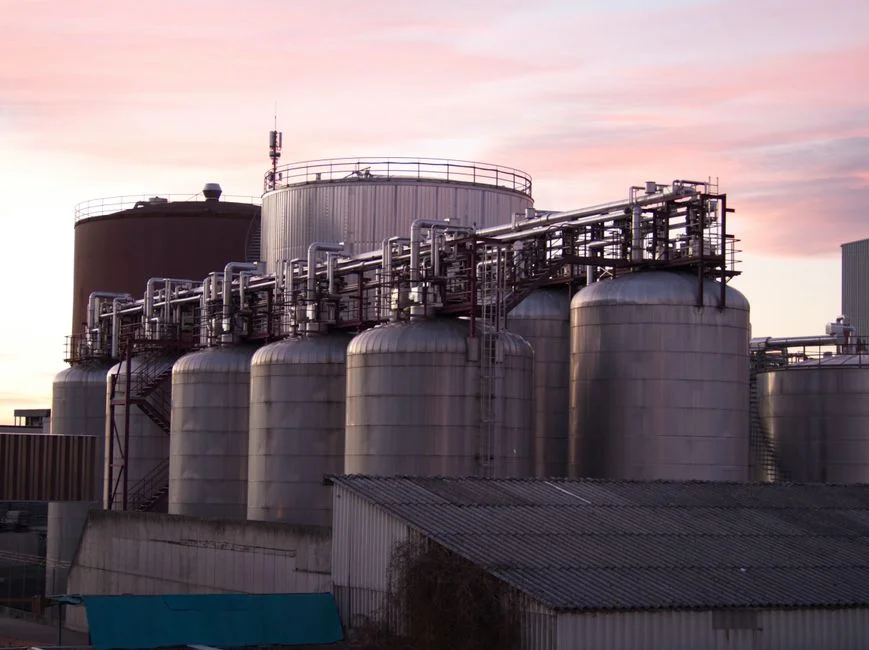
A/O package treatment and MBR are not interchangeable equipment choices: they combine different solids-separation methods, footprints and maintenance obligations. The WSZ package plant combines anoxic/aerobic biological contact oxidation, sedimentation and disinfection in one buried unit; it may be installed below grade with landscaping above or mounted on a trailer. According to the supplied product research, the WSZ system is fully automated and handles 1–80 m³/h for applications that include hotels and hospitals.
The supplied MBR information describes activated-sludge treatment combined with submerged PVDF membrane filtration. It specifies filtration below 1 μm and a footprint 60% smaller than conventional systems. Its catalog range is 10–2,000 m³/day, making membrane separation relevant where compact treatment or higher-quality reuse is required. These are product-supplied specifications, not comparative operating data for Izmir.
| Selection factor | A/O package plant | MBR |
|---|---|---|
| Treatment arrangement | Anoxic/aerobic contact oxidation, sedimentation and disinfection in one unit | Activated sludge with submerged PVDF membrane filtration |
| Catalog screening range | 1–80 m³/h | 10–2,000 m³/day |
| Reported filtration characteristic | Sedimentation is the solids-separation stage | Filtration below 1 μm |
| Site arrangement | Buried installation with landscaping above or trailer-mounted configuration | Compact installation; specified 60% smaller footprint than conventional systems |
| Operational emphasis | Fully automated | Requires membrane operation, maintenance and replacement planning |
| Best fit for further validation | Predominantly domestic sewage, acceptable buried footprint and straightforward on-site treatment | Verified reuse or discharge requirements where finer solids separation is valuable |
A separate DF flat-sheet MBR module in the supplied research has a 0.1 μm pore size and configurations from 80–225 m². That is a modular integration option, not proof that either capacity range will fit this property. Apply one design basis to both alternatives: peak hydraulic load, organic load, required effluent quality, available footprint, reuse targets, operator capability, energy use, maintenance and sludge handling. Compare the A/O package sewage treatment plant with the integrated MBR wastewater treatment system only after their treatment trains and commercial scopes are equivalent.
Decide using a weighted selection matrix
Municipal discharge, A/O package treatment and MBR should be scored against the same property requirements only after mandatory constraints have been checked. Use sewer certainty, peak-load coverage, footprint, reuse capability, permitting confidence, operating complexity and lifecycle cost as weighted criteria. If sewer permission is unavailable, peak capacity is inadequate or a discharge requirement cannot be met, the candidate fails regardless of its weighted score.
| Criterion | Municipal discharge | A/O package plant | MBR |
|---|---|---|---|
| Sewer certainty | Pass only after written connection and discharge confirmation | Pass if on-site treatment is lawful and the outlet is approved | Pass if on-site treatment and reuse arrangements are lawful |
| Peak-load coverage | Must remain within the accepted permitted flow | Must cover the verified design peak | Must cover the verified design peak |
| Footprint | Connection works and pumping requirements | Buried or trailer arrangement within available land | Compact arrangement subject to verified module configuration |
| Reuse capability | Only if the receiving route supports the intended use | Subject to validated effluent quality | Priority where verified reuse requires finer solids separation |
| Operating complexity | Network connection and any customer-side obligations | Automated package operation with residual handling | Additional membrane maintenance and replacement planning |
| Lifecycle cost | Compare the same scope with on-site alternatives | Include civil works, utilities, media, chemicals and residuals | Include civil works, utilities, membranes, chemicals and residuals |
Request comparable installed and lifecycle-cost scopes covering civil works, utilities, controls, membranes or media, chemicals, sludge removal, operator time and backup arrangements. The supplied research contains no Izmir quotation, so the buyer cannot assign a price from the article evidence. Instead, request a written offer for each shortlisted route and verify that exclusions are identical.
Select an A/O package plant when verified wastewater is predominantly domestic sewage, a buried footprint is acceptable and the objective is an automated on-site treatment route. Select MBR when verified reuse or discharge requirements make finer solids separation important and the site can sustain membrane operation, maintenance and replacement planning. The package sewage plant versus MBR selection method provides a comparison structure, but the local discharge route remains the controlling input.
Prepare a supplier-ready technical brief
A supplier cannot produce a defensible offer from room count alone. Include occupancy, seasonal and event flows, wastewater sample results, the proposed discharge point, sewer correspondence, available footprint, power availability, reuse demand and the sludge-handling route. Identify which inputs are measured, which are historical, and which remain to be validated by a licensed Turkish consultant.
| Brief section | Required content for quotation and technical review |
|---|---|
| Design basis | Average and peak flow; seasonal occupancy; event conditions; wastewater quality; required effluent quality; reuse destination |
| Process scope | Screening, flow management, biological treatment, solids separation, disinfection, controls and sludge handling |
| Performance and delivery | Design capacity, treatment stages, effluent guarantees, utilities, installation boundary, commissioning tests, spare parts and O&M requirements |
| Compliance | Applicable local references identified for owner and licensed Turkish consultant confirmation |
| Commercial exclusions | Civil works, power, chemicals, residual removal, operator attendance, training, maintenance and membrane replacement clearly stated |
Require a complete treatment train rather than treating the biological unit as a standalone purchase. Screening, flow management, biological treatment, solids separation, disinfection, controls and residual handling must be defined. This prevents a quoted package from omitting the equipment needed to accept the hotel’s actual streams.
Use catalog ranges only for preliminary screening: WSZ at 1–80 m³/h and MBR at 10–2,000 m³/day. The supplied DAF range of 4–300 m³/h across 13 models is relevant only when a separate grease or solids pretreatment train is being evaluated; a dissolved air flotation machine should not be added automatically. The DAF reference is also useful through the broader hotel wastewater treatment selection guide, although its non-Izmir application does not establish local requirements. The owner and consultant must confirm Turkish wastewater compliance from current official requirements.
Frequently Asked Questions
How should an Izmir resort size its wastewater treatment system?
Size it from measured and design flows, seasonal occupancy, event conditions and wastewater quality, not room count alone. Request current meter data and a 12-month operating profile where available, then separate average flow from seasonal and event peaks. Catalog limits provide only screening bounds; hydraulic and organic loading must be verified before selecting equipment.
How much should a hotel wastewater treatment system cost?
No defensible Izmir price can be stated because the supplied research contains no quotation or comparative cost for an Izmir hotel. Ask each supplier for the same scope: treatment equipment, civil works, utilities, controls, chemicals, sludge removal, operator time, commissioning and backup arrangements. Compare those written offers and identify exclusions rather than comparing equipment prices alone.
When should a hotel select MBR instead of an A/O package plant?
Select MBR for further engineering review when verified reuse or discharge requirements make finer solids separation important and the property can support membrane maintenance and replacement. The supplied MBR information specifies filtration below 1 μm, while its separate DF module has a 0.1 μm pore size and configurations from 80–225 m². The final choice depends on the site-specific design basis.
What should a buyer check before choosing a wastewater supplier?
Check that the supplier can demonstrate a suitable design basis, local execution capability, commissioning evidence, O&