
Define the hotel's wastewater and reuse requirements
A hotel or resort in Peshawar should usually start with a decentralized wastewater treatment system, but the appropriate equipment depends on daily flow, land availability, reuse objectives and receiving-authority requirements. The buried WSZ package sewage treatment plant handles 1–80 m³/h through biological treatment, sedimentation and disinfection, while an MBR wastewater treatment system handles 10–2,000 m³/day with membrane filtration. These are supplier specifications, so final selection requires measured site flows, verified discharge conditions and a project-specific design.
Begin with current and planned occupancy, guest-night wastewater generation, peak-hour flow and every non-sanitary discharge. Room count alone does not establish hydraulic loading. Obtain meter records where possible and record kitchen wastewater, laundry effluent, cleaning-chemical discharges, pool discharge, cooling-water discharge and any separately collected greywater. Map each stream to its proposed collection point and treatment stage. Kitchen grease, fibrous material and high solids need removal before biological treatment; laundry and cleaning chemicals need consideration during process selection.
The local risk is documented, but not in a form that can be used as a Peshawar permit limit. ICSF reported that more than 200 hotels across named Khyber Pakhtunkhwa locations were directly linked to river pollution through wastewater and solid-waste disposal. That account establishes material environmental risk, not the current effluent standard applicable to a particular Peshawar property.
Decide the final water destination before selecting a process. Compliant discharge, irrigation, toilet flushing and cooling make-up require different treatment objectives. A supplier’s dissolved-air flotation equipment may form part of a broader pretreatment assessment where oil and floatable material are present, but it does not replace biological sewage treatment.
| Fillable input | Hotel or resort entry | Why it affects selection |
|---|---|---|
| Current occupancy and planned occupancy | Not yet supplied | Establishes the forecast wastewater duty |
| Average daily and peak-hour flow | Not yet supplied | Determines hydraulic capacity and equalisation needs |
| Kitchen and laundry discharge | Not yet supplied | Identifies grease, solids and chemical pretreatment requirements |
| Reuse or discharge objective | Not yet supplied | Sets the required treatment and effluent specification |
| Receiving point and authority requirements | Not yet supplied | Defines the approval and testing pathway |
Confirm the Peshawar discharge and permitting route
The receiving route must be selected before the plant, because the same wastewater can have different technical and administrative requirements when discharged to a municipal sewer, a water body, a lined soakaway, a reuse network or an approved land-application system.
Ask the relevant authority for current discharge standards, application requirements, effluent-testing frequency, connection conditions and any site-specific restrictions. The supplied research contains no verified Peshawar-specific numerical effluent limits, so the buyer should not adopt a remembered standard or a supplier’s general compliance statement as a local requirement.
The environmental basis for careful control is concrete. ICSF reported sewage from hundreds of hotels entering rivers in Khyber Pakhtunkhwa and described chemically contaminated hotel wastewater and solid waste being disposed of at multiple locations. Although that report does not establish a Peshawar site’s legal standard, it demonstrates the environmental consequence of uncontrolled discharge and makes verified treatment and discharge planning procurement requirements rather than optional extras.
Require each proposal to identify the design flow, treatment objectives, proposed receiving point, sampling locations, test parameters, testing frequency and permit-support documents. It must also separate supplier responsibilities from those remaining with the hotel. That prevents a quotation from treating assumed approval as secured approval. The project planning basis should be checked against the engineering approach used for hotel and resort wastewater treatment systems, while treating Germany-specific examples as references rather than Peshawar requirements.
Compare buried package sewage treatment with MBR
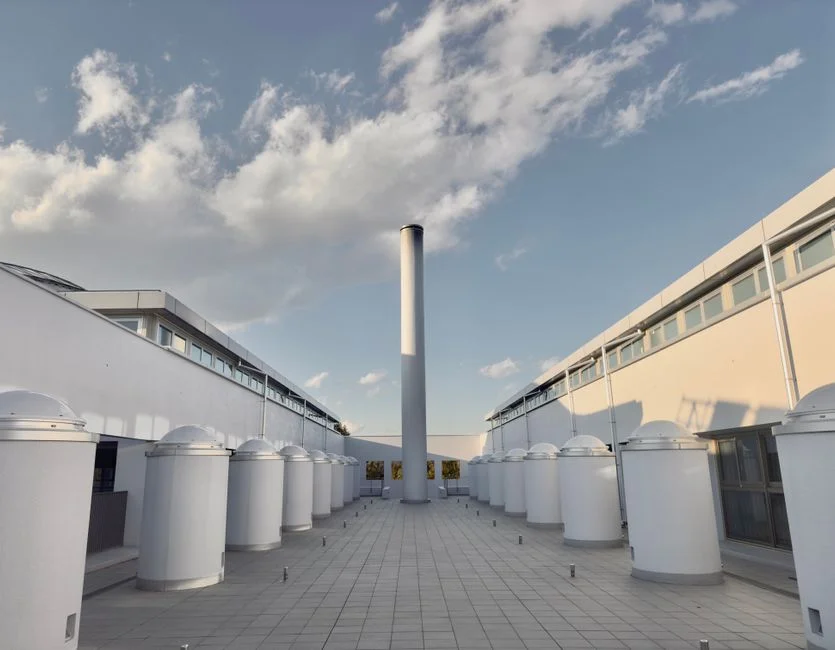
A buried WSZ package plant is a conventional-treatment option when the objective is a compact, automated installation for sanitary sewage, while MBR is the stronger candidate when membrane polishing or water-reuse quality justifies the additional process scope.
| Decision factor | Buried WSZ package | MBR system |
|---|---|---|
| Supplier-stated capacity | 1–80 m³/h | 10–2,000 m³/day |
| Treatment description | Anoxic/aerobic biological contact oxidation, sedimentation and disinfection | Activated sludge with submerged PVDF membranes and filtration below 1 μm |
| Installation and footprint | Below-grade package installation with a low visible footprint | Stated to be 60% smaller in footprint than conventional treatment |
| Best fit when | The priority is a low-operator package for conventional sanitary sewage | The reuse specification justifies membrane polishing or a compact high-quality biological process |
| Key verification | Excavation, groundwater, landscape, utilities and redundancy | Effluent specification, membrane maintenance and pretreatment |
The buried WSZ package sewage treatment plant combines below-grade installation, automatic operation and the stated biological, sedimentation and disinfection stages. It is suitable for preliminary consideration where visible plant footprint and routine operator attendance are important constraints. Its installation must still be checked against soil, groundwater, seasonal flows, excavation access and utility connections.
The MBR wastewater treatment system uses activated sludge with submerged PVDF membranes and is stated to filter below 1 μm. Its capacity range is 10–2,000 m³/day, and the supplier states a 60% smaller footprint than conventional treatment. These characteristics support selection where the required reuse quality cannot reasonably be established through the conventional process alone.
Do not treat the comparison as a completed Peshawar design. Capacity, footprint and effluent descriptions are supplier specifications. A project must also establish hydraulic variation, redundancy, receiving-water conditions, soil and groundwater constraints and the consequences of power interruption. If reuse is the objective, obtain the required water quality before choosing the process; “below 1 μm filtration” alone is not a complete reuse specification.
Size the system and add essential treatment stages
Equipment should be sized from documented flow and load data, then checked against the selected supplier’s stated capacity range—not selected from room count alone.
- Prepare average daily flow, peak-hour flow and flow-duration data from operating records.
- Develop current and planned occupancy forecasts.
- Check the resulting daily load against the 1–80 m³/h WSZ range or the 10–2,000 m³/day MBR range stated in the supplier catalogue.
- Check peak conditions and equalisation against the proposed biological process.
- Define the receiving route and applicable effluent objectives before final equipment selection.
| Design or acceptance item | Minimum information to obtain |
|---|---|
| Hydraulic basis | Average daily flow, peak-hour flow, flow-duration data and occupancy forecast |
| Incoming protection | Solids, grease, fibrous material and expected kitchen or laundry loads |
| Disinfection | Confirmed treatment stage, performance claim and proposed monitoring |
| Residuals | Sludge removal, storage, dewatering and disposal route |
| Site operations | Maintenance access, standby power, controls and remote support |
Incoming solids, grease and fibrous material should be removed before biological treatment. Where continuous fine screening and protection of downstream pumps and biological processes are required, specify a rotary mechanical bar screen as a candidate pretreatment item. Kitchen grease requires a separate evaluation; screening alone is not a grease-removal guarantee.
Final disinfection must appear as an explicit treatment objective. The WSZ description includes integrated disinfection, while the supplied MBR description emphasises biological treatment and membrane filtration. The MBR quotation should therefore state whether final disinfection is included, where it occurs and how it will be verified.
Plan residual sludge handling before comparing prices. A plate-and-frame filter press can be evaluated for dewatering where the hotel has the operating space, labour and cake-disposal route for it. Also price maintenance access, standby power, sampling, operator training and monitoring. These items can change both installation requirements and whole-life operating cost.
Issue a supplier-ready specification and acceptance checklist
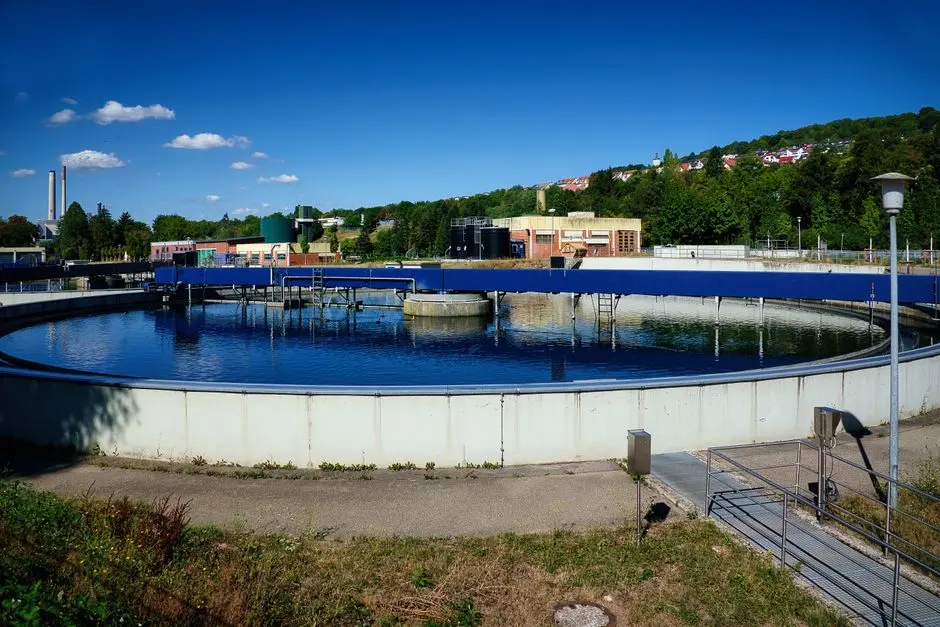
Comparable quotations require the same site, duty, treatment objective, delivery boundary and acceptance evidence. These details ensure that all bidders are pricing the same project scope.
Ask each supplier to state the design flow, peak-flow provision, treatment process, performance guarantees, pretreatment requirements, disinfection method, sludge handling, controls, utilities, installation boundary, commissioning tests and O&M support. The bid should also identify assumptions and exclusions, particularly collection piping, site works, power, effluent testing, operator training, sludge disposal and permit-support documents.
| Bid section | Supplier response required |
|---|---|
| Design basis | Flow, load, occupancy scenario, treatment objective and receiving point |
| Process scope | Pretreatment, biological stage, clarification or membranes, disinfection and sludge route |
| Site constraints | Footprint, soil, groundwater, flood exposure, access, lifting route, power and construction method |
| Quality evidence | Performance criteria, FAT/SAT plan and warranty or guarantee terms |
| Operations | Maintenance schedule, spare parts, troubleshooting, training and monitoring |
| Commercial exclusions | Site works, collection network, tests, approvals, power and residual disposal |
Ask for evidence matched to the selected risk: FAT and SAT plans, membrane or media guarantees, material standards, spare-parts availability, remote or local troubleshooting and maintainable access. For sludge-handling scope, the hotel wastewater sludge dewatering guide provides a useful technical reference, but the final choice must follow the actual solids characteristics and available operating resources.
Include Peshawar site information in every request: soil and groundwater reports, available footprint, access for tank lifting, power reliability, flood exposure, receiving point and the required construction method. A low equipment price is not comparable if one bid omits civil works, power, testing or disposal.
Frequently Asked Questions
How much should a Peshawar hotel budget for a wastewater treatment system?
Request a written quotation rather than apply an assumed generic price. A comparable budget must cover the selected treatment capacity, pretreatment, disinfection, controls, civil and installation works, power, commissioning, effluent testing, operator training, maintenance, spare parts and sludge handling. No supported Peshawar price is available in the supplied research, so the buyer should obtain quotations against the same design flow, site constraints and discharge route, then separately identify each exclusion.
Should a hotel choose a buried WSZ package plant or an MBR system?
Choose the buried WSZ option when the requirement is conventional sanitary-sewage treatment with a compact, below-grade, automated package. Choose MBR when the verified reuse specification justifies membrane filtration or the project needs a compact biological process with tighter solids separation. Confirm this against the treatment objective, available space, pretreatment needs and operating capability rather than footprint claims alone.
What wastewater flow information should a supplier request before quoting?
Provide average daily flow, peak-hour flow, flow-duration data, current and planned occupancy, kitchen and laundry discharge, and separate pool or cooling-water flows. Include metering periods and operating assumptions. These inputs allow the supplier to check preliminary duty against the stated WSZ or MBR capacity and to identify equalisation or pretreatment requirements.
How can a buyer verify a supplier's Peshawar compliance experience?
Ask for identifiable Peshawar projects, the authority approval route used, discharge destination and current monitoring arrangements; then verify the references where possible. Also request the supplier’s proposed compliance matrix and permit-support documents. The supplied research does not establish numerical Peshawar limits, so prior local experience must be confirmed with the relevant authority and the project’s actual discharge route.
What operating and maintenance items should be included in the quotation?
Require a maintenance schedule, routine inspection points, media or membrane replacement provisions, disinfection checks, laboratory or field testing, operator training, spare-parts list, troubleshooting support, power-failure response, sludge removal and dewatering, and residual-disposal responsibilities. For MBR, identify membrane-cleaning methods and access. For WSZ, confirm access to buried process components and the supplier’s local service arrangements.