Confirm the Discharge Route and Governing Limits
An indirect sewer discharge is governed by the industrial user discharge permit issued by the receiving POTW, not automatically by the mine’s NPDES requirements. A mining or metals plant near Ruston should first establish whether its wastewater enters the municipal collection system and whether the facility is subject to an industrial-user permit. The governing framework includes federal pretreatment rules in 40 CFR Part 403, POTW local limits, categorical standards where applicable, and permit-specific monitoring and reporting conditions. The U.S. EPA’s 40 CFR Part 436 material provides context for mining wastewater categories and NPDES requirements, but it does not establish sewer limits.
Request the current industrial user discharge permit, sewer-use manual, local limits, discharge location, prohibited discharges, sampling requirements, and pretreatment-work-plan expectations from the control authority. No Ruston-area POTW permit, local limit, sampling point, or reporting requirement was supplied for this article, so those items must be obtained before equipment is ordered. This is the first gate in the mining plant sewer-pretreatment compliance pathway.
| Document or decision | What it establishes | Engineering consequence |
|---|---|---|
| Federal pretreatment requirements under 40 CFR Part 403 | Prohibitions against POTW interference and pass through, plus applicable categorical requirements | Identify whether the facility is an industrial user and whether categorical standards apply |
| POTW local limits | Pollutant concentrations or loadings accepted by the receiving POTW | Use these values as the initial design targets for each regulated pollutant |
| Industrial user discharge permit | Prohibitions, standards, monitoring, reporting, sampling, and operating conditions | Design and commission to the permit, not to a generic equipment specification |
| 40 CFR Part 436 mining guidance | Context for mining wastewater and NPDES requirements | Use for regulatory context only; do not treat it as a POTW local-limit source |
Keep the route explicit in the basis of design. A direct discharge to surface water belongs in a different regulatory path from an indirect discharge to a POTW. If the proposed route or control authority is uncertain, resolve that ambiguity in writing before comparing clarifiers.
Characterize the Wastewater Before Choosing Equipment
The design basis must describe flow variability and pollutant behavior, not merely average flow. Characterize suspended and settleable solids, colloids, oil and grease, pH, metals, ammonia or nitrate, toxicity, and constituents associated with the plant’s mining or metals processes. Sampling should cover production, washdown, stormwater, and upset conditions so the selected train is tested against the conditions that matter. The supplied 2021 industrial pretreatment course treats monitoring, sampling, inspection, and reporting as compliance activities that belong in the pretreatment program, not as post-installation paperwork.
Start with permit exceedances and prohibited characteristics. The purpose of pretreatment is to prevent both interference with the POTW and pass through of pollutants unsuitable for the municipal system, as explained in the 2021 industrial pretreatment standards course. Record whether each condition is controlled by concentration, daily mass loading, or both; the permit determines the compliance basis. Also establish whether stormwater or washdown enters the sewer continuously, intermittently, or under a separate authorization.
| Wastewater characteristic | Design question | Decision output |
|---|---|---|
| Flow | What are the peak and operating flow rates, including washdown and upset contributions? | Equalization and flow-control basis |
| Suspended and settleable solids | Which fraction dominates, and does the stream float or settle? | DAF, Lamella clarification, or both |
| Colloids, oil and grease | Are these floatable, emulsified, or tightly associated with solids? | DAF and reagent decisions |
| pH and metals | Which parameters may be controlled by precipitation, pH adjustment, or reactive filtration? | Chemical dosing and additional unit processes |
| Ammonia, nitrate, toxicity | Are biological or specialized treatment requirements present? | Biological or reactive treatment review |
The commercial mining wastewater source describes treatment systems for ammonia, metals, and other contaminants, including reactive filtration, MBBR, and SAGR applications. That supports including these pollutants in the characterization; it does not establish that any one process is required at a Ruston plant.
Match DAF or Lamella Clarification to the Wastewater
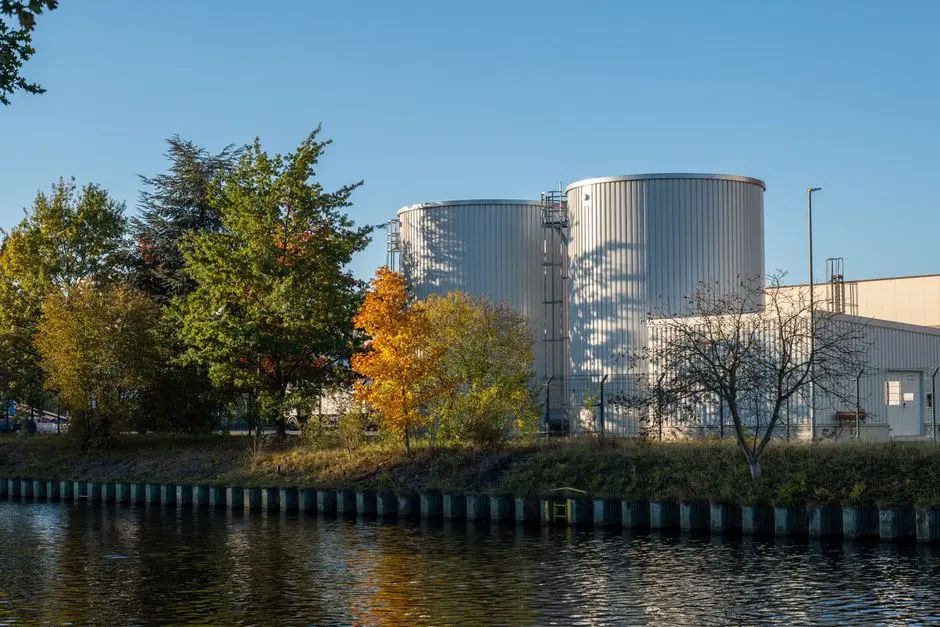
DAF is the stronger starting candidate when floatable material, emulsified oil and grease, colloids, or light suspended solids are central concerns. The 2021 industrial pretreatment standards course identifies dissolved air flotation as a common industrial pretreatment process. Lamella clarification is generally the stronger candidate when settleable-solids removal is the main objective and compact inclined-plate separation is preferred. The decision should be made from the wastewater characterization and permit target, not from a generic equipment-removal claim.
| Selection condition | Preferred starting point | Why | Confirmation required |
|---|---|---|---|
| Floatable solids, emulsified oil and grease, colloids | Industrial DAF system | Uses floatation to separate material that can rise to the surface | Peak flow, floatable-solids loading, oil character, and sludge fate |
| Settleable solids dominate | Lamella clarifier | Uses inclined plates to compact the settling zone | Peak flow, settleable-solids loading, footprint, and sludge characteristics |
| Metals or very low dissolved concentrations | Clarification plus a defined additional process | DAF or Lamella alone is not a complete metals solution | Permit target, chemical form, and treatment chemistry |
| Ammonia or nitrate | Clarification plus an appropriate biological process | Soluble nitrogen requires a treatment objective different from solids separation | Nitrogen limits, temperature, loading variability, and discharge route |
Do not assume clarification solves every pollutant. The supplied mining source reports a reactive-filtration example in Burrillville, Rhode Island, where copper was reduced to an ultra-low objective of 8 µg/L, or 0.008 mg/L. That is a separate unit-process result, not a DAF or Lamella claim. The same source describes MBBR for ammonia or nitrate and SAGR nitrification beds that can operate year-round even when water is below 1°C, or 34°F. Where those pollutants are regulated, review the gold mining wastewater treatment options before finalizing the train.
Build the Complete Pretreatment and Sludge Train
A clarifier becomes a pretreatment system only when it is connected to equalization, chemical control, solids handling, monitoring, and a controlled discharge path. Add PLC-controlled chemical dosing when the permit or treatment chemistry requires pH adjustment, coagulation, flocculation, or specialty reagents. The supplied equipment catalogue describes an automatic dosing system for coagulants, flocculants, pH adjusters, and wastewater chemicals. Confirm chemical compatibility, storage, secondary containment, metering, and interlocks before treating permit compliance as addressed.
Route settled or floated solids to a managed sludge treatment and disposal process. The 2021 industrial pretreatment standards course identifies sludge processing and disposal as part of pretreatment performance because untreated solids can transfer the compliance problem to the POTW. A plate-and-frame filter press can be evaluated when solids dewatering is required; the supplied catalogue gives a filter area range of 1–500 m² as an initial screening range, not a final selection. The final choice depends on sludge volume, solids characteristics, dewatering objective, filtrate quality, operating labor, and disposal acceptance.
| Train element | Required function | Selection input |
|---|---|---|
| Equalization and flow control | Stabilize flow and load before treatment | Flow profile and batch or upset conditions |
| DAF or Lamella clarification | Remove the targeted floatable or settleable fraction | Characterization, peak flow, and solids loading |
| Chemical dosing | Adjust pH, promote coagulation or flocculation, or feed specialty reagents | Permit limit and confirmed treatment chemistry |
| Additional metals, nitrogen, or toxicity treatment | Address soluble or pollutant-specific objectives | Concentration and mass-loading requirements |
| Sludge treatment and disposal | Remove water and establish an authorized solids route | Sludge characteristics, dewatering objective, and disposal acceptance |
| Monitoring, controls, sampling, and diversion | Show performance and prevent uncontrolled discharge | Permit conditions, SCADA/HMI requirements, and operating plan |
Include flow monitoring, pH and turbidity instrumentation, automatic controls, sample points, redundancy, and a bypass or diversion plan. The 2021 course shows that pretreatment systems may use SCADA/HMI control and require engineered process design. Equipment specifications remain distinct from permit acceptance: the train must demonstrate the applicable concentration and loading limits at the required sampling point.
Verify Compliance Before Sewer Discharge
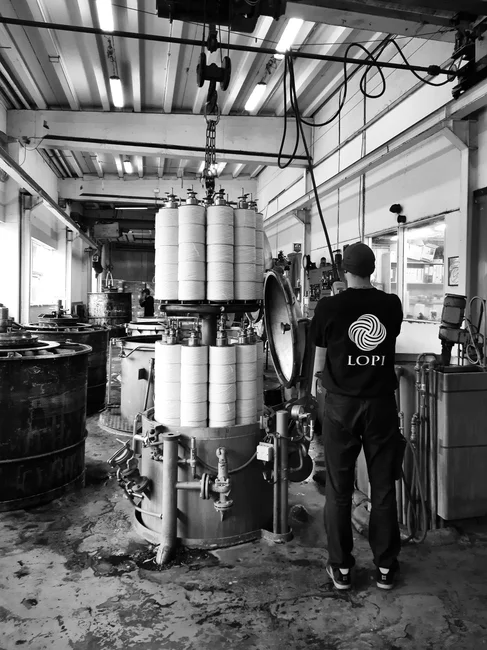
Compliance is established by a permit-based performance test, not by a manufacturer’s removal percentage or a single clean-water sample. Before procurement, ask the POTW to review the proposed process, discharge point, monitoring plan, sampling method, and reporting format. Obtain written confirmation that the process train is acceptable and that all unresolved limits, prohibited discharges, and missing local requirements have been resolved. Where categorical requirements apply, include them in the same acceptance matrix as POTW local limits.
Commission through startup, performance, and sustained-operation verification under representative flow and pollutant conditions. Compare analytical results with every applicable permit condition, using the permit’s definitions, sampling method, frequency, and load basis. If a condition is concentration-based, verify concentration. If it is mass-loading-based, verify the permitted load with the required flow measurement and calculation. Record sampling results alongside operating parameters, chemical use, sludge handling, equipment status, and corrective actions; the 2021 industrial pretreatment standards course identifies inspections, sampling, and reporting as pretreatment requirements.
A practical acceptance sequence is:
- Receive the current industrial user discharge permit and POTW local limits.
- Complete representative wastewater characterization and confirm the permit sampling point and compliance basis.
- Approve the process train, chemical plan, sludge route, monitoring plan, and bypass or diversion plan in writing.
- Complete startup and performance testing across representative operating conditions.
- Submit results in the required format and resolve noncompliance before continuous discharge.
Escalate any unresolved limit or missing Ruston requirement in writing before procurement and again before commissioning. If a permit condition cannot be demonstrated with the proposed equipment, revise the train rather than relying on a conditional acceptance.
Frequently Asked Questions
Where should mining and metals plants near Ruston obtain the sewer limits they must meet?
Obtain the sewer limits from the receiving POTW and the plant’s industrial user discharge permit. No Ruston-specific limits were supplied for this article, so a buyer should request the current permit, local-limits table, prohibited discharges, sampling point, monitoring method, and reporting requirements before comparing equipment. The DAF and clarifier selection workflow should be applied only after those requirements are in hand.
How should DAF and Lamella equipment be sized for a mining wastewater pretreatment system?
DAF sizing should begin with peak hydraulic flow and the mass loading of floatable, emulsified, or colloidal material. Lamella sizing should begin with peak flow and settleable-solids loading. The supplier should show how those inputs affect the selected geometry, hydraulic loading, chemical demand, operating envelope, and sludge production; a catalog flow range alone is not a sizing calculation.
What information should a supplier provide before an equipment selection is defensible?
Require the wastewater analysis, applicable permit limits, flow profile, constituent loadings, footprint, utilities, chemical demands, sludge characteristics, monitoring requirements, and proposed acceptance test. For a multi-stage train, also request the performance boundary between clarification, chemical treatment, metals removal, nitrogen treatment, and dewatering so no unit is asked to solve a pollutant outside its role.
Why does complete performance testing matter more than a removal percentage?
A removal percentage does not