Why Gold Mining Wastewater Needs a COD-Specific Treatment Train
Gold mining wastewater COD removal normally requires a treatment train, not a single generic unit. Use advanced oxidation for resistant organic loads, adsorption to capture dissolved contaminants, membrane systems to separate or recover valuable streams, and biological treatment only after toxicity and pH are controlled. The correct choice depends on measured COD, pH, sulfide, weak-acid-dissociable cyanide, suspended solids and metal concentrations. Recent evidence supports integrated membrane systems for water, acid and copper recovery, while a 2026 membrane-bioreactor study reported 94.13% COD removal and 96.66% TOC removal under its tested conditions.
Chemical oxygen demand, or COD, measures the oxidation demand associated with organic contamination; it does not describe acidity, metals, cyanide, sulfide or suspended solids. A gold-processing stream may therefore require several objectives: COD destruction, pH adjustment, solids separation, metal management and controls for weak-acid-dissociable cyanide. A suspended-solids unit can lower particulate-associated demand without destroying dissolved organics. Conversely, chemical oxidation can destroy dissolved organics while producing iron-bearing sludge.
The Ezana gold-mining wastewater characterization identified COD, TSS, turbidity, electrical conductivity, TDS, temperature, pH and cyanide WAD among the measured parameters. It also found metals in the order Fe²⁺ > Cu(II) > Pb(II) > Mn > Cr(VI) > Zn > Co > Ni > Cd, expressed by the Research Square preprint as ppm. Those results make both reagent interference and disposal of metal-bearing solids relevant to COD-equipment selection.
Acidity can determine whether the proposed process is chemically compatible. The integrated membrane study cites pressure-oxidation wastewater containing 72 mmol/L sulfuric acid. In that context, reagent demand, corrosion, oxidation safety and sludge generation cannot be evaluated separately from COD removal.
DAF pretreatment for mining wastewater can remove suspended material, oil and grease, and colloidal solids, but it is not a substitute for destroying dissolved COD. The distinction between those mechanisms should be settled before comparing DAF versus clarifier selection for mining wastewater.
Influent Parameters That Set the Treatment Limits
Design limits must come from representative gold-site analytics, because COD alone does not establish reagent dose, biological compatibility or membrane loading. The membrane study’s wastewater contained 171.6 mg Cu/L, 169.3 mg Ni/L and 829.2 mg Fe/L; these are study-specific concentrations, not gold-mine design defaults. Its lime-neutralization cost example used wastewater near pH 2.5 with acid around 11.4 g/L, while the cited pressure-oxidation characterization reported 72 mmol/L sulfuric acid.
| Parameter | Design relevance | Information required |
|---|---|---|
| COD | Organic oxidation and biological load | Composite profile and permit target |
| BOD₅ | Biodegradability and biological response | Paired COD/BOD testing |
| pH | Oxidation, precipitation and biological compatibility | Diurnal profile and reagent demand |
| Sulfide | Odour, toxicity and oxidant consumption | Speciation and residual concentration |
| Cyanide WAD | Worker-safety and permit-risk control | WAD and site-required cyanide species |
| TSS and turbidity | Solids separation and membrane fouling | Particle-size distribution where relevant |
| Iron and copper | Oxidation demand, scaling and sludge quality | Dissolved and total fractions |
| Sulfate | Acidity, scaling and disposal context | Concentration and permit relevance |
| Temperature | Reaction rate and membrane integrity | Minimum, maximum and duration |
| Flow variability | Hydraulic and chemical loading | Continuous flow record and composite samples |
The Research Square Eucalyptus Bark preprint reported temperature below 11°C in ppm and included COD, TSS, turbidity, electrical conductivity, TDS, pH and cyanide WAD in its characterization. Because the unit presentation is incomplete, the value should be confirmed with the site laboratory rather than converted into a universal operating limit.
Representative composite sampling should cover normal production and identified batch discharges. A single grab sample cannot establish diurnal variability, which determines equalization, reaction residence time, chemical-dose control and membrane loading. The automatic chemical dosing system should therefore be selected against measured variability rather than an assumed stable influent.
As a screening reference—not a gold-mine threshold—the HydropureWater 2026 mineral-processing guide identifies COD above 800 mg/L, residual xanthate above 5 mg/L or pH above 9.5 as an advanced-treatment band. Site chemistry remains controlling.
Compare the Four Main COD-Removal Routes
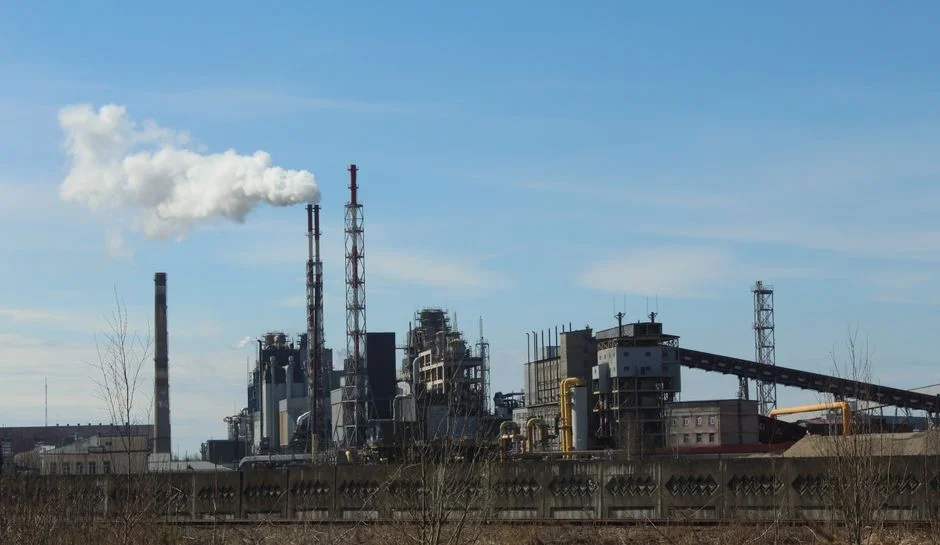
Each COD route removes a different fraction of the contaminant load, so the comparison must begin with the mass-balance objective rather than a headline removal percentage. Oxidation destroys organics; coagulation and flotation transfer suspended or colloidal material to solids; membranes separate phases or retain dissolved species; biological treatment converts compatible biodegradable material. These mechanisms can be combined, but their reagent, sludge and fouling consequences differ.
| Route | Reported evidence and operating context | Main limitation for gold wastewater |
|---|---|---|
| Advanced oxidation | The HydropureWater 2026 guide cites Fenton at pH 2.5–3.5, 30°C and 60–120 minutes with a 1:5–1:10 Fe²⁺/H₂O₂ ratio, reducing 2,500–10,000 mg/L COD to below 100 mg/L in its sulfide-mineral-processing context. | Acid demand, oxidant handling, heat and iron-bearing sludge. |
| Electrocoagulation | The same 2026 guide reports 65–80% COD removal at 20–40 A/m² and 30–60 minutes for sulfide mineral-processing wastewater; this is not gold-specific evidence. | Electrode consumption and residual solids require site confirmation. |
| Adsorption | The Ezana Eucalyptus Bark preprint reports 92% Cu(II) removal under its tested batch conditions. | It does not report COD removal; adsorbent regeneration and copper loading remain separate questions. |
| Membrane recovery | The gold wastewater study cites approximately 90% divalent-metal retention by nanofiltration and reverse osmosis, with fouling limiting recovery below 50% and 70%, respectively. | Fouling, concentrate handling and polymer-membrane cooling requirements. |
| MBR and biological polishing | Scientific Reports, 11 April 2026, reports 94.13% COD and 96.66% TOC removal in an MB-UVPMBR treating domestic wastewater for mine backfilling, with a cleaning cycle 2.74 times longer than conventional PVDF membranes. | The studied feed was domestic wastewater; raw gold wastewater cannot be assumed compatible. |
Fenton is appropriate when resistant dissolved organics must be destroyed before biological treatment. Electrocoagulation can transfer part of the load into coagulated solids, but it should not be sold as equivalent COD destruction without mass-balance evidence. The Ezana bark study supports metal-control feasibility, not COD treatment: its 92% result concerned Cu(II).
The integrated membrane study found approximately 90% divalent-metal retention, but fouling constrained nanofiltration recovery below 50% and reverse-osmosis recovery below 70%. Membrane distillation and membrane contactors were tested continuously for approximately 2,800 minutes to recover water, sulfuric acid and copper; that test duration does not establish full-scale life-cycle performance.
Biological polishing requires a controlled feed. The HydropureWater guide places entry conditions at residual H₂O₂ below 0.5 mg/L, sulfide below 1 mg/L and pH 6.5–8.0. For mechanistic support only, the Wasit University petroleum-wastewater study reported 99.5% COD removal at 12 kWh/m³ under its specified laboratory conditions; that result is not a gold-mine guarantee.
For a final polishing stage, compare integrated MBR wastewater treatment systems against RO and UF membrane elements using treated-water quality, fouling behaviour and concentrate disposal—not feed COD alone.
Build the Right Treatment Train for Each Gold Wastewater Profile
A defensible treatment train follows the contaminant profile: equalization and screening, pH-controlled oxidation or coagulation, solids separation, justified adsorption or membrane recovery, biological polishing where compatible, and disinfection or reuse polishing where required. Each stage needs a defined mass-balance role and a measurable outlet specification.
| Gold wastewater profile | Indicative train | Procurement check |
|---|---|---|
| High COD with sulfide | Equalization → controlled Fenton oxidation → clarification → neutralization → MBR polishing where the permit requires very low residual COD | Confirm residual oxidant, pH, COD and sludge production before biological entry. |
| Moderate COD | Electrocoagulation or Fenton → clarification → polishing as required | Compare the 65–80% electrocoagulation result and the Fenton operating window through site trials; neither is automatically transferable. |
| Acidic and metal-bearing | Precipitation or membrane-based resource recovery, with neutralization and solids handling | Assess acid, copper and water recovery value against concentrate and sludge routes. |
| Suspended-solids dominated | Screening → equalization → DAF → downstream COD stage | Do not credit DAF with dissolved-COD destruction. |
| Reuse-oriented | DAF or clarification → oxidation/coagulation → membrane recovery → reuse polishing | Evaluate permeate quality, concentrate disposal and recovery yield. |
For a high-COD, sulfide-bearing stream, position Fenton ahead of solids separation and biology. The cited operating window provides a starting point for bench dosing, not a turnkey guarantee. After oxidation, clarification removes the iron-bearing solids; neutralization then establishes the pH needed for downstream treatment. An MBR is justified when biological polishing or low residual solids are required and the upstream chemistry has been controlled.
For moderate COD, electrocoagulation followed by clarification may reduce reagent inventory, while Fenton followed by sedimentation offers stronger oxidation of dissolved organics. Require pilot confirmation of treated COD, residual turbidity, reagent consumption and sludge properties before comparing installed cost.
For acidic, metal-bearing water, the membrane route is attractive where reuse or recovered sulfuric acid and copper have value. The study’s integrated system operated for approximately 2,800 minutes, while its literature review cited approximately 20 tonnes of sludge per 1,000 m³ neutralized with lime or limestone. A simpler discharge route may be preferable where recovery value, product quality and concentrate handling do not align.
The JY Series can be considered for upstream clarification and filtration, but catalogue performance for surface water does not establish COD removal from gold wastewater. Likewise, DAF pretreatment for mining wastewater protects downstream units by removing suspended solids, oil and grease, and colloids; it does not replace oxidation of dissolved COD.
Solid residuals belong in the main equipment scope. A plate-and-frame filter press should be evaluated for iron or neutralization sludge, with cake yield and disposal acceptance tied to pilot results.
Size Equipment, Validate Performance and Control Operating Costs
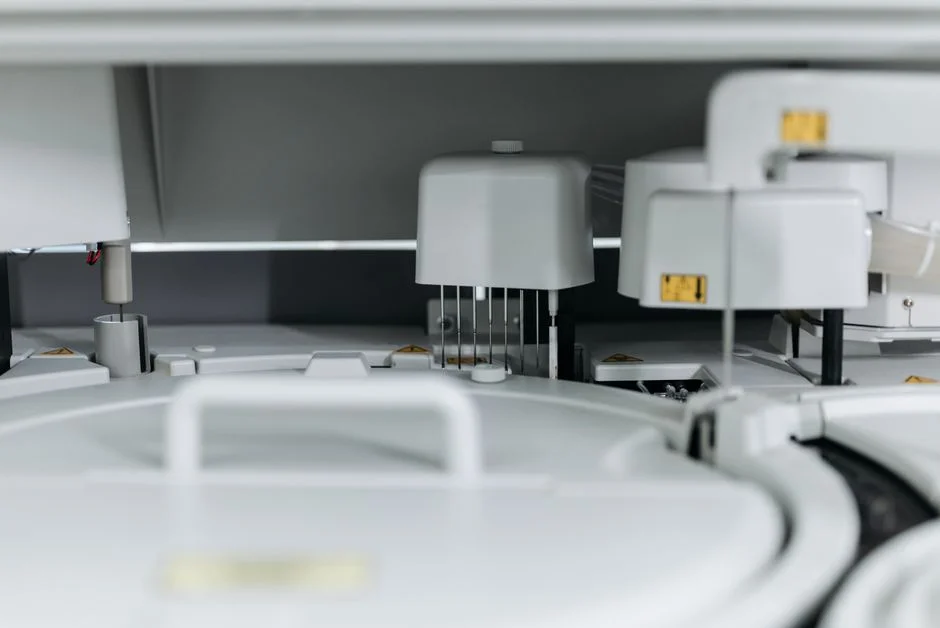
Equipment capacity should be based on measured and peak flow, while reaction and polishing capacity should satisfy the applicable permit COD rather than an assumed daily average. Upstream pretreatment must preserve the membrane manufacturer’s feed conditions during production swings, batch discharges and upset conditions.
The HydropureWater 2026 guide recommends 4–6 weeks of bench testing followed by 8–12 weeks of on-site pilot operation before full-scale commitment. For Fenton trials, track COD, BOD₅, residual H₂O₂ and sludge characteristics at Fe²⁺/H₂O₂ ratios of 1:5, 1:7 and 1:10. These ratios are trial points within the guide’s broader operating range, not a guarantee for every gold wastewater.
For electrocoagulation, require a relevant-scale vendor trial confirming current density, electrode consumption and treated COD. Do not transfer the guide’s 20–40 A/m² mineral-processing band directly into final design. For MBR trials, the guide recommends 1–5 m³/day for 8–12 weeks; measure membrane fouling, transmembrane pressure and cleaning frequency under actual upstream swings.
Include sludge handling in the operating budget. The membrane study’s cited example of approximately 20 tonnes per 1,000 m³ from lime or limestone neutralization demonstrates why dewatering, storage and disposal acceptance cannot be treated as minor accessories.
| Purchase item | Required information or acceptance condition |
|---|---|
| Flow and hydraulic capacity | Measured average, peak flow and equalization response |
| Performance guarantee | Defined influent envelope, treated COD target and applicable pH limits |
| Reagent system | Dosing range, control method, residual monitoring and containment |
| Membrane system | Fouling assumptions, cleaning method, transmembrane-pressure limit and service assumptions |
| Solids handling | Measured sludge yield, dewatering duty and disposal route |
| Controls and testing | pH, COD trending, flow, pressure, alarms, remote monitoring and performance-test protocol |
Specify automatic pH and reagent control, COD trending, flow, pressure, alarms and remote monitoring. Review applicable 2026 pretreatment limits for mining and metals plants, but obtain the site’s actual permit before fixing equipment guarantees. Include dewatering provisions and verify the comparative basis in MBR versus conventional activated sludge for mining wastewater.
Frequently Asked Questions
What COD removal system is best for gold mining wastewater?
There is no universal unit. Use oxidation for resistant dissolved organics, coagulation or flotation for suspended solids, membrane treatment for separation or recovery, and biological polishing after toxicity, sulfide and residual oxidant controls. Select the train from measured COD, pH, sulfide, weak-acid-dissociable cyanide, metals and fouling risk.
Can MBR remove COD directly from raw gold mine wastewater?
Not as a general design assumption. The HydropureWater 2026 guide places raw-feed MBR use above approximately 1,500 mg/L COD outside its recommended envelope and requires upstream control. Confirm applicability through site pilot testing rather than transferring the domestic-wastewater results of the 11 April 2026 Scientific Reports study.
How much does a gold wastewater COD removal system cost?
No defensible generic price can be given without measured COD, flow, pH and acid demand, metal and cyanide constraints, required recovery value and sludge-handling route. Request an itemized quotation covering reactors, pretreatment, membranes or adsorbents, reagent systems, controls, solids handling, utilities, commissioning and performance testing.
What should a supplier guarantee before purchase?
Require a defined influent envelope, treated COD target, applicable pH and residual limits, hydraulic capacity, fouling or cleaning assumptions, solids-management basis and an agreed performance-test protocol. Also require alarm, fail-safe and remote-monitoring functions so compliance cannot depend on manual attendance.
Is pilot testing necessary for COD removal?
Yes for a defensible gold-wastewater design. The HydropureWater 2026 guide recommends 4–6 weeks of bench trials and 8–12 weeks of on-site piloting, with COD, BOD₅, residual H₂O₂ and sludge tracked. Pilot results should update reagent consumption, fouling, sludge yield and final equipment sizing.
Related Equipment
- DAF pretreatment for mining wastewater — specifications, capacity range, and technical data