Separate the wastewater streams before selecting equipment
The wastewater strategy for a data center in Sahiwal, Pakistan requires a measured split between cooling effluent and sanitary wastewater, as the two streams contain different contaminants and face distinct reuse constraints. ASCE identifies domestic wastewater and cooling effluent as the two main data-center wastewater streams, with cooling effluent generally representing the larger share. The sanitary stream normally includes toilet, washroom, staff and kitchen wastewater, while cooling effluent includes tower blowdown and other cooling-system discharges. The final flow split must come from project drawings, operating records and metering—not from a generic design assumption.
Keep the streams hydraulically separate until the reuse or disposal decision is documented. A combined discharge can conceal the source of a sewer exceedance and makes it impossible to calculate whether reclaimed cooling water will satisfy the cooling tower’s make-up specification. Provide a dedicated flow meter and sampling point for each stream, plus intermediate metering where a cooling substream is diverted for treatment.
The wider decision framework aligns with the data-center wastewater reuse versus discharge comparison: establish the water balance, characterize each stream, then compare the feasible routes against local conditions. The supplied research contains no Sahiwal sewer acceptance limits, groundwater conditions or data-center design flows, so those items remain project-specific verification requirements.
| Decision field | Cooling stream | Sanitary stream |
|---|---|---|
| Typical contents | Tower blowdown, evaporator or other cooling-system discharges, concentrated treatment chemicals and dissolved salts | Toilet, washroom, staff and kitchen wastewater |
| Required measurement | Continuous flow plus conductivity and pH monitoring; chemical sampling for routine characterization | Daily flow pattern plus representative wastewater sampling |
| Primary decision | Reuse as cooling tower make-up water or pretreat before the confirmed discharge route | Package biological treatment, MBR or another route established from flow, reuse target and sewer requirements |
| Local information still required | Tower cycles of concentration, makeup-water quality, cooling design and disposal route | Design flow, staff loading, sewer acceptance criteria and reuse destination |
Test the water chemistry that controls the treatment route
Water chemistry, not equipment type, determines whether blowdown can be reused or must be discharged. ASCE recommends evaluating pH, conductivity, total dissolved solids, chlorides, silicon, hardness, alkalinity and microbial counts, together with seasonal source-water testing. Those parameters must be tied to the actual cooling cycle because evaporation concentrates dissolved salts, while chemicals used for corrosion and scaling control add further treatment requirements.
Record the cooling tower’s cycles of concentration and the resulting blowdown concentration under representative operating conditions. The blowdown calculation must account for evaporation, make-up additions, drift, purge, and the operating schedule. Otherwise, a vendor may size a system against an unrepresentative snapshot rather than the water that the facility will actually produce.
Management should meter each stream, retain trends, and assign responsibility for reviewing them, drawing on the 2021 Uptime Institute survey finding that only 51% of surveyed data-center operators tracked water use. Use the following fillable sampling sheet before requesting treatment proposals. Mark unmeasured fields as “pending”; do not substitute assumptions for source data.
| Parameter | Cooling make-up source | Cooling blowdown | Sanitary wastewater | Required result |
|---|---|---|---|---|
| pH | Enter analysis | Enter analysis | Enter analysis | Confirm operating envelope |
| Conductivity | Enter analysis | Online reading and sample | Enter analysis | Trend and correlate with TDS |
| TDS | Enter analysis | Enter analysis | Enter analysis | Define reuse and discharge implications |
| Chlorides, silicon, hardness and alkalinity | Enter analysis | Enter analysis | Assess if relevant | Complete scaling and corrosion assessment |
| Microbial counts | Enter analysis | Enter analysis | Enter analysis | Confirm biological and fouling risk |
| Flow | Continuous meter | Continuous meter | Daily profile | Complete water balance |
| Cooling cycles of concentration | Calculated | Calculated | Not applicable | Confirm blowdown calculation |
Compare blowdown reuse with pretreatment for discharge
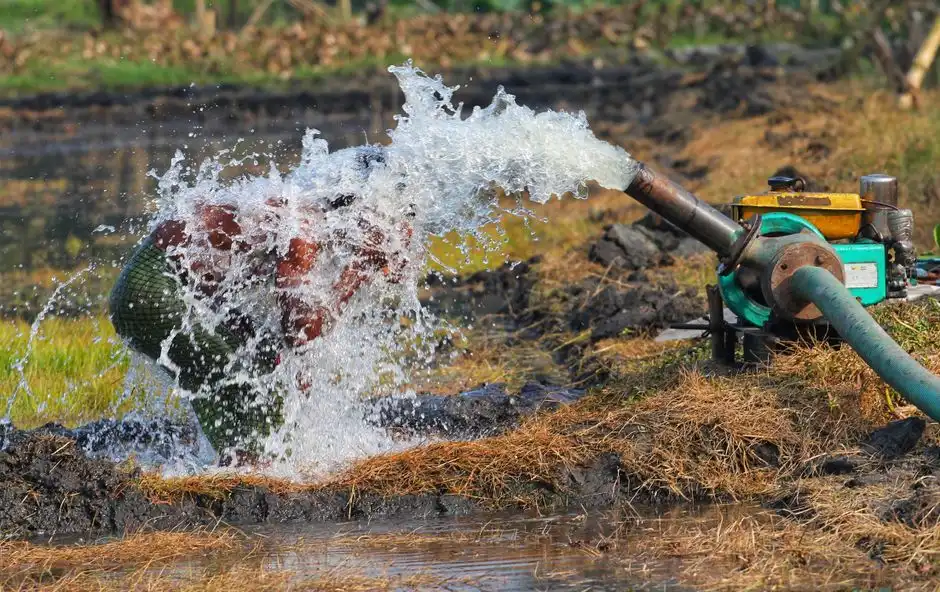
Cooling-blowdown reuse is justified only when the treated water matches the cooling system’s make-up-water requirements and the recovered water has a defined destination. ASCE notes that reclaimed or recycled water can increase corrosion, scaling and microbiological growth compared with potable water. The design should therefore compare final reuse-water chemistry with the operating limits of the cooling tower, heat-rejection equipment and chemical treatment program.
For brackish cooling blowdown, IDE Tech states that conventional reverse osmosis commonly reaches 75–80% recovery before scaling becomes unmanageable. Higher-recovery arrangements require additional chemistry and process controls. That figure serves as a general technology reference; the vendor must demonstrate performance against measured feed chemistry, scaling calculations and the complete mass balance.
For a discharge route, ASCE reports that utilities increasingly require pretreatment and that concentrated cooling pollutants may not be covered by ordinary municipal treatment. This makes the sewer route unconfirmed until the responsible utility states its acceptance criteria in writing. Pretreatment may be required for suspended solids, pH, dissolved salts or other identified parameters; the exact train depends on those limits.
Where membrane reuse is selected, UF can remove suspended solids, colloids, bacteria and relevant feed contaminants before RO, but it does not establish final suitability by itself. Use the cooling-blowdown treatment train comparison to test the sequence against feed results, and the regional cooling-blowdown treatment decision guide to structure the local verification.
| Decision point | If blowdown reuse is selected | If pretreatment for discharge is selected |
|---|---|---|
| Primary basis | Cooling-system make-up quality and a defined internal demand | Written sewer acceptance criteria |
| Indicative process question | Does the proposed pretreatment and RO train produce acceptable make-up water at the measured feed composition? | Which pollutants must be reduced, to what limit, and where will the residual concentrate go? |
| Critical engineering inputs | Feed chemistry, cycles of concentration, recovery basis, scaling calculation, permeate quality and blending strategy | Discharge limits, flow profile, constituent concentrations, pretreatment duty and concentrate disposal route |
| Main acceptance evidence | Performance test at contracted recovery and reuse-water chemistry | Demonstrated compliance at the agreed discharge sampling point |
| Unresolved Sahiwal item | Make-up-water specification and cooling-system operating limits | Written acceptance route and permitted disposal destination |
Build a treatment train for the sanitary wastewater stream
Sanitary wastewater requires a biological treatment decision rather than the salt-management logic applied to cooling blowdown. Use an integrated anoxic-aerobic package plant where the verified design flow is suitable for a buried, automated installation with limited routine attendance. Confirm sludge removal, access, odour control and final effluent handling before selecting a packaged route.
Use an MBR where the project requires a compact biological process, near-reuse-quality membrane separation or a more valuable footprint. The package-plant versus MBR comparison method can be adapted by applying the same separation-of-streams logic: sanitary wastewater should not be mixed with cooling blowdown unless the selected process and reuse target explicitly accommodate both.
Do not use a domestic package plant as a substitute for cooling-blowdown treatment. Dissolved salts, silica, treatment chemicals and scaling behavior require a different process basis. Likewise, do not assume that a biological effluent can become cooling make-up water: define the intended reuse standard, then verify that the complete train achieves it.
Turn the selection into a procurement and acceptance worksheet
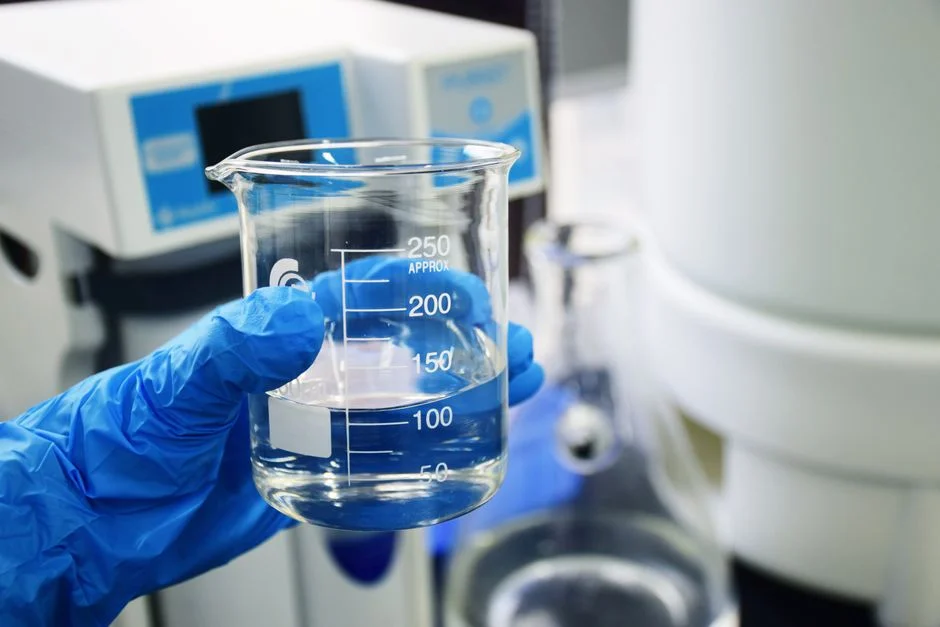
A procurement package should convert the selected route into measurable inputs, vendor obligations and acceptance tests. No supplied quotation establishes a price or package capacity for Sahiwal, so equipment sizing and cost remain outputs of measured flows, confirmed limits and vendor design calculations.
- Issue separate flow diagrams and metering schedules for cooling and sanitary streams.
- Attach source-water analyses, seasonal sampling records, blowdown calculations and the cooling tower cycles-of-concentration basis.
- Provide discharge-route correspondence, sewer acceptance criteria, reuse targets and the confirmed destination for concentrates or residual sludge.
- State redundancy, site-access, power, chemical-storage and operator-attendance requirements.
- Define commissioning tests, acceptance samples, operator training, spare parts and warranty boundaries.
Specify conductivity and pH monitoring where appropriate, automatic controls, chemical storage, concentrate or sludge handling, commissioning tests and operator training. Before ordering RO equipment, require the supplier to document membrane-feed chemistry, scaling calculations, antiscalant demand, recovery basis, cleaning strategy and permeate quality for the actual source water. An industrial RO pretreatment for cooling-blowdown RO should be selected only after those inputs are accepted.
| Vendor information required | Entry before quotation | Acceptance requirement |
|---|---|---|
| Stream flow and water balance | Measured sanitary flow, cooling flow and blowdown calculation | Equipment duty reconciled with the submitted balance |
| Feed-water chemistry | Source analyses, seasonal records and cooling cycles of concentration | All design assumptions traceable to project data |
| Recovery and reuse | Proposed recovery basis and intended reuse destination | Performance demonstrated at agreed conditions |
| RO design | Scaling calculation, antiscalant demand, cleaning strategy and permeate quality | Vendor guarantees tied to actual feed chemistry |
| Monitoring and controls | Instrument list, controls, alarms and metering | Functional demonstration during commissioning |
| Residuals and redundancy | Sludge or concentrate route, storage and standby strategy | Documented handling and acceptable continuity |
Frequently Asked Questions
How should treatment equipment for a Sahiwal data center be sized?
Size the sanitary and cooling trains from separately measured flows, blowdown concentration, operating schedule, recovery target and confirmed discharge route. For any membrane equipment, ask the supplier to reconcile its guaranteed duty with the submitted water balance and feed analysis.
How should a treatment supplier be selected?
Evaluate suppliers against actual feed-water tests, a complete process mass balance, membrane and chemical warranties, controls, monitoring, local service capability and acceptance testing. Require the supplier to identify every performance assumption that depends on source-water chemistry or a utility condition.
How should reuse and discharge costs be compared?
Request a lifecycle cost comparison that includes fresh-water savings, discharge savings, pretreatment, membrane replacement, energy, chemicals, sludge or brine disposal, and redundancy. Because no Sahiwal quotation or utility tariff was supplied, request the actual site inputs and vendor calculation rather than accepting a generic savings percentage.
What is the main compliance risk for this project?
The main risk is assuming that cooling blowdown may enter a municipal sewer or that treated water may be reused without written local confirmation. Obtain the sewer authority’s acceptance criteria and the cooling operator’s make-up-water specification before ordering equipment; use industrial RO system for blowdown reuse only within that documented envelope.