Start with the discharge route and reuse objective
A Quezon City hotel or resort should compare an underground WSZ package plant with an MBR rather than choose from room count alone. Choose WSZ when discharge compliance is the main objective, below-grade installation is practical and lower capital cost matters more than direct reuse. Choose MBR when toilet-flushing or irrigation reuse is required, the site is footprint-constrained or near-reuse-quality effluent supports the operating case. Final sizing must use Quezon City-specific peak flows and wastewater sampling; Philippine guide data are technical references, not automatic Quezon City permit rules.
The discharge route sets the governing evidence package. If the property will connect to a permitted sewer, confirm the connection requirements, pretreatment obligations, discharge point and monitoring conditions with the property’s environmental consultant or legal compliance team. If another discharge route is contemplated, establish in advance which authority must authorize it and what evidence it requires. A bidder’s generic statement that a package “can be connected” is not enough for a site-specific procurement.
Onsite reuse changes the treatment objective. HydropureWater’s 2026 Philippine guide characterizes WSZ effluent as adequate for discharge but marginal for direct reuse, while MBR effluent is suitable for toilet flushing and irrigation. For a hotel, direct reuse may mean reclaimed water enters the toilet-flushing system; for a resort, irrigation may add seasonal demand. Each use should be labeled separately as direct reuse, non-potable reuse or discharge because the monitoring, documentation and operating controls differ.
Ask each supplier to identify every proposed effluent use and the associated monitoring and documentation scope. The bid should also distinguish potable-water savings from recycled-water service availability: a treatment system can produce reusable water without guaranteeing that the building’s piping, pumps, storage and operational controls can use it.
Build the property-specific flow and strength basis
Room count is only a screening input; the equipment design basis must be built from measured property flows and wastewater characteristics. HydropureWater’s 2026 Cebu guide starts with 150–250 L per guest per day for sanitary wastewater, but that rate does not cover every resort wastewater stream. The missing inputs are the property’s actual occupancy pattern, fixture discharge, kitchen flows, laundry flows and any dominant backwash stream.
Collect representative samples from guest-room sewage, kitchen discharge, laundry discharge and the dominant backwash stream across operating conditions. As a preliminary benchmark only, HydropureWater’s 2026 Cebu blended raw-sewage characteristics are BOD 250–400 mg/L, TSS 250–350 mg/L and FOG 80–150 mg/L. Those figures must not replace Quezon City site data. They are useful for identifying which analysis must be commissioned and which assumptions a bidder is making.
For a resort with significant catering operations, require the supplier to justify dissolved air flotation pretreatment against measured kitchen-flow FOG rather than an assumed blended concentration. If laundry or backwash dominates, ask how those flows affect hydraulic peaks, process balance and pretreatment demand.
| Design input | Evidence to obtain | Procurement responsibility |
|---|---|---|
| Average and peak flow | Property-specific records covering occupied and peak operating periods | Owner supplies data; bidder documents calculation method |
| Wastewater strength | Samples from guest rooms, kitchen, laundry and any dominant backwash stream | Owner defines sampling program; qualified sampler performs analysis |
| Flow and strength variation | Results across operating conditions rather than a single composite sample | Bidder states design envelopes and operating assumptions |
| Reuse demand | Toilet-flushing, irrigation and other non-potable demand by operating period | Owner supplies demand profile; bidder confirms usable effluent production |
| Discharge route | Confirmed sewer or other receiving route and applicable connection conditions | Owner’s consultant verifies local requirements |
Compare WSZ and MBR against the site constraints
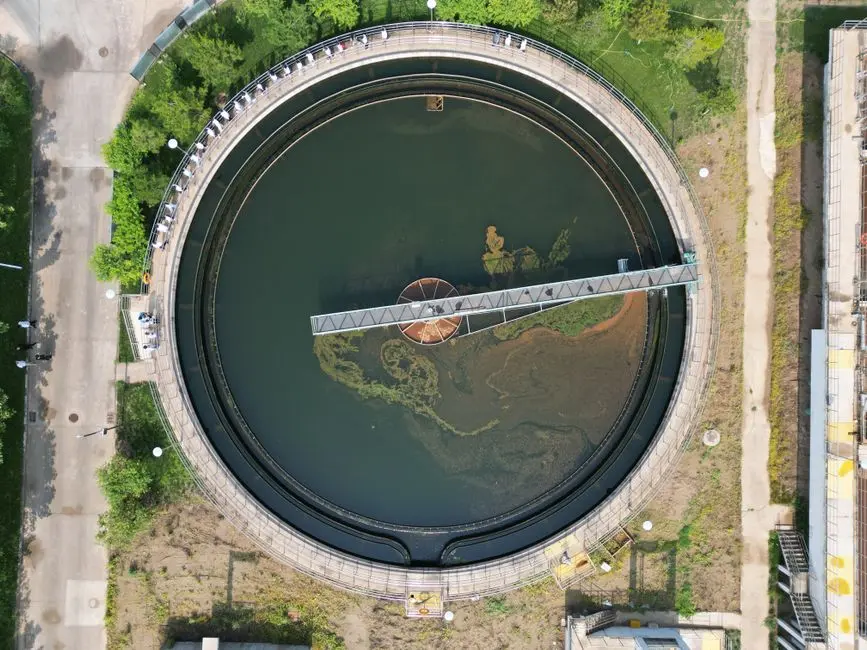
Choose the underground WSZ when below-grade installation and lower capital cost outweigh direct reuse. HydropureWater’s supplied 2026 specification gives WSZ effluent limits of BOD ≤20 mg/L and TSS ≤20 mg/L, with a listed capacity range of 1–80 m³/h. Its characterization of that effluent as adequate for discharge but marginal for direct reuse makes WSZ primarily a discharge-compliance option under the supplied evidence.
Choose MBR when reuse quality or a constrained footprint justifies the higher capital cost. HydropureWater’s supplied 2026 specification gives BOD <5 mg/L and TSS <1 mg/L, with roughly 60% less footprint than conventional activated sludge of equal throughput. The listed MBR capacity is 10–2,000 m³/day. Require the bidder to size the system against measured peak flows; the published capacity range is not a substitute for a property hydraulic calculation.
The commercial comparison must include civil work, buried-installation feasibility, utilities, sludge handling and operating requirements. An underground WSZ package treatment plant may offer a lower-capital route, but groundwater, excavation, access and above-ground finishing must remain visible in the comparison. An MBR membrane bioreactor system may create more footprint and reuse value, but its capital cost and operating obligations must be evaluated against the actual reuse plan.
HydropureWater’s 2026 Cebu example estimates that a 200-room Mactan resort using MBR effluent for toilet flushing and irrigation can offset 25–40% of municipal water cost. Treat that as a scenario, not a Quezon City savings guarantee. Require a Quezon City proposal to disclose the calculation, water tariff, demand profile, storage losses and treatment operating costs used in its own comparison.
| Decision condition | Underground WSZ | MBR | Bidder response required |
|---|---|---|---|
| Primary objective | Permitted discharge | High-quality reuse or footprint-constrained treatment | State governing objective and proposed discharge route |
| Supplied effluent specification | BOD ≤20 mg/L; TSS ≤20 mg/L | BOD <5 mg/L; TSS <1 mg/L | Guarantee values under the proposed operating envelope |
| Listed capacity | 1–80 m³/h | 10–2,000 m³/day | Demonstrate coverage of measured average and peak flows |
| Footprint | Buried package configuration | Roughly 60% less footprint than conventional activated sludge of equal throughput, per HydropureWater’s 2026 specification | Provide site plan, clearances, access and utility connections |
| Capital and reuse | Lower capital cost may be decisive | Higher capital cost can support toilet flushing and irrigation | Provide lifecycle cost and site-specific reuse-benefit calculation |
Protect downstream biological and pumping equipment
Fine screening and grease pretreatment belong upstream, but neither should be used to obscure the performance of the final biological treatment. A rotary mechanical bar screen should be evaluated when hotel wastewater contains significant rags, stringy solids or fibrous debris that could foul pumps, valves or biological processes. Require the selected aperture and throughput to match the measured ragging rate rather than a generic hotel-wastewater assumption.
Screen selection is not a substitute for sampling. The wastewater characterization should establish what enters the headworks, how much fibrous material is present and what peak solids passage the downstream equipment must tolerate. The bidder should explain how screenings are removed, stored and disposed of, and where that responsibility falls in the contract.
Evaluate DAF only where measured kitchen discharge contains enough FOG, oil and grease to justify pretreatment. The supplied DAF catalog identifies suspended-solids and FOG removal across 4–300 m³/h. A dissolved air flotation pretreatment system should therefore be justified by kitchen-flow data, flow variability and the removal duty required—not by the blended raw-sewage FOG benchmark alone.
Keep the scope boundary explicit. The RFQ should identify headworks equipment, biological treatment, tertiary treatment, reuse equipment and sludge handling as separate work packages. It should also state which performance guarantee applies to the complete train and which guarantees apply only to individual units. This prevents a supplier from meeting an equipment specification while leaving the installed treatment train unable to meet its required effluent quality.
Verify Quezon City compliance before awarding the order

Quezon City requirements must be verified with the property’s environmental consultant or legal compliance team before the final equipment award. Confirm the receiving sewer or receiving-water authority, connection requirements, pretreatment obligations, legal discharge point and applicable monitoring. The responsible party should also confirm whether the project affects an existing sewer connection, septic system or receiving-water capacity.
The supplied 2026 requirement for a Discharge Permit and quarterly Self-Monitoring Reports applies to hotels above 30 rooms in Lapu-Lapu City, Mandaue and Cebu City that discharge to sewer or surface water. HydropureWater states that the permit is obtained from EMB Region 7 and that the reports are signed by the property’s chief engineer. This evidence is jurisdiction-specific and must not be presented as a nationwide or Quezon City rule.
Require the supplier to provide permit-ready documentation, but define the boundary between responsibilities. The equipment supplier may provide process calculations, drawings, equipment data and operating procedures. The owner may need to submit the application, while the consultant may need to interpret discharge limits, monitoring requirements and evidence. The RFQ should name each party’s deliverable rather than use the generic phrase “permit assistance.”
| Compliance item | Transferable technical evidence | Quezon City verification required |
|---|---|---|
| Discharge authority | Supplier identifies the intended discharge route | Owner’s consultant confirms authority and route |
| Connection requirements | Supplier prepares technical connection information | Owner confirms applicable sewer or receiving-water conditions |
| Pretreatment obligations | Bidder states proposed process and performance | Consultant determines whether additional obligations apply |
| Monitoring | Supplier identifies parameters and instruments | Owner confirms applicable parameters, frequency and reporting responsibility |
| Permit documentation | Supplier provides permit-ready process and equipment records | Owner or consultant confirms application and jurisdiction |
Issue a comparison-ready supplier RFQ
A comparable bid starts with a common design basis, not a common product template. Require each bidder to return the property’s measured average and peak flows, wastewater characterization, process train, guaranteed flow capacity, effluent performance, civil footprint, utilities, sludge-generation estimate, installation schedule and lifecycle-cost assumptions. Mandatory fields should include the measured flows, reuse plan, discharge route and land constraints. Any missing value must be marked as an assumption with an owner action and deadline.
Assign responsibility for sewer approval, permit applications, flow monitoring, wastewater sampling, commissioning tests, operator training, local service, spare parts, sludge handling and warranty boundaries. This converts generic “support included” statements into accountable deliverables. For comparison, use the structure in this hotel A/O package plant versus MBR comparison, while recognizing that its project context is not Quezon City-specific.
| RFQ response item | Bidder response required | Named responsibility |
|---|---|---|
| Flow data and calculations | Average flow, peak factor, peak flow and calculation method | Owner supplies records; bidder prepares calculations |
| Wastewater sampling | Sampling points, parameters, operating conditions and analytical results | Owner defines scope; qualified party collects and analyzes |
| Process and guarantees | Process train, guaranteed flows and effluent parameters | Bidder |
| Footprint and civil works | Site plan, excavation, access, utilities and construction exclusions | Bidder with owner’s site information |
| Permit support | Documents supplied, application responsibility and unresolved approvals | Owner, consultant and supplier stated separately |
| Commissioning and training | Tests, acceptance criteria, documentation, operator hours and competence records | Bidder, witnessed by owner or consultant |
| Local service | Service location, response arrangement and spare-parts list | Bidder |
| Sludge and screenings | Estimated generation, handling route and disposal responsibility | Bidder estimates; owner confirms route |
| Warranty | Start date, covered items, exclusions and performance remedy | Bidder |
Ask bidders to identify assumptions, exclusions and unresolved permits rather than presenting a standard package as site-specific engineering. A further package sewage plant versus MBR comparison for hotels can help structure technical questions, but its location-specific evidence must not be transferred to a Quezon City site.
Frequently Asked Questions
How should a Quezon City hotel or resort size its wastewater treatment system?
Require the supplier to size the system from property-specific peak flows and sampled wastewater characteristics, not room count alone. Obtain the peak-flow calculation, operating assumptions and wastewater analyses, and make them mandatory RFQ fields before comparing WSZ and MBR bids.
Should the buyer choose WSZ or MBR based on price?
Do not request a generic unit price. Ask for a site-specific capital comparison that includes civil work, utilities, sludge handling and commissioning, then add operating and maintenance costs. Treat MBR’s reuse capability and WSZ’s potential capital-cost advantage as separate commercial items; the supplied evidence does not provide a universal Quezon City price or payback.
Which supplier-selection criteria matter most beyond price?
Compare guaranteed flow and effluent performance, permit documentation, commissioning tests, operator training, local service, spare-parts support, sludge planning and warranty boundaries. Require each bidder to name the responsible party for every deliverable and identify exclusions or unresolved approvals in the response.
Can the Cebu-region permit requirements be used for a Quezon City hotel?
No. The supplied Discharge Permit and quarterly Self-Monitoring Report requirement applies specifically to hotels above 30 rooms in Lapu-Lapu City, Mandaue and Cebu City, according to HydropureWater’s 2026 guide. A Quezon City project must obtain project-specific confirmation from its environmental consultant or legal compliance team and the relevant receiving authority.