Start With the Wastewater, Not the ETP Catalogue
The best effluent treatment plant in Karachi is matched to the factory’s wastewater flow, contaminants, pH, discharge route and reuse objective—not a standard package selected from capacity alone. Start with source-specific sampling for BOD, COD, TSS, TDS, pH, oil and grease, metals, dyes and process-specific pollutants. Use DAF for suspended solids, oil, grease and colloids; biological treatment for biodegradable organic loads; and MBR or another polishing stage when the selected route requires it. Karachi evidence confirms pollution risks, but site-specific limits and sizing remain unverified.
Flow rate is only one design input. Before comparing quotations, split the factory wastewater into streams that differ by process, concentration, temperature, pH or batch discharge. Record whether each stream is continuous, intermittent or produced only during cleaning. The collection system must also be understood: a combined inlet can dilute a concentrated stream or create shock loads that the proposed biological stage cannot absorb.
The Korangi tannery study demonstrates why source-specific characterization matters. Its authors tested BOD, COD, TDS, TSS, total solids and pH in Korangi industrial effluent, and reported that 70–80% of chromium was consumed in hides and skin while the remaining 20–30% entered process effluent (International Journal of Environmental Sciences & Natural Resources). A factory with a chromium-bearing process must therefore sample that stream separately; generic factory-wide averages can conceal the treatment duty.
| Input to confirm | Why it affects selection | Evidence still required from the factory |
|---|---|---|
| Flow and operating pattern | Sets hydraulic capacity and equalisation requirements. | Measured flow by shift, production changes, cleaning discharges and peak events. |
| Organic load | Determines whether biological treatment is technically relevant. | BOD, COD and process-specific organic parameters across representative operations. |
| Solids, oil and colloids | Defines pretreatment and solids-handling duties. | TSS, oil and grease, colloids and settleability data. |
| Dissolved salts and metals | Influences biological suitability, reuse options and polishing needs. | TDS, conductivity, metal species and source-specific streams. |
| pH and process chemicals | Controls chemical dosing, biological stability and discharge compliance. | Continuous pH records, chemical inventory and batch-discharge information. |
| Destination and objective | Sets the required treated-water condition and treatment train. | Intended sewer, surface-water or reuse route, plus the applicable written standard. |
Request composite and grab samples covering representative production and discharge conditions rather than relying on one sample. Record sampling point, date, shift, production state and flow during collection. For a mixed wastewater stream, composite sampling may better represent normal discharge; for a batch process, capture the complete batch profile. If reuse is contemplated, assess the intended reuse application separately from generic effluent reuse claims.
Match Each Contaminant to a Treatment Stage
Treatment equipment selection must follow the contaminant profile and required outcome rather than brand preference. Pretreatment protects downstream stages; biological treatment addresses biodegradable organics; polishing determines whether the final effluent is fit for the selected route; and sludge handling closes the process boundary.
For suspended solids, oil and grease, FOG and colloidal matter, evaluate an industrial DAF pretreatment system. HydropureWater’s DAF catalogue spans 4–300 m³/h across 13 models. That catalogue range is a selection boundary, not a plant-sizing rule: hydraulic loading, contaminant loading, recovery and pretreatment demands still need engineering verification.
Use biological treatment when the wastewater contains biodegradable organics that can be treated under controlled aerobic and, where required, anoxic conditions. An MBR should be selected when biological treatment must be followed by fine solids separation. The supplied HydropureWater catalogue gives an MBR membrane bioreactor range of 10–2,000 m³/day and filtration below 1 μm. For sanitary or mixed wastewater requiring anoxic/aerobic treatment, sedimentation and disinfection, the underground WSZ package catalogue is stated as 1–80 m³/h. Neither catalogue capacity removes the need to verify wastewater suitability and effluent targets.
Treat nanofiltration as an optional polishing stage where the reuse objective requires additional separation after conventional wastewater treatment. A University of Twente doctoral study concluded that direct nanofiltration is a potential means of polishing wastewater treatment plant effluent to EU Water Framework Directive standards for agricultural or indirect potable use (University of Twente). That finding does not establish suitability for a Karachi factory, an automatic discharge requirement or the full cost of a reuse train.
Evaluate constructed wetlands only where land availability, hydraulic loading and the required micropollutant-removal objective support the approach. The supporting evidence is Yu Lei’s Wageningen University doctoral thesis (2022); it should be treated as technical context rather than a current local approval or performance claim.
| If the wastewater or objective shows… | Evaluate first | Key question before accepting the proposal |
|---|---|---|
| High suspended solids, oil, grease or colloidal load | DAF pretreatment, with an appropriate solids route. | Does the proposal state hydraulic and contaminant loading, recovery performance and sludge handling? |
| Biodegradable organic load | Biological treatment, such as an A/O or related process. | Are temperature, pH, nutrients, toxicity and shock loads addressed? |
| Fine solids separation after biological treatment | MBR. | What membrane configuration, cleaning regime and solids-discharge duty are priced? |
| Sanitary or mixed wastewater with anoxic, aerobic, settling and disinfection duties | Underground WSZ package. | Does the package match the characterized flow, load and reuse or discharge target? |
| Additional separation for a defined reuse application | Nanofiltration or another polishing process. | Has the final reuse quality been defined by analysis and the receiving requirement? |
| Land-based micropollutant treatment with a suitable hydraulic basis | Constructed wetlands. | Are land, hydraulic loading, maintenance and removal objectives demonstrated? |
Do not force every treatment mechanism into one train. A factory may need source segregation, equalisation, pH control, DAF, biological treatment and sludge dewatering, with polishing added only where the discharge route requires it. For a broader process sequence, see the industrial ETP equipment-selection process; for a specific mechanical comparison, review the DAF versus clarifier comparison.
Account for Local Discharge and Operating Risks
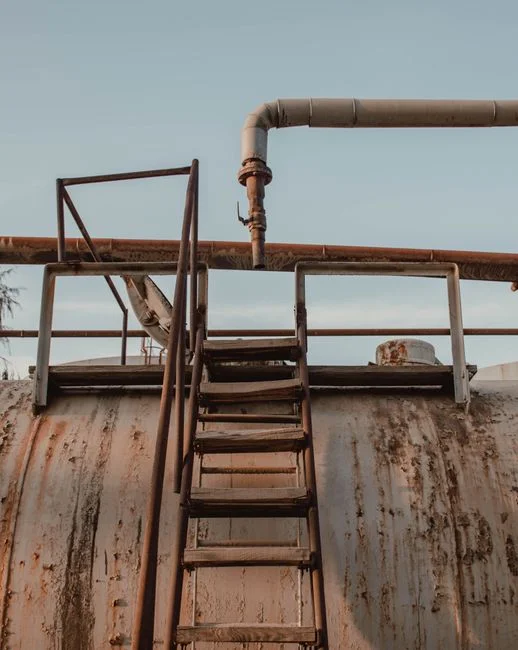
Karachi’s receiving environment makes the discharge route a critical factor in equipment selection. A published review identifies liquid industrial discharge and municipal solid effluents as primary pollution sources entering Karachi Harbor, where inadequate disposal and treatment facilities allow toxic pollutants to remain in the harbor and degrade water quality (Pakistan Journal of Science). This is local context, not a substitute for current site-specific discharge criteria.
Verify the proposed destination in writing: a sewer connection, a treated industrial outlet, a surface-water system or a reuse application. Each route imposes different pretreatment, reporting and acceptance conditions. The supplied research does not establish a complete current table of Karachi-specific industrial effluent limits, so do not let a quotation substitute a generic specification for the applicable authority’s requirement. Obtain the governing discharge standard, permit conditions and testing protocol before finalising equipment specifications.
Ask each supplier to define the complete operating boundary. That includes sludge removal and disposal, chemical delivery and storage, odour control, standby provisions, bypass prevention, alarm response and maintenance access. The Korangi tannery study attributes worsening pollution conditions partly to insufficient individual treatment facilities and unwillingness by some tanners to contribute to combined ETP operating and maintenance costs (International Journal of Environmental Sciences & Natural Resources). A quotation that omits operating responsibilities can create an install-only project with unresolved downstream risks.
Chromium-bearing wastewater requires a separate treatment review because chromium speciation changes with pH. The Korangi study reports that slightly acidic conditions above pH 5.5 reduce the proportion of chromium (III), while recovery can involve raising pH and forming chromium hydroxide for sludge capture. For chromium-bearing streams, request measured total chromium and, where needed, speciation data; then define pH correction, precipitation, sludge capture and analytical acceptance criteria.
Keep two checks separate. Technical selection asks whether the equipment can treat the characterized wastewater. Regulatory verification asks whether the completed discharge satisfies the route-specific legal and permit conditions. Both must close before acceptance, but only the latter should be represented as a verified compliance statement.
Build the Procurement and Acceptance Checklist
A comparable proposal identifies the design basis, equipment duty, boundaries and unresolved assumptions for every treatment stage. Start with one row per stage—collection, equalisation, pretreatment, biological treatment, polishing, sludge handling and final disposal—then use the same fields across suppliers.
Require the supplier to state the source of every design flow and pollutant load. “Design flow” must be traceable to a meter record, approved production forecast or other stated basis. Every assumed concentration, peak factor, operating time or reuse target must be marked for site confirmation. A catalogue capacity cannot substitute for a source-specific design calculation.
| Stage | Design and duty fields | Supplier evidence required | Buyer action |
|---|---|---|---|
| Collection and equalisation | Flow basis, peak condition, retention duty, mixing and bypass control. | Flow calculations, P&ID, equipment schedule and controls narrative. | Confirm inlet arrangement and operating production changes. |
| Pretreatment | Hydraulic load, contaminant load, pH correction, chemical dose and recovery. | Calculation basis, equipment list, materials and duty descriptions. | Check against measured oil, solids, pH and batch discharges. |
| Biological treatment | Organic loading, process configuration, aeration, sludge age and toxicity controls. | Process basis, aeration and control philosophy, consumables and maintenance plan. | Validate biodegradability, temperature, nutrients and variability. |
| Polishing | Permeate or final-flow basis, target quality, backwash and membrane cleaning. | Performance criteria, control narrative, replacement and cleaning assumptions. | Match equipment to the written discharge or reuse target. |
| Sludge handling | Solids generation, thickening, dewatering, storage and disposal route. | Mass balance, moisture basis if stated, equipment schedule and disposal responsibilities. | Confirm site space, collection route and responsible operator. |
| Civil, utilities and automation | Footprint, power, chemicals, drainage, controls, alarms and local conditions. | GA drawing, utility schedule, electrical and control scope, exclusions list. | Assign every interface and site dependency. |
| Commissioning and acceptance | Test protocol, test water, sampling points, criteria and signatories. | Performance test, calibration records, training and handover deliverables. | Define how failures, retests and handover will be handled. |
Include acceptance tests for treated-water quality, automatic controls, alarm response, equipment availability, sludge withdrawal and operator handover. A practical sequence is: verify installation; calibrate instruments; run each stage; test interlocks and alarms; conduct a representative load trial; sample against agreed criteria; rectify deficiencies; and repeat the affected test. The agreement should define who provides test water, performs laboratory analysis and bears delay costs.
Assign responsibility for laboratory analysis, civil works, power, chemicals, installation, training, commissioning and long-term maintenance. Put every exclusion in writing. For industrial pretreatment acceptance, the industrial pretreatment compliance pathway illustrates why regulatory approval and equipment operation need separate evidence.
Compare MBR and packaged A/O only after applying the same flow, footprint, effluent target and discharge constraints to both proposals. Then compare solids separation, operating complexity, chemical use, sludge production, automation, maintenance, utilities and operator competence. A lower equipment price is not directly comparable if one quote excludes pretreatment, polishing, civil works or long-term consumables.
Frequently Asked Questions
Why can’t flow rate alone size an industrial effluent treatment plant?
Flow sets hydraulic capacity, but pollutant load determines chemical demand, biological capacity, solids production and polishing duty. Ask the supplier for measured flow by operating condition, BOD, COD, TSS, TDS, pH, oil and grease, metals or other process-specific parameters, plus production shifts, batch discharges, equalisation requirements and the proposed effluent target. Request the source of every design value and identify every assumption requiring confirmation.
How should MBR and a packaged A/O plant be compared?
Apply the same characterized flow, footprint, effluent target and discharge route to both proposals. Compare final solids separation, biological process
Frequently Asked Questions
How do I choose an ETP for a factory in Karachi?
Selecting an ETP begins with a comprehensive characterization of your industrial effluent, specifically identifying the Chemical Oxygen Demand (COD), Biological Oxygen Demand (BOD), Total Suspended Solids (TSS), and heavy metal concentrations. You must ensure the proposed technology aligns with the space constraints of your facility in industrial zones like Korangi or SITE, while also considering the availability of local spare parts and the capability of the supplier to provide consistent maintenance support.
Furthermore, evaluate the electrical load requirements against the stability of the local power grid, as Karachi’s industrial areas often face voltage fluctuations that can disrupt sensitive automated systems. Prioritize systems that offer modularity for future capacity expansion and ensure the design accounts for the high salinity levels often found in groundwater utilized by Karachi industries.
What wastewater tests should I give an ETP supplier for sizing?
To ensure accurate hydraulic and organic loading calculations, you must provide a laboratory report detailing pH, Temperature, BOD5, COD, TSS, and Total Dissolved Solids (TDS). If your facility involves metal finishing, textile dyeing, or chemical processing, include specific tests for Oil and Grease (O&G), Phenols, Cyanide, Chromium (VI), and other heavy metals relevant to your production process.
Include the average and peak flow rates (measured in cubic meters per day) and the diurnal variation in effluent quality. Providing 24-hour composite sampling data rather than grab samples is critical for the supplier to design a system capable of handling the fluctuations inherent in multi-shift industrial operations.
Is MBR or a packaged A/O plant better for industrial wastewater in Karachi?
Membrane Bioreactor (MBR) technology is superior for space-constrained sites in Karachi, as it eliminates the need for large secondary clarifiers and produces high-quality effluent suitable for industrial reuse, such as cooling tower makeup or floor washing. However, MBR systems require higher capital expenditure and rigorous membrane cleaning protocols to prevent fouling caused by high TDS and mineral scaling common in the region.
A packaged Anaerobic/Oxic (A/O) plant is generally more robust and easier to maintain for facilities with variable influent characteristics or limited access to specialized chemical cleaning agents. While A/O plants require a larger footprint, they are often more cost-effective for high-strength organic waste streams where strict nutrient removal is not the primary regulatory driver.
How should I compare industrial ETP suppliers and quotations?
Compare quotations based on the total cost of ownership (TCO) rather than just the initial capital expenditure. Ensure each proposal includes a detailed process flow diagram (PFD), a list of major mechanical components with brand specifications (pumps, blowers, sensors), and a guaranteed performance range for effluent quality post-treatment.
Verify the supplier’s track record by requesting site references within Karachi and inquiring about their after-sales response time for emergency repairs. A professional quotation should clearly define the power consumption per cubic meter of treated water and the projected annual cost of chemicals, sludge disposal, and membrane or media replacement.
Which Karachi discharge requirements must I verify before ordering an ETP?
You must verify compliance with the Sindh Environmental Quality Standards (SEQS) for municipal and liquid industrial effluents. Specifically, ensure the ETP design meets the maximum permissible limits for parameters such as BOD (80 mg/l), COD (150 mg/l), and TSS (150 mg/l) if discharging into a municipal sewer system or surface water body.
If your facility is located within an industrial estate managed by the Sindh Industrial Trading Estate (SITE) or Korangi Association of Trade and Industry (KATI), check for any additional specific discharge protocols or pre-treatment requirements set by the local effluent treatment authority. Always confirm that the supplier provides a system capable of meeting the current SEQS parameters to avoid legal penalties and potential factory shutdowns.