
Identify the Controlling Smilax Discharge Requirement
For a discharge to a sewer manhole, Clean Water Act §307(b) and 40 CFR Part 403 govern pretreatment, while NPDES under CWA §402 governs direct surface-water discharges. Ore mining and dressing may be subject to 40 CFR Part 437; plating, pickling or anodizing may also trigger Part 433. The practical basis of design is therefore the receiving POTW’s current sewer-use ordinance, industrial user permit, sampling requirements and discharge location—not a generic federal limit table. No Smilax-specific POTW ordinance, permit or local discharge map was supplied for this article, so no Smilax limit should be treated as verified. Obtain those documents and confirm the applicable Categorical Industrial User category before selecting or sizing equipment.
Start with the permit hierarchy. Federal categorical standards establish applicable requirements for qualifying operations, while the POTW can impose local pretreatment limits through its sewer-use ordinance and permit. The supplied mining pretreatment guidance identifies Part 437 as the ore mining and dressing pathway and Part 433 as relevant to applicable metal-finishing operations (HydropureWater, “How Mining & Metals Plants Meet Pretreatment Limits Before Sewer Discharge,” undated). A mining facility may have both sewer pretreatment obligations and separate NPDES requirements for stormwater outfalls or process-pond discharges.
Do not infer the receiving authority from the site name alone. The permit package must identify the POTW, manhole, sewer jurisdiction, applicable subcategory, local limits, monitoring point and enforcement contact. Until that package is complete, equipment sizing remains provisional.
| Basis-of-design field | Verified entry required | Why it controls the design |
|---|---|---|
| Receiving POTW and manhole | Enter from the current permit or written POTW confirmation | Identifies the authority that will review and enforce the discharge |
| Industrial classification | Select applicable Part 437 subcategory and Part 433 applicability, if any | Determines which categorical requirements must be checked |
| Federal requirement | Enter each applicable parameter, daily maximum and monthly average | Provides the federal floor, not the final local target |
| Local pretreatment limit | Enter the permit value, averaging period and sampling point | Usually becomes the controlling equipment guarantee |
| Prohibited or conditional discharges | Record pH, metals, TSS, oil and grease, toxicity, monitoring and surcharge conditions | Determines pretreatment barriers, controls and contingency capacity |
| Approval path | Name reviewer, submittal date and approval conditions | Prevents equipment selection ahead of regulator concurrence |
Build the Compliance and Wastewater Input Matrix
The permit must be converted into measurable equipment criteria before a clarifier is selected. The supplied sources give representative 2026 local sewer limits of zinc 0.3–1.0 mg/L monthly average and copper 0.3–0.5 mg/L monthly average; these are examples, not verified Smilax requirements (HydropureWater, “How Mining/Metals Plants Near Smith, US Meet 2026 Pretreatment Limits,” undated). The same source reports a sector wastewater profile of pH 2–4 in raw acid drainage and spent process solutions, TSS from hundreds to several thousand mg/L, metals including Pb, Cu, Zn, Cd, Ni and As, and elevated sulfate and TDS.
Collect a defensible flow and concentration dataset rather than one grab sample. Separate continuous process wastewater, dump-leach runoff, mill clean-outs, stormwater and other batch streams; document when each enters the equalization basin and whether it can be segregated. For every permit parameter, enter the concentration limit, averaging period, sampling point, analytical method, flow basis, monitoring frequency, surcharge rule, prohibited discharge and escalation contact. Missing entries should remain open items in the design memorandum rather than assumptions in the equipment guarantee.
Use the matrix below as the controlling bridge between the POTW, laboratory data and procurement. The detailed DAF versus lamella comparison provides additional equipment-selection context, but it does not replace a Smilax permit or site characterization.
| Parameter | Permit or laboratory input | Design translation | Owner |
|---|---|---|---|
| Each regulated parameter | Limit; daily maximum; monthly average; units | Final effluent guarantee and treatment target | POTW and compliance lead |
| pH | Permit range and measured influent range | Reactor stages, reagent demand and trim-control requirement | POTW and laboratory |
| Metals | Pb, Cu, Zn, Cd, Ni, As and any permit species | Jar-test matrix, precipitation route and residual target | Laboratory |
| TSS and oil/grease | Maximum, average and representative concentrations | Clarifier type, filtration need and polymer trial | Laboratory |
| Peak flow | Two-hour peak and batch-discharge hydrograph | Equalization, hydraulic loading and turndown | Process engineer |
| Monitoring | Frequency, sample location and reporting method | Automation, sample taps and data export | POTW and operations team |
| Surcharge or prohibition | Trigger, consequence and escalation procedure | Storage, bypass prohibition and contingency response | POTW and management |
Choose the Chemical Precipitation Route
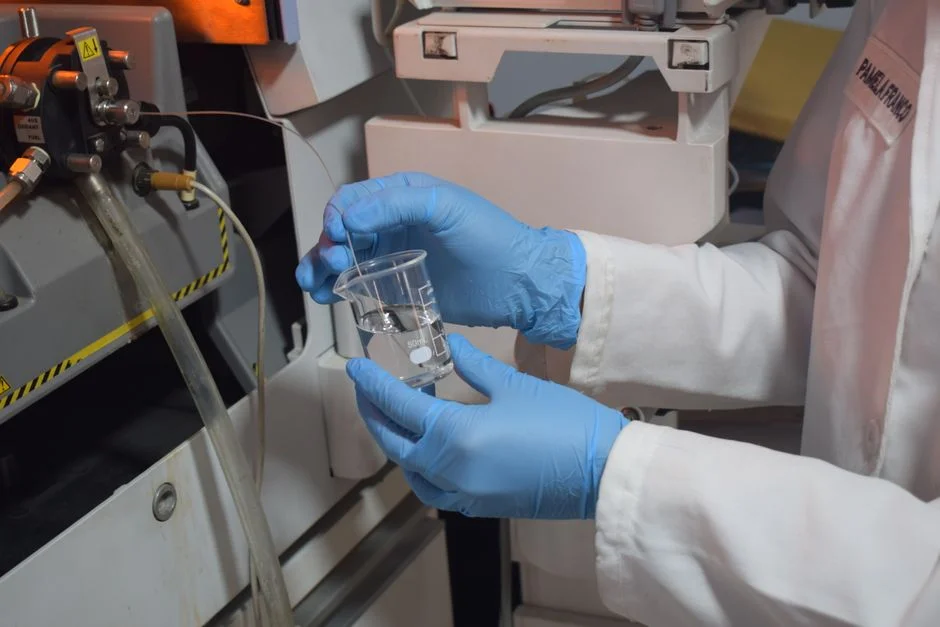
Heavy metals precipitation should be selected from jar-tested residuals and local limits, not from a generic pH recipe. The supplied optimum windows are copper 8–9, zinc 9–10, cadmium 10–11 and nickel 10–11, while the general POTW target range is pH 6.5–9.0 (HydropureWater, “How Mining/Metals Plants Near Smith, US Meet 2026 Pretreatment Limits,” undated). Properly controlled precipitation systems in operating mining and metals installations routinely achieve 85–95% total metals removal (Fluence, 2024-11, as cited by HydropureWater in the undated mining pretreatment guidance).
Hydroxide precipitation is the normal starting point because the chemistry is established and the reagents are widely used. Sulfide precipitation produces lower residuals: the supplied comparison gives 0.01–0.05 mg/L for sulfide treatment against 0.5–2.0 mg/L for hydroxide treatment. It also carries a 2–4-times higher reagent cost and requires sealed reactors and hydrogen sulfide scrubbing. Use sulfide only where the verified local limit, residual loading and operator capability justify the added safety and operating burden.
For many flows, hydroxide precipitation with sulfide polishing on a slipstream is the practical compromise. Place the sulfide reactor before the solids-removal step so the residual floc can settle with the bulk sludge, and size it for its slipstream flow and metal load. A PLC-controlled chemical dosing skid should provide staged reagent feed, pH feedback, flow-paced chemical demand, interlocks and independent high-pH/low-pH alarms.
| Decision condition | Hydroxide route | Sulfide route or polish |
|---|---|---|
| Verified local limit | Can be met by the tested hydroxide residual | Required when hydroxide residual cannot meet the limit |
| Typical residual reported in supplied research | 0.5–2.0 mg/L | 0.01–0.05 mg/L |
| Operating burden | Established pH control and sludge chemistry | Sealed reactors, H₂S scrubbing and added monitoring |
| Cost driver identified in supplied research | Lower reagent cost; lime may increase sludge volume | Reagent cost 2–4 times higher |
| Recommended configuration | Primary bulk precipitation | Slipstream polishing where final residuals require it |
Match DAF or Lamella to the Wastewater
DAF is the stronger choice when oil, grease or fine colloidal metals materially affect separation; lamella is the stronger choice for predominantly metal-hydroxide sludge at higher flows or where footprint is constrained. The supplied research reports DAF hydraulic loading of 5–25 m/h, with 90–98% TSS removal and 85–95% oil and grease removal. It reports lamella surface loading of 20–40 m/h and a footprint about one-third that of a conventional clarifier (HydropureWater, “How Mining & Metals Plants Meet Pretreatment Limits Before Sewer Discharge,” undated; and the Smith pretreatment article, undated).
Flow breakpoints are planning indicators, not Smilax design values. Packaged skids are common below 10 m³/h; approximately 100 m³/h is identified as an economic pivot; above 100 m³/h, parallel DAF trains or lamella often become more economical (HydropureWater, Smith pretreatment article, undated). Recalculate those conditions using the verified two-hour peak, batch contributions, required turndown, available footprint and future expansion. For a stream with free oil or colloidal fines, review the DAF system for oil and colloidal metals; for metal-hydroxide sludge, use a lamella-specific hydraulic and sludge-blanket design.
| Selection factor | Choose DAF when | Choose lamella when |
|---|---|---|
| Wastewater character | Oil, grease or fine colloidal metals are present | Metal-hydroxide flocs dominate |
| Reported loading range | 5–25 m/h hydraulic loading | 20–40 m/h surface loading |
| Reported removal | 90–98% TSS; 85–95% oil/grease | Dense sludge blanket and effective settling of metal-hydroxide flocs |
| Footprint | Acceptable for the selected flotation capacity | Approximately one-third of a conventional clarifier footprint, as reported in the supplied research |
| Flow breakpoint | Below 10 m³/h, packaged skids are common; above 100 m³/h, parallel trains may be economical | Approximately 100 m³/h is an economic pivot, but project economics must be confirmed |
| Required sizing basis | Peak two-hour flow with 20–30% turndown capacity, recalculated from the actual Smilax discharge profile | |
Base the final selection on a site-specific solids characterization and pilot or jar test. Confirm floc shear, settleability, oil recovery, polymer demand, sludge blanket depth, filtrate quality and clarified-water carryover. A supplier’s generic removal claim is not a site performance guarantee.
Complete the Train and Sludge Acceptance Plan
A complete mining sewer pretreatment train requires equalization, controlled chemical addition, staged reaction, solids removal, final filtration, optional disinfection and a defined sludge route. The supplied research recommends equalization of 8–24 hours of average daily flow to buffer shift, dump-leach and mill-cleanout discharges; it contrasts that with a four-hour basin that may pass upstream spikes directly into clarification (HydropureWater, Smith pretreatment article, undated). Size the basin from the measured hydrograph and operating rules, then confirm that prohibited bypasses cannot occur.
Where required, provide multimedia filtration after clarification as the final TSS barrier. The supplied research specifies a filtration rate of 1–2 m/h and residual TSS below 10 mg/L. Add chlorine dioxide at 1–5 mg/L only if the POTW ordinance requires disinfection; disinfection is not a default mining-metals requirement. The pretreatment sequence should end with the permit sampling point, automatic flow measurement, pH monitoring and controls capable of holding each permit parameter under the guaranteed operating envelope.
Clarifier and flotation sludge must have a permitted route before award. The supplied guidance describes plate-and-frame dewatering to 25–35% dry solids, with cake potentially hauled or sent for metal recovery and filtrate returned to the head of the plant. Waste classification, analytical results, destination acceptance and transport terms must be confirmed; a generic landfill or smelter description is not enough. The regional mining pretreatment compliance framework shows how the same permit-first method can be structured elsewhere, but Smilax requirements remain unverified.
| Package element | Required acceptance criterion | Evidence to submit |
|---|---|---|
| Equalization | Documented operating envelope and no prohibited uncontrolled bypass | Hydrograph, volume calculation and controls narrative |
| Chemical dosing | Flow-paced control, interlocks, alarms and redundant critical instrumentation | PLC narrative, I/O list and functional description |
| DAF or lamella | Guarantee for peak hydraulic loading, permitted residuals and turndown | Performance protocol tied to permit parameters |
| Filtration and disinfection | Final TSS barrier; disinfection only where required | Filtration calculation, backwash logic and POTW requirement |
| Sludge handling | Permitted destination and guaranteed cake dry solids | Waste characterization, destination acceptance and press guarantee |
| Monitoring and reporting | Flow, pH, parameter sampling, data logging and alarm escalation | Monitoring plan, sample locations and control narrative |
| Commercial guarantee | Reagent consumption, sludge moisture, controls, redundancy and permit-parameter performance | Compliance schedule tied to the verified permit |
Frequently Asked Questions
Do sewer pretreatment and NPDES permits both apply to a mine near Smilax?
They answer different questions and can apply in parallel. CWA §307(b) and 40 CFR Part 403 govern pretreatment to a POTW sewer, while CWA §402 covers direct surface-water discharges. Identify each outfall separately, but size the sewer treatment train to the verified POTW requirements at the discharge manhole.
Should the facility choose DAF or lamella for Smilax?
Choose DAF when testing confirms that oil, grease or fine colloidal metals are material to the separation duty. Choose lamella when the stream is dominated by metal-hydroxide sludge, flow is higher or footprint is constrained. Confirm the choice with measured flow, solids characterization, jar or pilot testing and the verified permit limit.
How should a purchaser compare treatment-system cost and budget?
Compare life-cycle inputs rather than equipment price: reagent demand, sludge volume, dewatering and disposal, operator staffing, energy, maintenance, downtime and penalty exposure. Request written reagent-consumption and sludge-moisture assumptions for the design wastewater, plus a priced schedule for performance tests and guarantees. No supported Smilax quotation was supplied, so a purchaser should request the site flow, wastewater analysis, permit limits and destination costs before setting a budget.
What documents and guarantees should be obtained before selecting a supplier?
Obtain the current POTW sewer-use ordinance, industrial user permit, discharge map, monitoring requirements, surcharge rules and written confirmation of the controlling limits. Require the wastewater laboratory to issue representative analytical data and the treatment supplier to guarantee every applicable permit parameter at the peak two-hour flow, stated turndown, chemical consumption, sludge moisture, automatic controls and monitoring. Require disclosure of exceptions and regulatory responsibilities in the acceptance schedule.