
DAF vs Clarifier for Mining/Metals Wastewater: The 2026 Decision for Minnie Factories
For a Minnie, US mining or metals factory in 2026, the choice between DAF and a conventional (gravity or lamella) clarifier depends on the characteristics of the suspended phase. DAF systems use 30–50 µm microbubbles to float oils, light flocs, and fine buoyant solids; lamella and gravity clarifiers settle heavier mineral fines and metalliferous sludge by gravity. A DAF system for mining and metals wastewater typically delivers a smaller footprint, rapid startup, and a thicker floated sludge, provided it is paired with coagulant and flocculant conditioning. Where the stream is dominated by dense, abrasive mineral particles, a lamella clarifier for mineral fines is the more durable, lower-chemical primary stage. The 2026 US framework is critical: 40 CFR 440 subpart limits and the local NPDES or POTW permit set the discharge target, which drives equipment selection.
DAF clarifies by attaching micron-scale bubbles to particles so they rise, while gravity and lamella clarifiers remove particles because they are denser than water. For a Minnie aggregate, taconite, copper, or steel-finishing site, the suspended phase is rarely a single category — process sumps, vehicle wash, and acid-mine drainage neutralization all generate different particle populations. A plant engineer who scores the influent on buoyancy, abrasiveness, and existing chemical dose practice can usually rule one technology out before a detailed evaluation.
How Each Technology Actually Treats a Mining Stream
DAF and lamella clarifiers share the same upstream challenge—particles that are too small or too neutral to settle on their own—but resolve it with different physics. The Sarı chapter on DAF in industrial wastewater treatment describes DAF as an alternative to sedimentation that offers better final water quality, rapid startup, higher rates of operation, and thicker sludge, with DAF systems needing less space than normal clarifiers (Sarı, in Wastewater Treatment, doi:10.1201/9781315164199). Clearwater/SigmaDAF literature specifies that clean water fills the unit, a recirculation pump pressurizes a side stream with air, and the depressurized recycle releases 30–50 µm bubbles that attach to flocculated particles and float them to the surface (Clearwater Industries, 2026-04-27).
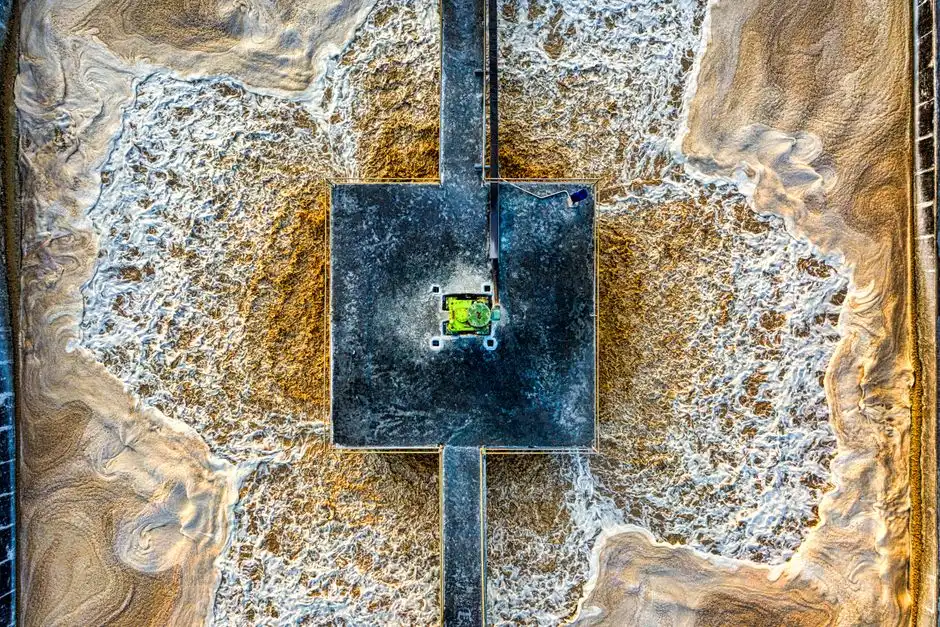
The practical flow for DAF on a mining stream involves dosing influent with coagulant and adjusting pH in a serpentine floc tube or mix tank, then adding a polymer flocculant to build a settleable or floatable floc. The conditioned stream enters the DAF chamber, where saturated recycle releases bubbles that attach to flocs and lift them; a paddle skimmer sweeps the float to a trough; and an auger pulls the small fraction of heavy settled solids from the bottom. A gravity or lamella clarifier receives the same conditioned water and lets dense particles drop to a sludge hopper while clarified water overflows a weir; in a lamella, inclined plates shorten the effective settling path so finer or slower-settling particles reach the sludge.
For a Minnie site, the implication is straightforward. DAF is effective when the stream contains emulsified oils, FOG, light hydroxide flocs, or polymer-conditioned fines whose effective density is close to water. Lamella is superior when the stream is already dominated by coarse silica, taconite tailings, or metalliferous sludge that settles under its own weight. Both technologies require chemical conditioning for fine or colloidal fractions, and the PLC-controlled coagulant and flocculant dosing skid that supports either choice is essentially the same unit.
Parameter Comparison: DAF vs Lamella/Gravity Clarifier
The table below is built from the Clearwater/SigmaDAF product literature (2026-04-27), the Sarı chapter on DAF (doi:10.1201/9781315164199), and the Wang/Krofta paper on high-rate DAF (STEAM, 2022-07).
| Parameter | DAF (dissolved air flotation) | Lamella / gravity clarifier |
|---|---|---|
| Separation mechanism | 30–50 µm microbubbles attach to flocs and float them (Clearwater/SigmaDAF, 2026-04-27) | Gravity settling; inclined plates shorten settling path in lamella |
| Typical footprint vs conventional clarifier | Smaller footprint and modular installation per the Sarı DAF chapter (doi:10.1201/9781315164199) | Lamella reduces footprint vs conventional clarifier, but still larger basin than a DAF for the same flow |
| Upstream chemistry | Must be paired with coagulation and flocculation (Clearwater/SigmaDAF, 2026-04-27) | Coagulation/flocculation improves performance but is not strictly required for dense, fast-settling solids |
| Sludge output | Thickened float plus a small bottom-settled fraction removed by auger; 2–3% thickened sludge consistency reported for high-rate DAF (Wang & Krofta, STEAM 2022-07) | Single settled-sludge stream from a sludge hopper |
| Model families (SigmaDAF / Clearwater) | FPAC (small-to-medium flow, very high solids), FPBC (low-to-medium solids, lamella pack inside), FPHF (high flow, cross + countercurrent), COMPACT DAF (single skid ≤66 GPM, two-skid >66 GPM) (Clearwater/SigmaDAF, 2026-04-27) | HydropureWater High-Efficiency Sedimentation Tank (lamella plates) for comparable flow range |
| Standard materials | 304SS standard; 316SS, polypropylene, or other alloys available on request (Clearwater/SigmaDAF, 2026-04-27) | PP/PVC or stainless lamella plates depending on chemistry |
| Best-fit particle class | Light, buoyant, oil-coated, or polymer-flocculated fines | Dense, abrasive, fast-settling mineral particles |
When a DAF Is the Right Pick for a Minnie Mining Plant
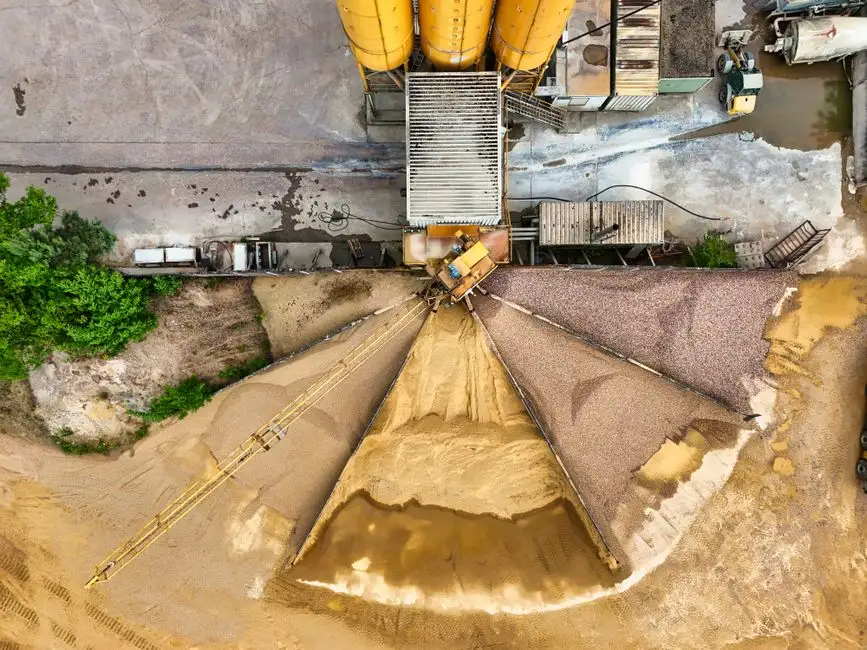
DAF is the optimal primary stage when the suspended phase is light, buoyant, or chemically flocculated. The SigmaDAF FPAC model is designed for small-to-medium flow rates with very high solids loads, including FOG and TSS, and uses a large free surface area for floated-solids accumulation (Clearwater/SigmaDAF, 2026-04-27). This makes DAF a natural fit for vehicle wash water, equipment drainage, oil-lubricant contamination, and any stream that undergoes neutralization producing light hydroxide flocs.
Three site conditions favor DAF for a Minnie engineer. First, the stream contains emulsified oils, lubricants, or hydrocarbon contamination. Second, the solids are light hydroxide or polymer flocs from a neutralization stage, where 30–50 µm bubbles attach efficiently to produce the 2–3% thickened sludge consistency reported for high-rate DAF (Wang & Krofta, STEAM 2022-07). Third, the site is footprint-constrained—a brownfield expansion of an older Minnie mill, where the COMPACT DAF's plug-and-play modular architecture minimizes civil work (Clearwater/SigmaDAF, 2026-04-27). DAF supports rapid startup and PLC-controlled adjustment of chemical dosing and skimmer speed, which is helpful when production schedules shift between campaigns.
When a Lamella or Gravity Clarifier Wins in Metals Processing
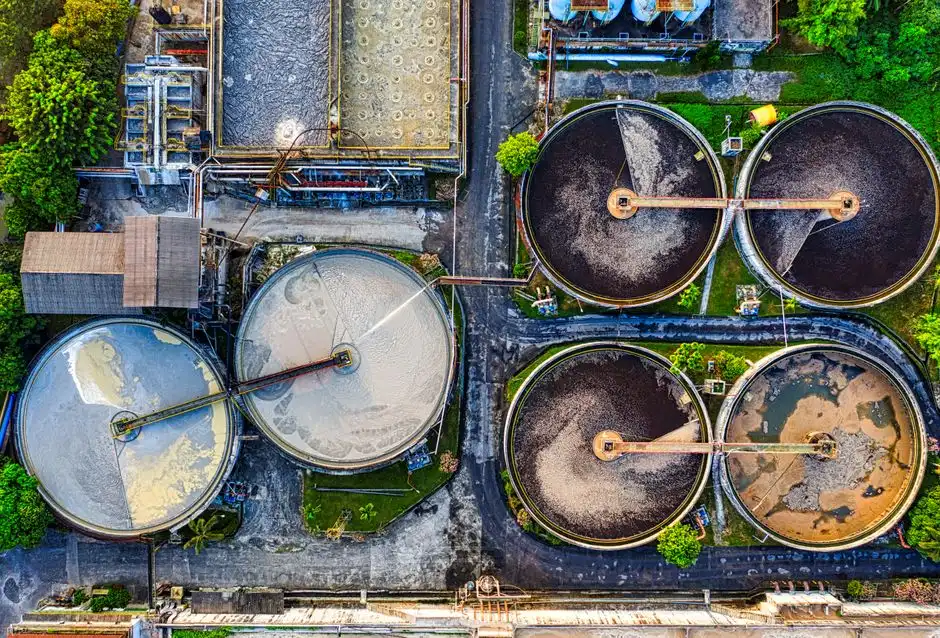
For many Minnie streams, the older technology is the correct answer. If the influent is dominated by dense mineral particles—silica, iron ore fines, taconite tailings—that settle readily, there is no engineering reason to use energy for bubble generation, and a quiescent lamella clarifier for mineral fines is the simpler primary stage.
Three conditions push a Minnie engineer toward a lamella or gravity clarifier. First, the stream is abrasive: recycle pumps, saturation skids, and skimmer paddles in a DAF add wear points that a quiescent lamella basin does not. Second, chemical conditioning is minimal. Clearwater/SigmaDAF state that DAF should be paired with coagulation and flocculation for optimal performance (2026-04-27); a plant that does not want to run a polymer program should avoid a DAF. Third, the downstream process expects a settled-sludge feed—for example, a filter press for the clarifier underflow—and a single sludge stream from a lamella clarifier is easier to feed than the combined float-plus-settled sludge from a DAF.
2026 Cost, Footprint, and Compliance Considerations for Minnie
Cost framing for 2026 depends on the engineering requirements. A DAF carries added CAPEX for the pressurization/saturation skid, recycle pump, and skimmer mechanism, but a smaller civil footprint; a lamella clarifier carries higher civil cost for the basin and lower rotating-equipment cost. The Wang/Krofta paper claims a high specific clarification capacity (4–5 GPM/sqft) and a 3-minute retention time for the Supracell DAF, and notes that purchase cost is lower than other systems of comparable performance (STEAM, 2022-07) — a vendor claim that should be verified against an actual quotation. On OPEX, DAF requires ongoing coagulant, flocculant, and pH-adjustment chemicals plus saturated-air energy, while a lamella clarifier is mostly hydraulic with lower chemical demand.
Compliance framing is equally important. The 40 CFR 440 effluent guidelines divide mining and metals operations by subpart, and local NPDES or POTW pretreatment limits can be more stringent than federal numbers. The 2026 target is whether the chosen primary stage, followed by secondary and polishing stages, meets the subpart limit and local permit at design flow. Confirm the subpart and local limits before locking the equipment specification, and request a jar-test or pilot run on the actual Minnie stream before signing a CAPEX commitment.
| 2026 decision axis | DAF | Lamella / gravity clarifier |
|---|---|---|
| CAPEX driver | Pressurization/saturation skid, recycle pump, skimmer mechanism, smaller basin | Larger civil basin, minimal rotating equipment |
| OPEX driver | Coagulant, flocculant, pH adjust, saturation energy | Mostly hydraulic, much lower chemical demand |
| Sludge handling | Thickened float 2–3% consistency (Wang & Krofta, STEAM 2022-07) plus small bottom fraction | Single settled-sludge stream, lower consistency, larger volume |
| Regulatory anchor | 40 CFR 440 subpart + site NPDES or POTW limits — confirm before sizing | Same regulatory anchor — confirm before sizing |
| Vendor model fit | DAF system for mining and metals wastewater | Lamella clarifier for mineral fines |
Decision Framework: Choosing DAF or Clarifier for Your Minnie Site
Use this four-step flow at the next project meeting to finalize the equipment choice. Step 1 — Characterize the suspended phase. If the particles are light, oily, or buoyant, score DAF; if they are dense, abrasive, and settle readily, score lamella. Step 2 — Check the chemistry program. If the plant already runs coagulant/flocculant dosing for a downstream stage, DAF is the more integrated choice; if not, lamella is simpler to operate. Step 3 — Check footprint and existing civil. A tight brownfield Minnie site favors a skid-mounted DAF system for mining and metals wastewater; an open site with existing basins favors a lamella clarifier for mineral fines. Step 4 — Confirm the 2026 discharge target against the applicable 40 CFR 440 subpart and the local NPDES or POTW permit before locking the specification, and request a pilot run on the actual stream.
Frequently Asked Questions
What is the 2026 capital cost difference between a
Frequently Asked Questions
Should a mining factory in Minnie choose a DAF or a clarifier in 2026?
The choice depends on the specific gravity and particle size of the suspended solids. Dissolved Air Flotation (DAF) is superior for mining wastewater containing oil, grease, or low-density particles (specific gravity < 1.0) that naturally float, offering removal efficiencies often exceeding 95% for light particulates. Conversely, lamella clarifiers are preferred for high-density, inorganic mineral tailings with a specific gravity > 1.2, as these materials settle rapidly and require a smaller footprint for gravity-based separation.
What is the typical capital cost difference between a DAF system and a lamella clarifier for a 100 GPM mining wastewater stream?
For a 100 GPM stream, a lamella clarifier typically carries a lower capital expenditure, ranging from $60,000 to $120,000 depending on materials of construction and plate configuration. A DAF system for the same flow rate generally costs between $100,000 and $180,000 due to the added complexity of the air saturation system, recycle pumps, and pressure vessels required to maintain micro-bubble generation.
How do I size a DAF versus a lamella clarifier for a metals plant with high TSS and heavy metals?
DAF systems are sized based on the surface overflow rate, typically ranging from 2 to 4 gallons per minute per square foot (gpm/ft²), accounting for the air-to-solids ratio. Lamella clarifiers are sized based on the projected settling area of the plates; for metals precipitation, a rise rate of 0.1 to 0.3 gpm/ft² of projected area is standard to ensure the removal of metal hydroxide flocs, which are often fragile and prone to shear.
Which US permits and 40 CFR 440 subparts apply when selecting a DAF or clarifier for a mining wastewater plant in 2026?
Facilities must comply with the National Pollutant Discharge Elimination System (NPDES) permit requirements dictated by the specific 40 CFR Part 440 subpart applicable to their commodity (e.g., Subpart J for Copper, Nickel, Lead, and Zinc Ores). Selection of treatment technology must ensure effluent concentrations meet Best Available Technology (BAT) standards for total suspended solids (TSS) and specific heavy metal limits (e.g., mercury, cadmium, lead) as defined in the 2026 EPA guidelines for the mining sector.
What chemical dosing system is required upstream of a DAF treating mining or metals wastewater?
Effective DAF operation requires a multi-stage chemical conditioning system, typically consisting of a pH adjustment tank followed by rapid mix and flocculation stages. Dosing of coagulants (such as ferric chloride or aluminum sulfate) at 20–100 mg/L is necessary to destabilize metal colloids, followed by the addition of high-molecular-weight anionic polymers (0.5–5 mg/L) to bridge particles, creating the larger flocs necessary for attachment to the pressurized air micro-bubbles.