Set the treatment objective before choosing a process
For fabricated-metals wastewater in Watertown, choose MBR when low suspended solids, a defined water-reuse objective or a constrained footprint justifies membrane fouling control, maintenance and higher solids inventory. Choose conventional activated sludge when wastewater is consistent, pretreatment is modest, land is available and the site can reliably operate clarifiers, sludge return and wasting. Neither process alone removes dissolved metals, VOCs or salts. The decision begins with source-by-source characterization, average and peak flows, equalization, pretreatment, the applicable discharge or reuse objective, available space and the sludge-disposal route.
Direct discharge, sewer pretreatment and industrial wastewater reuse are different objectives. Obtain the current requirement from the facility and the reviewing authority; the supplied research does not establish Watertown discharge limits, sewer rules or reuse criteria. Do not convert a generic low-solids specification into a permit requirement.
An MBR retains microorganisms and suspended solids through membrane separation. It does not automatically remove dissolved metals, volatile organic compounds or salts; those contaminants need a defined physical, chemical or other polishing step. Conventional activated sludge has the same limitation because biological treatment does not substitute for source control or contaminant-specific treatment.
HydropureWater’s integrated submerged-PVDF MBR system is described as delivering near-reuse-quality effluent through filtration below 1 micrometre. That describes a separation capability, not evidence of dissolved-contaminant removal or permit compliance. Treat it as a vendor claim to verify against the actual wastewater, treatment train and applicable objective.
Characterize each fabricated-metals wastewater stream
Each fabricated-metals stream requires separate characterization because cutting and grinding fluids, machining coolant, wash water, coating rinse water, floor washdown and process rinse water differ in chemistry, flow, toxicity and fouling potential.
A biological loading calculation based only on a plant-wide average can conceal an incompatible batch and produce an unreliable treatment design. Send the following source-characterization request to each responsible production area. It should require measured data rather than generic process descriptions:
- Average flow, peak flow, batch-discharge frequency, discharge duration and operating schedule for each stream.
- pH, oil and grease, total suspended solids, metals, toxicity indicators, surfactants, temperature and applicable bulk organics or toxicity tests.
- Color or coating constituents where relevant, chemical products used in each stream, and known incompatible mixing combinations.
- Identification of the proposed receiving route: direct discharge, sanitary or industrial sewer pretreatment, or a specific reuse application.
- Sampling during normal production, cleanup, maximum production and representative batch releases—not one composite average alone.
Keep incompatible streams separate where necessary. Combining them by dilution can conceal toxicity, foaming, shock loading and membrane-fouling risks. A release that appears small after mixing can still exceed the biological or membrane operating envelope.
Where oil, grease and floating material are confirmed, DAF pretreatment for metalworking wastewater is one candidate step. It is not an automatic requirement: size any DAF from measured contaminants and the proposed biological loading, then identify the resulting solids route. Use the metals wastewater pretreatment decision guide as a prompt for verification, not as a substitute for Watertown site data.
| Source-characterization request | Required information | Decision supported |
|---|---|---|
| Cutting and grinding fluids; machining coolant | Flow, pH, oil and grease, surfactants, suspended solids, toxicity indicators and batch pattern | Source control, biological loading, equalization and membrane protection |
| Wash water and coating rinse water | Flow, pH, oil and grease, suspended solids, surfactants, color, metals and discharge timing | Stream-specific pretreatment and release control |
| Floor washdown and process rinse water | Solids, metals, temperature, chemicals and batch-release pattern | Shock-load exposure, solids removal and disposal route |
| All streams | Average and peak flow, sampling method, analytical methods and current receiving/reuse objective | Common design basis for biological capacity, footprint and compliance risk |
Match MBR and activated sludge to operating conditions
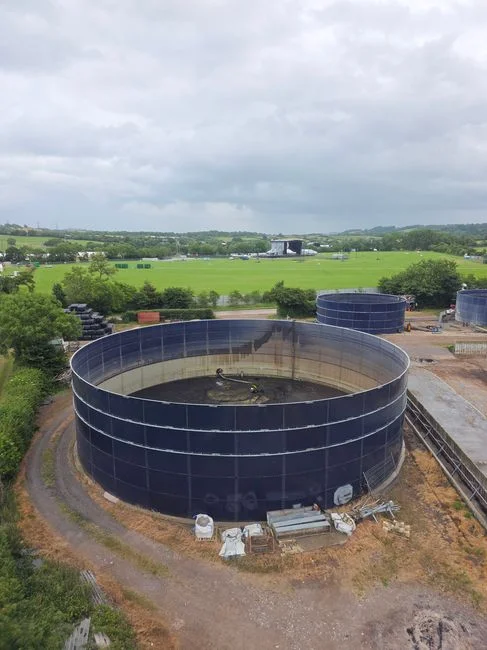
MBR is the stronger candidate when low suspended solids, clarified reuse value, limited space and controlled upstream contaminants justify replacing secondary clarification with membrane separation. Choosing the right system requires balancing these operational factors against the site's unique requirements.
The process comparison must include the consequences of that choice. MBR can retain a higher mixed liquor suspended solids inventory: NYWEA’s Clear Waters publication from Summer 2014 reports that conventional activated sludge commonly operates near 2,000–3,000 mg/L MLSS, while MBR units can safely run at 10,000–20,000 mg/L. Higher inventory affects tank volume, wasting, mixing, pumping and downstream sludge treatment.
Residual solids are another distinction. The University of Cincinnati-hosted review, The status of membrane bioreactor technology, cited in HydropureWater’s 2026 comparison reports flocculant solids of 8–18 g/L in most MBR plants, depending on solids retention time, compared with 2.5–3.5 g/L for conventional activated sludge. The same review states that 30–50% of energy demand for an immersed MBR can arise from membrane aeration. Energy therefore requires a design calculation, not a generic MBR-versus-CAS assumption.
| Selection condition | MBR | Conventional activated sludge | Evidence or required check |
|---|---|---|---|
| Effluent solids and reuse | Stronger fit where membrane separation provides required solids quality or clarified reuse value | Requires secondary clarification followed by any required polishing | Define the actual effluent or reuse objective |
| Space | Potential footprint advantage | Requires space for biological basins, clarifiers, sludge handling and maintenance access | HydropureWater claims 60% smaller footprint for its integrated MBR; verify with dimensioned layouts |
| Wastewater consistency | Suited to applications that control upstream oil, solids, pH and shock loads | More practical for consistent wastewater with modest pretreatment | Source testing and batch-release history |
| Solids inventory | 10,000–20,000 mg/L MLSS can be used | Commonly near 2,000–3,000 mg/L MLSS | NYWEA, Clear Waters, Summer 2014 |
| Residual solids | 8–18 g/L flocculant solids in most plants, depending on SRT | 2.5–3.5 g/L | University of Cincinnati-hosted review cited in HydropureWater’s 2026 comparison |
| Energy | 30–50% of demand for an immersed MBR can arise from membrane aeration | Includes biological aeration and solids handling | Same review; require calculated site-specific demand |
| Operations | Adds membrane inspection, cleaning, scouring, integrity management and replacement | Adds secondary settling, sludge return, wasting and solids handling | Compare operator capability and service responsibility |
Do not select a process from equipment names alone. An MBR replaces the secondary-clarifier function; it does not replace upstream oil, grease, solids, pH or shock-load control. A CAS system needs reliable settling and a workable sludge route. The adjacent MBR versus activated sludge use-case comparison illustrates the screening logic, but food-processing evidence cannot establish fabricated-metals performance.
Design for peak flows, fouling and maintenance access
Peak-flow control can eliminate an otherwise attractive option because membrane capacity and equalization must cover batch releases, not merely average daily flow. EPA guidance from June 2021 states that peak design flows should be no more than 1.5–2 times average design flow; excursions beyond that range require added membrane capacity or equalization. Give bidders the actual flow history and the proposed equalization response.
The same EPA guidance recommends N-plus-1 membrane capacity at full-treatment installations so treatment remains available during maintenance. Require each bidder to state the treatment capacity that remains available when one membrane unit is isolated and how that condition affects the discharge or reuse commitment.
EPA guidance also calls for fine screening immediately before membranes. Manufacturer-dependent cutoffs are generally 1–3 mm: hollow-fiber systems typically use 1–2 mm, while plate systems use 2–3 mm. The selected membrane manufacturer should confirm the exact screen requirement, cleaning frequency and consequences of debris or grit reaching the membrane.
Request membrane material, pore size, configured area, design flux, air-scour design, cleaning method and frequency, redundancy, replacement scope, service life, warranty and remaining capacity during maintenance. Also require operator access, installation clearances, remote support, training, spare-parts strategy and treatment continuity during cleaning or repair.
HydropureWater’s vendor-reported 60% smaller footprint should not be accepted as a universal comparison. Require dimensioned plan views, equipment envelopes, maintenance clearances and the conventional activated-sludge layout used as the comparator. Without a common flow, characterization, solids inventory and maintenance-access basis, footprint claims are not like-for-like.
Compare lifecycle costs and sludge routes on one basis
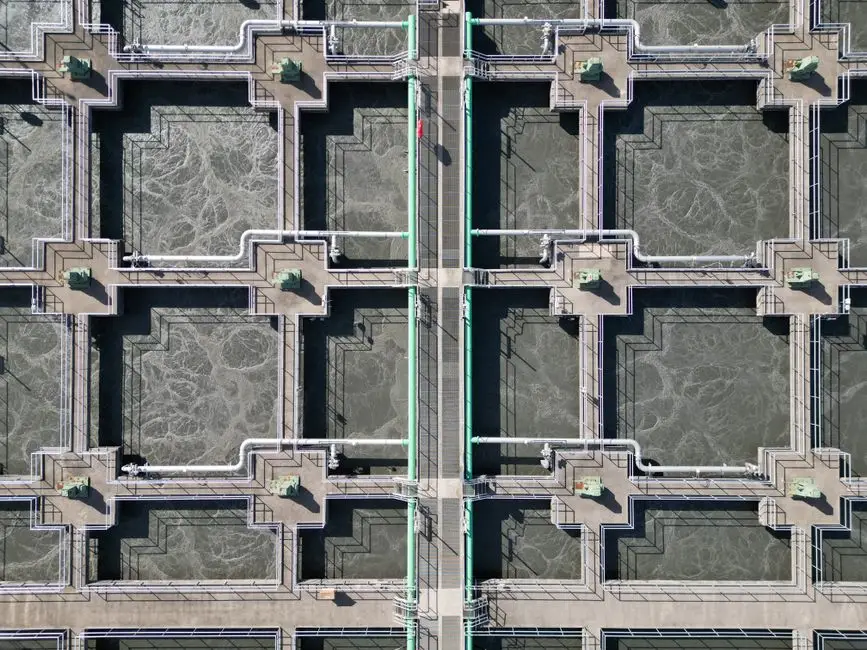
The supplied research contains no validated fabricated-metals capital or operating cost range for Watertown, so no defensible generic price comparison can be presented. Require itemized bids on one design basis. Equipment purchase price alone will not reveal the cost of aeration, chemicals, operators, membrane replacement, cleaning downtime, residual-sludge treatment or disposal.
The MBR wastewater treatment system cost and selection guide provides a useful framework for lifecycle-cost and application-selection detail, but it does not replace site-specific quotations.
Sludge must be compared on the same basis. The University of Cincinnati-hosted review cited in HydropureWater’s 2026 comparison describes MBR sludge as less readily dewaterable than conventional activated-sludge sludge. Require the intended wasting route, expected volume and consistency, conditioning assumptions and consequences at the selected dewatering method. A plate-and-frame filter press may be considered after sludge properties are characterized, but receiving-facility acceptance and off-site disposal remain separate requirements.
| Common bidder input | MBR information required | Conventional activated-sludge information required |
|---|---|---|
| Same flow and wastewater basis | Average and peak flow, source characterization, equalization, pretreatment and effluent objective | Average and peak flow, source characterization, equalization, pretreatment and effluent objective |
| Equipment and separation | Membrane area and material, design flux, air scour, cleaning, service life, replacement and warranty | Basin and secondary-clarifier sizing, settling criteria, sludge return and wasting |
| Operations | Energy calculation, controls, operator hours, inspection, cleaning chemicals, downtime and remote support | Blower basis, controls, operator hours, inspection, sludge handling and maintenance |
| Residual solids | Expected volume and consistency, conditioning, dewatering method, disposal route, transport and receiving charges | Expected volume and consistency, conditioning, dewatering method, disposal route, transport and receiving charges |
| Commercial scope | Installation, startup, training, warranty, exclusions and performance-guarantee conditions | Installation, startup, training, warranty, exclusions and performance-guarantee conditions |
Issue one common design package to every bidder: flow basis, characterization, equalization, effluent objective, available footprint, pretreatment basis, power assumptions, operator capability and sludge-disposal route. Ask bidders to label manufacturer claims, calculation inputs, site assumptions and permit-dependent items separately. For material compliance or reuse risk, require pilot evidence with agreed analytical methods rather than relying only on catalog performance.
Frequently Asked Questions
How should a Watertown fabricator compare MBR and conventional activated sludge on cost?
Do not compare purchase prices alone, because no validated Watertown fabricated-metals cost range is available in the supplied research. Ask each bidder for an itemized lifecycle quotation using the same flow, wastewater characterization, effluent objective, pretreatment, footprint and sludge-disposal basis. Include energy, chemicals, operator labor, membrane replacement and cleaning downtime for MBR, as well as settling, sludge return, wasting, sludge treatment and disposal for conventional activated sludge. Use the MBR wastewater treatment system cost and selection guide to structure the review, then request quotations rather than substitute generic figures
Frequently Asked Questions
Is MBR or conventional activated sludge better for fabricated metals wastewater?
MBR (Membrane Bioreactor) is generally superior for metal-fabricating wastewater because the physical barrier of the membrane ensures 100% retention of biomass, regardless of the sludge settling characteristics often hindered by metal-laden waste. While activated sludge relies on gravity settling in a secondary clarifier, MBR operates at higher Mixed Liquor Suspended Solids (MLSS) concentrations, typically ranging from 8,000 to 12,000 mg/L, providing a more robust process capable of handling the toxic shocks and variable organic loads common in industrial metal processing.
What does an MBR wastewater system cost compared with activated sludge?
MBR systems typically carry a 20% to 40% higher initial capital expenditure (CAPEX) than conventional activated sludge systems due to the cost of membrane modules, specialized aeration systems, and automated control infrastructure. However, MBR systems often result in lower total footprint costs and reduced secondary treatment requirements, though operational expenditure (OPEX) is higher due to membrane cleaning chemicals, energy usage for scouring air (typically 0.5 to 1.5 kWh/m3), and periodic membrane replacement cycles every 5 to 8 years.
How should an MBR be sized for variable metal-fabricating wastewater flows?
For metal-fabricating facilities with fluctuating flows, MBR systems should be sized based on the peak hydraulic flow rate rather than the average, while incorporating an equalization basin to buffer flow surges. Engineers typically design the membrane flux rates conservatively, often between 10 and 20 liters per square meter per hour (LMH), to account for potential membrane fouling caused by residual oils, grease, and metal fines that may bypass primary pretreatment stages.
Which wastewater data should I require from MBR and activated-sludge suppliers?
You must require suppliers to provide performance guarantees based on treatability studies using your specific influent, including chemical oxygen demand (COD), total suspended solids (TSS), oil and grease concentrations, and specific heavy metal profiles (e.g., Chromium, Nickel, Zinc). Additionally, request data on the expected transmembrane pressure (TMP) increase over time, the required flux maintenance protocols, and the predicted sludge production rates in kilograms of dry solids per kilogram of COD removed.
Does MBR remove dissolved metals before discharge in Watertown?
MBR alone does not remove dissolved metals; it only removes metals that are bound to particulate matter or those that become incorporated into the biological sludge flocs. To meet discharge standards for dissolved metals in Watertown, the MBR must be preceded by chemical precipitation, coagulation, and flocculation steps to convert dissolved metal ions into insoluble precipitates, which the membrane can then physically filter out of the effluent stream.