Separate the wastewater streams before selecting equipment
Cooling tower blowdown must be treated as a separate industrial process stream from sanitary sewage at a Juiz de Fora data center. Evaporative cooling removes water as vapor while retaining salts, corrosion inhibitors, biocides, and other treatment chemicals in the circulating liquid; controlled purging then removes that concentrated water. UGA Extension reports that globally, 75% to 90% of data centers primarily use water-based cooling, which makes wastewater planning relevant early in site development.
Ask the mechanical and chemical-treatment teams to define the cooling configuration, cycles of concentration, complete chemical package, source-water analysis, operating temperature, average and peak blowdown flow, operating hours, and expected variation in those inputs. Sanitary sewage, equipment-cleaning wastewater, treatment backwash, and air-handling condensate should each be identified by source and destination rather than assumed to be interchangeable with blowdown.
| Stream | Procurement and treatment boundary | Required information |
|---|---|---|
| Cooling tower blowdown | Industrial process wastewater; assess independently for reuse, sewer pretreatment, or direct discharge. | Cooling configuration, cycles of concentration, chemical inventory, flow, temperature, source-water analysis |
| Sanitary sewage | Domestic waste from restrooms and kitchens; keep separate from industrial blowdown. | Fixture count, design flow, local sewer route and capacity |
| Equipment-cleaning wastewater | Route according to contaminants and receiving authority requirements; do not combine by default. | Cleaning products, frequency, volume, concentration |
| Treatment backwash | Manage as a separate unit operation because its chemistry and flow depend on the selected treatment train. | Source treatment process, backwash frequency, disposal route |
| Air-handling condensate | Characterize before combining with any discharge or reuse stream. | Sampling results, temperature, flow, possible additives |
Characterize the blowdown before choosing a treatment train
Cooling blowdown characterization requires analyzing both chemistry and operating variability because the contaminants that drive pretreatment change with source water, chemical dosing, and cooling-system operation. Black & Veatch identifies wastewater sampling as the step that determines whether direct discharge, sewer connection, or on-site treatment is appropriate. Preliminary characterization should therefore precede equipment sizing.
Obtain baseline and operating samples rather than relying only on vendor-provided “typical” values. Test pH, conductivity or total dissolved solids, suspended solids, chlorides, sulfates, phosphates, residual chlorine or the selected biocide, relevant metals, temperature, and flow. The exact analytical program should reflect the site’s cooling-water source, chemical package, corrosion materials, and intended discharge or reuse route.
| Parameter | Design question | Possible control |
|---|---|---|
| pH | Could the blowdown corrode receiving infrastructure or affect treatment? | pH neutralization with an automatic chemical dosing system for blowdown pH control |
| TDS and conductivity | Will dissolved salts constrain sewer acceptance or make-up-water quality? | RO or another separation process; route-specific limits |
| Suspended solids | Could solids foul receiving infrastructure or the selected treatment train? | Filtration and solids removal |
| Residual oxidant or biocide | What residual remains at the discharge or reuse point? | Dechlorination or review of the biocide strategy |
| Chlorides, sulfates, phosphates, and metals | Which constituents require removal or monitoring under the selected route? | Route-specific treatment and analytical monitoring |
| Temperature and flow | What peak hydraulic and thermal loads must the system handle? | Cooling, equalization, flow control, and monitoring |
RSP Engineers lists TDS, chlorides, sulfates, phosphates, pH, temperature, residual chlorine, and heavy metals as common blowdown concerns. Its stated pH range of 6.0 to 9.0 and example temperature of 150°F are U.S.-scoped references, not Juiz de Fora limits. Extreme pH may require neutralization; residual oxidant may require dechlorination or an alternative biocide approach; and dissolved salts can complicate both discharge acceptance and reuse.
Compare reuse, sewer discharge, and direct discharge
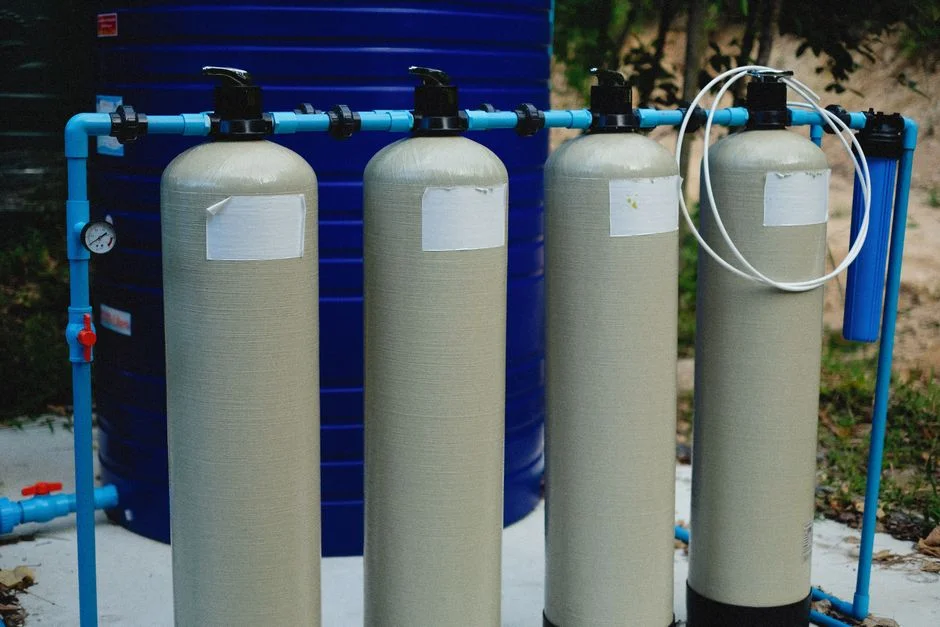
The preferred route depends on written authority requirements, treatment burden, water-reuse value, and operating risk rather than the lowest initial equipment price. Black & Veatch frames the decision around three alternatives: direct discharge to a receiving body, discharge to the local wastewater treatment plant if accepted without additional treatment, or on-site treatment before discharge. Sewer acceptance must not be assumed, and reuse remains an additional route that changes both treatment objectives and concentrate handling.
| Route | Decision condition | Principal treatment and operating issues |
|---|---|---|
| Cooling-water reuse | Select if the authority permits the application and reliable make-up-water quality can be produced from variable blowdown. | Equalization, filtration, pH control, dechlorination where needed, RO or another membrane process, storage, distribution, and concentrate management |
| Sanitary sewer discharge | Select only after the accepting utility confirms flow capacity, connection conditions, pretreatment limits, sampling, and monitoring requirements. | Flow control, pH neutralization, solids removal, dechlorination where required, and monitoring against utility criteria |
| Direct discharge | Select only if a receiving body is legally available and the competent authorities confirm authorization, constituent limits, temperature conditions, and monitoring obligations. | Solids removal, pH correction, dechlorination, thermal management, dissolved-solids control, and discharge monitoring as verified locally |
For reuse, treat the blowdown as a make-up-water production problem rather than as a discharge stream with pH correction alone. The project must evaluate membrane or separation performance, scale control, concentrate disposal or further treatment, storage, distribution back to the cooling system, and protection against contamination during transfer.
For sewer discharge, request the interceptor’s written criteria before ordering equipment. Confirm whether the proposed flow is hydraulically acceptable, what pretreatment is required, which constituents must be monitored, and whether sampling or flow records are required.
For direct discharge, confirm authorization with the competent Brazilian and Juiz de Fora authorities, including receiving-water temperature and constituent limits, toxicity or aquatic-life considerations, monitoring, reporting, and permit conditions. The supplied Clean Water Act and NPDES evidence from RSP Engineers and UGA Extension is U.S.-scoped. It supports the route-selection logic but is not the legal framework for Juiz de Fora.
For a broader comparison of treatment objectives, see how to compare data center blowdown treatment trains and how to compare reuse and discharge options for data center wastewater.
Build the treatment train around the selected route
Each treatment module must answer a defined route-specific duty, as there is no universal skid for all data-center wastewater. A reuse route normally starts with equalization and filtration, then may require pH control, dechlorination, RO, optional polishing, and concentrate handling before treated water returns as cooling make-up. Sewer pretreatment centers on utility-defined limits, while direct-discharge treatment must address the receiving-body criteria confirmed locally.
| Selected route | Indicative module sequence | Final design checks |
|---|---|---|
| Reuse as cooling make-up | Equalization → filtration → pH control → dechlorination where required → RO or other membrane separation → optional polishing → storage and return distribution | Make-up-water quality, membrane scaling, concentrate route, storage turnover, cooling-system compatibility |
| Sewer pretreatment | Equalization → flow control → pH neutralization → suspended-solids removal → dechlorination where required → monitoring and sampling | Written utility limits, accepted flow, constituent removal, sampling location, discharge-control arrangement |
| Direct discharge | Equalization → solids removal → pH correction → dechlorination where required → thermal management → dissolved-solids control where required | Receiving-water limits, temperature, aquatic-life considerations, permit conditions, monitoring and reporting |
For sewer pretreatment, an UF pretreatment for data center blowdown may be relevant where the verified solids and fouling duty justify it. The skid specification should also cover chemical containment, drainage, maintenance access, power, controls, bypasses or redundancy, and treatment of wastes generated by the equipment itself.
IDE reports that conventional brackish-water RO typically reaches 75–80% recovery before scaling becomes unmanageable. Use that value only as a scale-formulation reference: silica, calcium carbonate, and calcium sulfate behavior must be checked against the actual blowdown chemistry before recovery, concentrate volume, or pretreatment capacity is fixed.
Footprint is also route-dependent. RSP Engineers reports that simple pH neutralization may occupy a few hundred square feet, while filtration plus chemical precipitation may require several thousand square feet. Reserve space early for tanks, chemical storage, access, drainage, and future maintenance rather than treating the treatment area as a late civil-works item.
Verify performance with a sample-to-commissioning checklist
Acceptance must be tied to representative chemistry and flow rather than a factory performance test. The procurement file should contain source-water analysis, the complete cooling chemical inventory, cooling-system parameters, expected and peak blowdown flow, temperature range, operating schedule, and the receiving utility’s or environmental authority’s written criteria.
| Stage | Minimum record | Decision or acceptance action |
|---|---|---|
| Baseline sampling | Sample point, date, flow condition, temperature, laboratory method, and preservation | Establish source-water and initial blowdown characterization |
| Operating sampling | Representative samples across expected chemical dosing and operating conditions | Confirm variability and select the design basis |
| Procurement review | Design flow, chemistry, route-specific limits, concentrate route, monitoring duties, and approval status | Reject sizing based on generic data or unresolved authority requirements |
| Pre-installation review | Skid duty, bypass or redundancy, alarms, containment, drainage, maintenance access, power, and sampling points | Resolve operability and site-integration gaps |
| Commissioning | Tests at representative flow and chemistry; pH and required constituent results; reuse quality where applicable | Accept only against specified route and performance criteria |
| Operations | Monitoring and reporting schedule, calibration records, operator responsibility, and upset response | Transfer the discharge or reuse system into controlled operation |
- Collect baseline and operating samples with documented sampling points, laboratory methods, preservation, and operating conditions.
- Select the discharge route only after receiving written local criteria.
- Finalize equipment duties, sizing, redundancy, footprint, monitoring, and concentrate handling.
- Test at representative flow and chemistry, verify required constituent removal or reuse quality, and establish the monitoring schedule.
Frequently Asked Questions
Why is preliminary sampling required before a supplier sizes the treatment system?
Blowdown chemistry changes with source water and the cooling chemical program. Representative samples let the buyer define pH, dissolved solids, suspended solids, biocide residue, temperature, and flow before settling treatment capacity or recovery assumptions.
How much should a data center budget for wastewater and cooling-blowdown treatment?
Request a route-specific quotation because cost depends on chemistry, average and peak flow, treatment duty, reuse value, concentrate handling, monitoring, and the receiving route. The buyer should require itemized equipment, civil works, chemicals, energy, maintenance, sampling, and concentrate-disposal costs; the supplied research contains no valid Juiz de Fora price.
What should a supplier provide to reduce sizing and lead-time risk?
Require the supplier to identify its design basis, flow and chemistry inputs, treatment objectives, equipment sizing margins, concentrate route, utility requirements, controls, monitoring, commissioning tests, and excluded civil or regulatory work.
Why can Juiz de Fora compliance not be inferred from U.S. rules?
The supplied Clean Water Act and NPDES evidence is U.S.-scoped. Obtain the applicable Brazilian and local authority requirements in writing and confirm them with the agencies responsible for sewer acceptance, reuse, and receiving-water discharge.