Profile the wastewater before selecting equipment
Wastewater treatment for Nigerian breweries should begin with measured wastewater characteristics, not a fixed equipment list. A study of four Nigerian breweries found water use 2.9–5.08 hl/hl above best practice and annual wastewater runoff averaging 35–61 million hectoliters. Another study reported a brewery wastewater plant removing 93% BOD, 82% ammonia and 82% COD, but plant performance must still be verified for each site. DAF can address suspended solids, oil and grease; biological treatment can reduce soluble organics and ammonia; MBR can provide compact solids separation where reuse quality is required. Final selection depends on flow, load, pH, discharge route and site constraints.
Request flow records by production shift, operating day and season rather than relying only on an annual average. The four breweries examined in Water Footprints in Four Selected Breweries in Nigeria (2011) generated average annual wastewater runoff of 35–61 million hectolitres and exceeded their best-practice water-use rating by 2.9–5.08 hl/hl of product. Those findings support two separate procurement actions: investigate source reduction at the brewery, and size treatment equipment against measured peak flow rather than annual runoff alone.
The laboratory programme should cover pH, BOD, COD, TSS, turbidity, ammonia, oil and grease, sulfate, temperature and flow. The Nigerian brewery studies reviewed for this article identify pH, turbidity, BOD and COD as relevant wastewater indicators, while the broader sampling list provides the information needed to distinguish physical, biological and discharge-control duties.
Screen for copper, lead, zinc, manganese and iron where incoming water, ingredients or process conditions warrant it. These were the heavy metals evaluated in Bioremoval of Heavy Metals from a Nigerian Brewery Wastewater by Bacterial Application (2017), but their presence and concentration remain site-specific questions. Record the discharge route or intended reuse quality before comparing clarification, biological, membrane or disinfection equipment, because those decisions change both the required process stages and the acceptance criteria.
| Procurement input | Evidence required | Why it affects equipment selection |
|---|---|---|
| Water balance and flow | Measured flow by shift and day; seasonal coverage; production schedule | Defines pretreatment, equalisation and biological capacity |
| Organic and solids load | BOD, COD, TSS, turbidity, ammonia, oil and grease | Separates soluble biological load from material requiring clarification |
| Process conditions | pH, temperature, sulfate and flow samples | Identifies pH correction, biological constraints and operating variability |
| Site-specific contaminants | Copper, lead, zinc, manganese and iron where screening is warranted | Tests whether source control or dedicated treatment is required |
| Final destination | Discharge route, permit conditions or intended reuse specification | Sets treatment objectives and acceptance limits |
Match each pollutant to its treatment stage
Each treatment stage should have a defined pollutant-removal duty. A DAF system is appropriate when suspended solids, oil and grease or colloidal material are the principal industrial effluent pretreatment drivers. The available DAF system for brewery wastewater pretreatment spans 4–300 m³/h across 13 standard models, but that range is not a substitute for duty-based sizing.
Soluble biodegradable organics and ammonia require biological capacity rather than more flotation or membrane surface area. The brewery wastewater treatment plant cited in Water Footprints in Four Selected Breweries in Nigeria (2011) reported removal of 93% BOD, 82% ammonia and 82% COD. These are study-era results from a cited plant, not guaranteed values for another brewery: incoming strength, hydraulic retention, temperature and operating control must be verified through site sampling and a design load calculation.
Consider an MBR wastewater treatment system for brewery reuse when the required train combines biological treatment with membrane solids separation. The available MBR range is 10–2,000 m³/day and states filtration below 1 μm. The comparison of MBR and activated sludge for food-processing wastewater is useful for a technology discussion, but the selected process still has to be checked against measured organic loading, flow variability, membrane operating requirements and the reuse destination.
Do not treat laboratory coagulant results as a standard operating dose. In Assessment of the Role of Moringa Oleifera Seeds Powder in the Purification of Wastewater from the Nigerian Breweries, Kaduna Nigeria (2018), a 120 g dose produced the strongest reported reductions among the tested quantities: pH changed from 4.17 to 6.85, turbidity from 29 NTU to 9 NTU, BOD from 2,177.8 to 20 mg/l, and COD from 7,137.67 to 890 mg/l. Because this was a laboratory jar-test sequence, site-specific validation is required before adopting the dose or estimating chemical consumption.
Do not assume that DAF, biological treatment or MBR alone will remove heavy metals. The 2017 Nigerian brewery study examined bacterial removal of copper, lead, zinc, manganese and iron separately; it does not establish that those contaminants will be removed by the proposed treatment train.
| Measured pollutant or objective | First-stage decision | Equipment or action to evaluate | Supplier information required |
|---|---|---|---|
| TSS, turbidity, oil and grease, colloids | If these dominate pretreatment demand, include solids removal before biological treatment | DAF system | Flow, solids loading, oil and grease characteristics, required removal basis |
| Soluble BOD and COD | If soluble organics are material, provide biological capacity | Activated-sludge or other biological process selected by design | Organic load, hydraulic retention basis, aeration and control requirements |
| Ammonia | If ammonia removal is required, define the biological treatment and nitrification duty | Biological reactor with process aeration | Ammonia load, temperature, pH, aeration basis and performance test |
| Compact biological treatment plus solids separation | If footprint and reuse quality justify membrane separation | MBR system | Peak flow, load, membrane configuration, cleaning and replacement obligations |
| Coagulation or flocculation need | If jar testing confirms a treatment benefit, define chemical dosing | Coagulation/flocculation and dosing equipment | Validated dose, mixing requirement, sludge production and chemical supply |
| Copper, lead, zinc, manganese or iron | Do not assign removal to conventional stages without evidence | Source control or dedicated treatment evaluation | Concentration, source, speciation, disposal route and treatment objective |
Build the treatment train around the discharge decision
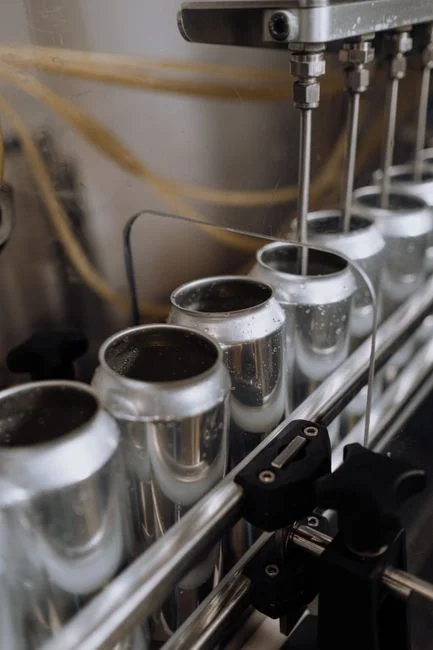
A conventional discharge route should be designed from the actual permit and receiving-water conditions, not from a generic process diagram. Define whether equalisation, solids removal, biological treatment, clarification and disinfection are required, and document the receiving point, applicable current requirement and proposed sampling locations. For a reuse application, evaluate an MBR or downstream membrane train against the required water quality and end use.
The available ultrafiltration systems span 2,000–40,000 L/h, use 0.03 μm PVDF membranes and accept turbidity up to 300 ppm. Those equipment limits should be checked against actual feed quality and the reuse specification. They do not establish that a brewery effluent will meet a reuse target, because pretreatment, biological performance, membrane condition and downstream treatment all affect the final result.
Use automated chemical dosing for pH adjustment, coagulation or flocculation only after jar testing and process design. The 2018 Kaduna study identified 120 g as its best tested moringa dose, but the work used a coagulation–flocculation–sedimentation laboratory sequence. A procurement specification should therefore require a site-representative test, selected chemical, dose range, mixing basis, control strategy and expected sludge generation.
Study-era treatment results are selection evidence, not proof of current compliance. Confirm the current Nigerian requirement, discharge point, permit conditions and any reuse restrictions with the responsible authorities before freezing the equipment schedule or acceptance limits.
| Decision condition | Potential treatment train | Design evidence to obtain | Principal risk |
|---|---|---|---|
| Conventional discharge | Equalisation, industrial effluent pretreatment, biological treatment, clarification and disinfection as permitted | Peak flow, organic load, solids load, permit and receiving-point requirements | Treating a general process train as proof of site-specific compliance |
| Internal or process-water reuse | Biological treatment followed by MBR or qualified downstream membrane treatment | Reuse specification, feed variability, membrane design data and utilities | Selecting membrane capacity before defining water quality |
| Variable pH or turbidity | Equalisation and site-validated chemical dosing ahead of the selected biological or membrane stage | Shift samples, jar tests, mixing and control requirements | Transferring a laboratory dose directly to plant operation |
Plan solids handling before comparing supplier bids
Sludge handling is part of the treatment scope, not a disposal detail to add after the liquid-process bid. Ask each bidder to identify every sludge-generating stage, expected solids characteristics, proposed dewatering method, resulting solids destination and operating requirements. The answer should be tied to site data rather than a generic food-processing sludge assumption.
Use plate and frame filtration when batch industrial sludge dewatering is required. The available filtration areas span 1–500 m², with manual, hydraulic or fully automatic PLC operation. The bidder should demonstrate why the selected area and operating mode fit the expected batch volume, cake characteristics, operating hours and labour model.
Compare scope boundaries explicitly for sludge removal, odour control, standby duty, controls, commissioning, operator training and performance testing. A bidder that prices the liquid treatment train but leaves sludge discharge, utilities or commissioning unresolved has not supplied a comparable offer.
Request evidence from comparable brewery applications, but do not treat general food-processing experience as proof of performance on Nigerian brewery effluent. The verification package should distinguish product capacity from an application record, a measured site result and a contractual performance obligation.
| Bid item | Information to request | Acceptable supporting evidence |
|---|---|---|
| Sludge generation | Source stage, expected mass and volume, moisture or solids characterisation | Site calculation supported by pilot or comparable data |
| Dewatering | Selected method, batch or continuous duty, cake handling and disposal route | Equipment sizing calculation and comparable application |
| Standby and controls | Essential duty, standby arrangements, alarms and PLC scope | Functional description and control narrative |
| Commissioning | Training, trial run, sampling points and acceptance responsibilities | Written commissioning and performance-test protocol |
| Performance evidence | Brewery-specific results and operating conditions | Measured, dated results with clear scope and limitations |
Issue a supplier-ready selection brief
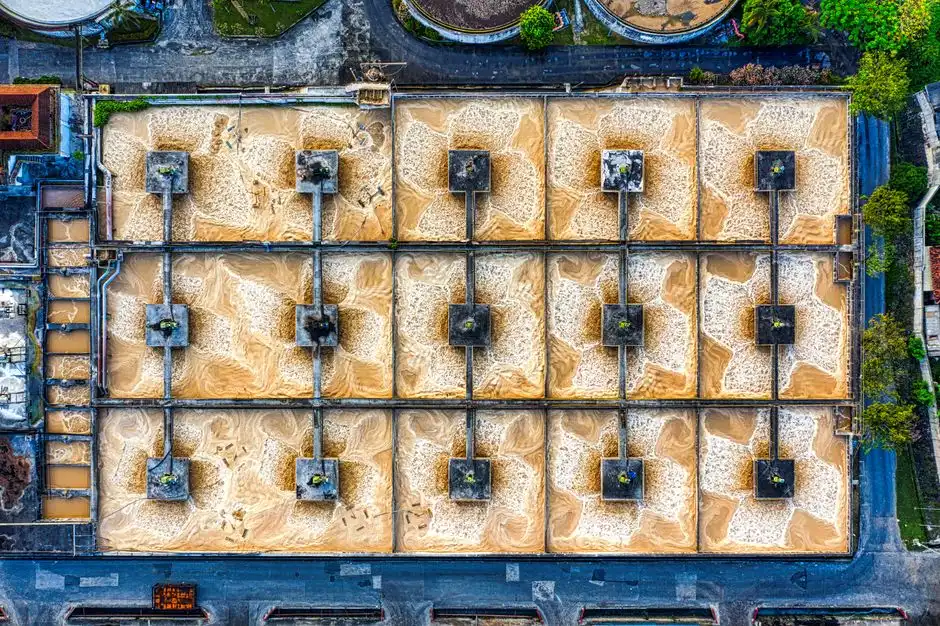
A comparable proposal requires one common design basis. Include measured and design flow, production schedule, water balance, full wastewater analysis, source-reduction actions, discharge or reuse target, available footprint and power supply. Label measured values, design values and bidder assumptions separately so that a missing input cannot be concealed inside an equipment price.
Define each bid as pretreatment, biological treatment, solids separation, disinfection, sludge handling, controls, utilities, installation and commissioning—or state which items are excluded. Where a stage is not proposed, require the bidder to explain the selection logic against the measured pollutants and treatment objective.
Require guaranteed process and equipment performance criteria, test methods, sampling points, acceptance protocol and treatment of variable production loads. A headline removal percentage is incomplete without the influent condition, test method and operating boundary. The cited Nigerian brewery plant’s reported removal of 93% BOD, 82% ammonia and 82% COD in the 2011 water-footprint study is useful context, but it should not be copied into a guarantee without verification at the proposed site.
Ask suppliers to identify every design assumption, utility requirement, consumable, maintenance task and exclusion. The industrial ETP process and equipment selection method provides a useful structure for separating process logic from commercial scope, although the final brief must reflect the Nigerian brewery’s own analysis, permit route and site constraints.
| Fillable field | Buyer input | Supplier response required |
|---|---|---|
| Measured flow and production schedule | Shift, daily and seasonal flow records; production changes | Design flow, equalisation and peak-duty basis |
| Wastewater analysis | BOD, COD, TSS, turbidity, ammonia, oil and grease, pH, temperature, sulfate and justified metals screening | Process calculations and stage-by-stage design assumptions |
| Treatment objective | Discharge route and permit conditions, or reuse specification | Required stages, exclusions and proposed performance criteria |
| Site constraints | Footprint, power, utilities, access and operating hours | Civil, utility, layout and installation requirements |
| Commercial boundary | Equipment, civil works, controls, chemicals, sludge handling, energy, commissioning and training | Priced schedule with exclusions and recurring costs identified |
| Acceptance | Test methods, sampling points, variable-load conditions and resolution process | Binding acceptance protocol and performance guarantee |
Frequently Asked Questions
How should wastewater treatment equipment be sized for a Nigerian brewery?
Size the selected process from measured peak and minimum flows, organic loading, hydraulic loading and the discharge or reuse requirement. Provide production-based flow data and seasonal coverage; do not size from annual wastewater runoff alone.
What should a buyer request when comparing supplier prices and budgets?
Request a normalised price schedule separating equipment, civil works, controls, chemical use, sludge handling, energy, commissioning, training and verified performance obligations. Also request consumable and maintenance assumptions, because an incomplete equipment-only comparison will not represent the operating budget.
Which factors should determine supplier selection?
Evaluate the supplier against a defined wastewater analysis, process duty, comparable brewery references, equipment scope and site-specific acceptance testing. Headline capacity or generic food-processing experience is not enough; require evidence that matches the proposed duty and operating conditions.
How should compliance risk be managed before ordering equipment?
Identify the applicable Nigerian discharge requirement, receiving point, current permit conditions and any reuse restrictions, then confirm them with the responsible authority. Require the supplier to state the compliance assumptions used in its design; study-era performance figures do not establish current site-specific compliance.