
Start with the site, receiving body, and legal route
Wastewater treatment for a Samsung semiconductor fab in Mexico requires verification of the project status, receiving body, permit envelope, and reuse registration before equipment selection. A greenfield may require a Manifestación de Impacto Ambiental, Licencia de Funcionamiento, and CONAGUA Título de Concesión; a brownfield may retain valid permits that still require due diligence. NOM-001-SEMARNAT-2021 applies concentration-based industrial discharge limits differentiated by river, reservoir, coastal, or municipal-sewer receiving body. Sanitary sewer discharges require NOM-002-SEMARNAT-1996 or its current successor. Site permits, basin conditions, stream chemistry, and reuse registration determine whether to buy pretreatment alone, biological treatment, RO reuse, or a zero-liquid-discharge scope.
The legal route is established by the site’s regulatory status and receiving body rather than an equipment catalogue. HydropureWater’s Samsung fab wastewater equipment decision in Mexico provides a useful distinction between fresh environmental authorization for a greenfield and inherited permits for a brownfield, but procurement should use the actual site instruments rather than the project category alone.
| Decision input | Evidence required | Route or scope consequence |
|---|---|---|
| Project status | Greenfield or brownfield; MIA, Licencia de Funcionamiento, existing NOM authorization, and CONAGUA instruments | Determines whether authorization is inherited or must be obtained |
| Industrial discharge | Receiving body and applicable NOM-001-SEMARNAT-2021 conditions | Sets concentration-based discharge constraints |
| Sanitary discharge | NOM-002-SEMARNAT-1996 or successor; sewer discharge conditions | Adds sanitary-specific compliance requirements |
| Water use and reuse | Título de Concesión, reuse registration, registered volume, quality, and end use | Determines whether treated wastewater reuse is legally available |
| Local overlay | State basin or water-commission requirements, monitoring conditions, and drought controls | Can change discharge and reuse operating constraints |
Classify and segregate every wastewater stream
Semiconductor wastewater segregation prevents invalid biological or polishing designs. Ultrapure-water blowdown, CMP slurry, wet-bench and scrubber condensate, and sanitary sewage must remain separately characterized rather than being averaged into one wastewater balance. Fluoride-bearing and solvent-bearing condensate requires dedicated treatment before it can enter biological systems; the supplied Mexican guide identifies fluoride precipitation and IPA stripping ahead of biology. Physical separation must be supported by dedicated containment, automatic drain isolation, and stormwater monitoring.
Samsung’s published Korean wastewater program applies real-time monitoring, where drains close automatically when water quality exceeds limits (Samsung Semiconductor, Stewardship, 2022). That control concept remains critical, as the Austin Monitor reported in February 2022 that acidic wastewater entered a stormwater pond and a tributary; as much as 763,000 gallons escaped over a period of up to 106 days. The incident demonstrates why stormwater isolation and rapid detection must be engineered features, not assumptions in the operating narrative.
| Stream | Principal characterization concern | Required segregation decision |
|---|---|---|
| Ultrapure-water blowdown | Low-volume, high-purity water | Identify its source and possible recovery or reuse value before blending |
| CMP slurry | Colloidal solids and trace metals | Collect separately; characterize solids and metals before selecting clarification or metal recovery |
| Wet-bench and scrubber condensate | Fluoride-bearing and solvent-bearing chemistry | Route to dedicated precipitation and stripping before biological treatment |
| Sanitary sewage | Organic sanitary load and hydraulic peaks | Keep separate from chemical plant drains; characterize independently |
| Stormwater | Potential contact with process chemicals or contaminated storage | Provide dedicated containment, isolation, and monitoring |
Select pretreatment around the contaminants
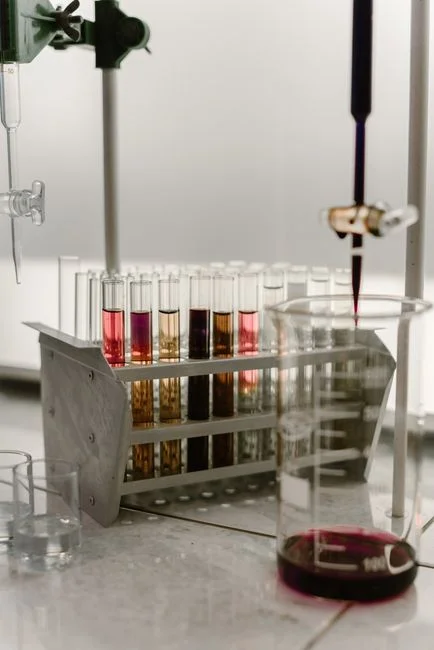
Pretreatment equipment should be selected by stream and contaminant, not by total plant flow. A GX rotary mechanical bar screen provides the headworks reference for removing rags, plastics, fibrous debris, and suspended solids that could damage downstream pumps and biological treatment. Where the selected stream contains FOG, oil, photoresist residues, or colloidal material, dissolved air flotation is the relevant separation technology. The supplied HydropureWater range includes 4–300 m³/h across 13 standard DAF models. For streams dominated by suspended solids, lamella clarification offers a compact separation stage; the supplied comparison gives surface loading rates of 20–40 m/h.
The chemical plant must not be merged with the sanitary flow before characterization. CMP slurry treatment, for example, may require a solids-separation train and metal-recovery assessment, while fluoride- and solvent-bearing condensate requires its own chemical-removal train. Use the semiconductor copper wastewater recovery blueprint to evaluate recovery concepts, but require site-specific analytical results before defining equipment capacity or reagent demand.
| Design condition | Equipment scope | Procurement input still required |
|---|---|---|
| Rags, plastics, and fibrous debris are present | GX rotary mechanical bar screen | Debris inventory, peak flow, and screen aperture confirmation |
| FOG, oil, photoresist residue, or colloidal material governs | DAF, including chemical dosing | Confirmed contaminant profile and representative flow data |
| Suspended solids govern | Lamella clarification | Solids loading and required removal performance |
| pH, coagulation, flocculation, or specialty reagent is required | Automatic dosing skid | Laboratory dosing trials and verified control strategy |
Build the biological and advanced-treatment train
The chosen discharge and reuse route determines the biological, membrane, disinfection, and sludge scope. For compatible industrial and sanitary flows requiring low-turbidity effluent, an integrated MBR is the biological reference. The supplied HydropureWater MBR range is 10–2,000 m³/day and specifies filtration below 1 μm. When reuse is part of the route, the next decision is an industrial RO system for fab-water reuse; the supplied product information states permeate recovery rates up to 95%, although final recovery must be verified against feed chemistry and end use.
Disinfection should be included where the selected route requires it, rather than added automatically to every design. Sludge handling must account for DAF float, metal-recovery residues, and biological waste. The supplied plate-and-frame press catalogue spans 1–500 m² of filtration area. For metal recovery, Samsung Austin Semiconductor’s copper ion-exchange program conserves more than 1.5 million gallons of water per year and eliminates 1.5 million pounds of sludge annually (Samsung Semiconductor, undated award notice). This benchmark supports evaluation of metal recovery; it does not establish the Mexican project’s loading or economics.
| Selected route | Treatment scope | Critical sizing or verification issue |
|---|---|---|
| Sanitary or compatible flows to municipal sewer | Headworks, pretreatment as required, biological treatment, and route-specific disinfection | Confirm sewer acceptance conditions and NOM-002 or successor |
| Permitted industrial discharge | Stream-specific pretreatment, compatible biological treatment, polishing, and permit-required disinfection | Define limits against the receiving body rather than a generic effluent specification |
| Treated wastewater reuse | Pretreated MBR effluent followed by RO and site-specific disinfection or polishing | Match registered volume, quality, and end use; verify recovery against feed chemistry |
| No acceptable discharge route | Advanced treatment followed by evaporation and crystallization | Confirm residual mass destination, energy basis, and site-specific approval |
Turn the route into a procurement and verification checklist
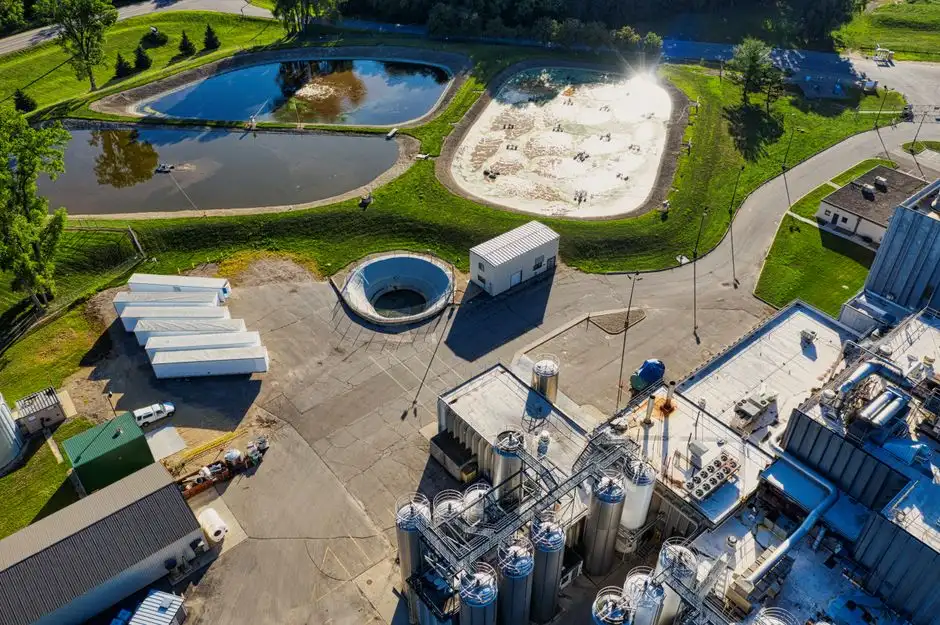
Equipment selection should not be frozen until named site inputs and responsible owners are documented. The purchaser should request site-specific permits, the receiving-body classification, water-concession status, reuse registration, current effluent data, and a signed influent characterization. The integrated MBR wastewater treatment system may then be evaluated against the confirmed hydraulic and chemistry basis, rather than against a corporate average.
Separate verified obligations from project-specific inputs in every vendor package. Verified obligations are the permit conditions, applicable discharge standards, and registered reuse conditions actually confirmed for the site. Project-specific inputs are measured flows, contaminant concentrations, operating peaks, chemical demand, basin constraints, sludge destination, end-use quality, and commissioning responsibilities. Reuse claims remain conditional until the registered volume, quality, and end use match the operating design.
| Verification deliverable | Minimum responsible party | Release condition |
|---|---|---|
| Environmental authorization and permit register | Environmental lead or Mexican counsel | Confirms route, limits, monitoring, and renewal status |
| Water right and reuse registration | Water-resources lead | Confirms permissible volume, quality, and end use |
| Stream-by-stream wastewater balance | Process and utilities engineers | Defines average, peak, batch, and abnormal flows |
| Signed influent characterization | Laboratory and process engineers | Supports pretreatment, biology, RO, and sludge sizing |
| Containment and isolation design | Civil, controls, and EHS engineers | Proves stormwater protection and automatic drain response |
| Acceptance test plan | Procurement, supplier, and commissioning leads | Links each guarantee to the selected permit or reuse route |
| O&M and handover package | Operations and supplier | Defines monitoring, alarms, response actions, and training |
Frequently Asked Questions
How should the wastewater budget be divided when comparing treatment options?
Request separate priced modules for stream-specific pretreatment, biological treatment, RO or other advanced treatment, disinfection, sludge handling, containment, controls, commissioning, and disposal. Compare each quotation against the same permit route and the same signed influent basis. Do not accept a bundled reuse or zero-discharge price until the registered reuse volume and residual disposal route are known.
What should a supplier demonstrate before being selected?
Require a stream-by-stream design basis, references to the site’s actual permits, measurable performance guarantees tied to the selected route, and a commissioning plan covering monitoring, alarms, automatic isolation, and O&M handover. Verify local commissioning support and responsibility for proving permit compliance, disinfection performance where applicable, and stable solids handling.
How should treatment capacity be sized for the fab?
Base sizing on measured flow peaks and a signed chemical characterization of each stream. The sanitary equalization assessment must consider shift-change peaks, while chemical streams require their batch discharges and abnormal-generation conditions. Employee count or a generic daily wastewater balance is not a sufficient basis for equipment selection.
What compliance checks should be completed before commissioning?
Verify the industrial discharge permit, sanitary authorization where applicable, water concession, reuse registration, monitoring requirements, basin conditions, stormwater containment, and automatic isolation. Exercise the monitoring and alarm response path before accepting the treatment plant, and confirm that each commissioned stream discharges only through its authorized route.