Frame the Chittagong Project Before Selecting Equipment
A buried package plant is the practical starting point for domestic sewage treatment in Chittagong when the project requires a compact, automated unit for a residence, hotel, hospital, or factory. The WSZ combines anoxic/aerobic A/O biological contact oxidation, sedimentation, and disinfection in one buried unit, handles 1–80 m³/h, and requires no operator. An MBR is the stronger option when higher flows or membrane separation are priorities: the catalogued system spans 10–2,000 m³/day and provides sub-1 μm filtration. Final selection still requires Chittagong-specific effluent rules, receiving-site conditions, sludge handling, and verified supplier performance data.
Define whether the project handles sanitary sewage only, a mixed commercial flow, or a wastewater stream requiring industrial pretreatment before comparing Chittagong sewage treatment equipment. Then establish the design-flow basis: daily average flow, peak-hour flow, seasonal variation, and expected wet-weather conditions. The US EPA Municipal Wastewater guidance explains that infiltration and inflow can cause overflows and operational problems, while blockages, equipment failures, broken pipes, and vandalism can also interrupt service. These risks define the questions a local designer must resolve.
Identify the receiving location and the authority that will assess the discharge route before selecting a process. The supplied research does not establish a Chittagong discharge standard, so a generic effluent table cannot be treated as an approval criterion. Determine whether the treated flow will be discharged, reused on site, or transferred to another receiving system. The wastewater limit-values guide can help organize parameter checks, but local requirements must still be confirmed.
Use soil and groundwater investigation as a site due-diligence flag. The IOSR Journal study Dynamics of Cadmium and Lead in Some Soils of Chittagong, Bangladesh reported total cadmium from 0 to 2.48 mg kg−1 and lead from 7.14 to 54.31 mg kg−1 across four sites affected by sewage, tannery, fertilizer, and cement sources. Those results identify a need for site assessment; they do not define acceptable site concentrations or permit conditions. Ask suppliers to label each submission as local evidence, generic product data, or an item requiring verification by an accredited local designer or authority.
Compare Package Plants and MBR Systems Against Real Project Conditions
A buried package plant is suitable when compact deployment and automated operation dominate the project requirements. The WSZ integrates anoxic/aerobic A/O biological contact oxidation, sedimentation, and disinfection within one buried package unit. Its published capacity is 1–80 m³/h, and the HydropureWater verified product catalog describes it as fully automated with no operator required. These are product-catalog claims, not evidence of suitability at a particular Chittagong site.
Physical deployment is a decisive screening criterion. The same catalog states that the WSZ can be installed below grade with landscaping above or mounted on a trailer for mobile deployment. Confirm excavation depth, groundwater conditions, access covers, vehicle loading, odor control, and maintenance clearances before including it in a shortlist. An MBR should be shortlisted when membrane filtration, reuse potential, or a larger daily flow range is central to the brief. The catalogued MBR membrane bioreactor system covers 10–2,000 m³/day and provides sub-1 μm filtration.
Do not treat the catalogued claim of a 60% smaller footprint than conventional systems as a project fact. Require the supplier to define the comparison basis and show the complete plant layout, including tanks, membrane modules, aeration equipment, controls, access roads, sludge handling, and future maintenance space. For a buried package plant, compare the above-ground footprint separately from excavation and access requirements. For MBR, compare installed dimensions under the selected configuration.
Maintenance ownership must also influence the decision. The WSZ is described as fully automated and requiring no operator, but a responsible party still needs to inspect the plant, respond to alarms, maintain access, and arrange desludging. An MBR scope must explicitly cover membrane cleaning, aeration, instrumentation monitoring, membrane replacement, and specialist support. Use the MBR and conventional activated-sludge comparison to structure questions, but require project-specific evidence rather than accepting broad performance or cost claims.
| Decision criterion | Buried package plant | MBR | Evidence required before selection |
|---|---|---|---|
| Published capacity | 1–80 m³/h | 10–2,000 m³/day | Hydraulic calculation against design and peak flow |
| Treatment configuration | Anoxic/aerobic A/O contact oxidation, sedimentation and disinfection | Biological treatment with membrane separation | Process diagram, duty calculations and treatment objectives |
| Filtration | Not stated in the supplied WSZ catalog evidence | Sub-1 μm filtration claimed in the MBR catalog | Applicable effluent parameters and test method |
| Deployment | Buried installation or trailer-mounted mobile deployment | Complete plant layout required | Soil, groundwater, access, excavation and utility information |
| Operation | Fully automated; no operator required, as catalogued | Membrane cleaning, aeration, monitoring and specialist maintenance must be scoped | Named O&M responsibility, alarm response and training plan |
| Footprint | Compact buried configuration; installation constraints must be checked | 60% reduction claimed versus conventional systems | Dimensioned layout and defined comparison basis |
Build the Size and Acceptance Brief
A defensible equipment selection starts with a complete treatment-duty statement. Specify the design average and peak flows, wastewater source, treatment objectives, discharge or reuse route, site boundary, available footprint, power supply, odor-control requirements, maintenance access, and operator availability. State whether the proposed unit must accommodate wet-weather variation or whether upstream inflow control will prevent storm-derived flow from reaching the plant.
Require each bidder to show how its selected capacity handles the stated peak flow and seasonal conditions. The US EPA Municipal Wastewater guidance identifies infiltration and inflow, blockages, equipment failures, broken pipes, and vandalism as operational risks that can affect treatment reliability. For the Bangladesh wastewater project, the response should be project-specific: identify isolation points, standby provisions, alarm escalation, safe access, and the consequences of an unavailable treatment unit.
Attach a process flow diagram, hydraulic calculation, general arrangement, control philosophy, duty/standby strategy, commissioning plan, and O&M schedule to the quotation. For an MBR, request membrane materials, the pore or filtration specification, cleaning method, replacement intervals, confirmed membrane area, and life-cycle cost. The MBR sizing methodology illustrates the design reasoning required, but its locality-specific material must not be transferred to Chittagong without validation.
For the WSZ, request confirmation of the verified process stages, hydraulic treatment capacity, buried-installation constraints, access arrangements, and complete automation scope. Use the package plant and MBR selection guide to structure the comparison. Neither guide replaces a site-specific design, and any bidder that relies on the supplied catalog should identify which items are confirmed by test evidence and which remain manufacturer claims.
| Brief item | Minimum information to be supplied | Acceptance evidence |
|---|---|---|
| Design basis | Average flow, peak flow, seasonal variation and wet-weather condition | Hydraulic calculation and process duty statement |
| Receiving route | Discharge point, reuse destination or transfer route | Applicable authority requirements confirmed by named documentation |
| Site | Boundary, soil, groundwater, footprint, access and power | General arrangement and site investigation requirements |
| Equipment | Process stages, capacity, materials, dimensions and controls | Process diagram, datasheets and layout |
| Reliability | Duty/standby strategy, alarms, isolation and failure response | Control philosophy and commissioning tests |
| Acceptance | Permit or client parameters, test methods and sampling protocol | Approved performance-test protocol and witnessed test records |
| Commercial scope | Supply, civil works, utilities, installation, training, spares and exclusions | Itemized quotation and responsibility matrix |
Address Effluent, Sludge, O&M and Supplier Risk
Make the Chittagong receiving and discharge route a formal bid-document requirement. The supplied research does not establish a city-specific numeric effluent limit, so bidders should not be compared using an unverified parameter table. The engineer or authority must identify the applicable route and the parameters that control reuse, discharge, or transfer.
Define what happens to sludge or septage. The contract should name responsible parties for collection, dewatering, storage, transport, and disposal, together with the expected frequency and access arrangement. Where sludge dewatering equipment is considered, the plate-frame filter press can be treated as a downstream option for evaluation, but its selection cannot be justified until solids characteristics, batch size, operating hours, and disposal arrangements are known.
Require verifiable references for comparable wastewater type, flow, installation environment, and operating conditions. Test whether the supplier has supported projects under comparable duties rather than merely citing generic equipment. Make the contract conditional on site-specific design, delivery, and installation data; a generic package-plant description does not establish local suitability.
Commercial risk should be allocated before award. Require local commissioning support, spare-parts availability, operator training, a stated remote or on-site fault-response arrangement, and a clear warranty and performance-test protocol. Define exclusions explicitly, especially for civil works, power connections, chemicals, sludge disposal, permits, extended access roads, and membrane replacement. These obligations may materially change the relative commercial position of a package plant and an MBR even when equipment prices appear comparable.
Issue a Supplier Enquiry and Verification Checklist
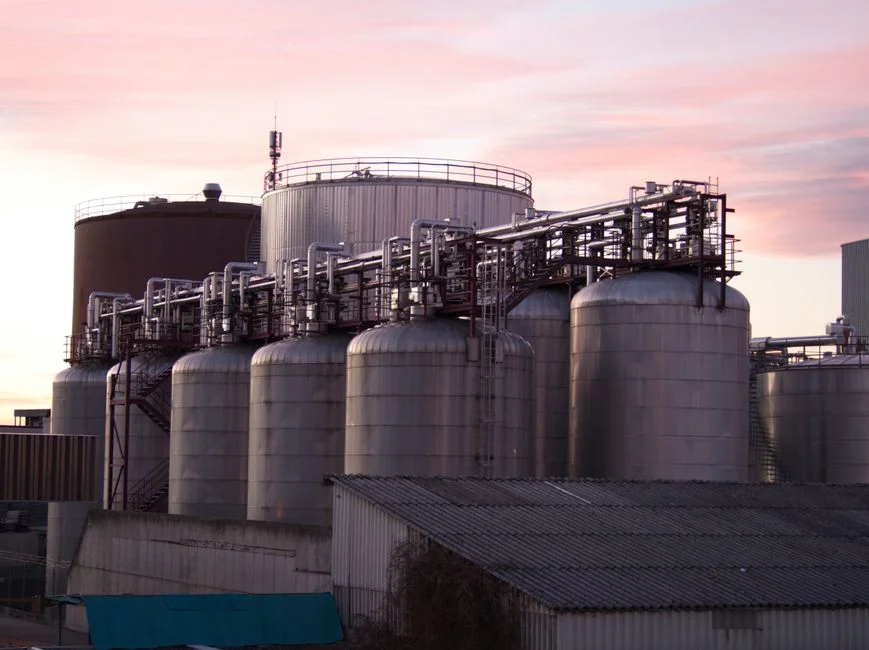
A consistent enquiry should separate buyer-supplied project inputs from supplier evidence and commercial commitments. Copy the following structure into the request for quotation. The domestic sewage treatment buyer’s guide provides a useful general reference for developing that document.
| Fillable field | Buyer input or supplier response | Verification status |
|---|---|---|
| Design average and peak flow | Enter flow basis and wet-weather condition | Accepted by engineer |
| Wastewater characterization | Source, trade inputs, pretreatment requirement and sampling record | Verified locally |
| Receiving point and reuse target | Name route, authority and intended effluent use | Requirements confirmed |
| Site and access | Soil, groundwater, footprint, access, power and odor constraints | Design inputs complete |
| Equipment evidence | Diagram, capacity, materials, controls, dimensions and commissioning tests | Checked against bid criteria |
| O&M and references | Responsibilities, training, spares, response time, warranty and comparable references | Evidence attached |
| Commercial breakdown | Equipment, installation, civil works, utilities, commissioning, consumables, sludge handling and exclusions | Quote comparable |
| Open conditions | List unresolved local, site, permit and performance items | Closed before approval |
Use one acceptance rule for every bid: do not approve equipment until the treatment duty, discharge route, and unresolved local requirements are supported by named documentation. This prevents a polished general specification from concealing missing project inputs.
Frequently Asked Questions
What size domestic sewage treatment plant does a Chittagong building need?
The required size depends on the verified design flow, peak flow, wastewater characteristics, and treatment objective, not on building type alone. Ask each bidder for a hydraulic calculation linked to those inputs. The WSZ catalog covers 1–80 m³/h, while the catalogued MBR covers 10–2,000 m³/day; use the buried package sewage treatment plant and MBR membrane bioreactor system documents as starting points, not as a substitute for project sizing.
Is a package sewage treatment plant cheaper than an MBR?
A valid price comparison requires an itemized quotation covering equipment, installation, civil works, utilities, commissioning, training, consumables, sludge handling, and exclusions. Do not infer that the package plant is cheaper because it is buried, or that the MBR is more economical from its
Frequently Asked Questions
What size domestic sewage treatment plant does a building in Chittagong need?
The required capacity is determined by the Chittagong Development Authority (CDA) guidelines, typically based on a daily per capita water consumption of 150 to 200 liters. For a standard residential building, you should calculate the design flow by multiplying the total number of occupants by this consumption rate, while applying a peak factor of 2.5 to 3.0 to account for morning and evening usage surges.
Is a package sewage treatment plant cheaper than an MBR system?
Yes, a package plant typically carries a 30% to 50% lower initial capital expenditure (CAPEX) compared to a Membrane Bioreactor (MBR) system because it lacks the high-cost submerged membrane modules and automated back-pulsing controls. However, MBR systems offer lower long-term sludge handling costs and produce high-quality effluent suitable for non-potable reuse, which may offset the higher upfront investment in water-scarce urban environments.
What should I check before selecting a sewage treatment supplier in Bangladesh?
Verify that the supplier provides a performance guarantee tied to the Department of Environment (DoE) Bangladesh discharge standards, which mandate a Biochemical Oxygen Demand (BOD) of less than 30 mg/L and Total Suspended Solids (TSS) below 50 mg/L. You should also audit their local inventory for critical spare parts, such as aeration blowers and sensor probes, to ensure a response time of 24 to 48 hours for maintenance requests.
Can a buried package plant or MBR fit on a site with limited space?
Yes, both systems can be installed underground to maximize surface footprint, but MBR systems are significantly more space-efficient. Because MBRs utilize membrane filtration instead of traditional gravity clarifiers, they can handle higher Mixed Liquor Suspended Solids (MLSS) concentrations—often 8,000 to 12,000 mg/L—allowing for a 40% to 60% reduction in the total tank volume required to achieve the same treatment capacity as a conventional package plant.
What tests should be included in a sewage treatment plant acceptance certificate?
An acceptance certificate must include a 24-hour composite sampling report verified by a third-party laboratory, specifically measuring BOD5, Chemical Oxygen Demand (COD), Total Suspended Solids (TSS), pH, and Dissolved Oxygen (DO). Additionally, the certificate should document a successful 72-hour continuous performance trial under peak load conditions and a verification of the automated control system’s alarm triggers for pump failures and high-level overflows.