Define the final effluent objective
An industrial effluent treatment plant in Dhaka should be selected by matching the wastewater profile and final use to the treatment barriers—not by choosing the largest or most advanced unit. Textile and other industrial discharges may require suspended-solids, oil, color or other contaminant removal before biological treatment or membrane polishing. Research in Dhaka Export Processing Zone documents the local textile-effluent context, while Bangladesh research supports ETP implementation to reduce industrial pollution. If reuse is required, nanofiltration or constructed wetlands may be considered as polishing options, subject to site testing and regulatory verification.
The first procurement decision is the endpoint. Compliant industrial discharge, agricultural reuse, indirect potable use and process reuse are not interchangeable. Each pathway defines a different receiving environment, residual contaminant risk and verification burden. The project brief should name the receiving water or land, the proposed reuse activity, the applicable Bangladesh approvals and the party responsible for each compliance input.
The University of Twente nanofiltration thesis examined polishing to EU Water Framework Directive standards and potential agricultural or indirect potable use. Those standards and uses form the scope of that research; they are not automatically Dhaka regulatory requirements. The wastewater compliance and treatment guide can help structure the compliance questions, but the buyer still needs confirmation from the relevant Bangladesh authorities.
| Project field | What the buyer must state or provide | Why it affects selection |
|---|---|---|
| Discharge pathway | Receiving environment, discharge point and required Bangladesh approval basis | Determines the receiving-water or land-use constraints that the final treatment train must satisfy. |
| Reuse pathway | Intended agricultural, process, indirect potable or other use | Changes the required polishing, monitoring and approval evidence. |
| Applicable standard | Named authority, regulation and applicable parameter limits | Prevents research benchmarks from being mistaken for enforceable local requirements. |
| Verification responsibility | Client, supplier, accredited laboratory and approving authority | Defines who samples, tests, reports and remediates any shortfall. |
| Reuse destination | End user, operating process and intended water quality | Allows equipment claims to be tested against the actual receiving use. |
Characterize the wastewater before choosing a treatment train
The 2016 study by Kamal and colleagues in the journal Pollution characterizes textile effluents from the Dhaka Export Processing Zone; it provides local context rather than a universal specification for every factory in Dhaka. A buyer should therefore use the study to identify questions and sampling variables, then replace its site-specific results with current data from the proposed facility.
Representative sampling should cover normal production, cleaning, batch discharge and other material operating conditions. The analytical program should include flow, pH, suspended solids, oil and grease, color, COD, BOD and contaminants specific to the process. The sampling plan should identify each sampling point, frequency, flow condition, laboratory method and analytical period. Without those records, a supplier cannot demonstrate whether its equipment has been sized for the actual duty.
Ask each bidder which measured parameter drives each decision: pretreatment, biological loading, membrane selection and disinfection. Also ask how variable industrial flows are represented, including batch discharges, maximum hourly flow, stored wastewater and start-up conditions. A nominal daily capacity does not resolve those hydraulic questions by itself.
Close information gaps by assigning an owner to every missing dataset. The client may need to provide production records, utility data and access for sampling; an accredited laboratory may need to perform analysis; the supplier may need to justify its design assumptions. Do not accept a final offer until the sampling protocol, laboratory methods and analytical period accompany it.
| Wastewater observation | Potential treatment barrier | Module to evaluate | Required verification input |
|---|---|---|---|
| Flow varies substantially by batch or shift | Hydraulic and organic loading peaks | Equalization and biological treatment | Flow record, peak demand and batch-release profile |
| Suspended solids, oil and grease, FOG or colloidal material | Solids separation and scum or oil capture | DAF pretreatment | Contaminant characterization and defined removal duty |
| COD and BOD indicate a biodegradable organic load | Biological treatment demand | Biological treatment, including MBR where justified | Organic loading, biodegradability and reactor duty basis |
| Color, salts or process-specific contaminants | Removal or separation not resolved by settling alone | Process-specific pretreatment or polishing | Constituent analysis and supplier-specific performance evidence |
| Reuse requires further separation or contaminant control | Residual pollutants after the main treatment train | Nanofiltration or constructed wetlands | Site trial, final-use criteria and approval basis |
Match each contaminant barrier to the right module
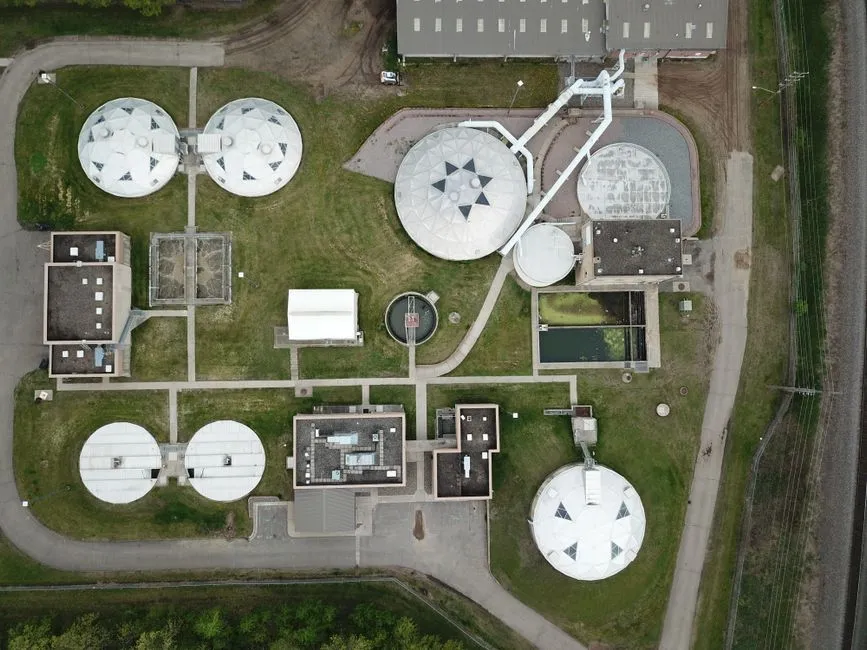
DAF, biological treatment and membrane or wetland polishing solve different problems, so quotations should separate the minimum plant from optional performance upgrades. The catalog range for the DAF pretreatment system is 4–300 m³/h across 13 standard models. Use it as a candidate physical-treatment module where suspended solids, FOG, oil and grease, or colloidal material must be removed before downstream biological or membrane processes.
DAF should not be specified by nominal throughput alone. Request the contaminant-removal duty, tested wastewater basis, skimming arrangement, solids handling, recirculation and controls. If the supplier claims removal, require the inlet concentration, outlet concentration, operating condition and test method behind the claim. The DAF versus clarifier selection guide can support that technical comparison.
Use biological treatment where the wastewater contains biodegradable organic material that must be removed before discharge or reuse. Evaluate the integrated MBR wastewater treatment system where combining biological treatment with membrane filtration below 1 micrometre is justified. Its catalog range is 10–2,000 m³/day. Confirm how that range relates to the buyer’s characterized influent, hydraulic peaks, biological load and required final effluent quality.
For polishing, the University of Twente’s Direct nanofiltration of wastewater treatment plant effluent thesis assessed nanofiltration for polishing wastewater treatment plant effluent to EU WFD standards and for potential agricultural or indirect potable use. That supports nanofiltration as an evaluated polishing concept, but the performance must be checked against the actual Dhaka effluent, target endpoint and site conditions.
Constructed wetlands are a separate option. Wageningen University and Research’s doctoral research, published in September 2022, investigated removal of micropollutants from wastewater treatment plant effluent by constructed wetlands. A Dhaka proposal should identify the specific contaminants, land area, climate, hydraulics and receiving endpoint; a general micropollutant-removal claim is not a site guarantee.
| Module | Primary function | Use it when | Evidence to request |
|---|---|---|---|
| DAF | Physical separation of suspended solids, FOG, oil and grease, or colloidal material | The wastewater profile shows a material barrier before biological treatment or polishing | Removal duty, skipping and solids handling, tested influent basis |
| Biological treatment | Removal of biodegradable organic load | COD and BOD data show an organic treatment requirement | Loading basis, process configuration and performance results |
| MBR | Integrated biological treatment and membrane filtration below 1 micrometre | The selected train requires combined biological treatment and fine membrane separation | Membrane type, filtration basis, cleaning, controls and consumables |
| Nanofiltration | Advanced polishing and effluent reclamation | The primary treatment leaves constituents that must be reduced for the selected endpoint | Site-relevant membrane evidence, permeate quality and recovery conditions |
| Constructed wetlands | Polishing with a studied micropollutant-removal approach | Land, hydraulic and contaminant conditions support the research-based concept | Target pollutants, site conditions, hydraulic loading and outlet verification |
Set measurable acceptance criteria before comparing suppliers
Comparable proposals require the same test point, sample frequency, analytical method and guarantee conditions. Put those requirements into the request for quotation before comparing capital prices. The Bangladesh wastewater treatment plant cost breakdown can help identify cost categories, but it does not replace site-specific sizing or a supplier’s verified performance basis.
Define whether compliance is demonstrated at the final discharge point, reuse interface or another agreed location. State how samples will be collected, which laboratory will analyse them, which methods apply and who witnesses the tests. Also define guarantee conditions: characterized influent range, operating hours, reagent conditions, flow condition and consequences of failure.
Performance claims must identify the tested influent and effluent conditions. An outlet concentration without its starting condition, flow and operating period does not establish treatment performance. Ask for independent verification by an agreed laboratory and identify the party responsible for corrective action if acceptance is not achieved.
For membrane stages, request membrane type, filtration basis, cleaning method, automation and consumables. For DAF, request the specified contaminant-removal duty and skimming arrangement. When project data is insufficient to substantiate the proposal, require a site trial or representative wastewater test before equipment selection.
Build a complete supplier request package
A quotation cannot be compared fairly unless every bidder receives the same wastewater duty, endpoint and acceptance criteria. Attach the characterization report, flow record, target endpoint, site constraints, required utilities and applicable compliance basis. Use the industrial ETP due-diligence checklist to identify legacy or operating-history issues that could affect wastewater variability.
Require each supplier to return a process flow diagram, equipment schedule, electrical and civil requirements, commissioning plan, operating-cost inputs, maintenance scope and warranty assumptions. The supplier must also return a responsibility matrix identifying what it supplies, what the client provides and what must be verified by a local authority or accredited laboratory.
| Fillable procurement field | Buyer entry or requested supplier response | Required before award |
|---|---|---|
| Characterized wastewater duty | Attach report, sampling protocol, analytical period and flow record | Supplier confirms the design basis and assumptions. |
| Target endpoint | State discharge or reuse route and applicable approval basis | Supplier maps each claimed performance claim to the endpoint. |
| Process scope | Separate pretreatment, biological treatment, polishing and sludge handling | No optional claim obscures the minimum plant scope. |
| Site and utilities | Provide available footprint, power, water, drainage and access | Supplier confirms physical and operating requirements. |
| Verification plan | Specify points, frequencies, methods, laboratory and witness | Responsibility is accepted in writing. |
| Commercial normalization | List civil work, installation, controls, training, consumables and guarantee exclusions | All bids use the same commercial boundary. |
| Capacity definition | Identify whether each rate is influent, treated flow or peak demand | No comparison is made between incompatible duty definitions. |
Frequently Asked Questions
How much should a buyer budget for an industrial ETP in Dhaka?
No defensible price can be stated without the characterized wastewater, flow, endpoint, site constraints and scope. Request itemized quotations using the same duty and acceptance criteria, including civil work, utilities, controls, installation, training, consumables, maintenance and performance guarantees. Also request the operating-cost inputs needed for comparison.
How should an ETP be sized for a Dhaka factory?
Begin with representative flow and contaminant data, then apply the selected supplier’s verified duty basis. Ask the supplier to show how batch peaks, daily flow and contaminant loads affect pretreatment, biological and polishing capacity. Treat catalog flow ranges as screening information, not a final sizing.
What should a buyer check before accepting a water-reuse claim?
Require the intended reuse endpoint, applicable approval, relevant contaminant analysis and site-specific test results. Nanofiltration and constructed wetlands should be judged against that endpoint—not against general reuse language or research performed elsewhere.
How can suppliers be compared beyond quoted capacity?
Normalize the commercial scope and verify the responsibility matrix. Check pilot evidence, performance conditions, commissioning plans, training, maintenance, membrane or DAF operating details, sludge handling and the independent acceptance process before selecting the supplier.