Verify the Permit and Wastewater Destination Before Choosing Equipment
Equipment selection for an acquired semiconductor fab in Mexico should begin with the permitted destination of each wastewater stream, rather than a preferred technology. The acquired site’s current permit, discharge authorization, sewer or receiving-water conditions, reuse approvals, and compliance history must be obtained before the design basis is fixed. The available research does not establish the applicable Mexican permit or numerical limits, so the buyer must verify them with the relevant authorities and receiving utilities.
Confirm whether environmental responsibility transfers with the fab, changes with the owner, or requires a new authorization. This is a legal and permitting question, not a technical assumption. Map every stream to its actual destination: sanitary sewer, permitted outfall, off-site treatment plant, internal reuse, or a zero-liquid-discharge system. A stream that will be discharged may require different treatment from one destined for reuse or direct contact with a production process.
The seller should provide the baseline design package before bids are opened: discharge monitoring, flow records, chemical inventories, sludge histories, process changes, and outstanding compliance actions. A similar acquisition sequence is discussed in the acquisition wastewater-requirements checklist.
| Permit or operating record | Decision supported | Owner | Evidence required before equipment selection |
|---|---|---|---|
| Current discharge authorization and permit | Whether the existing route remains valid after acquisition | Permitting lead | Certified permit, amendments, transfer conditions, and regulator correspondence |
| Sewer or receiving-water conditions | Discharge route, pretreatment obligations, and monitoring | Environmental engineer | Utility agreement, discharge criteria, sampling history, and surcharge conditions |
| Reuse approval | Permitted water grade and end use | Process-integration lead | Approved reuse points, quality criteria, and monitoring obligations |
| Compliance and residual records | Baseline risk and inherited corrective actions | Operations and EHS managers | Monitoring reports, exceedances, notices, sludge manifests, and chemical usage records |
Characterize the Fab's Separate Wastewater Streams
Stream separation is necessary because semiconductor fab wastewater contains incompatible treatment requirements. Metals-bearing process streams, cleaning wastewater, cooling and rinse streams, floor and equipment washdown, and sanitary flows should not be combined until their flows, contaminants, variability, and destinations are known. Each stream needs a representative sampling plan before treatment technology is selected.
Test flow, pH, temperature, suspended solids, oil and grease, copper and other relevant metals, acidity or alkalinity, hardness, organics, and toxicity indicators across representative production and cleaning periods. The advanced semiconductor wastewater treatment blueprint provides a technical framework, but Mexican site data must govern the final selection.
Samsung Austin is a copper-specific reference, not a Mexican sizing case. The Texas Commission on Environmental Quality reported in May 2022 that the operation typically generated 8,700 gallons per hour of copper-bearing wastewater from chip-manufacturing processes. Do not copy Samsung E&A’s disclosed 86,000 m³/day Pyeongtaek wastewater-treatment capacity into the Mexican design; it belongs to a different project and site. Size the acquired train from verified flow, chemical inventory, production variation, and approved recovery targets.
| Stream | Minimum characterization package | Variable to identify | Owner |
|---|---|---|---|
| Metals-bearing process wastewater | Flow, copper and other metals, pH, suspended solids, acidity or alkalinity | Batch dumps and metal concentration peaks | Process engineer and analytical lead |
| Cleaning wastewater | Flow, pH, temperature, organics, metals, suspended solids | Cleaning-cycle duration and slug frequency | Process-integration lead |
| Cooling and rinse streams | Flow, temperature, hardness, metals, suspended solids, conductivity | Makeup-water demand and reuse suitability | Utilities engineer |
| Floor and equipment washdown | Flow, suspended solids, oil and grease, metals, toxicity indicators | Floor-cleaning practices and episodic discharges | Facilities and EHS managers |
| Sanitary wastewater | Flow, conventional wastewater characteristics, local discharge requirements | Whether separate treatment is justified | Environmental engineer |
Match Each Treatment Objective to the Appropriate Equipment
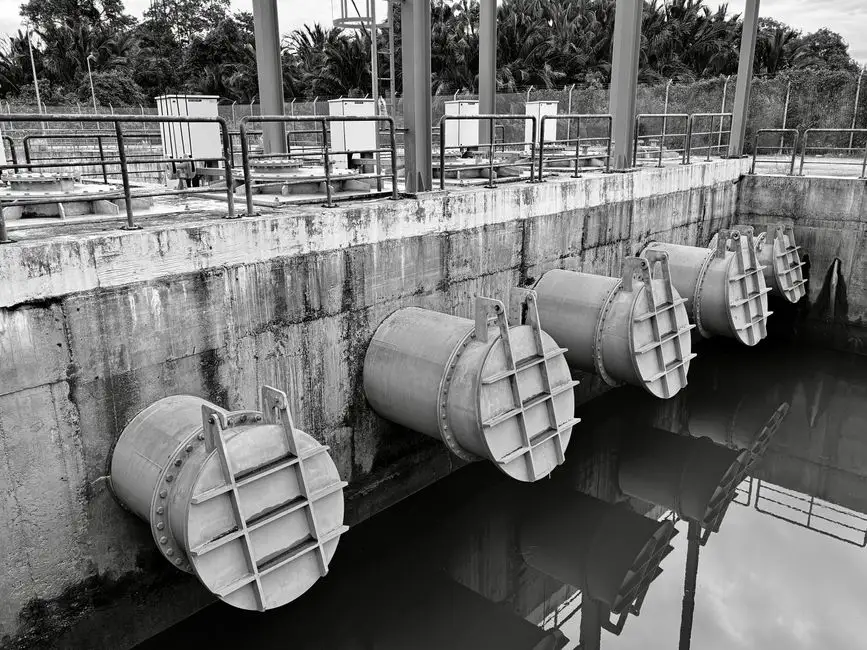
DAF, biological treatment, MBR, RO, and copper ion exchange solve different problems, and selecting one train for every stream risks unnecessary capital cost or inadequate compliance. The applicable process should follow from verified contaminants, required water quality, destination, and residuals—not from a generic semiconductor treatment sequence.
Use DAF where the objective is high-rate removal of suspended solids, oil and grease, or floatable material before finer polishing. A DAF system for fab wastewater pretreatment should be assessed through wastewater-specific ETP pilot testing; the supplied research does not establish a universal removal rate. The DAF versus clarifier selection for semiconductor wastewater provides a technical comparison, but it does not replace local testing.
Add biological treatment only if sampling confirms a biodegradable organic load and the local process, climate, and reuse constraints support it. The research supplies no Mexican biological-loading data. If the required reuse quality justifies membrane polishing, evaluate an MBR membrane bioreactor for wastewater reuse. HydropureWater’s product catalogue specifies near-reuse-quality effluent below 1 μm filtration and capacities from 10 to 2,000 m³/day. Evaluate RO for membrane-grade or ultrapure-water duties and reuse polishing; HydropureWater’s catalogue specifies industrial RO recovery rates up to 95%, including semiconductor applications, while actual recovery depends on feed chemistry and pretreatment.
Assess copper ion exchange as a site-specific alternative to precipitation. The Texas Commission on Environmental Quality reported in May 2022 that Samsung Austin’s implementation eliminated 1.5 million pounds of copper sludge and 2.8 million pounds of treatment chemicals, while producing $35,000 per year from recovered copper. Compare this with precipitation on the verified Mexican feed, resin loading, regenerant disposal, and residual solids.
| Technology | Use when verified evidence supports | Key design checks | Residual or trade-off to evaluate |
|---|---|---|---|
| DAF | Suspended solids, oil and grease, or floatables require high-rate separation | Representative pilot, solids capture, chemical demand, hydraulic variability | Float sludge and treatment chemicals |
| Biological treatment | Biodegradable organic load is confirmed | Local loading basis, temperature, inhibition, biosolids handling | Biological residuals and additional footprint |
| MBR | Required reuse quality justifies membrane polishing | Filtration specification, membrane cleaning, controls, product-water fit | Energy demand and membrane replacement |
| RO | Membrane-grade or ultrapure-water polishing is required | Feed chemistry, pretreatment, recovery, concentrate fate | Concentrate management and energy use |
| Copper ion exchange | Copper load and recovery potential support selective removal | Resin selection, loading, regeneration, copper value, residual sludge | Regenerant and unrecovered solids require an approved route |
Build an Integrated Recovery and Residuals Strategy
Recovery objectives are defined by destination and water grade, because wastewater for controlled reuse, cooling, process replenishment, or ultrapure-water production represents distinct product streams. Samsung E&A lists process-water treatment, wastewater treatment, and recycling facilities as distinct systems within its semiconductor project, supporting a separated design rather than one undifferentiated treatment train.
Compare the site water balance against the utility and recovery implications of RO and other polishing. HydropureWater’s industrial RO specification permits recovery rates up to 95%, but the acquired fab’s actual recovery must be calculated from verified feed chemistry, pretreatment requirements, product-water demand, and concentrate disposal. Any business case should separately quantify recovered water, recovered material, residual sludge, avoided chemical demand, energy use, and disposal cost.
Samsung Austin reported annual water conservation of more than 1.5 million gallons and avoided landfill sludge of 1.5 million pounds in Samsung Semiconductor’s account of its water-treatment programs. These are site-specific outcomes, not Mexico forecasts. Wastewater Visibility also reported Samsung’s Hwaseong target of purifying and reusing 400 million litres per day. Use that figure only as an industrial-scale benchmark, not as a Mexican capacity assumption. The broader semiconductor fab wastewater compliance and treatment guide can support the acquisition review, but the local water balance remains controlling.
Every proposed recovery route must close the residuals loop. Identify the origin and classification of each sludge or concentrate, the dewatering or concentration method, temporary storage, approved disposal route, and responsible operator. The fab wastewater treatment and ETP guide provides a structure for that interface, but Mexico-specific waste acceptance and disposal arrangements must be verified before award.
Set Pilot, Acceptance and Procurement Criteria
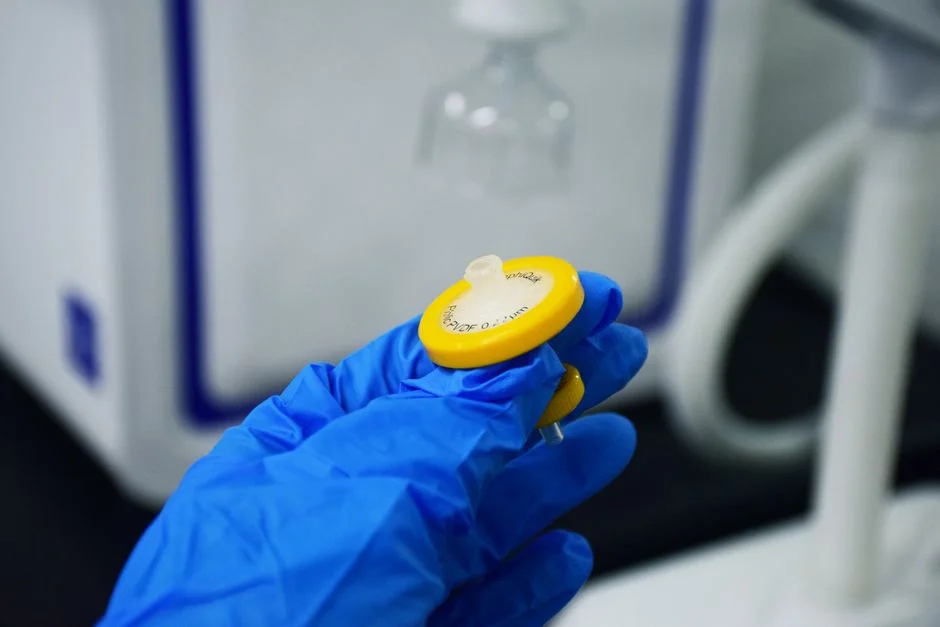
Final equipment selection follows source-representative testing and a site-specific ETP pilot. The pilot must challenge actual variability, not a selected composite that hides batch dumps. Acceptance criteria should cover treated-water quality, chemical consumption, recovered solids or metal, energy demand, availability, automatic controls, upset response, and sludge handling.
Samsung Austin’s disclosed benchmark was 8,700 gallons per hour of copper-bearing wastewater, according to the Texas Commission on Environmental Quality in May 2022. The same flow and composition must be verified for Mexico before equipment sizing. Where the pilot cannot reproduce a rare event, require a stated design envelope and confirm equalization, automatic dosing, bypass protection, upset recovery, and maintenance-isolation provisions.
Define each supplier’s scope boundary before evaluating proposals: process guarantee, civil interfaces, pretreatment, chemical storage, sludge handling, controls, instrumentation, commissioning, operator training, and long-term spare parts. Guarantees must use the verified Mexican discharge or reuse criteria and disclose the assumptions behind chemical consumption, sludge yield, recovered-metal value, and utility consumption. Do not allow a process guarantee to transfer unresolved permitting or residual-disposal risk to the owner.
| Stage | Decision | Owner | Acceptance evidence |
|---|---|---|---|
| Baseline review | Proceed to source characterization | Permitting lead | Permit, destination map, monitoring data, compliance history, and outstanding actions |
| Source characterization | Fix sampling points and analytical program | Environmental and process engineers | Representative flow and contaminant dataset covering normal and batch conditions |
| ETP pilot testing | Confirm unit suitability and operating envelope | ETP lead | Pilot report, mass balance, treated quality, chemical use, energy, and residual characterization |
| Route comparison | Select discharge and reuse train | Project engineering director | Documented comparison of quality, sludge, energy, chemicals, recovery, and compliance risk |
| Procurement and acceptance | Award scope and define performance tests | Procurement and operations | Supplier guarantees, interface schedule, commissioning protocol, training plan, and spares list |
Frequently Asked Questions
How should an equipment supplier size treatment for the acquired Mexican fab?
The supplier should size from verified stream flows, contaminants, production variability, permit or reuse criteria, water grades, and recovery targets. Do not size from Samsung’s Pyeongtaek or Hwaseong capacities. Require the design flow, peak and batch conditions, feed chemistry, and recovery calculation to be stated in the proposal.
How should we compare DAF–biological–MBR with a reuse-intensive RO route on cost and budget?
Request lifecycle inputs from both routes: capital scope, chemical use, energy demand, recovered-water value, sludge or concentrate disposal, membrane or resin replacement, operator labor, and compliance exposure. No defensible budget can be produced without verified Mexican stream data and applicable disposal costs. Include contingency for production changes and treatment upsets rather than accepting a comparison based only on purchase price.
Can Samsung Austin’s copper-recovery result be used to estimate savings in Mexico?
No. The Texas Commission on Environmental Quality reported $35,000 per year from recovered copper at Samsung Austin in May 2022, but that value is site-specific. Mexico savings require verified copper concentration, flow, resin performance, residual-generation rate, recovered-metal quantity, disposal cost, and market terms.