
Choose the Monitoring Route Before Requesting a Quote
A medical center wastewater monitoring service should be selected according to its intended use: community disease surveillance, facility-specific risk monitoring, or treatment and discharge verification. The CDC’s National Wastewater Surveillance System supports public-health monitoring across communities served by municipal collection systems, while WastewaterSCAN describes community-level, anonymous sampling at sewage treatment plants. A 2024 PLOS Water study found that wastewater norovirus data could lead or align with other surveillance methods, with stronger correlations when the covered populations overlapped. A medical center should require suppliers to document sampling coverage, methods, analytes, reporting, limitations, and the operational action each result will trigger.
Defining the monitoring boundary is the first step in procurement. Community surveillance characterizes wastewater from a combined sewer catchment; it does not establish the condition of the medical center’s internal wastewater stream. Conversely, an internal sample may support treatment verification without representing disease activity across the wider sewer-shed. Procurement teams should not compare these services as if they provide equivalent information.
| Monitoring route | What it establishes | Required supplier scope | Procurement decision |
|---|---|---|---|
| Community disease surveillance | Population-level trends in selected pathogens within a combined sewer catchment | Sampling location, covered population, analytes, public-health interpretation, and reporting interval | Useful when the objective is situational awareness, not proof of facility performance |
| Facility-specific monitoring | Pathogen or process indicators in wastewater associated with the medical center | Defined sample points, sampling method, representativeness, controls, and notification protocol | Choose when infection-control or internal wastewater risk requires attributable data |
| Treatment and compliance verification | Performance of a defined treatment or discharge-control process | Process parameters, influent and effluent comparison, acceptance criteria, and deviation response | Require analytical evidence tied to the permit and treatment objective |
CDC states that its program provides public-health infrastructure for monitoring infectious diseases and that monitoring can be implemented in communities served by municipal wastewater collection systems (CDC, 2026-04-10). WastewaterSCAN says its samples are collected at sewage treatment plants, where wastewater is combined, and that the model identifies no individual person or household (WastewaterSCAN, 2026). Require every bidder to state which route it covers and whether results can be traced to the medical center’s own discharge.
Match the Service to the Facility and Sewer Coverage
Sample representativeness begins with the discharge route, not the analyte list. A medical center connected to a municipal sewer may be represented in a treatment-plant composite, but only as part of a much larger wastewater stream. A center with on-site treatment, a holding tank, or a separate pretreatment discharge requires sampling points tied to that route. Without the facility’s sewer map, flow information, and discharge configuration, a supplier cannot define its wastewater sewer-shed coverage.
The PLOS Water study quantified human norovirus GII in composite influent samples from five wastewater treatment plants and found that correlations with syndromic, outbreak, and search-term data varied with the overlap between the wastewater sewershed population and the population included in those other monitoring methods (PLOS Water, 2024). This finding applies directly to procurement: a community dataset is not a substitute for a facility-specific sample when the decision concerns the center’s own wastewater.
| Facility input | Information to obtain | Why it affects service selection |
|---|---|---|
| Discharge route | Municipal sewer, on-site treatment, holding tank, pretreatment, or another route | Determines where sampling can occur and whether community data can represent the center |
| Hydraulic layout | Upstream and downstream sample points, flow paths, bypasses, and sampling access | Prevents attribution errors and identifies the correct facility sample point |
| Wastewater characteristics | Expected composition, treatment process, and known discharges | Helps the supplier assess sampling and analytical limitations |
| Sewer catchment | Population represented by community samples and downstream treatment works | Shows where facility data ends and community surveillance begins |
The proposal should name the exact sample point, describe upstream and downstream context, state the sampling method, define the population or discharge represented, and disclose limitations caused by healthcare, industrial, or pretreatment flows. Where a commercial medical-center service is proposed, ask how its result differs from a public sewer-shed dashboard and whether facility attribution is technically defensible.
Set Test Scope, Data, and Reporting Acceptance Criteria
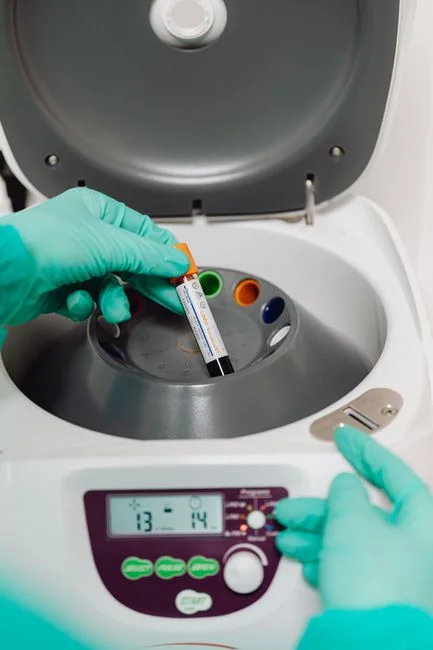
A monitoring proposal is acceptable only when its analytical scope and deliverables can be verified. Specify every required analyte, method, reporting unit, frequency, detection limit, turnaround time, and data format before comparing bids. “Pathogen detection” alone is not a procurement requirement because the same term can describe community surveillance, hospital wastewater surveillance, or a process-control assay.
WastewaterSCAN tracks more than a dozen infectious diseases and makes location-based levels and trends available through a public dashboard (WastewaterSCAN, 2026). That establishes a useful reference point for trend reporting, but a commercial medical-center service may need different controls, including facility-specific chain of custody, quality-control records, result qualification, and direct notification procedures. The wastewater analyzer selection guide can help buyers distinguish analytical requirements from general monitoring-service claims.
| Acceptance criterion | Information required from the supplier | Buyer-side check |
|---|---|---|
| Analyte and method | Named target, analytical method, reporting unit, and method limitations | Confirm that each method is appropriate for the stated decision |
| Performance | Required detection limit, sample frequency, turnaround commitment, and qualification rules | Match the commitment to the operational response time |
| Data delivery | Raw result, trend view, interpretation, and exportable data format | Test whether findings remain traceable to each sample |
| Quality assurance | Chain-of-custody procedure, quality-control results, hold-time controls, and corrective-action process | Reject a result that cannot be tied to controlled collection and laboratory records |
| Alerts | Notification rule, responsible recipient, response time, and escalation path | Match alert routing to the medical center’s incident process |
The facility should receive the result, measurement uncertainty or qualification, sampling metadata, quality-control status, interpretation limits, and corrective actions taken for invalid samples. This creates the wastewater sampling acceptance criteria needed for operational, laboratory, and regulatory decisions.
Connect Monitoring Findings to Treatment and Compliance
Every monitored result needs a written treatment trigger. A positive result may justify operational review, repeat sampling, laboratory escalation, or inspection of an on-site treatment system; it should not automatically imply a permit violation. The response protocol should identify who reviews the result, what evidence is required, and when the response is closed.
A 2024 PLOS Water study concluded that wastewater data can complement imperfect clinical data streams rather than replace them (PLOS Water, 2024). The medical center should therefore retain conventional facility, infection-control, and public-health reporting within its response plan. Wastewater data interpretation adds evidence; it does not remove established reporting channels.
Treatment compliance verification must be separated from pathogen surveillance. Pathogen presence can prompt a process review, but performance verification requires defined influent and effluent measurements, treatment objectives, sampling conditions, and acceptance criteria. If the treatment route is part of the proposal, evaluate process fit separately. The medical wastewater treatment system described in the supplier’s product catalog combines multi-stage filtration with ozone disinfection, states a 99%+ kill rate, requires no chemical dosing, and is available in a footprint as small as 0.5 m². Those product claims do not establish permit compliance until matched to the facility’s wastewater and applicable requirements.
For permit-sensitive decisions, request the treatment system’s process basis, applicable compliance documentation, proposed sampling points, and proposed acceptance criteria. Monitoring and treatment suppliers should not define compliance around themselves; the medical center must map evidence to its discharge requirements.
Build the Supplier-Selection Checklist

Supplier comparison works when the medical center and monitoring supplier each provide defined inputs. Facilities or environmental-health personnel should supply flow, wastewater characteristics, sewer route, permit conditions, sampling access, and treatment-system details. The supplier should return a sampling plan, analytical methods, accreditation or equivalent quality documentation, turnaround commitments, alert protocol, and example deliverables. A 2026 PLOS Water study’s finding on population overlap should be used as a bid-review prompt: each supplier should explain how its sample represents the intended medical-center population.
| Responsible party | Required submission | Procurement outcome |
|---|---|---|
| Medical center | Facility inputs, permit conditions, sewer map, access arrangements, and treatment details | Defines a service that can be technically scoped |
| Monitoring supplier | Sampling plan, methods, quality documentation, schedule, alert protocol, and sample reports | Enables equivalent technical comparison |
| Joint review | Sample-point map, data fields, interpretation limits, and action thresholds | Links findings to treatment and compliance decisions |
| Contract manager | Deliverable schedule, nonconformance process, and change-control method | Makes performance and corrective action auditable |
Ask each bidder to demonstrate how it will handle an invalid sample, an unexpected result, a missed service window, and a request for raw supporting data. Do not award the work on pathogen count alone; compare representativeness, data traceability, response protocol, and the supplier’s willingness to define measurable acceptance criteria.
Frequently Asked Questions
How should a medical center calculate the scope of a wastewater monitoring service?
Start with the decision to be supported, then map every required sample point, analyte, data field, response action, and reporting period to the facility’s discharge route and permit conditions. Obtain flow, sewer-layout, wastewater-characteristic, and treatment-system inputs before requesting quantities or pricing.
What information should be included in a request for proposal?
Include the sewer map, permit conditions, sample-access details, required analytes, reporting format, turnaround requirement, quality-control requirements, alert recipients, and expected deliverables. Also request the supplier’s definition of represented population and its limitations for community, facility, or treatment verification.
How does a hospital decide between community surveillance and facility-specific sampling?
Use community surveillance for population-level situational awareness. Use facility-specific sampling when the hospital needs evidence tied to its own wastewater or infection-control review. The 2024 PLOS Water study showed that interpretation depends on population overlap (PLOS Water, 2024).
Can wastewater monitoring results prove compliance with a medical center’s discharge requirements?
Not by themselves. Request the applicable permit conditions, treatment-process evidence, specified measurements, and acceptance criteria from the responsible compliance team. A monitoring result becomes compliance evidence only when it satisfies that defined verification method.
When should monitoring results trigger review of an on-site treatment system?
Set thresholds before sampling that assign results to operational review, repeat testing, laboratory escalation, or equipment inspection. Include treatment deviations, unexpected process indicators, and relevant alert results so the trigger is tied to actions rather than an undefined concern.
Related Equipment
- automatic wastewater chemical dosing system — specifications, capacity range, and technical data