Confirm the regulation and controlling sewer limit
Fabricated metals plants near Columbia, United States meet sewer pretreatment limits through a site-specific train that equalizes batch discharges, removes oils, reduces hexavalent chromium, oxidizes cyanide, precipitates dissolved metals, clarifies the solids, adjusts pH and monitors the final effluent. First confirm whether 40 CFR Part 433 applies, then obtain the receiving Columbia-area publicly owned treatment works’ current local limits. Local requirements under 40 CFR 403.5 are at least as stringent as categorical standards, so each parameter must be designed to the stricter requirement. Sample a full week of composite flow before sizing equipment because short composites can miss batch dumps and undersize equalization.
Part 433 covers forming, finishing, forging, foundry, metal spraying and machining wash operations when they are co-located with plating or anodizing lines. A plant operating only dry fabrication and sending parts to a separate finisher generally falls outside that description; a facility operating zinc, nickel or chromic-acid plating is a more likely covered source. Existing sources are evaluated under PSES, while PSNS applies to new sources and is generally tighter. HydropureWater’s fabricated metals wastewater pretreatment compliance guide also notes that some POTWs apply PSNS-equivalent local limits to all industrial users, so an existing plant should not assume that “existing source” status permits design to PSES.
The plant must not infer a Columbia-area permit condition from a federal table or from general engineering guidance. Obtain the current sewer-use ordinance, industrial pretreatment permit, local-limit tables and written confirmation of which categorical standard applies. Record the permit number, issuing POTW, sampling point, monitoring frequency, averaging basis and effective dates. The metals wastewater pretreatment for sewer discharge reference explains the broader treatment sequence, but it does not replace confirmation from the receiving authority.
| Selection field | Plant entry | Verification required |
|---|---|---|
| Regulatory status | Covered existing source, new source, or not covered | Confirm Part 433 applicability and source status in writing |
| Controlling authority | Receiving Columbia-area POTW | Identify the legal sewer authority and contact responsible pretreatment staff |
| Permit identification | Permit number and effective dates | Use the current issued permit and amendments |
| Controlling limits | PSES, PSNS and applicable local limits | Apply the stricter limit by parameter |
| Local additions | List any permit parameters for metals, oil and grease, TSS and pH | Obtain the current POTW limit table; do not assume these values |
| Compliance points | Final monitoring or sampling location | Confirm sample point, monitoring method, frequency and averaging periods |
Characterize the waste streams before selecting equipment
A defensible equipment selection starts by mapping each production stream to its batch frequency, flow, pH and contaminant concentrations. Separate stamping, machining, drawing, grinding, pickling, plating, anodizing, hard-chrome and compressed-air condensate flows. A mixed floor drain can conceal the chemistry of individual dumps; a composite sample must preserve the relationship between flow and contamination during the monitoring period.
HydropureWater’s 2026 field data for mixed floor drains entering pretreatment gives screening ranges of 50–500 mg/L for oils, 5–200 mg/L for total dissolved metals, 100–1,000 mg/L for TSS and pH from 2 to 12 across batch dumps. The same source reports that a hard-chrome line can exceed 50 mg/L Cr(VI) and lower pH below 2 during a rinse dump. These values are screening references, not plant design values; site sampling must establish the actual mass and hydraulic loads.
Collect a full week of composite flow before issuing an equipment specification. HydropureWater, 2026, specifically warns that a four-hour composite can miss a Friday-afternoon dump and undersize equalization. Sampling should therefore capture production days, dump events and clean-out discharges rather than only routine production hours.
The characterizations then divide the wastewater into four treatment families: oils from machining and drawing compounds; dissolved metals from rinsewater and pickling; hexavalent chromium associated with chromic-acid operations; and TSS from grinding swarf, casting sand and hydroxide floc. Cyanide must be recorded separately when alkaline cyanide plating remains in use. The rotary mechanical bar screen can protect downstream equipment by removing rags, wipes and tramp metal before these streams enter equalization.
| Waste stream | Field to document | Contaminant family | Selection consequence |
|---|---|---|---|
| Stamping, machining and drawing | Batch volume, frequency, flow and pH | Free or emulsified oils; TSS may be present | Define oil-removal and clarification duty |
| Plating and anodizing rinsewater | Dump timing, flow, pH and metal concentrations | Dissolved metals; Cr(VI) where applicable | Define equalization and chemical-reaction loads |
| Pickling | Acid concentration, flow and dump frequency | Dissolved metals and acidity | Establish pH-control and neutralization demand |
| Grinding and foundry operations | Suspended-solids generation and cleanup practice | TSS and grit | Define solids removal and screen requirements |
| Alkaline cyanide plating | Cyanide concentration and dump schedule | Cyanide | Require oxidation before metals precipitation |
| Compressed-air condensate | Oil concentration and discharge pattern | Emulsified or free oil | Determine whether segregation improves oil removal |
Match each contaminant family to a treatment step
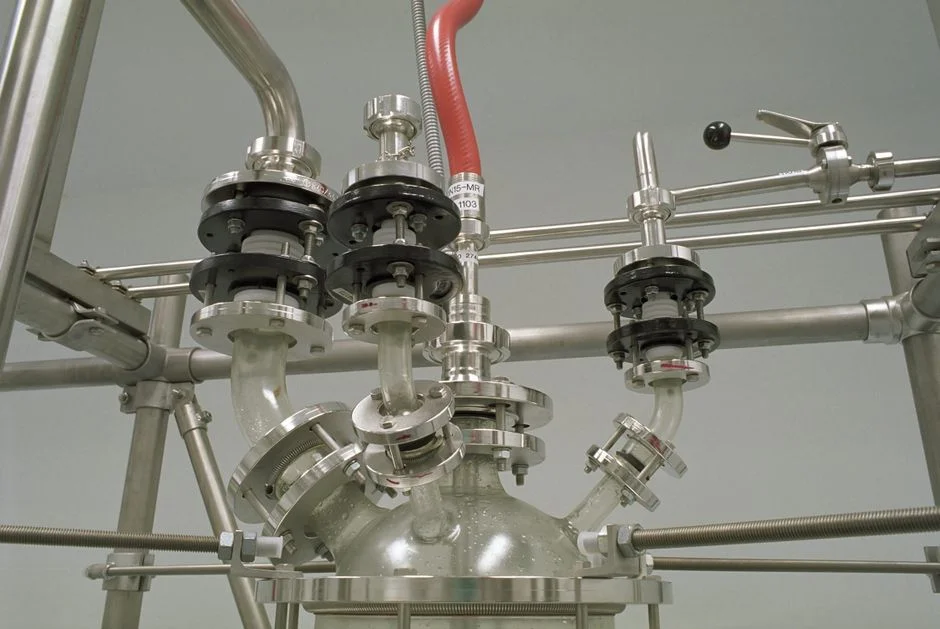
Each contaminant family requires a distinct physical or chemical mechanism, so one reactor cannot be assumed to handle oils, chromium, cyanide and dissolved metals simultaneously. Equalization should blend batch dumps and stabilize downstream chemistry. Oil then requires physical separation or chemical break; Cr(VI) requires reduction; cyanide requires oxidation; dissolved metals require pH-driven precipitation; and the resulting solids require clarification.
For Cr(VI), HydropureWater’s 2026 engineering article specifies sodium metabisulfite or ferrous sulfate at pH 2–3 and approximately 250–300 mV ORP. Trivalent chromium is then precipitated as Cr(OH)₃ at pH 8.5–9.5. Cyanide must be oxidized before metals precipitation because it can resolubilize downstream precipitates. This sequence should be confirmed through bench or pilot testing with plant water because reaction demand depends on the sampled chemistry.
DAF is suitable when the waste profile includes oils, suspended solids or precipitated floc. HydropureWater, 2026, identifies hydraulic surface loading, air-to-solids ratio and recycle rate as the principal DAF design controls. Its stated ranges are 4–20 m/h for surface loading, 0.005–0.060 for air-to-solids ratio with 0.02 as a typical design point, and 10–30% recycle relative to forward flow. A lamella clarifier is an alternative where the clarified-solids loading and floc characteristics suit the design. Compare the alternatives using the DAF versus clarifier selection for fabricated metals wastewater method, but size against the actual waste profile rather than a generic metals profile.
Use the DAF system for metalworking wastewater when float removal and oil capture are central to the duty. Use lamella clarification where the solids and floc load fit its clarified-solids design. Neither option is justified without flow, solids and recycle-rate inputs.
Advanced polishing is justified only when the POTW limit is tighter than the federal requirement, rinsewater reuse requires it, or a future rule adds a requirement. HydropureWater, 2026, reports an EPA PFAS rulemaking scoped to chrome-finishing facilities but no current numerical PFAS limit for chrome finishers. The appropriate 2026 decision is to reserve space and connection points for possible future polishing rather than install and operate it without an established limit.
| Treatment function | Contaminant addressed | Design inputs to obtain | Performance check |
|---|---|---|---|
| Equalization | Batch variability and hydraulic peaks | Full-week flow and dump chronology | Selected basin volume contains the controlling batch sequence |
| Oil removal | Free and emulsified oil | Oil concentrations, flow, temperature and emulsion character | Separated oil removal and downstream carryover |
| Chromium reduction | Cr(VI) | Cr(VI), pH, ORP and reduction-demand testing | Reaction endpoint and Cr(III) conversion |
| Cyanide oxidation | Cyanide | Cyanide concentration, pH and oxidation-demand testing | Destruction before precipitation |
| Metals precipitation | Dissolved metals | Metal species, pH and sludge-generation estimate | Residual metals at the controlling limit |
| DAF or lamella clarification | Oil, TSS and metal hydroxide floc | Flow, solids loading, recycle rate and air-to-solids ratio | TSS and oil removal; stable float or sludge withdrawal |
| Conditional polishing | Residual parameters required by permit or reuse | Controlling limit and end-use water quality | Removal relevant to the stated requirement |
Set the dosing, control and safeguard requirements
Reliable treatment requires a controlled chemical system, not merely separate tanks and pumps. Specify flow-paced feedforward dosing with pH and ORP feedback on a PLC-controlled skid for pH adjustment, chromium reduction, cyanide oxidation and polymer addition. This arrangement gives the operator a common control panel and provides the signals needed to detect an off-condition reaction before discharge.
Each chemical pump should include a calibration column and a stroke-count totalizer. HydropureWater, 2026, identifies these as necessary for verifying actual chemical delivery rather than dosing without an auditable record. The PLC-controlled automatic chemical dosing skid should also specify chemical storage, containment, secondary containment, calibration procedures, maintenance access and operator lockout points.
Bench-test the complete control narrative before shipment or site integration. At minimum, demonstrate pH and ORP response, high- and low-dose behavior, alarm annunciation, pump-status indication, totalizer operation and fail-safe states. The interlock set should be written as cause-and-effect: identify the initiating condition, the equipment action, the required operator response and the discharge status.
Include automatic diversion back to the equalization header for pH excursion, ORP outside its operating range and high TSS. The equipment proposal should define the alarm thresholds, instrumentation ranges, response time, diversion-valve position and reset authority. A proposed pH target of 6–9, flow CV below 0.5, DAF surface loading, air-to-solids ratio and recycle rate should be treated as named design or performance checks subject to the final proposal; they are not substitutes for site data.
Plan solids handling and compliance verification

The solids path must be specified with the treatment train. Install a rotary mechanical bar screen before equalization to remove rags, wipes and tramp metal. HydropureWater, 2026, identifies these materials as a leading cause of premature filter-press cloth failure. Confirm screen aperture, extracted-solids handling, cleaning access and a disposal route before accepting the mechanical arrangement.
Metal-hydroxide sludge leaving DAF is typically described by HydropureWater, 2026, as 2–5% dry solids and is reported as dewaterable to 25–35% dry solids with a plate-and-frame filter press. A plate-and-frame filter press should therefore be evaluated against the selected DAF, expected sludge volume, cake-transport constraints and disposal route. The high-efficiency sedimentation tank option may also require solids withdrawal, sludge storage and conditioning provisions that must appear in the complete design.
Compliance verification must use the permit-defined monitoring method, sampling point, frequency and averaging basis. Check daily-maximum and monthly-average requirements under the applicable PSES or PSNS together with every applicable local limit. Do not infer a local numerical limit from the federal categorical standards or from generic pretreatment guidance.
Require acceptance testing after installation. The record should demonstrate flow balance, chemical-calibration results, pH and ORP control response, TSS removal, alarm trips, automatic diversion and sludge-dewatering performance. If a performance value was not established during design or testing, it should remain an explicit unresolved acceptance item rather than an implied guarantee.
| Commissioning item | Acceptance evidence | Responsible information source |
|---|---|---|
| Hydraulic balance | Measured flows reconcile with the approved mass balance | Approved design and field startup records |
| Chemical calibration | Calibration-column records and pump totalizer reconciliation | Dosing-system commissioning record |
| pH and ORP control | Demonstrated response at the specified operating condition | PLC test record |
| Solids removal | TSS result measured using the permit-defined method | Independent or POTW-accepted laboratory result |
| Alarms and diversion | Trip, diversion-valve action and reset record | Factory or site functional test |
| Sludge dewatering | Recorded cake dry-solids result and handling route | Filter-press test and waste-disposal record |
| Permit compliance | Results reported in the required form and averaging basis | POTW permit and accepted monitoring record |
Frequently Asked Questions
Who confirms the controlling Columbia-area permit limits and supplies the wastewater characterization?
The receiving Columbia-area POTW confirms its current industrial pretreatment permit, local-limit table, monitoring point, monitoring method and averaging requirements. The plant remains responsible for characterizing its own wastewater and demonstrating that each discharge parameter meets the stricter applicable federal or local requirement. Ask the POTW for the issued permit and amendments, then submit site sampling results using the required analytical methods.
When should a buyer choose DAF instead of lamella clarification, and what inputs are needed for defensible sizing?
DAF is the stronger candidate when the selected train must remove oil, suspended solids or buoyant metal-hydroxide floc; lamella clarification should be considered when the actual solids and floc loading suit that design. Require the manufacturer to receive full-week flow and dump data, oil and TSS concentrations, pH, current contaminant loads, air-supply conditions, recycle requirements and the requested residual TSS before issuing a final size. Require the sizing proposal to identify surface loading, air-to-solids ratio and recycle rate for DAF, or clarified-solids loading for lamella.
How can a buyer specify controls, alarms and acceptance tests without relying on unsupported guarantees?
Require a cause-and-effect matrix covering pH excursion, ORP outside range, high TSS, pump failure, loss of feedback and automatic diversion. Make calibration-column results, stroke-count records, instrument calibration, trip tests and diversion-valve operation documented acceptance conditions. Set performance criteria only after site influent testing and equipment sizing establish defensible values.
When is advanced polishing justified if there is no current numerical PFAS limit for chrome finishers?
Advanced polishing is justified when the controlling POTW limit requires performance beyond the selected conventional treatment train, or when rinsewater reuse has a confirmed water-quality target. With no current numerical PFAS limit for chrome finishers, do not price an unspecified PFAS polishing system as mandatory. Instead, ask the manufacturer to reserve space, utilities and connection interfaces for a future unit, and define the trigger in the permit-contingency plan.