Characterize the Trade Waste Before Selecting Equipment
Manufacturers in Kuwait City should not assign one high-COD treatment train to every trade-waste stream. The defensible sequence is: characterize the actual factory discharge, remove floatable oils and solids where necessary, treat biodegradable COD biologically, and add membranes only against defined reuse or discharge requirements. Kabd municipal influent averaged 596.32 mgO₂/l COD and 285.06 mgO₂/l BOD, while COD ranged from 234–1363 mgO₂/l in the 2012–2023 dataset; only 1.3% of observations had BOD/COD above 0.8, so biological suitability must be verified rather than assumed (Alsulaili et al., Optimizing Wastewater Management in Kuwait, presented November 2024). Final design must also define the reverse-osmosis reject route.
Start by requesting COD and BOD on representative factory samples, then calculate the biodegradability ratio as BOD divided by COD. A ratio below 0.3 triggers a search for refractory compounds, industrial contamination, or toxicity. That threshold occurred in 10.71% of Kabd observations, while only approximately 1.3% were above 0.8 (Alsulaili et al., November 2024). The study used APHA 5220 D for COD, APHA 5210 B five-day BOD, APHA 2540 D for TSS and APHA 5520 B for oil and grease.
Oil and grease, TSS and pH change the pretreatment decision. Kabd influent averaged 42.5 mg/l oil and grease, 172.86 mg/l TSS and pH 7.09, but oil and grease ranged from 0.5–819 mg/l (Alsulaili et al., November 2024). These are municipal-influent data from one plant, not factory discharge limits. Sample each process line and production state, including clean-up, batch dumping and peak discharge, rather than relying on one composite sample. Further local context is available in the Kuwait City industrial wastewater guide.
| Measured test | Decision supported by the result | Information required before equipment specification |
|---|---|---|
| COD and five-day BOD | Separates the biodegradable and potentially refractory organic load | Representative concentrations, flow-weighted variability and current BOD/COD ratio |
| Oil and grease | Tests whether front-end floatation or grease recovery is required | Maximum concentration, emulsified versus free oil, temperature and discharge cycle |
| TSS and settleable solids | Sets solids loading for DAF, biological clarification or membrane pretreatment | Solids profile, grit condition, settleability and peak flow |
| pH | Checks pretreatment and biological compatibility | Operating range, alkalinity and equalization strategy |
| Endpoint | Defines whether disinfection, UF, MBR or RO is justified | Direct discharge, sewer transfer, irrigation reuse or industrial reuse criteria |
Match Each Wastewater Fraction to a Treatment Step
DAF belongs ahead of biological treatment when the factory discharge contains measurable free oil, grease, floatable solids or colloids that interfere with downstream biological and membrane systems. DAF separates the floating phase but does not reliably remove dissolved refractory COD. Equalization, temperature control and grease-conditioning assessment remain separate design issues.
Biological treatment belongs where BOD/COD confirms enough biodegradable material to support it. Kabd’s 10.71% share of observations below 0.3 indicates refractory organic material in part of the municipal dataset, while its approximately 1.3% share above 0.8 shows that strongly biodegradable conditions cannot be assumed throughout (Alsulaili et al., November 2024). Toxicity screening should accompany COD and BOD sampling because inhibitory industrial contaminants can make an apparently biodegradable feed unsuitable for biological treatment.
Electrocoagulation can be considered for a selected high-COD mineral-processing stream. A study applied it to wastewater from a Pb/Zn sulfide flotation plant with initial COD of 424.29 mg/L; that result supports stream-specific evaluation, not a default treatment for all Kuwait industrial effluent (MDPI AG, Electrocoagulation: A Promising Method to Treat and Reuse Mineral Processing Wastewater with High COD, 2022).
Microfiltration does not function as a universal COD removal method. A review of wastewater treatment for agricultural applications reports significant COD and BOD reductions with MF, but does not establish performance for every industrial effluent (Biointerface Research in Applied Chemistry, Treatment of Wastewater for Agricultural Applications in Regions of Water Scarcity, 2025). Compare the high-COD trade wastewater treatment guide and the Amman treatment-train guide for boundary-setting rather than assuming local performance transfers between jurisdictions.
| Observed condition | First process decision | What that step does not establish |
|---|---|---|
| Free oil, grease, floatable solids or problematic colloids | DAF or another physically justified separation step ahead of biology | It does not demonstrate removal of dissolved refractory COD |
| BOD/COD supports biological conversion | Biological treatment for the biodegradable COD fraction | It does not prove that the process will tolerate industrial toxicity |
| BOD/COD below 0.3 | Investigate refractory compounds, dilution and toxicity before selecting advanced treatment | The ratio alone does not identify the responsible pollutant or removal method |
| Selected mineral-processing effluent | Run a representative electrocoagulation trial | The Pb/Zn flotation-plant result is not a general performance guarantee |
| Downstream reuse requires solids separation | Use MF, UF or MBR according to the required separation barrier | Filtration does not by itself establish compliance for soluble contaminants |
Build a DAF-to-Membrane Treatment Train
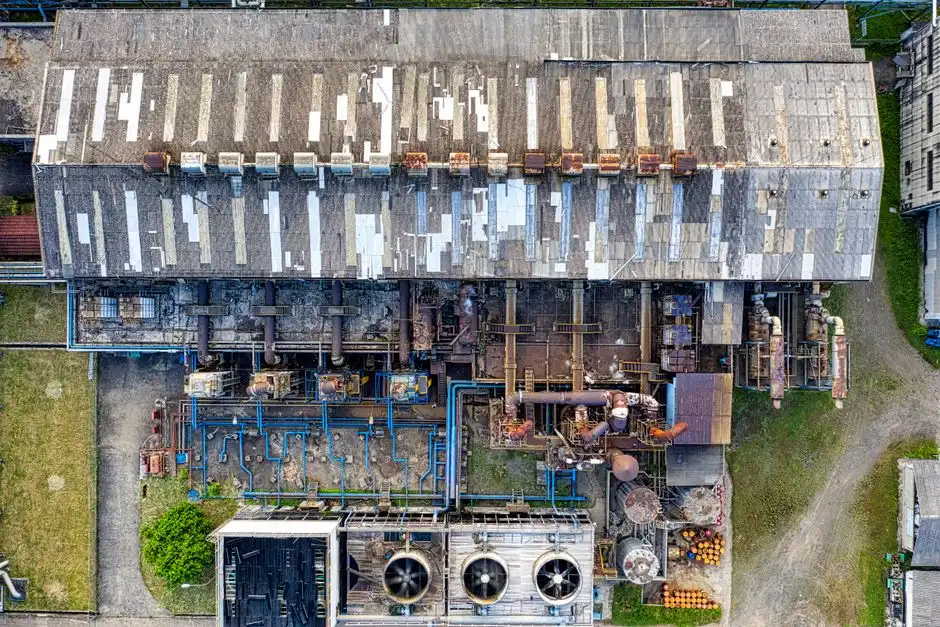
A defensible high-COD train uses each barrier for a measured contaminant rather than stacking processes by default. The hydraulic sequence is equalization and characterization, DAF where oil or floatable solids are present, biological treatment where biodegradability supports it, then MBR or UF where the endpoint requires solids separation or membrane protection. Reverse osmosis is a downstream desalination barrier for specified reuse applications, not a substitute for biological COD removal.
Size DAF from measured flow, oil-and-grease concentration, suspended-solids loading and expected float loading. The supplied industrial DAF specification covers 4–300 m³/h across 13 standard models for industrial FOG, oil, colloid and suspended-solids removal. A supplier must still demonstrate that the selected model accommodates the factory’s measured peak loads; the product range is not a substitute for feed data. The DAF versus clarifier comparison provides a useful basis for checking whether the selected separation duty matches the wastewater.
Route DAF effluent to biology only after testing the clarified stream. At Kabd, only approximately 1.3% of observations had BOD/COD above 0.8, so a favorable average or one representative sample is insufficient (Alsulaili et al., November 2024). If the ratio is low but the organic load is substantial, investigate compound-specific biodegradability, toxicity and whether an upstream segregation step can prevent dilution of the biological feed.
Use an integrated MBR wastewater treatment system when biological treatment must be followed by sub-micron solids separation. The supplied MBR specification identifies an integrated capacity from 10–2,000 m³/day and effluent filtration below 1 μm. Use UF when solids removal and downstream membrane protection are required without chemical cleaning; the supplied UF specification lists 2,000–40,000 L/h, 0.03 μm PVDF membranes and automatic backwash with air scour. Neither barrier should be credited with independently solving refractory soluble COD.
Plan for RO Reuse and Reject Disposal
RO makes reuse possible only when the permeate endpoint and the reject destination are both defined. Membranes remove dissolved material from the product stream, but they concentrate rejected constituents into a residual stream; pretreatment does not eliminate the disposal obligation.
At Sulaibiya, a daily sampling campaign over one month found that RO reject met Kuwait Environment Public Authority requirements except for BOD, total dissolved solids and total phosphate (Khajah, Ahmed and Al-Matouq, International Journal of Environmental Science and Development, February 2023). The same study reported deep-well injection and seawater discharge as practices in Kuwait, and identified surface-water discharge, sewer disposal, deep-well injection and land application as potential reuse options for the brine. These are options to evaluate, not automatic permissions for a new project.
| Reject-management option | Evidence-supported consideration | Information required for the project |
|---|---|---|
| Deep-well injection | Reported as an existing Kuwait practice | Current authority approval and site-specific hydrogeological and disposal conditions |
| Seawater discharge | Reported as an existing Kuwait practice | Current discharge route, receiving conditions and seasonal constraints |
| Sewer disposal | Identified as a potential brine-reuse option | Authority acceptance, downstream impact and receiving-system capacity |
| Land application | Identified as a potential brine-reuse option | Application rate, receiving soil, crop and current approval conditions |
| Surface-water discharge | Identified as a potential brine-reuse option | Permit conditions, receiving-water capacity and seasonal restrictions |
| Evaporation pond with membrane filtration | Proposed treatment for further brine improvement | Site suitability, concentrate destination and project-specific environmental approval |
Before ordering RO equipment, obtain a reject mass balance covering flow, salinity, BOD and phosphate, then assess each candidate route against the Environment Public Authority’s current project-specific requirements. Include the reject system in capital and operating costs rather than treating disposal as an unpriced downstream effect.
Specify Equipment and Supplier Acceptance Criteria
A bid is technically comparable only when every bidder states the same measured design basis. Require the design flow, feed characteristics, treatment objective, operating duty cycle, process assumptions and performance targets to appear in the proposal. State whether the endpoint is direct discharge, sewer transfer, irrigation reuse or industrial reuse; otherwise DAF, MBR, UF and RO bids may be solving different problems.
Ask each bidder to map FOG, suspended solids, biodegradable COD and refractory COD to named process steps, and to identify the final destination of sludge, DAF float, membrane concentrate and RO reject. Do not accept generic removal percentages: the supplied sources establish no universal removal performance for Kuwait trade waste. Evidence should be tied to the actual feed, or the bidder should identify a pilot or design test needed to close the gap.
Confirm the governing sizing basis for every quoted unit. DAF capacity may be driven by hydraulic flow, float loading and contaminant characteristics; MBR and UF selection must also consider membrane flux, feed solids, temperature, operating hours and cleaning strategy. The DAF versus sedimentation cost and decision framework provides useful questions for comparing separation bids, but the tender must require the bidder to disclose the assumptions behind any cost or ROI calculation.
Include startup testing, control narratives, sludge and reject handling, operator training, performance guarantees, bypass provisions and data-submittal requirements in the acceptance schedule. If the proposed train includes membranes, require clarification of membrane warranty conditions, replacement criteria, chemical or air-scour requirements and how changes in feed composition affect the guarantee.
Frequently Asked Questions
When should DAF precede biological treatment?
Place DAF ahead of biology when representative samples show free oil, grease, floatable solids or problematic colloids. The decision should cite measured oil-and-grease and TSS results, peak flow and expected float loading. DAF is unnecessary where those fractions are absent, but COD alone cannot prove that.
What wastewater data does a supplier need to size the treatment train?
Request COD, five-day BOD, oil and grease, TSS, pH, flow and the required effluent endpoint. Also require production-cycle samples, toxicity information and the measured range, not only averages. For membranes, request the basis for flux and operating-hour assumptions; for biological treatment, request the biodegradability assessment and nutrient or alkalinity data where relevant.