What makes Amman trade wastewater different from ordinary sewage
Manufacturers in Amman generally treat high-COD trade waste by first characterizing and equalizing the effluent, then removing oil, grease, suspended solids and colloids before biological treatment. DAF is commonly suitable for pretreatment because it targets FOG, oil and floatable solids; activated sludge or another biological process then reduces biodegradable COD. Regional evidence supports this staged approach: a 2016 study of 27 Jordanian plants found activated-sludge and trickling-filter systems performed better than stabilization ponds, while industrial discharges contributed an estimated 10% of biological loading. Final design should reflect the factory’s COD, FOG, TSS, flow, discharge route and reuse objective.
Trade waste is industrial or commercial effluent discharged to a sewer, receiving environment or intended for reuse. Unlike dilute domestic sewage, it can vary substantially by production batch. COD may include soluble biodegradable material, while FOG, suspended solids, colloidal material, dyes, surfactants or toxic compounds can change both treatment requirements and the risk to downstream biological processes.
The 2016 Evaluation of Wastewater Treatment Plants in Jordan and Suitability for Reuse assessed COD, BOD5, TSS and other characteristics separately. It reported an average influent BOD5 of 615 mg/L for wastewater sampled in 2005, describing this as a very high organic load that imposed operational problems. The same study warned that high organic loads can make plants biologically overloaded even before their hydraulic capacity is reached.
An influent COD laboratory result is therefore not, by itself, a design load. Engineers also need time-series flow, discharge duration, production schedules and batch characteristics. This distinction is especially important where a factory discharges intermittently or changes production between high-strength and washdown periods. A Jordan wastewater engineering reference provides regional context, but it does not replace site-specific characterization.
Jordan’s water scarcity makes recovery strategically relevant, but it does not establish that every Amman factory can discharge to the As-Samra system. The controlling factors remain the authorized route, current permit, sewer-acceptance conditions and any verified reuse specification.
Characterize the effluent before selecting a process
Equipment selection should begin with representative composite samples, not a single grab result. Composite sampling must cover normal production, cleaning and discharge cycles so that the selected process reflects both average loading and batch peaks.
Request COD or BOD5, FOG and oil-and-grease characterization, TSS, pH, temperature, conductivity or TDS, nitrogen and phosphorus data, together with flow and discharge schedules. Trace the source of each stream: identify whether COD is mainly soluble and biodegradable or is accompanied by high suspended solids, colloidal solids, FOG, dyes, surfactants or toxic compounds.
The 2016 Jordan study treated COD, BOD5, TSS and other wastewater characteristics as separate indicators. That separation matters because a process selected for COD reduction does not automatically remove oil, floatable solids or colloidal material. A high-COD trade-waste treatment process can support the same screening logic, although its industrial examples are not Jordanian regulatory evidence.
| Information to obtain | Engineering question | Why it affects selection |
|---|---|---|
| COD and BOD5 | How much biodegradable organic load enters the system? | Sets the biological treatment basis and aeration demand. |
| FOG and oil-and-grease data | Will free oil or emulsified grease reach the treatment train? | Determines whether upstream removal is required before biological treatment. |
| TSS and colloidal-solids data | How much material must be separated physically? | Influences DAF, clarification and solids-handling requirements. |
| pH, temperature, conductivity or TDS | Could the wastewater shock or inhibit biological treatment? | Identifies equalization, acclimatization and salinity constraints. |
| Nitrogen and phosphorus | What nutrient balance may develop in the biological stage? | May affect process control and discharge or reuse objectives. |
| Flow and discharge schedule | What are the average, maximum and batch-discharge conditions? | Defines hydraulic capacity, equalization and turndown requirements. |
| Authorized discharge or reuse route | Which permit and receiving criteria control? | Sets the required effluent specification and treatment objective. |
Confirm the route before selecting reuse-oriented equipment. Obtain the current permit, sewer-acceptance criteria, irrigation requirements or other reuse specification. Without those documents, “near-reuse quality” is not a procurement requirement; it is only an operating description.
Build a pretreatment-to-disinfection treatment train
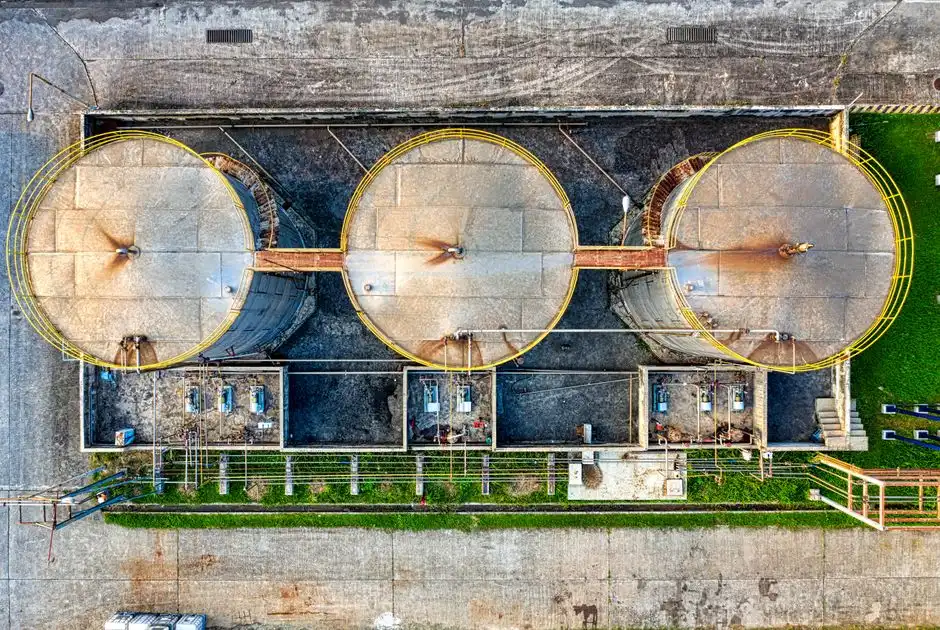
A practical treatment train protects the biological stage by removing materials that can block equipment, consume oxygen or interfere with separation. The sequence should normally proceed from screening and equalization through physical pretreatment, biological treatment, solids separation, required disinfection and sludge dewatering.
- Screening: remove rags, plastics and fibrous debris before pumps and downstream equipment.
- Equalization: blend production and cleaning discharges and feed the treatment train at a controlled rate. The 2016 Jordan study identified hydraulic and biological overloading as operational problems at evaluated plants.
- DAF or equivalent pretreatment: use physical flotation when the effluent contains oil, FOG, floatable material, colloids or suspended solids. An industrial DAF system for FOG and suspended solids can serve this stage; DAF does not replace biological COD reduction.
- Biological treatment: reduce biodegradable COD and BOD. The 2020 Water study found that 60% of 30 Jordanian plants assessed used activated sludge, while the 2016 study found activated-sludge and trickling-filter systems outperformed stabilization ponds for BOD5, COD and TSS removal.
- Secondary separation: provide clarification after conventional biological treatment or membrane separation within an MBR.
- Disinfection: include it where the authorized discharge or reuse specification requires pathogen control.
- Sludge handling: specify collection, conditioning, dewatering, storage and the authorized disposal route before procurement.
| Train component | Primary function | Principal design or operating issue |
|---|---|---|
| Screening and equalization | Remove debris and buffer batch discharges. | Must handle the production and cleaning discharge pattern without pump blockage. |
| DAF or equivalent | Remove FOG, oil, floatable solids, colloids and suspended solids. | Performance depends on feed characteristics, chemical conditioning and solids withdrawal. |
| Activated sludge or other biological stage | Remove biodegradable COD and BOD. | Requires controlled feeding, aeration, biological monitoring and sludge separation. |
| Clarifier or MBR solids separation | Separate biological solids from treated liquid. | MBR adds membrane-management and footprint demands while providing membrane solids separation. |
| Disinfection | Meet applicable pathogen-control requirements. | Specify only against the controlling discharge or reuse criteria. |
| Sludge dewatering | Reduce sludge volume before authorized handling or disposal. | Selection depends on sludge characteristics, operating hours and destination. |
Use MBR where compact biological treatment, membrane solids separation and an effluent approach suited to the specified reuse objective justify the additional process-control requirements. The available MBR membrane bioreactor for industrial effluent covers 10–2,000 m³/day.
Plan sludge dewatering as part of the train rather than after commissioning. A plate and frame filter press is an available mechanical option with filtration areas from 1 m² to 500 m² and manual, hydraulic or automatic PLC operation; suitability still depends on representative sludge and the disposal route.
Match DAF, biological treatment and MBR to the application
DAF, activated sludge and MBR solve different parts of the treatment problem, so the reuse objective should determine the combination rather than the brand of a single unit.
| Option | Primary function | Strength | Operating consideration | Jordan evidence |
|---|---|---|---|---|
| DAF | Physical removal of FOG, oil, floatable solids, colloids and TSS. | Provides upstream protection for biological treatment. | Requires appropriate conditioning, chemical dosing, sludge withdrawal and monitoring. | No plant-specific Amman industrial performance data were supplied in the research. |
| Conventional activated sludge | Biological reduction of biodegradable COD and BOD. | Established treatment approach with separate solids settling. | Needs aeration, feeding control, biological monitoring and sludge handling. | The 2020 Water study found it at 60% of 30 plants assessed; the 2016 study found it performed better than stabilization ponds. |
| MBR | Combined biological treatment and membrane solids separation. | Compact treatment with membrane separation and an effluent approach suited to specified higher-quality reuse objectives. | Adds membrane management, controls and maintenance requirements. | The 2020 Water study examined Jordanian wastewater reuse and treatment processes but did not provide a plant-specific MBR design basis for an Amman factory. |
DAF is a solids- and FOG-removal pretreatment option, not a substitute for biological COD reduction. If the wastewater is mainly soluble and biodegradable, DAF alone leaves the principal COD objective unresolved. Conversely, sending oily or particulate-rich effluent directly to activated sludge can increase the contaminant burden on the biological stage and complicate separation.
MBR becomes more defensible when the project needs compact biological treatment with membrane solids separation and the verified reuse specification justifies that configuration. A DAF-versus-clarifier technical comparison can help frame physical separation choices, but it should not substitute for Jordan-specific permit and reuse requirements.
Jordan’s reuse policy and infrastructure support the wider case for water recovery. The 2016 study reported that the wastewater reuse index increased from 30 in 2004 to 38% in 2007. The MCC states that the expanded As-Samra plant provides 133 million m³ of treated water annually for irrigation in the Jordan Valley. Neither fact proves that a particular factory has an authorized reuse route; the permitted end use and receiving specification still control.
Size the system from flow and load, not discharge peak alone
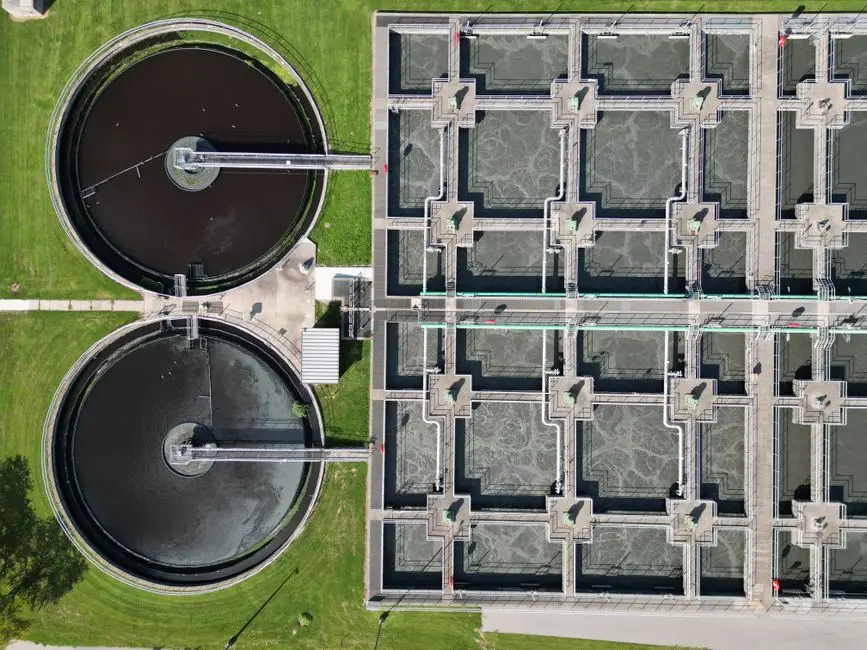
Treatment capacity and pollutant-removal capacity are separate design questions. A system may have enough hydraulic volume while lacking the solids separation, oxygen transfer or biological capacity required for the COD load.
Size pretreatment using average and maximum flow, hydraulic surge, FOG and solids loading, required removal performance and expected operating availability. Do not select equipment solely from average daily effluent volume. The DAF selection guide for FOG and TSS provides a useful framework for separating hydraulic and contaminant-removal requirements.
Size biological treatment from the selected COD or BOD basis, hydraulic retention, applicable loading criteria, temperature and permitted discharge or reuse target. The supplied research does not provide plant-specific loading rates for Amman industrial sites. Missing loading data should remain an explicit tender input rather than be replaced by an unsupported typical rate.
| Design issue | Information suppliers must state | Buyer’s check |
|---|---|---|
| Hydraulic basis | Average and maximum flow, batch-discharge assumptions, equalization volume and turndown. | Confirm that the stated peak reflects production and cleaning cycles. |
| Organic loading basis | Raw COD and BOD5, design load, hydraulic retention and loading criteria used. | Reject a proposal based only on flow or a single laboratory result. |
| Physical pretreatment | FOG and TSS loading, required removal rate, chemical use and sludge yield. | Check whether the stated removal basis matches the supplied wastewater data. |
| Reliability | Redundancy, maintenance access, standby strategy and operating availability. | Identify how a unit outage affects the permitted discharge route. |
| Controls | Monitoring for flow, pH, COD, TSS and FOG where they affect dosing, aeration, discharge or reuse performance. | Verify instrument placement, control authority and data recording. |
| Commercial scope | Footprint, utilities, sludge yield, installation boundary and exclusions. | Compare quotations on the same process and performance basis. |
Ask every bidder to disclose its design basis, hydraulic and organic loading assumptions, redundancy, turndown strategy, footprint, utilities and expected sludge yield. The 2016 Jordan study’s warning about hydraulically and biologically overloaded plants makes surge and shock-load scenarios mandatory tender content for industrial contributors to a sewer system.
Build the procurement brief and verify Jordan-specific risks
A comparable quotation must be based on the same wastewater, discharge route and performance obligations. Issue a process performance specification covering treated flow, raw COD, FOG, TSS, pH, operating hours, peak factor, authorized route, required effluent quality and sludge handling.
Require guaranteed performance under representative wastewater conditions, together with drawings, P&IDs, control philosophy, O&M manuals, spare-parts schedules, training and commissioning support. A guarantee is meaningful only if its sampling method, test parameter, operating condition and acceptance period are defined.
| Supplier selection area | Evidence to request | Commercial or compliance risk addressed |
|---|---|---|
| Industrial experience | References for the actual industry and wastewater characteristics. | Avoids relying only on potable-water or municipal references. |
| Process performance | Guaranteed treatment results based on representative wastewater. | Prevents an equipment-only quotation from obscuring treatment obligations. |
| Design transparency | Load assumptions, sizing calculations, redundancy, utilities, footprint and exclusions. | Allows quotations to be compared on the same scope. |
| Jordan compliance | Current permit, sewer-acceptance conditions and authorized reuse specification. | Prevents equipment selection ahead of the controlling discharge requirements. |
| Operations in Jordan | Operator competence, water availability, electricity requirements, cooling provisions and waste-disposal routes. | Addresses site operability and local infrastructure constraints. |
| Service and parts | Installation capability, response time, local access to membranes, pumps, chemicals and wearing parts. | Reduces downtime and long-term maintenance exposure. |
Use industrial wastewater pretreatment requirements as a prompt for process-specific questions, then amend the brief for the factory’s actual production streams. Confirm installation and service capability in Jordan rather than assuming international supply arrangements will be adequate.
Have legal and environmental reviewers check whether local permit conditions, sewer-acceptance rules, electrical requirements or waste-disposal restrictions affect the proposed route. A supplier’s stated process capability cannot override those obligations. Keep responsibility for performance acceptance, operator training, maintenance, chemical supply and sludge disposal clearly assigned in the contract.
Frequently Asked Questions
What does a high-COD wastewater treatment system cost for a factory in Amman?
The supplied research does not provide a defensible equipment price for an Amman factory. Request quotations using the same design basis: average and peak flow, raw COD, FOG, TSS, pH, discharge schedule, reuse objective, required effluent quality, utilities, footprint and sludge-disposal route. Compare cost-structure guidance, but do not convert another market’s published cost into an Amman budget.
How should an Amman manufacturer select a wastewater treatment supplier?
Require industrial references, guaranteed process performance based on representative wastewater, and transparent design assumptions. Ask bidders to provide P&IDs, load calculations, utilities, controls, O&M documentation, training and commissioning support. Verify installation and service capability in Jordan, including access to membranes, pumps, chemicals and wearing parts.
How is wastewater treatment capacity sized when COD is high?
Hydraulic capacity does not establish pollutant-removal capacity. Size pretreatment from maximum and average flow, surge, FOG and solids loads; size the biological stage from the selected COD or BOD basis, hydraulic retention and loading criteria. The supplied research contains no plant-specific loading rates for Amman industrial sites, so request the supplier to state every loading assumption and provide representative wastewater data.
Which Jordan requirements control discharge and reuse?
The authorized discharge route and the current permit conditions control the project. Obtain the applicable sewer-acceptance criteria, discharge permit and verified reuse specification before fixing the process. Jordan’s national reuse development does not automatically authorize a factory discharge or reuse route, so the supplier’s performance guarantee must be tied to the controlling documents.