
Define the sludge and dewatering design basis
Plate-and-frame filter press design should begin with dry solids per day, not wet sludge volume. Calculate daily dry solids, convert them to wet cake mass at the target cake solids percentage, calculate cake volume, divide by realistic cycles per day, and add a 15–20% margin to establish chamber volume and filtration area. Plate construction, filter cloth, pressure rating, materials, cycle time, and controls must then match the sludge’s particle distribution, compressibility, chemistry, temperature, conditioning, and disposal target. Pilot testing and verification of uniform chamber filling remain essential because industrial presses may develop non-uniform flow distribution and uneven cake formation.
Before calculating a chamber, define the feed and the product the plant must handle. The design basis should identify the sludge source, daily wet volume, solids concentration, particle-size distribution, conditioning chemicals, pH, temperature, and expected seasonal variation. A representative site sample or pilot result is more defensible than a generic filtration rate: LONGONE’s wastewater guide describes application-specific outcomes rather than a universal dewatering rate (LONGONE, filter press application guide).
Set the target cake solids percentage, filtrate-quality limit, available operating time, disposal route, and future-capacity requirement before asking for a quotation. Specify whether the equipment is a true plate-and-frame press with flat plates separated by hollow frames or a recessed-chamber design with built-in plate recesses. LONGONE notes that buyers often use “plate and frame” for both configurations, so the RFQ should name the required arrangement (LONGONE).
| Design-basis input | Record before quotation | Why it affects selection |
|---|---|---|
| Feed | Daily wet volume, solids percentage, sludge type, particle-size distribution, pH, temperature, variability | Sets dry-solids duty, feed-pump demand, cloth needs, and material limits |
| Conditioning | Chemical type, dose, mixing method, sequence, and operational control | Changes filterability, cake structure, dosing equipment, and operating control |
| Products | Target cake solids, filtrate-quality criterion, disposal or reuse route | Defines performance acceptance and handling requirements |
| Operation | Cycles available per day, automation level, wash-water availability, future growth | Determines chamber volume, controls, utilities, and expansion provision |
| Configuration | True plate-and-frame or recessed chamber; membrane squeeze required or not | Prevents suppliers from pricing materially different equipment |
Calculate chamber volume and required filtration area
The repeatable sizing method is daily dry solids → wet cake mass → cake volume → required chambers → filtration area. Apply the method consistently, then request the manufacturer to demonstrate how its plate geometry converts calculated chamber volume into effective filtration area.
- Calculate daily dry solids. Multiply daily sludge volume by feed solids concentration. LONGONE states that this quantity remains constant when sludge is thickened, although thickening reduces the wet volume that must be pumped (LONGONE).
- Calculate wet cake mass and volume. Divide daily dry solids by the target cake solids percentage to obtain wet cake mass, then divide that mass by cake density. Cake density must be supplied from representative test data or included as a clearly identified quotation assumption.
- Allocate volume by cycle. Divide required daily cake volume by the number of cycles the plant can realistically complete. A full cycle includes filling, pressing, squeezing where fitted, opening, cake discharge, closing, and periodic cloth washing; LONGONE states that cycle duration commonly runs for several hours and depends on sludge filterability and automation level (LONGONE).
- Apply the sizing margin. LONGONE specifies a 15–20% margin for seasonal load swings, wetter sludge, and future growth (LONGONE). Do not apply it twice or use it to conceal missing cycle-time data.
LONGONE provides one illustrative case: 20 m³/day of thickened sludge at 3% solids, a 35% target cake, and plates of 1000 × 1000 mm with approximately 30 L per chamber lead to about 29 chambers, or around 30 plates. LONGONE explicitly labels this as an illustration rather than a final specification because plate count, chamber volume, and cake thickness vary by design (LONGONE). The calculation therefore identifies a selection envelope; it does not replace manufacturer geometry and filtration-area calculations.
| Worksheet step | Calculation | Required input or confirmation |
|---|---|---|
| Daily dry solids | Daily wet sludge volume × feed solids percentage | Representative daily mass and solids analysis |
| Wet cake mass | Daily dry solids ÷ target cake solids percentage | Target cake solids percentage |
| Daily cake volume | Wet cake mass ÷ cake density | Measured or explicitly assumed cake density |
| Volume per cycle | Daily cake volume ÷ realistic cycles per day | Cycle study covering all operating steps |
| Design chamber volume | Volume per cycle plus justified sizing margin | Supplier chamber geometry and margin basis |
| Chamber count | Design chamber volume ÷ net volume per chamber | Net chamber volume, excluding non-cake space |
| Filtration area | Total filtering surfaces calculated from chamber count and plate dimensions | Supplier calculation identifying active area per chamber |
Require the supplier to state both net chamber volume and total filtration area for the offered configuration. Compare HydropureWater plate and frame filter presses against equivalent duty proposals using the same duty basis, not by plate count alone. Filtration-area claims should identify whether every active cloth face is included and how the area relates to chamber volume.
Select plates, cloth, materials, and pressure
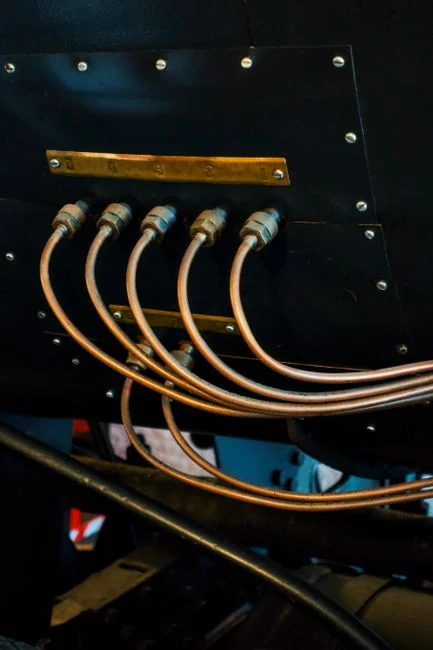
Component selection must follow the sludge chemistry and required dewatering result; the highest pressure or most restrictive cloth is not automatically the best configuration. M.W. Watermark identifies recessed-chamber, plate-and-frame, and membrane-squeeze plates as distinct filter-plate types, with membrane squeezing providing a post-fill dewatering step (M.W. Watermark, industrial filter press product guide).
Choose plate architecture around the procurement definition and operating sequence. A true plate-and-frame arrangement uses flat plates and hollow frames to form chambers; recessed chambers are integral to the plates; membrane-squeeze plates add a squeeze stage. Ask the supplier to state how cake release and washing are achieved for each option. Review the engineering specifications for food-processing applications only for specification structure; compliance requirements must follow the actual project jurisdiction and process.
Match filter cloth to particle-size distribution and the required balance among filtrate clarity, cake release, drainage, and blinding. LONGONE states that tighter weave can capture finer solids but clog faster, while more open weave drains faster but may allow fines through; material, weave, and air permeability should therefore be selected from sludge data rather than a catalog default (LONGONE). Pilot comparative results remain more relevant than generic cloth claims. In the supplied CaCO₃ study, cotton cloth produced 56.00% solids-removal efficiency at 4% w/w under that study’s conditions, compared with drill cloth; the result applies to the tested conditions, not to activated sludge generally (National Research and Innovation Agency, “Studi Proses Dewatering di Unit Pengolahan Air Limbah menggunakan Plate-Frame Filter Press”).
LONGONE describes polypropylene as a common wastewater-duty plate material because it resists corrosion, accommodates a wide pH range, and remains practical to handle (LONGONE). For acidic, hot, or chemically aggressive service, submit the complete chemical composition, pH range, temperature range, and gasket requirements for compatibility review. Do not approve materials from “sludge-compatible” wording alone.
Evaluate feed-pressure options of 0.6, 1.0, and 1.6 MPa against the rating of the complete press assembly, including frames, plates, gaskets, seals, piping, and closure mechanism. LONGONE notes that higher pressure can produce drier cake on some sludges, but compressible biological sludge may gain little beyond a certain pressure (LONGONE). The 12-step plate and frame filter press maintenance checklist should identify the points whose condition affects sealing and pressure performance.
| Criterion | RFQ requirement | Acceptance evidence |
|---|---|---|
| Plate type | True plate-and-frame, recessed chamber, or membrane squeeze; state sequence | Drawing, chamber construction description, and proposed cycle |
| Cloth | Material, weave, surface treatment, permeability, temperature limit, and expected life basis | Data sheet plus representative filtration result |
| Materials | Plate, frame, gasket, seal, wetted connection, and corrosion-protection requirements | Compatibility review against supplied chemistry and temperature |
| Pressure | Rated feed pressure and complete-assembly rating; maximum operating sequence | Design calculation and pressure-test requirement |
| Squeeze function | Membrane pressure, squeeze duration, and cake-yield effect where applicable | Cycle study and target-cake solids result |
Match cycle time, controls, and cake discharge
The production rate is the number of completed batches per operating day, not the theoretical filtration volume of a chamber. Build the cycle around feed, pressing, squeezing where applicable, plate opening, cake discharge, closing, and periodic cloth washing. LONGONE reports that a full cycle typically takes several hours, with sludge filterability and automation level among the factors affecting duration (LONGONE).
Specify the operating mode after reviewing labor availability, access risks, and the production schedule: manual operation, hydraulic plate movement, or PLC control with a defined sequence. The control narrative should cover feed start and stop, pressure limits, filtrate-flow indication, end-of-feed detection, squeeze operation, discharge initiation, wash sequence, fault response, and data logging. These functions should be traceable to the plate and frame filter press working principle and the actual site utilities.
Review cake release, plate opening, discharge handling, filtrate routing, wash-water demand, and containment against the intended layout. Confirm whether cake leaves the frames directly, is collected below the press, or requires another handling method. Check the stated filtrate route, drain sizing, wash-water supply, and drainage containment against the site design.
Future expansion should be treated as a priced equipment decision. M.W. Watermark notes that adding filter plates may require removing an expansion piece or distance piece, so physical expansion capability must be established in the offered design rather than inferred from the chassis length (M.W. Watermark). Ask for current plate count, filtration area, net chamber volume, maximum supported plate count, extension hardware, and the price impact of additional capacity.
Validate filling uniformity and vendor acceptance criteria
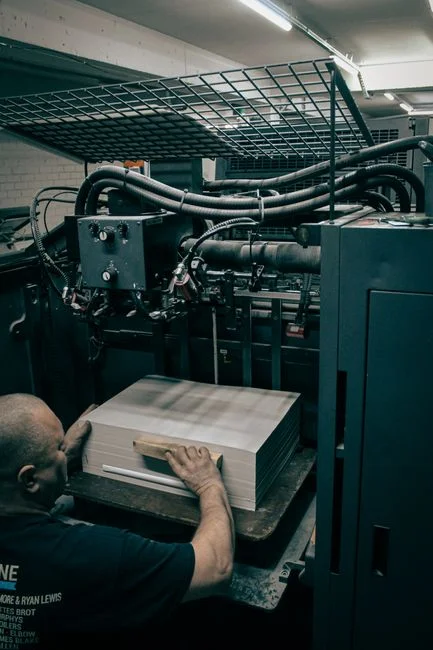
Non-uniform chamber filling must be an explicit acceptance issue because conventional sizing assumes a distribution that may not occur in operation. FILTECH’s 2026 conference paper states that uniform suspension distribution across industrial filter chambers is rarely achieved, producing non-uniform filling, heterogeneous cake, and increased risks of overfilling and clogging (FILTECH, 2026). The procurement response should therefore explain how the design controls and measures this condition.
Include chamber-level pressure and filtrate-flow measurements in the factory acceptance test or commissioning plan when uneven filling could affect acceptance. Review feed-distribution hardware, feed-port arrangement, piping design, chamber geometry, and chamber count with the supplier. FILTECH’s compartment-scale modeling identifies pressure losses, flow maldistribution, and chamber-to-chamber interactions as mechanisms that require review (FILTECH, 2026). If direct chamber-level instrumentation is impractical, the supplier should propose a documented alternative with defined measurement points and acceptance limits.
Set performance acceptance around the specified feed, target cake solids percentage, cycle duration, filtrate quality, and stable operating pressure—not a generic throughput statement. Require the vendor to identify the test sludge, conditioning, feed quantity, sampling method, stabilization criteria, and calculation method. Where the actual sludge is unavailable, use a mutually agreed representative sample and treat the result as application-specific rather than a universal guarantee.
Include startup support, operator training, maintenance documentation, recommended spare parts, and the cloth-cleaning plan in the commercial offer. The maintenance checklist can inform the documentation review, while a plate frame filter press manufacturer comparison should be used to normalize quotations.
| RFQ or acceptance item | Supplier response required | Buyer check |
|---|---|---|
| Design duty | Daily dry solids, cake target, cycle count, chamber volume, and filtration-area calculation | Recalculate from the same inputs |
| Filling uniformity | Feed-distribution arrangement, pressure-loss review, and measurement plan | Acceptance points and limits are defined |
| Performance test | Feed, conditioning, cake solids, filtrate quality, cycle time, and pressure method | Test conditions match the design duty |
| Equipment scope | Frames, plates, cloth, connections, discharge, controls, wash system, accessories, and utilities | Exclusions and interfaces are explicit |
| Handover | Startup, training, manuals, spares, and cloth-cleaning plan | Deliverables and timing are contractual |
| Expansion | Current and maximum plate count, filtration area, chamber volume, and modification scope | Future capacity is technically supported |
Frequently Asked Questions
How should a plate-and-frame filter press be sized from daily sludge production?
Calculate daily dry solids, divide by the target cake solids percentage to obtain wet cake mass, convert mass to cake volume using cake density, and divide by realistic cycles per day. Then apply a justified sizing margin and ask the supplier to translate the required volume into chamber count and filtration area. LONGONE specifies a 15–20% margin for seasonal load, wetter sludge, and future growth, but the margin should not replace representative cycle-time and filterability data (LONGONE).
How should suppliers be compared when quotations are being evaluated?
Compare documented chamber geometry, net chamber volume, filtration-area calculation, plate type, material compatibility, pressure rating, controls scope, commissioning method, and delivered equipment boundaries. Ask each bidder to show how the quoted configuration satisfies the same design-basis sheet. Unit price alone does not reveal differences in cloth, cake discharge, controls, documentation, or expansion provisions.
What inputs are needed to estimate cost and budget?
Request a quotation based on the daily dry-solids duty, target cake solids, representative feed analysis, cycle count, plate configuration, filtration area, materials, controls, accessories, utilities, startup, training, and delivery scope. Compare lifecycle cost using cake weight and disposal or hauling charges alongside capital cost, conditioning, energy, labor, cloth replacement, and maintenance. No supplied research provides a defensible quotation for an undefined duty, so a numerical price cannot be selected without these inputs.
How can non-uniform filling be controlled before the press is accepted?
Require a documented feed-distribution and pressure-loss review, define chamber-level pressure or filtrate-flow measurements where practicable, and set acceptance around the specified feed, target cake solids, filtrate quality, cycle duration, and stable pressure. FILTECH’s 2026 conference paper identifies non-uniform distribution as a cause of heterogeneous cake, overfilling, and clogging in industrial operation (FILTECH, 2026). A representative pilot or site trial should therefore confirm both output and filling behavior before final acceptance.