Identify the Limit That Controls the Discharge
Mining and metals plants near Columbia meet sewer pretreatment limits by treating wastewater in stages: equalization, pH adjustment, heavy-metals precipitation, solids removal, optional biological polishing and disinfection, with sludge dewatering included. The controlling document is the receiving POTW’s industrial discharge permit, not the federal categorical standard alone. Under 40 CFR Part 403, the local control authority issues permits to significant industrial users. Ore mining and dressing may fall under 40 CFR Part 430, metal finishing under Part 433, and 40 CFR Part 436 addresses mine drainage and mineral-processing discharges incorporated into NPDES permits.
Use the mining and metals wastewater pretreatment guide to organize the permit review, but do not treat its equipment benchmarks as legal limits. Confirm the receiving POTW, whether the facility is an SIU, the applicable industrial discharge permit, local discharge limits, monitoring requirements, spill controls and any POTW best-management requirements. The federal categorical standard is the floor; the site-specific POTW requirement is the operative discharge ceiling.
Keep sewer-discharge obligations separate from residual handling. A permit may establish an acceptable effluent, but it does not determine how metals-bearing sludge must be characterized or where it may be accepted. The current permit, receiving POTW instructions and applicable residual rules must all enter the design basis before equipment is selected.
| Control document | Applicability | Engineering consequence | Verification |
|---|---|---|---|
| POTW industrial discharge permit under 40 CFR Part 403 | SIU discharge to the receiving sewer | Defines enforceable site-specific limits, monitoring and operating conditions | Obtain the current permit and written confirmation from the control authority |
| 40 CFR Part 430 | Ore mining and dressing operations | Establishes applicable categorical pretreatment duties | Confirm subcategory and production basis with the POTW |
| 40 CFR Part 433 | Metal finishing operations | Establishes applicable categorical pretreatment duties | Confirm whether finishing rinsate is included in the regulated discharge |
| 40 CFR Part 436 | Mine drainage, mineral processing and stormwater discharges covered through NPDES permits | Provides the mineral-mining regulatory framework for relevant discharges | Determine whether the requirement applies directly or through another permit |
| Residual and sludge requirements | Chemical precipitation and dewatering residues | Controls sludge characterization and disposal acceptance independently of the sewer permit | Request current waste-profile and landfill acceptance requirements |
Build the Wastewater Characterization Basis
A defensible equipment selection starts with the composite sent to the POTW, not an average of unrelated discharge streams. The 2026 mining pretreatment guide identifies pit dewatering, concentrator slurry water, contact stormwater, acid mine drainage and finishing-shop rinsate as distinct sources with different pollutant fingerprints. Each source must be sampled, routed and characterized before the receiving sewer composite can be established.
Request flow and load data for the worst credible combination of ore grade, mill throughput, production campaign, contact-storm runoff and any finishing operation that can discharge concurrently. The guide identifies 24-hour composite sampling and online pH and conductivity monitoring at the headworks as the minimum defensible basis. If monitoring data do not exist, the buyer should obtain them before issuing a final equipment sizing and acceptance schedule.
Test for every constituent named in the permit and any constituent needed to assess treatment chemistry. Relevant constituents identified in the guide include Hg, Cr, Ni, Cd, Cu, Pb, Zn, free and WAD cyanide, fluoride, TSS, COD and oil and grease. Acid mine drainage also requires attention to low pH, dissolved iron, sulfate and dissolved solids. These are characterization inputs, not automatic permit limits.
Use the automatic chemical dosing system only after the reagent dose, flow response and control objectives have been established from pilot work or validated jar testing. The final proposal must reconcile current permit limits, worst-case composite data and expected treatment output. Example removal values in the guide are engineering references; they are not guaranteed discharge compliance and should not be converted into permit criteria without written confirmation.
| Required input | Why it controls equipment selection | Minimum evidence to request | Acceptance check |
|---|---|---|---|
| Stream inventory and routing | Determines which flows enter the POTW composite and whether segregation is needed | Process flow diagrams, drainage maps and operating description | Field walkdown and mass-balance reconciliation |
| Worst-case flow and pollutant load | Establishes equalization, chemical and solids-removal duties | 24-hour composite results linked to flow, ore grade, throughput and storm conditions | Compare design cases with the permit monitoring basis |
| Continuous pH and conductivity | Identifies variability and chemical dosing demand | Headworks trend data from representative operating periods | Verify sensor range, calibration and data integration |
| Constituent-specific chemistry | Defines precipitation, flotation, biological and filtration requirements | Laboratory results for every permit-listed constituent and relevant operational parameters | Laboratory methods and detection limits reviewed with the POTW |
| Sludge chemistry | Influences thickening, conditioning, dewatering and disposal route | Representative precipitate and solids characterization | Confirm residual criteria and receiving-facility acceptance |
Match Each Treatment Stage to the Permit Risk
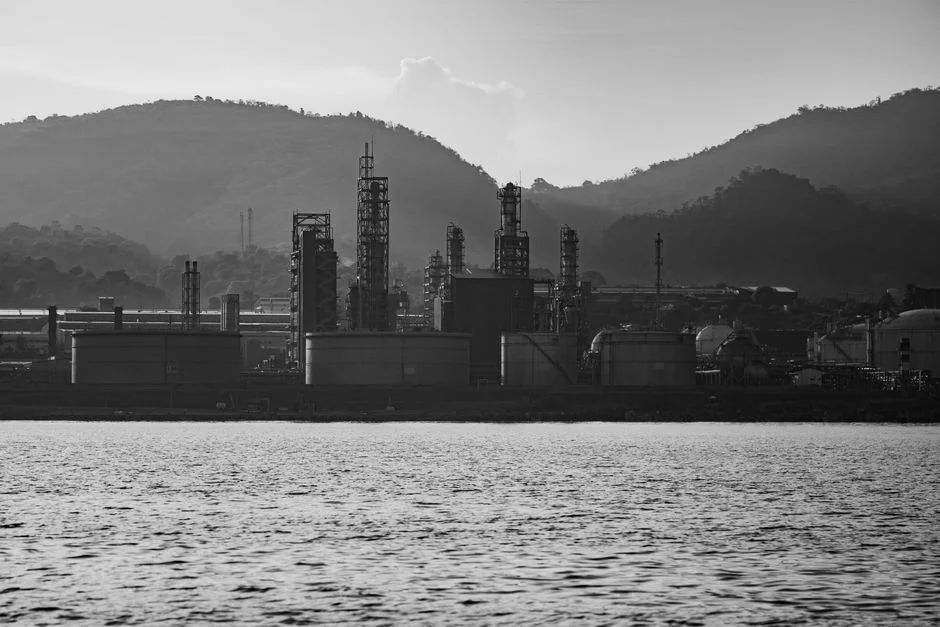
Each treatment stage should have one measurable purpose tied to a permit risk. Equalization controls flow and load variation; precipitation removes dissolved metals; separation captures precipitate and floatable material; biological treatment addresses soluble biodegradable pollutants; disinfection is added only where required. Size the train against the worst-case headworks composite, as directed by the 2026 mining pretreatment guide.
Hydroxide precipitation is the usual primary response for broad divalent-metal removal. The guide reports Cu, Pb and Zn results typically below 1–2 mg/L each. Its weakness is pH sensitivity: Cr(III) and Al can resolubilize above approximately pH 10.5, according to the same 2026 source. Use controlled pH adjustment, staged reactions and online probes rather than a single high-pH setting.
Reserve sulfide precipitation for Pb, Hg or Cd targets that hydroxide cannot reliably meet. The guide reports Pb below 0.1 mg/L and Hg below 0.01 mg/L as achievable sulfide-precipitation outcomes. That selection also requires sulfide-residual control, sealed equipment and H₂S safeguards; otherwise it creates a different operational risk.
Choose dissolved-air flotation when floatable material, oil and grease or colloids are significant. The guide reports 80–95% oil and grease removal and TSS below 30 mg/L for the cited DAF application. A lamella clarifier is the compact alternative where the solids duty is primarily settled precipitate. Review the DAF versus lamella clarifier comparison against actual oil, solids and floc properties rather than footprint alone.
Use an MBR system for biological polishing and reuse where soluble COD, ammonia or fine solids require additional removal. The 2026 guide reports COD removal above 95%, ammonia-nitrogen removal above 90% and TSS below 5 mg/L for the cited MBR performance. These are benchmarks, not guaranteed limits for an unspecified blend.
| Process stage | Primary permit risk | Selection criterion | Required input | Verification step |
|---|---|---|---|---|
| Equalization and pH control | Flow and load surges; chemical demand; pH noncompliance | Select when the blend varies materially with production, campaigns or storms | Hourly flow, online pH/conductivity and composite loads | Run the worst-case hydraulic and chemical sequence through the control narrative |
| Hydroxide precipitation | Dissolved Cu, Pb, Zn, Ni and other precipitated metals | Use as the primary train when broad divalent-metal removal is required | Species-specific jar tests across the intended pH range | Demonstrate effluent results at the worst-case composite and the final permitted pH |
| Sulfide precipitation | Pb, Hg or Cd limits not reliably met by hydroxide | Add only when the permit risk and chemistry justify the H₂S burden | Metal, sulfide demand, pH and dissolved-oxygen data | Verify residual control, gas safeguards and final metal compliance |
| DAF or lamella clarification | Oil and grease, floatable reagents, colloids or precipitated solids | Use DAF for significant floatables; use lamella clarification for compact solids separation | Oil, TSS, colloid and settleability data | Confirm solids capture, filtrate or clarified-water quality and sludge withdrawal |
| MBR polishing | Soluble COD, ammonia and fine solids | Use when the permit or reuse target requires biological or membrane-grade separation | Biodegradability, nutrient, temperature and solids data | Perform sustained testing and record turbidity, TSS and constituent removal |
| Disinfection | Microbiological criteria specified by the permit | Include only when required by the approved permit or receiving authority | Current permit schedule and contact-time or dose basis | Validate residual or dose under worst-case flow and demand |
Decide Between Pretreatment, Reuse and ZLD
The discharge decision is an operating-economics and permit-risk decision, not simply a choice between more or less treatment. Compare sewer discharge, partial reuse with a membrane-polish loop and full ZLD using POTW fees, incoming-water cost, energy, chemical use and concentrate handling. The 2026 mining pretreatment guide provides a qualitative framework but does not support project-specific price ranges, so a buyer should request site-specific quotations and operating-cost inputs.
For partial reuse, MBR followed by RO is a credible sequence because the guide identifies MBR effluent as suitable feed for RO polishing. The decision still depends on recovery objectives, concentrate disposal, water chemistry and demand. A reverse-osmosis unit should not be selected from nominal flow alone; the buyer must provide the MBR effluent quality, recovery target, scaling constituents and concentrate route.
Sewer discharge remains exposed to SIU permit changes and tighter POTW requirements. Reuse reduces sewer-discharge volume and may change industrial-user status, subject to confirmation by the control authority. Full ZLD removes sewer-discharge exposure, but it does not eliminate air-permit, energy or concentrate-management obligations. These distinctions should appear in the commercial comparison and in the owner’s sensitivity analysis.
| Decision question | Sewer discharge | Partial reuse | Full ZLD |
|---|---|---|---|
| What remains exposed? | POTW limits, SIU permit changes and sewer fees | Residual discharge exposure plus membrane, energy and concentrate obligations | No sewer-discharge permit exposure; air, energy and residual obligations remain |
| What operating data are required? | Full flow, load, permit and sludge scope | The same data plus water-demand and recovery targets | The same data plus detailed brine and concentrate-balance design |
| What is the verification focus? | Permit-compliant composite at the discharge point | Reuse-water quality, recovery and residual-discharge quality | Complete liquid balance, product quality and concentrate route |
| How should cost be compared? | POTW fees, chemicals, labor, sludge disposal and future permit exposure | Reduced incoming water and discharge volume against added membrane and energy costs | Full lifecycle energy and residual handling compared with avoided water and discharge costs |
Plan Residuals and Permit Verification
The treatment train is incomplete until its solids and residuals have a defined route. The 2026 mining pretreatment guide specifies thickening and filter-press dewatering for metals-bearing sludge and reports 30–45% dry-solids cake from a well-run press. It also identifies a paint-filter test where required by the receiving landfill. These figures are equipment references, not discharge limits or guaranteed project results.
Characterize hydroxide- or sulfide-derived solids under the applicable TCLP requirements. The guide warns that metals-bearing sludge can qualify as RCRA hazardous because of regulated metals, and that disposal cost may dominate long-term operating expense. The sewer discharge permit does not replace residual characterization or landfill acceptance.
Require the plate-and-frame filter press and associated sludge-conditioning equipment to be evaluated with the liquid-treatment train. The buyer should specify automatic chemical dosing, interlocks, sludge-return provisions, pH and flow recording, accessible sampling points and performance testing against the final permit schedule. Also request the receiving landfill’s current acceptance criteria; a generic sludge specification is not enough.
Use the following acceptance basis to close procurement gaps. It should be completed by the owner, reviewed by the POTW where appropriate and transferred into the equipment specification and performance test.
| Design-basis item | Required entry | Procurement verification |
|---|---|---|
| Controlling permit | POTW, SIU status, permit number, current limits, monitoring and reporting conditions | Current permit attached; unresolved requirements closed in writing |
| Stream inventory | Source, flow path, segregation, bypass control and discharge point | Approved P&ID and drainage reconciliation |
| Worst-case composite | Flow, pH, conductivity, metals, cyanide, TSS, COD, oil and grease and other permit constituents | Representative sampling records and design-case calculation |
| Target removal duties | Permit-linked output for each unit operation | Performance guarantees tied to defined test conditions |
| Chemical and sludge assumptions | Dose range, reagent supply, sludge yield, dewatering behavior and disposal route | Jar or pilot evidence, supplier inputs and receiving-facility acceptance |
| Monitoring points | Headworks, each treatment stage and final discharge | Approved P&ID, data acquisition, calibration and sampling access |
| Acceptance tests | Hydraulic test, controlled influent trial, performance sampling and demonstration of interlocks | Predefined methods, limits, duration, witnesses and remedy for noncompliance |
Frequently Asked Questions
Can a mine or metals plant design from federal categorical standards without the Columbia-area POTW permit?
No. Under 40 CFR Part 403, the POTW issues the industrial discharge permit and establishes site-specific conditions for an SIU. Part 430, Part 433 or Part 436 may establish applicable categorical duties, but they do not replace the current POTW permit. Request the current permit and written confirmation of applicable limits before releasing a final equipment specification.
How should a buyer choose between DAF and a lamella clarifier?
Choose DAF when floatable material, oil and grease or colloids are a material part of the permit risk; choose a lamella clarifier when the principal duty is compact separation of precipitated solids. Request oil-and-grease, TSS, colloid and settleability data, then compare the resulting clarified-water quality and sludge characteristics. A DAF system for mining wastewater solids removal should be sized against those measured duties rather than peak flow alone.
When is sulfide precipitation justified?
Use sulfide precipitation when the permit creates a Pb, Hg or Cd target that hydroxide precipitation cannot reliably meet. Require pH control, sulfide-residual management, sealed equipment and H₂S safeguards. The 2026 guide’s Pb and Hg benchmarks support the application decision, but they do not prove compliance; performance must be demonstrated on the site’s worst-case composite.
What should a buyer request in the price and supplier-selection package?
Ask each supplier to price the same scope: worst-case flow and load, unit sizing, reagent consumption, automation, sludge thickening and dewatering, monitoring, commissioning, performance tests and residual handling. Confirm whether the quotation assumes a specific blend, reagent and disposal route. The guide’s removal ranges and cake results are engineering references, not project pricing or guaranteed compliance; acceptance payments should follow the final permit schedule and agreed test protocol.
Related Equipment
- DAF system for mining wastewater solids removal — specifications, capacity range, and technical data