Match the equipment to the wastewater fraction
Mining and metals wastewater consists of multiple distinct fractions that require specific separation technologies. A typical plant stream combines dense mineral fines from a tailings thickener overflow, colloidal clays that do not settle cleanly, oils and greases from mobile equipment, residual flotation reagents, and dissolved heavy metals. A single-mechanism clarifier sized only for the settleable fraction will discharge the colloidal, buoyant, and dissolved loads; a DAF unit forced to handle raw tailings will be overwhelmed by the silt and clay fraction it cannot lift. The selection must start with which fraction dominates the specific stream before naming any equipment.
Classify each stream before selecting a vendor. Dense settleable fines are candidates for gravity separation. Colloidal material, oils and greases, flotation reagents, and fine precipitates require attention to conditioning and flotation potential. Dissolved metals are not removed by settling alone; heavy metals precipitation may require pH adjustment and chemical treatment first.
Research identifies silt and clay as a poor fit for flotation because DAF is not well suited to high levels of heavier particles that do not float (Fluence, “What Is Dissolved Air Flotation?”). Do not force raw, high-silt tailings directly into DAF. Conversely, a clarifier alone does not remove colloidal solids, emulsified oils, or dissolved loads. For mixed streams, the HydropureWater comparison identifies clarifier usage first and DAF second, allowing DAF to polish the colloidal and buoyant fraction that passes the clarifier.
| Dominant wastewater fraction | Preferred equipment | Engineering basis | Required follow-up |
|---|---|---|---|
| Dense, rapidly settling mineral fines | Clarifier or lamella clarifier | Gravity separation is the direct mechanism; lamella plates increase effective settling area. | Particle-size distribution, settleability, TSS loading, and underflow target. |
| Colloidal solids, oils, greases, flotation reagents, or conditioned fine precipitates | DAF | Micro-bubbles attach to floc and carry it to a surface skimmer. | Jar tests for coagulant, pH adjustment, and flocculant; emulsion and reagent characterization. |
| Raw, high-silt or clay-rich tailings | Clarifier first; DAF only after solids reduction | DAF is poorly suited to heavier non-floating particles. | Demonstrate removal of the residual buoyant and colloidal fraction after clarification. |
| Combined dense, colloidal, and buoyant fractions | Clarifier followed by DAF polishing | Each unit addresses a different contaminant fraction. | Define intermediate and final solids, oil, metal, and reuse criteria. |
| Dissolved metals | Precipitation or other chemical treatment before solids separation | Dissolved species do not settle or float as ordinary suspended solids. | Determine permitted discharge route and required final metal concentrations. |
For a more detailed process comparison, see the detailed DAF and lamella clarifier comparison.
Choose a clarifier, DAF, or a two-unit train
A clarifier separates suspended solids by gravity, and lamella plates increase effective settling area without changing that basic mechanism. A DAF unit instead attaches 30–50 micron micro-bubbles to floc, floats the aggregate to the surface, and removes it with a skimmer (Clearwater Industries, as cited in the HydropureWater comparison, 2026). DAF is suited to oils, greases, flotation reagents, biological flocs, fine precipitates, and conditioned colloidal fines. Neither mechanism is a substitute for a separately designed dissolved-metals treatment step.
The unit-selection decision follows the contaminant fraction and the required endpoint. For dense mineral solids, evaluate a lamella clarifier for dense mineral solids. For a buoyant or conditioned colloidal load, evaluate an industrial DAF system. For a combined stream, specify the clarifier as primary solids removal and DAF as the polishing stage, with the intermediate water quality and final polishing requirements stated in the RFQ.
| Selection item | Clarifier or lamella clarifier | DAF | Two-unit train |
|---|---|---|---|
| Separation mechanism | Gravity settling; lamella plates increase effective settling area. | 30–50 micron bubbles attach to floc and float it to the surface. | Clarifier removes dense solids first; DAF removes residual conditioned or buoyant solids. |
| Best-fit contaminant fractions | Dense mineral fines, tailings, and metallurgical sludges. | Oils, greases, flotation reagents, emulsions, fine precipitates, and conditioned colloidal fines. | Streams containing both dense solids and buoyant or colloidal loads. |
| Important limitation | Does not remove colloidal, emulsified, or dissolved loads. | Not well suited to high-silt or clay-rich raw tailings. | Requires defined intermediate transfer, controls, and sludge-handling interfaces. |
| Supplied specification evidence | HydropureWater’s lamella clarifier is specified at 20–40 m/h surface loading rates. | HydropureWater’s DAF range is 4–300 m³/h across 13 standard models. | These are manufacturer specifications, not site-specific design values. |
| Downstream consideration | Clarified water may still need filtration, DAF, or other polishing. | DAF effluent may still require filtration or membrane treatment before reuse or discharge. | Include any filtration needed for process water reuse in the same RFQ. |
Do not interpret the supplied model ranges as automatic selections. A standard DAF model requires a site-specific check of flow, conditioned solids loading, recycle rate, flotation area, chemical demand, and available footprint. Likewise, a lamella clarifier must be checked against the selected surface overflow rate and sludge-withdrawal arrangement.
Validate performance with stream-specific tests
Equipment selection should be based on representative wastewater, not a generic supplier sample. Request TSS, particle-size distribution, pH, temperature, flow, and dissolved-metal data for copper, lead, zinc, and other relevant metals. Research identifies these influent parameters as necessary for vendor qualification and warns that inconsistent data across seasonal flow variations can lead to undersized equipment.
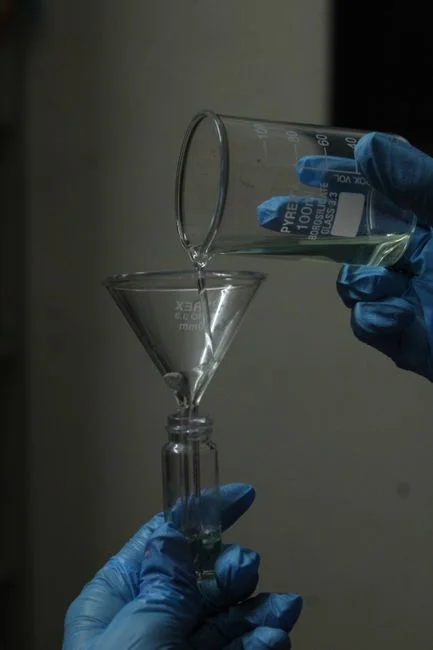
Use bench-scale jar testing to establish the coagulant, pH-adjustment, and flocculant doses rather than accepting a default vendor dose. The Utah State University study by Andrew Elder (2011) found an optimum of 30 mg/L aluminum sulfate for algae and phosphorus removal in lagoon effluent. Because that was a 2011 non-mining application, it supports empirical testing rather than serving as a mining design value.
Clarifier sizing should reflect the selected surface overflow or loading rate and the sludge-withdrawal arrangement. DAF sizing should reflect the conditioned solids loading, recycle rate, and flotation area. Request results by operating condition, including flow and contaminant concentrations, rather than relying on a single composite sample. For a mine or metals plant, characterize seasonal and batch-process variability so the selected equipment is not based on one favorable sample.
- Collect flow and contaminant data across operating conditions and identify representative worst-case samples.
- Measure the settleable, buoyant, colloidal, and dissolved fractions separately.
- Run jar tests to establish chemical conditioning and confirm solids capture.
- Size the selected unit from the measured loading and the verified treatment mechanism.
- Repeat or extend testing where pilot performance is needed to support the final specification.
Build an RFQ that makes performance and costs comparable
A comparable bid must identify the treatment scope, performance basis, exclusions, and downstream obligations. Each bidder should state which contaminant fractions its proposed unit will remove, identify any pretreatment, polishing, or sludge-handling steps excluded from the price, and provide the influent data used for sizing. Ask for pilot or jar-test evidence on representative mine or metals wastewater rather than generic municipal or algae-treatment performance.
The commercial DAF market range cited in the research is $150,000 to over $1.5 million, with a possible 20–30% premium for mining service. These are commercial screening figures, not a budget quotation, and should not drive equipment selection. For a firm budget, request a quotation tied to the specific flow, TSS, contaminant-fraction profile, chemistry, required materials of construction, controls, polishing, and sludge handling.
| RFQ data category | Buyer should supply | Supplier deliverable | Acceptance or comparison basis |
|---|---|---|---|
| Influent flow and solids | Current and seasonal flow, TSS, particle-size distribution, and batch or campaign data. | Design flow, design TSS, hydraulic basis, and selected loading rate. | Stated design cases and any identified peak-load treatment. |
| Chemistry and contaminants | pH, temperature, oils and greases, flotation reagents, dissolved copper, lead, zinc, and other relevant metals. | Contaminant-fraction treatment map, chemical demand, and material-of-construction recommendation. | Named removal objectives and documented basis for each claim. |
| Conditioning and pilot evidence | Representative jar-test results or pilot access. | Coagulant, pH-adjustment, and flocculant dose; pilot protocol and results. | Results apply to the supplied water chemistry, not unrelated application data. |
| Controls and operations | PLC requirements, integration points, utilities, and operating philosophy. | Chemical-dosing skid, alarms, interlocks, controls integration, commissioning support, and operator training. | Scope is explicit in the commercial offer and schedule. |
| Residuals and downstream treatment | Sludge handling route, filtration or membrane requirements, and reuse or discharge endpoint. | Excluded scope, sludge characteristics, dewatering approach, and downstream polish needs. | Complete-train cost and responsibility matrix. |
| Materials and maintainability | Acidic or abrasive service conditions, available footprint, and maintenance constraints. | Corrosion-resistant materials or coatings appropriate to the actual water chemistry. | Material selection is tied to site chemistry, not a generic premium assumption. |
Compare the complete train: clarification, chemical conditioning, DAF, sludge dewatering, and any filtration needed before process water reuse. A well-conditioned DAF can produce a thick floated sludge that may need little further dewatering (Clearwater Industries, as cited in the HydropureWater comparison, 2026). Include that downstream consequence in the lifecycle comparison rather than comparing equipment purchase prices alone.
Confirm California compliance without assuming a generic limit
The compliance path depends on the discharge route, not merely on whether the equipment is called a clarifier or DAF. Confirm whether the discharge route is direct to surface water, an industrial wastewater treatment system, a sanitary sewer, or a zero-liquid-discharge system. Each route requires a different review of applicable requirements, monitoring, pretreatment conditions, and downstream treatment capacity.
Research does not establish current California-specific numeric limits for a particular mine, metal, or permit. The facility must verify its permit and current agency requirements rather than treating a general equipment comparison as a compliance guarantee. Request evidence of applicable local discharge compliance and United States EPA ore-mining and dressing effluent-guideline requirements from the supplier, but confirm those requirements against the facility’s actual permit and regulatory adviser’s interpretation.
Treat final equipment sizing as provisional until representative wastewater characterization, jar testing, and permit review are complete. For a sewer-discharge application, also review the mining and metals wastewater pretreatment requirements. For a process-water reuse project, the gold mining wastewater treatment process provides a related process context, but it does not replace site-specific characterization or current permit review.
Frequently Asked Questions
Is the quoted DAF price range a firm budget for a California mining installation?
No. The $150,000 to over $1.5 million figure is an industrial DAF market screening range, and the cited 20–30% mining-service premium is not a site quotation (HydropureWater comparison, 2026). Request a firm offer based on flow, TSS, particle-size distribution, chemistry, pilot results, materials of construction, controls, sludge handling, and any required filtration.
How should a supplier be selected using representative-stream data?
Require the supplier to show how its proposed unit addresses the measured settleable, colloidal, buoyant, and dissolved fractions, then ask for pilot or jar-test evidence on representative mine or metals wastewater. Documented mining or metals references should be checked against the actual stream chemistry, rather than accepted as generic performance proof.
When is a standard DAF model not an engineered selection?
A standard model becomes insufficient when site flow, conditioned solids loading, recycle