Confirm the wastewater stream is suitable for dewatering
A belt filter press can be suitable for fruit-juice wastewater when the stream contains dewaterable solids and the plant can control conditioning, pH, belt washing and cake discharge. Selection should be based on dry-solids loading—not wastewater flow—and the target cake dryness, solids recovery and filtrate quality. Supplied industry data indicates typical belt-width loading ranges of 40–230 and 300–910 kg/h/m, while three-belt designs can accommodate higher hydraulic loading below 1.5% feed solids. Fruit residues may also create filtration and cleaning challenges, so pilot testing and an effective wash-jet system are essential before purchase.
The first screening step is to identify exactly what the equipment will treat. Fruit-juice production can generate dilute wash water, pulp-bearing process water, concentrated juice-extraction residues or a combination of spent fruit solids and process wastewater. These are different duties. A belt press is used for sludge, slurry and mashed fruit that it can process; Wikipedia’s belt filter entry also identifies applications in apple-juice, cider and winemaking production. That supports a duty check, not a conclusion that every fruit-residue stream will dewater acceptably (Wikipedia, Belt filter, accessed 2026).
Ask the process team to complete the following characterization before requesting equipment proposals. The dry-solids concentration must come from representative samples rather than a single grab sample, because fruit batches and washing practices can change the solids profile. pH, temperature, organic loading, pulp and fibre content, adhesive residues and odour characteristics should be recorded alongside the expected production schedule.
| Selection input | Information required from the process team | Why it affects the decision |
|---|---|---|
| Stream identity | Dilute juice wastewater, pulp sludge, spent fruit solids or combined stream | Confirms whether the proposed belt press duty matches the material to be separated. |
| Dry-solids concentration | Representative concentration and expected variation | Establishes hydraulic load and the amount of dry solids entering the machine. |
| pH and temperature | Normal operating range, including batch and cleaning conditions | pH affects conditioning and filterability; temperature affects the test conditions. |
| Solid characteristics | Pulp, fruit pieces, fibres, adhesive residues and cohesiveness | Indicates blinding, cake-release and discharge risks. |
| Odour and emissions | Odour, volatile-emission and hydrogen-sulphide concerns | Determines whether enclosure or gas-tight housing is required. |
| Treatment objective | Target cake dryness, solids recovery and filtrate quality | Defines the performance basis for the purchase rather than relying on dry solids alone. |
Use a laboratory settling or dewatering check before accepting a supplier’s cake-dryness guarantee. The relevant sedimentation tank for solids separation may be relevant to upstream clarification, while an automatic chemical dosing system becomes relevant once the conditioning regime has been established. If the solids are predominantly dissolved organics or very fine material, first determine whether clarification or biological treatment should precede mechanical dewatering.
Translate feed conditions into a belt-press duty
Belt press feed solids loading must be expressed as kilograms of dry solids per hour per metre of belt width, not as wastewater flow alone. The supplied belt filter reference gives indicative lower and higher loading ranges of 40–230 and 300–910 kg/h/m belt width, while also stating that loading varies with sludge type, filter media and conditioning (Wikipedia, Belt filter, accessed 2026). These are reference ranges, not guaranteed fruit-juice capacity.
- Obtain the representative dry-solids concentration and hourly dry-solids production rate.
- Calculate dry-solids loading as kilograms per hour divided by selected belt width.
- Compare the result with the reference ranges and identify which architecture is being proposed.
- Check hydraulic loading and feed concentration against the selected belt design.
- Size the gravity and pressure zones only after confirming cake release, filtrate quality and washing requirements.
The three-belt architecture is relevant when the feed is dilute. Wikipedia reports that a three-belt system can use different belt types and independent speeds for gravity and pressure zones, allowing higher hydraulic loading with feed solids below 1.5% (Wikipedia, Belt filter, accessed 2026). That does not mean every wastewater below 1.5% solids should use three belts; it establishes the operating condition under which the stated capability applies.
| Duty parameter | Sourced reference or required project input | Specification consequence |
|---|---|---|
| Dry-solids loading | Indicative ranges of 40–230 and 300–910 kg/h/m (Wikipedia, Belt filter, accessed 2026) | Use only for preliminary configuration; require a representative pilot result before guarantee. |
| Feed concentration | Three-belt designs can accommodate higher hydraulic loading below 1.5% solids (Wikipedia, Belt filter, accessed 2026) | Confirm whether hydraulic loading or dry-solids loading governs the proposed design. |
| Gravity-drainage zone | Much of the dewatering occurs in this zone (Wikipedia, Belt filter, accessed 2026) | Include gravity drainage in laboratory conditioning trials and observed pilot results. |
| Belt material and weave | Project input: solids, filtrate clarity, cake quality, cleaning regime and throughput | Select media and weave after—not before—pilot confirmation. |
| Belt width | No universal width is established by the supplied research | Request the supplier’s calculation and measured basis for the proposed width. |
The gravity-drainage zone deserves particular attention because conditioning effects are most visible there and can be reproduced at laboratory scale (Wikipedia, Belt filter, accessed 2026). For process comparison, also request the plate-and-frame filter press alternative and require the supplier to explain why the selected belt architecture gives the better project fit.
Do not convert the published loading ranges directly into a purchase guarantee. The same reference states that final loading depends on sludge type, filter media and conditioning, and that performance improves when variations in feed solids and conditioning are minimised. A defensible specification therefore states the tested feed condition, selected media, conditioning programme, dry-solids loading and achieved results.
Choose the chemical-conditioning and washing strategy
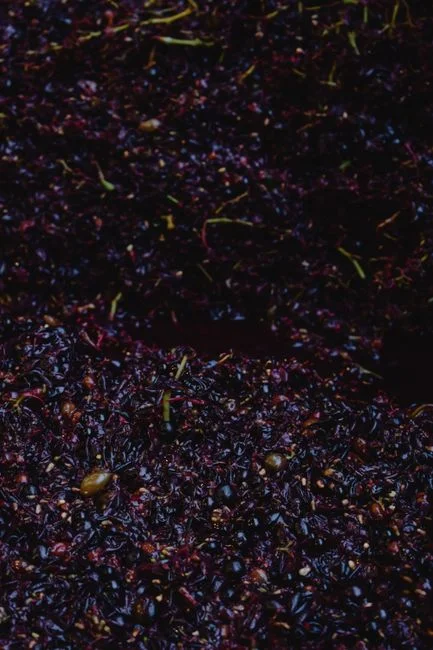
The conditioning strategy must be developed for the actual fruit-juice stream because low pH decreases flocculation. Wikipedia also warns against a fixed polymer dose: excessive polymer or mixing can impair flocculation and increase operating expense (Wikipedia, Belt filter, accessed 2026). Feed pH should therefore be monitored and controlled, while polymer type, dose and mixing are established through representative trials.
Start with laboratory gravity-drainage tests because the reference identifies this zone as an appropriate way to determine an effective conditioning strategy (Wikipedia, Belt filter, accessed 2026). Use the intended fruit-juice solids, proposed belt media and realistic pH. Record cake formation, filtrate quality, solids capture and chemical consumption. An automatic chemical dosing system can then be specified around the validated dose range rather than an assumed pump setting.
| Conditioning or washing decision | Evidence-based requirement | Information to obtain before purchase |
|---|---|---|
| pH control | Low pH decreases flocculation (Wikipedia, Belt filter, accessed 2026) | Normal pH range and adjustment method. |
| Polymer conditioning | Each parameter should be optimised; excessive polymer or mixing can be detrimental (Wikipedia, Belt filter, accessed 2026) | Polymer type, dose range, mixing method and laboratory results. |
| Filter cloth washing | An effective washing section is required to prevent blinding from reducing permeability (Wikipedia, Belt filter, accessed 2026) | Wash-water supply, quality, flow demand and cleaning sequence. |
| Woven-media cleaning | Wash jets are identified as an appropriate cleaning method for woven beverage filter cloths (Food Engineering Reviews, 2020) | Jet arrangement, coverage, operating pressure and cleaning verification method. |
| Material selection | Beverage filter media commonly include polypropylene, polyethylene, polyester and polyamide (Food Engineering Reviews, 2020) | Material suitability for the fruit stream, temperature, pH, cleaning regime and hygiene requirements. |
Filter cloth washing is part of the process, not an accessory. Wikipedia notes that the press must wash frequently, that this consumes water and time, and that automatic washing can reduce associated waste (Wikipedia, Belt filter, accessed 2026). The supplied Food Engineering Reviews paper, published in 2020, adds a beverage-specific concern: cohesive cakes require complete discharge for efficient subsequent filtration, while residue adhesion can cause blinding and fouling. It identifies wash jets as a suitable cleaning approach for woven beverage filter media (Food Engineering Reviews, 2020).
Material selection should also address food-contact and hygiene requirements. The same review names polypropylene, polyethylene, polyester and polyamide as common beverage filter-cloth materials, but that list does not establish suitability for every fruit stream. Ask the supplier to document cleanability, chemical compatibility, retention of fines and the performance effect of the proposed weave.
Compare the belt press with alternative dewatering routes
A belt press is most defensible when its continuous operation, washable filter media and controllable cake discharge meet the project objectives. The physical separation alternatives identified in the supplied reference are centrifuges, vacuum-disc filters and plate-and-frame presses (Wikipedia, Belt filter, accessed 2026). The comparison must include utilities and operating controls, not only cake dryness.
| Decision factor | Belt filter press | Centrifuge | Vacuum-disc filter | Plate-and-frame press |
|---|---|---|---|---|
| Operating mode | Continuous belt separation | Requires project-specific assessment | Requires project-specific assessment | Batch dewatering |
| Feed basis | Dry-solids loading per unit belt width | Solid–liquid separation duty | Filtration duty | Batch solids inventory and chamber capacity |
| Relative cost at equal cake dryness | The supplied comparison identifies no significant cost advantage for centrifuges over belt presses at the same cake dryness (Wikipedia, Belt filter, accessed 2026). | |||
| Plant-scale threshold | Below 4 million gallons per day, the supplied reference states that a belt press may be less cost-efficient than liquid transport, off-site processing or non-mechanical methods such as drying beds or reed beds (Wikipedia, Belt filter, accessed 2026). | |||
| Critical evaluation items | Wash-water demand, polymer demand, odour control, cloth cleaning, operator attendance and maintenance access | Power, feed consistency, retained solids and cake discharge | Vacuum demand, filter area, wash requirements and solids discharge | Batch cycle time, plate capacity, cloth cleaning and labour |
The scale threshold is a screening rule, not a universal economic model. The supplied reference states that below 4 million gallons per day a belt press may be less cost-efficient than transport, an off-site facility or non-mechanical dewatering (Wikipedia, Belt filter, accessed 2026). The buyer must supply the actual wastewater flow, operating hours, disposal route, labour basis and utility costs before ranking alternatives.
For a low-pH, high-organic or odour-generating fruit stream, determine whether odour and volatile emissions require a fume hood, enclosure or gas-tight housing. The supplied reference describes those controls for unpleasant or hazardous feed conditions, including hydrogen sulphide, while noting that reduced visibility and corrosion can accompany enclosure (Wikipedia, Belt filter, accessed 2026). If upstream pretreatment is needed, review the options for food and beverage wastewater pretreatment.
Request a plate-and-frame filter press alternative when batch sludge dewatering is acceptable. A belt press remains the relevant continuous-duty option, but the commercial comparison should include wash-water use, chemical consumption, maintenance exposure and odour-control requirements alongside dry-solids performance.
Set pilot-test and acceptance criteria before ordering
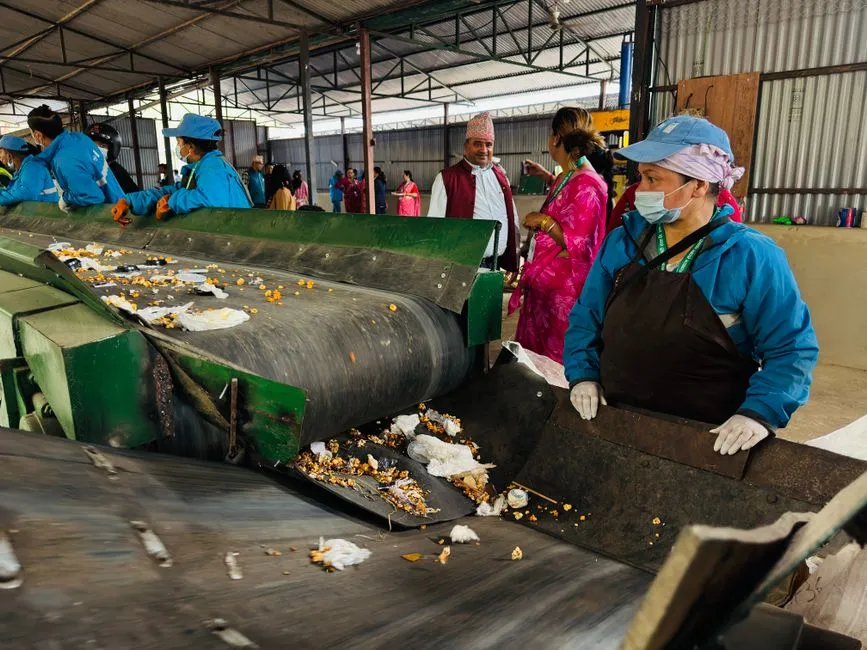
The purchase specification should convert the feed characterization into measured acceptance criteria. Wikipedia identifies cake dry-solids content, solids recovery and lateral sludge migration as principal belt-press efficiency measures, and states that solids recovery is directly related to filtrate quality (Wikipedia, Belt filter, accessed 2026). Those measures should be tested with the intended feed, proposed belt media and conditioning regime.
| Acceptance field | Supplier information or test result required | Buyer’s completion |
|---|---|---|
| Representative feed | Feed source, dry-solids concentration, pH, temperature and solids description | Enter approved project values and permitted variability. |
| Belt media | Material, weave, belt width and proposed operating speed | Confirm the same media will be supplied commercially. |
| Conditioning | Polymer type, dose, mixing method and pH control | Enter the pilot-validated operating range. |
| Filter cake dry solids | Measured dry-solids content and test method | Enter target and minimum acceptable result. |
| Solids recovery | Percentage of feed dry solids recovered in the cake | Enter target and minimum acceptable result. |
| Filtrate quality | Suspended-solids result and required measurement method | Enter discharge or reuse limit established by the project. |
| Lateral migration | Observed or measured migration along the belt | Enter the permitted condition relative to the acceptance basis. |
| Cloth washing | Blindage check, wash sequence and post-wash permeability | Define the acceptance observation or measured limit. |
| Discharge | Confirmation that cohesive fruit residue leaves the belt completely | Define visual and operational acceptance conditions. |
| Commercial conditions | Utilities, wash-water consumption, polymer demand, operator attendance, enclosure and maintenance access | Attach audited test and design information to the order. |
Do not accept generic sludge results from another installation as proof of performance for a fruit-juice stream. The pilot should reproduce the expected solids type, pH, temperature, variability and conditioning method. The Food Engineering Reviews paper warns that cohesive cakes require full discharge and that attached biological residues can impair cleaning and subsequent filtration (Food Engineering Reviews, 2020). Include complete cake release and cloth condition in the acceptance walkthrough.
Document the operating envelope as well as the best result. A supplier should identify the tested dry-solids concentration, loading per metre of belt width, hydraulic rate, belt speed, polymer dose, pH and test duration. Where the fruit stream varies, define whether a guarantee applies only within an agreed operating range or whether the equipment must maintain performance across the full production variation.
A structured belt filter press selection guide can help organise these questions, but acceptance criteria must remain tied to the fruit-juice pilot. If the supplier cannot provide a representative test, the unresolved feed and performance inputs should remain open commercial items rather than being replaced by guaranteed figures.
Frequently Asked Questions
What cost information is needed to compare a belt filter press for fruit juice wastewater?
The supplied research provides no quotation for this duty. Request a complete operating-cost breakdown covering equipment, installation, belt media, polymer, wash water, power, labour, maintenance, odour controls and cake disposal. Ask for the tested feed basis behind each consumption figure; generic belt-press ranges do not establish the cost of a fruit-juice installation.
Why is pilot testing with representative feed required before accepting a performance guarantee?
Performance depends on solids type, feed concentration, filter media and conditioning. Fruit residues can also adhere to the cloth, blind the belt and remain in the cake. Require the proposed media and conditioning programme to be tested with representative solids, and define cake dry solids, solids recovery, filtrate quality, lateral migration and discharge completeness in the acceptance record.
When is a plate-and-frame press more appropriate than a belt press?
A plate-and-frame press is an alternative for batch sludge dewatering, while a belt press supports continuous operation. Compare chamber capacity and batch cycle time for the plate-and-frame route against belt width, dry-solids loading, wash-water demand and operating labour for the belt route. The decision should follow the actual production schedule and cake-disposal route.
How should wash-water use, conditioning chemicals and maintenance affect supplier selection?
They are operating commitments, not secondary accessories. Ask each supplier to state wash-water supply and quality requirements, polymer demand, operator attendance, cloth-cleaning sequence and maintenance access. A useful comparison also uses the belt filter press sizing and selection framework to check whether proposed guarantees include those costs and responsibilities.