What Domestic Sewage Treatment Means in Germany
Domestic sewage treatment in Germany involves selecting a decentralized or packaged biological treatment system for wastewater from residential, hospitality, institutional and non-industrial users where a centralized sewer connection is unavailable. A package sewage treatment plant may integrate biological treatment, solids separation and disinfection in one unit. For higher-capacity or treated-effluent reuse applications, a membrane bioreactor may offer a different process route. The correct choice depends on wastewater characteristics, required effluent quality, site space, access, sludge handling and the applicable German discharge authorization.
Domestic wastewater treatment is distinct from industrial pretreatment. A hotel, school, housing development or care facility may generate wastewater with domestic characteristics, but any trade effluent from kitchens, laundries, laboratories, workshops or production areas must be identified separately. If a non-domestic contribution changes the flow, composition or treatment demand, the treatment concept must reflect that load rather than rely on a nominal domestic-plant rating.
The decentralized category becomes relevant where no suitable centralized sewer network is available, or where connection would require disproportionate infrastructure. Relevant applications include remote properties, small institutions and compact developments. A 2018 study by Kyriienko, Betin and Kuznetsova identifies individual houses, small schools, roadside cafés, restaurants, small railway stations and camping sites as applications for small sewage treatment plants where no centralized sewage network exists.
That study also describes septic tanks and drainage wells, including gravity collection without electricity, for sites with limited installation space. These arrangements form part of the broader decentralized wastewater treatment decision, as shown in this rural sewage treatment system comparison, but they do not automatically provide the same treatment train or reuse capability as a packaged biological plant.
Before selecting equipment, the project team must identify the applicable German discharge conditions, groundwater constraints, water-protection requirements and site-specific environmental controls. The supplied research does not establish a universal German effluent limit for BOD, COD or suspended solids; the competent permit and project documentation must define the acceptance criteria.
Choose the Treatment Configuration by Site Conditions
The process configuration follows the required treatment performance, physical access and operating objective rather than simply the lowest packaged capacity. Package A/O systems provide a conventional biological route in a compact installation, while MBR systems add membrane separation and offer a different footprint and reuse profile.
| Decision factor | Package A/O plant | MBR system |
|---|---|---|
| Treatment process | Anoxic/aerobic biological contact oxidation, sedimentation and disinfection | Activated sludge with submerged PVDF membrane filtration |
| Published capacity | 1–80 m³/h | 10–2,000 m³/day |
| Physical configuration | Single buried package unit | Compact integrated system; the product information states a 60% smaller footprint than conventional systems |
| Separation method | Sedimentation | Submerged membranes with filtration below 1 μm, according to the product information |
| Installation relevance | Can be installed below grade with landscaping above or mounted on a trailer | Membranes, aeration, sludge handling and controls still require planned service access |
| Reuse consideration | Assess against the required effluent specification and reuse rules | Consider where the tighter membrane separation and reuse objective justify the additional process scope |
The underground WSZ package sewage treatment plant combines anoxic/aerobic biological contact oxidation with sedimentation and disinfection in one buried unit. HydropureWater’s verified product catalog describes it as fully automated, requiring no operator, and gives a capacity of 1–80 m³/h. That configuration is relevant where the project needs a compact below-grade installation and can assign routine inspection and maintenance to a named owner.
The MBR membrane bioreactor wastewater system combines activated sludge with submerged PVDF membrane filtration. Its published capacity is 10–2,000 m³/day, and the product information specifies filtration below 1 μm and a 60% smaller footprint than conventional systems. These supplier-published process and footprint claims require the buyer to request the design basis and site-specific layout rather than treating them as an automatic site-fit conclusion.
For sites without a sewer network, gravity-fed septic and drainage arrangements may reduce electrical demand, but their suitability depends on soil, groundwater and available drainage area. The 2018 study presents septic tanks and drainage wells as space-constrained options using gravity collection without electricity. Vermifiltration is another possible decentralized technology: the IntechOpen study describes a combination of filtration and earthworms that can be decentralized and requires less expertise, while also assessing treatment against statutory requirements.
Use a package A/O plant where the treatment objectives fit biological contact oxidation, sedimentation and disinfection and below-grade deployment is valuable. Consider MBR where membrane separation or treated-effluent reuse is required and the buyer can support the associated servicing. Keep septic or gravity drainage arrangements in the comparison where they meet the project’s treatment and environmental conditions.
Size the System from Daily Load and Operating Demand
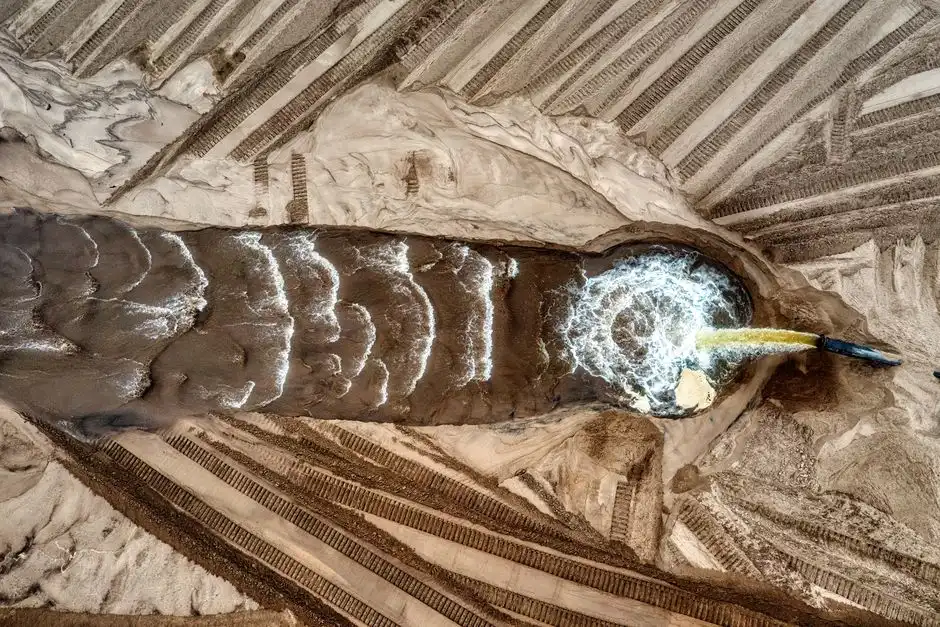
A defensible size starts with the site’s flow profile, not a product’s headline rating. Obtain the connected population or occupancy, wastewater flow, peak factors, industrial contributions, reuse demand and operating hours, then require the supplier to demonstrate how the proposed equipment handles that design basis.
| Input for the sizing request | Why it affects equipment selection | Evidence to request from the supplier |
|---|---|---|
| Connected population or occupancy | Defines the domestic wastewater load to be treated | Design population, connected fixtures and design flow calculation |
| Average and peak flow | Tests biological and hydraulic loading rather than merely nominal throughput | Hydraulic profile and treatment-stage loading calculations |
| Trade-effluent contribution | Can change treatment requirements beyond domestic wastewater assumptions | Load characterization and confirmation of the proposed treatment scope |
| Reuse demand | May require a tighter treatment specification or additional treatment | Effluent specification and treatment train provided by the supplier |
| Operating hours and maintenance access | Determines whether automation and service arrangements are realistic | Control narrative, service intervals and access requirements |
The published WSZ capacity is 1–80 m³/h, while the published MBR capacity is 10–2,000 m³/day. These are hourly and daily ratings, respectively, so they must not be compared directly without converting both against the site’s flow profile. The supplied sources do not provide enough hydraulic information to make that conversion for an individual German site.
Kyriienko, Betin and Kuznetsova’s 2018 study links treatment design to the type of facility and the absence of a centralized sewer network. A small hotel, school or residential development can have different peak-flow behavior from a continuous municipal system. The buyer should request a design-flow calculation tied to the actual occupancy and operating pattern, rather than selecting the smallest published capacity that appears to cover an annual estimate.
Oversizing can add unnecessary capital cost, footprint and operating complexity; undersizing can produce inadequate treatment and unstable biological or membrane operation. These risks must be assessed using the project flow profile, wastewater composition and required effluent performance.
Plan Installation, Access and Routine Maintenance
A buried package can preserve usable surface space, but installation remains a civil and process-discipline interface. The WSZ unit can be installed below grade with landscaping above, or mounted on a trailer for mobile deployment. Temporary accommodation, phased construction or a short-term treatment need may justify consideration of the mobile configuration.
An MBR’s compact footprint should not be confused with simple maintenance. Membrane modules, aeration equipment, sludge handling, controls and electrical services each need inspection or service access. A site that cannot provide safe working clearance or timely access is not a complete MBR installation, regardless of the tank footprint.
Before handover, request the process-flow diagram, design flow, power requirements, control philosophy, routine service intervals, spare-parts list, commissioning protocol and start-up support. Also require drawings that show inlet and outlet works, sampling points, odour control, sludge withdrawal, drainage, electrical supply and maintenance access. These documents let the civil designer, operator and environmental consultant coordinate their interfaces.
The WSZ is described by HydropureWater’s verified product catalog as fully automated and requiring no operator. However, routine inspection, sludge removal and corrective work still need an assigned owner. Where the treatment chain produces sludge, the project must establish how it will be dewatered, stored, removed and disposed of; relevant separation options are discussed in this plate-and-frame sludge filtration process.
Assess Permit, Site and Environmental Risk
The German permit and site assessment must precede equipment selection because treatment performance alone does not establish lawful discharge or acceptable siting. Confirm the local wastewater-discharge conditions, groundwater and soil constraints, protected-area status, site drainage and any trade-effluent contribution with the competent authorities.
The supplied research provides no universal German BOD, COD or TSS acceptance limit. The permit and site-specific documentation must state the applicable effluent requirements, sampling regime and operating conditions. Buyers should not ask a supplier to certify compliance against an unspecified “German standard.”
Contamination risk is material to project planning. Germany recorded 1,979 accidents involving water-hazardous substances in 2021, a 2.2% year-over-year decrease, according to Destatis. The same Federal Statistical Office source reports that 16.1 million litres escaped into the environment in 2021. Of that amount, 14.7 million litres, or 91.5%, could be recovered, reused or properly disposed of; approximately 1.4 million litres, or 8.5%, could not be recovered and caused lasting environmental damage.
These figures concern accidents involving water-hazardous substances generally, not decentralized sewage plants. They support a conservative engineering approach: control access, contain stored chemicals or sludge, use impermeable construction where required, protect drains and groundwater-dependent areas, and schedule maintenance to prevent uncontrolled releases. The German industrial wastewater treatment planning guide provides a related context for separating site-specific industrial controls from domestic treatment requirements.
Build a Supplier Shortlist That Reduces Project Risk
A credible shortlist compares complete project solutions rather than product headings. Ask each supplier to demonstrate sizing against the project design flow and to identify any conditions that would change the selected configuration or treatment scope.
- Request a process-flow diagram showing biological treatment, solids separation, disinfection, sludge withdrawal, odour control, controls, utilities and installation interfaces.
- Request hydraulic and process calculations, including the design flow, organic loading, peak-flow treatment and the basis for every quoted capacity.
- Request the control narrative, utilities demand, materials of construction, testing points, commissioning protocol and operator-training scope.
- Request the complete equipment scope, so that omitted elements such as sludge withdrawal, odour control or installation supervision are visible before price comparison.
- Ask where consumables, replacement parts and technical support will be sourced in Germany, what response times are contractually available and who will perform routine service.
Compare lifecycle constraints as well as acquisition price: installation footprint, energy demand, service frequency, sludge logistics, membrane replacement where applicable, operator training and handover documentation. The packaged MBR system selection guide provides a useful structure for checking site-specific assumptions, although German permit and site requirements must still be established independently.
Price comparison should use a common scope. Request a bill of quantities covering equipment, civil interfaces, installation, electrical works, commissioning, training, initial spares, consumables, routine service, sludge removal and membrane replacement. Also request the stated energy demand and service assumptions so that the buyer can identify recurring obligations.
Frequently Asked Questions
How do I choose between a package A/O plant and an MBR system?
Choose a package A/O plant when biological contact oxidation, sedimentation and disinfection in one buried unit meet the treatment objective and below-grade deployment is important. Consider an MBR where submerged membrane filtration or the specified reuse objective justifies its added process scope. The WSZ catalog rating is 1–80 m³/h; the MBR rating is 10–2,000 m³/day. Both require confirmation against the site’s actual flow profile and permit conditions.
What information do I need to request an MBR system size?
Request a design calculation based on connected population or occupancy, average and peak wastewater flow, wastewater composition, reuse demand and operating hours. Do not compare the MBR’s daily rating directly with the WSZ hourly rating without a site-specific conversion. For MBR sizing, also request membrane-area and loading assumptions,
Frequently Asked Questions
How much does a packaged sewage treatment plant cost for a domestic project in Germany?
For a standard single-family home, the cost of a packaged small-scale sewage treatment plant (Kleinkläranlage) typically ranges between 3,000 and 7,000 EUR for the equipment itself. Including professional installation, excavation, and electrical connection, total project costs generally fall between 8,000 and 15,000 EUR.
Prices fluctuate based on the specific technology (e.g., SBR vs. fixed-bed) and whether the site requires additional components like a pump station or a final clarification stage to meet local discharge requirements. Ongoing operational costs, including electricity and mandatory bi-annual maintenance, average approximately 200 to 400 EUR per year.
Should I choose an A/O package plant or an MBR system for a small community in Germany?
An A/O (Anaerobic/Oxic) system is generally preferred for small communities or domestic settings due to its lower energy consumption, simpler maintenance requirements, and lower capital expenditure. These systems are highly effective at meeting standard German effluent requirements for BOD5, COD, and NH4-N levels.
An MBR (Membrane Bioreactor) system should only be considered if the site requires extremely high-quality effluent for water reuse (e.g., irrigation) or if the discharge point is an ecologically sensitive area with stringent nitrogen and phosphorus removal limits. MBR systems carry significantly higher operational costs due to membrane fouling, cleaning cycles, and increased energy demand for aeration.
How do I size a domestic sewage treatment system for a hotel or residential development?
In Germany, systems are sized based on the number of "Population Equivalents" (PE or EW - Einwohnerwerte). For residential developments, the standard calculation is 1 PE per resident. For hotels, sizing is based on expected peak occupancy, with a standard hydraulic load factor typically set at 150 liters per person per day.
You must consult the DIN 4261 standard for small sewage treatment plants. For larger developments exceeding 50 PE, the plant design must comply with the ATV-DVWK-A 131 technical guidelines, which account for peak load fluctuations, seasonal variations, and specific wastewater composition to ensure the biological treatment process remains stable.
What should I ask a sewage treatment plant supplier before ordering equipment?
You should request the DIBt (Deutsches Institut für Bautechnik) general building supervisory approval (allgemeine bauaufsichtliche Zulassung) for the specific model to ensure it meets German regulatory standards. Ask for a detailed performance report showing compliance with the effluent classes C, N, or D as defined in the Abwasserverordnung (AbwV).
Additionally, clarify the expected frequency of sludge removal, the availability of 24/7 remote monitoring or telemetry features, and the proximity of certified service technicians. It is essential to confirm that the supplier provides a comprehensive spare parts guarantee for at least 10 years and clear documentation for the mandatory maintenance logs required by local authorities.
Which permits and environmental documents are needed before installing a decentralized sewage plant in Germany?
You must obtain a "Wasserrechtliche Erlaubnis" (water law permit) from the local "Untere Wasserbehörde" (lower water authority) before installation. This application requires a site plan, a technical description of the plant, and a hydrogeological report if the treated water is to be discharged into the groundwater via infiltration (Versickerung).
If the effluent is discharged into a surface water body, you will need proof that the plant meets the specific discharge limits set by the local authority. After installation, you must submit a "Fachunternehmerbescheinigung" (certificate of professional installation) and register the plant with the municipal authority to ensure it is included in the mandatory monitoring and maintenance schedule.