Why a Packaged MBR, and Why Dublin Changes the Question
A packaged MBR STP for a Dublin hotel is a factory-built membrane bioreactor (typically 10–500 m³/d) that combines activated sludge with submerged PVDF or flat-sheet ultrafiltration membranes (0.03–0.4 µm) to deliver reuse-quality effluent. For a Dublin site in 2026, selection is driven by three Irish constraints: EN 12566-3 certification under the EPA Code of Practice 2021, TGD H compliance, and Irish Water connection or discharge licence terms. Reference plants such as the 200-bed, 5-star hotel running 250 m³/d demonstrate that a HydropureWater packaged MBR wastewater treatment system can hold BOD₅ below 5 mg/L and TSS near zero at hotel loading.
Dublin is not a generic municipal-utility context. The city's sewer network is operated by Irish Water (Uisce Éireann), planning permission runs through the four local authorities (DCC, Dún Laoghaire–Rathdown, Fingal, South Dublin), and any packaged plant over Population Equivalent 10 is regulated outside the EPA's Domestic Waste Water Treatment System CoP 2021. That means a buyer who starts with "which MBR brand" is asking the wrong question; the right question is "which packaged MBR will pass Irish Water, the local authority planner and the EPA on a Dublin hotel site." The 250 m³/d Imemflo hotel reference is a useful design anchor, but Irish wastewater is consistently at the more concentrated end of the EN 12566-3 characterised influent range (per EPA CoP 2021 §1.1), so the same daily flow carries a heavier kg-BOD/d load than the equivalent Indian or Middle Eastern hotel.
Sizing the Packaged MBR for a Dublin Hotel
Start with bed-count and occupancy, not with a vendor's "standard" model. The EPA Code of Practice 2021 treats domestic wastewater as a per-capita load, and Irish Water's design guidance uses 150–220 L per guest per day for hotel occupancy. A 150-bed city hotel at 75% average occupancy therefore produces 17–25 m³/d from guest rooms alone; conference centres, restaurants and laundry typically add another 30–50% on top, pushing a 150-bed operation into a 25–40 m³/d design envelope. Apply a 1.2–1.5× safety margin to account for the more concentrated Irish influent (per EPA CoP 2021) and seasonal occupancy swings — Dublin city hotels commonly swing 40–70% off-peak — and the MBR's design flow lands roughly 30% above the calculated daily average.
The peaking factor is what drives the equalisation tank upstream of the MBR, not the daily flow. Hotel wastewater is highly diurnal: laundry surges hit between 09:00 and 14:00, breakfast prep dumps FOG between 06:00 and 10:00, and evening dining loads arrive in a two-hour window. A peaking factor of 2.5–3.0× the daily average is typical, so the equalisation tank must hold 6–10 hours of average flow to flatten the load the membranes see. The matrix below turns bed-count into the numbers a tender needs.
| Hotel scale | Beds | Avg. daily flow (m³/d) | Population Equivalent (PE) | Recommended MBR capacity (m³/d) | Equalisation tank (m³) |
|---|---|---|---|---|---|
| Boutique / 3-star | 20–60 | 5–15 | 30–90 | 10–20 | 2–5 |
| Mid-scale / 4-star | 80–150 | 20–40 | 120–240 | 25–50 | 6–12 |
| Large / conference / 5-star | 200–400+ | 50–180 | 300–1,000+ | 60–200 | 15–50 |
Convert PE to design load at 60 g BOD per person per day (per EN 12566-3 characterised loading); a 240-PE mid-scale hotel therefore loads the MBR with ~14.4 kg BOD/d. That number, not the m³/d figure, sets the aeration-tank volume and the oxygen demand — which is why two hotels with the same flow but different occupancy profiles are not the same design problem.
What a Hotel-Ready Packaged MBR Package Must Contain
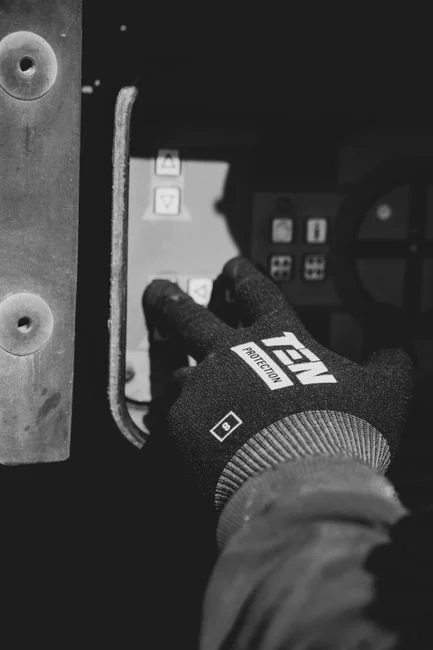
The package spec has to address four Dublin-specific loadings: kitchen FOG (oils, fats, greases up to 200–400 mg/L from banquet kitchens), laundry surges (pH excursions and surfactant loads), high-strength organic loading from full-occupancy weekends, and low-flow periods during the off-season. A correctly configured hotel package has five stages.
- Front-end pre-treatment. A coarse bar screen (8 mm openings) followed by an oil and grease separator, with a DAF system for FOG and suspended solids pre-treatment for banquet kitchens, then a fine screen and an equalisation tank with coarse-bubble mixing. A rotary mechanical bar screen at the head of the works keeps fibrous material off the membranes downstream.
- Biological stage. Aeration tank with EPDM fine-bubble tubular diffusers (90 mm × 1,000 mm), MLSS 3,000–6,000 mg/L for hollow-fibre designs or 6,000–12,000 mg/L for high-load flat-plate designs (per SIGMADAF MBR technical data), oxygen demand approximately 2 kg O₂ per kg BOD removed (per CPG Consultants MBR design note), HRT around 18 hours.
- Membrane stage. Submerged PVDF hollow-fibre modules (0.03–0.1 µm) or flat-sheet CPVC/PVDF modules (0.2–0.4 µm), continuous air-scour blowers sized to maintain crossflow, automatic backwash and a CIP cleaning circuit fed from a dedicated chemical tank.
- Polishing and disinfection. Online UV steriliser for reuse-ready polishing (preferred where the hotel wants reuse credits), or chlorination for discharge-only routes, plus a treated-water sump with level control.
- Sludge handling. Sludge holding tank with coarse-bubble mixing, decanter or a plate-frame filter press for dewatering to ~20% DS before off-site disposal by a licensed contractor.
Blowers and controls are the other half of the tender. Specify (1W+1S) twin-lobe blowers with VFD control for both aeration and membrane air-scour duty, and a PLC with remote telemetry so the package can run unattended in 2026 — Irish Water and most local authorities will not accept a plant that requires a full-time on-site operator. The table below maps the package components to the operating parameters an Irish reviewer will ask about.
| Stage | Key component | Operating parameter | Design value |
|---|---|---|---|
| Pre-treatment | Bar screen + oil/grease separator | Opening / HRT | 6–8 mm / ≥10 min |
| Equalisation | Coarse-bubble mixed tank | Retention | 6–10 hr at avg. flow |
| Aeration | EPDM fine-bubble diffusers | MLSS / SOTR | 3,000–12,000 mg/L / ~2 kg O₂/kg BOD |
| MBR | PVDF HF or flat-sheet UF | Pore size / flux | 0.03–0.4 µm / 10–25 L/m²·h |
| Disinfection | Online UV | Dose / transmittance | 30–40 mJ/cm² at >65% UVT |
| Sludge | Holding tank + filter press | DS content | ~20% DS after pressing |
| Controls | PLC + telemetry | Redundancy | (1W+1S) blowers, VFD, remote alarms |
Meeting Irish Compliance in 2026
Three documents control whether a packaged MBR is acceptable on a Dublin hotel site in 2026, and they do different jobs. I.S. EN 12566 Part 3 is the product standard — it certifies the packaged plant's tested effluent quality against a defined loading. The EPA Code of Practice 2021 sets the minimum effluent standards in Table 4.2 (BOD, COD, TSS, NH₃, total nitrogen, E. coli) for any domestic wastewater treatment system, and notes that Irish domestic wastewater is at the more concentrated level of the EN 12566-3 characterised influent (per EPA CoP 2021 §1.1). TGD H (Drainage and Waste Water Disposal) is the Building Regulations technical guidance document and the route through which the local authority planner checks the design.
Map the proposed MBR effluent to the EPA CoP 2021 Table 4.2 performance standards on paper before the planner does. Typical MBR output from a correctly sized hotel package: BOD₅ <5 mg/L, COD <20 mg/L, TSS near zero, turbidity <2 NTU (per CPG Consultants MBR design note). That is comfortably inside EPA CoP 2021 minima for all six parameters, which is the technical case to put in front of the local authority.
The discharge route decides which licence you need. Three realistic options exist for a Dublin hotel:
- Irish Water collection-system connection — requires a Section 16 connection licence and a trade effluent discharge agreement; the MBR is effectively pre-treatment to the IW network.
- Discharge to surface water or groundwater — requires a Water Pollution Act licence or a Discharge Licence, with effluent limits set on a site-specific basis by the EPA or local authority.
- On-site reuse — toilet flushing, irrigation, or laundry make-up, governed by the EPA Water Reuse guidance and, for any human-contact reuse, Drinking Water Inspectorate / HSE input.
One point planners raise repeatedly: the EPA CoP 2021 caps DWWTSs at Population Equivalent ≤ 10. Any hotel — even a 20-bed boutique — is well above that threshold, so the CoP is a reference document, not the binding instrument. The binding instrument is the Irish Water connection agreement or the discharge licence. Two EU drivers that flow into Irish 2026 enforcement and tighten limits over time are the Urban Waste Water Treatment Directive (91/271/EEC) and the Bathing Water Directive; both are reflected in the discharge limits the EPA will write into a Dublin licence.
Packaged MBR vs. Underground A/O Packaged STP for a Dublin Hotel
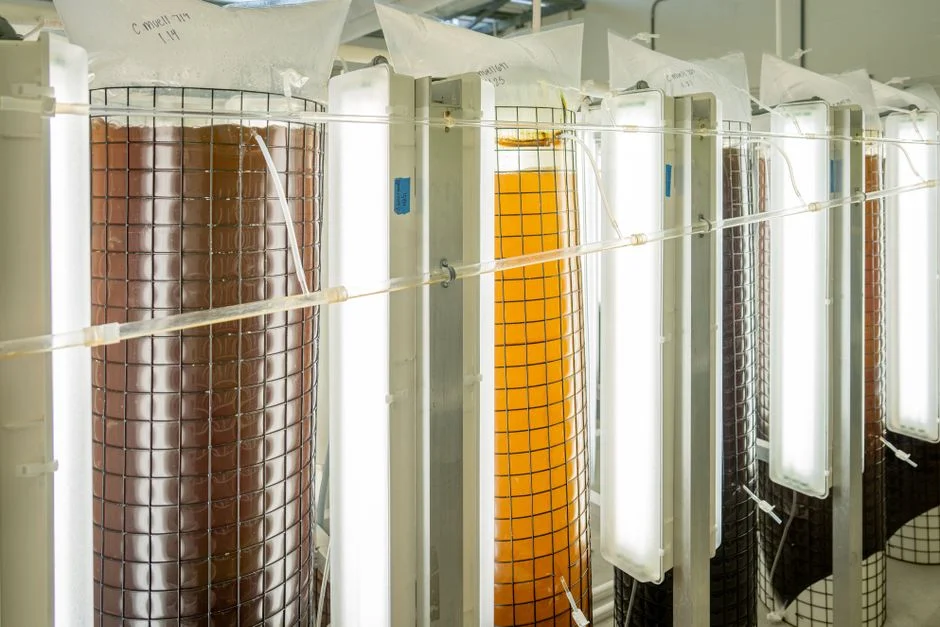
Two packaged formats are credible for a Dublin hotel: an MBR and an underground anoxic/aerobic contact-oxidation package. The HydropureWater WSZ underground packaged sewage treatment plant runs 1–80 m³/h, sits fully buried with landscaped cover, and needs no full-time operator. A packaged MBR runs 10–2,000 m³/d, takes roughly 30–40% of the footprint of an equivalent CAS plant, and produces reuse-grade effluent.
| Criterion | Packaged MBR | WSZ underground A/O |
|---|---|---|
| Flow range | 10–2,000 m³/d | 1–80 m³/h (24–1,920 m³/d) |
| Effluent BOD₅ | <5 mg/L | ≤20–30 mg/L (typical) |
| Effluent TSS | Near zero (UF membrane barrier) | ≤30 mg/L (settled) |
| Reuse-ready | Yes — toilet flush, irrigation, laundry | No — discharge or irrigation only |
| Footprint | Compact; above-ground skid/container | Buried; no visible plant |
| Capex | Higher (membranes, blowers, CIP) | Lower (no membranes) |
| Opex | Membrane CIP chemistry + replacement at 5–8 yr | Sludge handling, no membrane cost |
| Operator | Remote telemetry, periodic visit | Remote telemetry, periodic visit |
| Best fit | Tight city-centre site, reuse credits, strict discharge limits | Site allows burial, no reuse, cost-driven |
Decision rule of thumb for a Dublin hotel: specify MBR if the hotel intends reuse, has <150 m² of plantroom, or sits on a tight city-centre site where surface discharge limits are strict. Specify WSZ if the site allows burial, reuse is not on the table, and capital cost is the binding constraint. For a typical 4-star, 120-bed Dublin hotel on a constrained urban plot, the MBR is the more defensible choice because the effluent-quality headroom covers both an Irish Water connection and a future reuse scope without redesign.
2026 Procurement and O&M Checklist for the Buyer
Five items to verify before signing a Dublin hotel order, in the order a procurement lead should walk through them:
- EN 12566-3 test certificate and an Irish reference list. Demand the certificate, the test institute, and at least one operating Irish hotel or hospitality site. Ask for a 12-month performance warranty tied to effluent parameters — BOD, COD, TSS, NH₃, E. coli — not just to equipment survival.
- 2026 control package. PLC with remote telemetry (4G/Ethernet), automatic membrane CIP on time-cycle, membrane air-scour blowers in (1W+1S) configuration, and a documented membrane replacement schedule — typically 5–8 years for PVDF hollow-fibre under hotel loadings.
- O&M contract structure. Tie O&M to a performance-based contract so the operator carries effluent-compliance risk; the guide to performance-based wastewater O&M contracts covers the standard risk-allocation language. Do not let the hotel owner carry the membrane failure risk.
- Chemical and power budget. Plan for citric acid, NaOCl and caustic soda consumption in the CIP circuit (typically 2–4 cycles per month for hotel loadings), and for the fine-bubble aeration electrical load — a 50 m³/d MBR package draws 8–15 kW continuously, which the hotel's electrical room must accommodate.
- Commissioning and handover. Require a documented performance test over 30 days at design flow, with Irish Water or consultant-witnessed sampling, before final payment. The 12 field-tested fixes for modular sewage treatment systems guide is useful for the post-handover troubleshooting period, and a comparable packaged MBR STP sizing guide for a Mumbai hotel is a useful cross-check on the design assumptions, even though the regulatory layer is different.
Frequently Asked Questions
What size packaged MBR does a 100-bed Dublin hotel need?
A 100-bed Dublin hotel at 75% average occupancy typically generates 20–30 m³/d of wastewater. Apply a 1.2–1.5× safety margin for concentrated Irish influent and a 2.5–3.0× peaking factor for laundry and FOG surges, and the MBR should be sized at 25–40 m³/d with an equalisation tank of 6–10 m³.
Is EN 12566-3 certification enough for a Dublin hotel project?
EN 12566-3 is the product-level certification required for any packaged wastewater treatment plant in Ireland, but it is not the only approval. A Dublin hotel also needs an Irish Water connection licence (Section 16) or a discharge licence, plus TGD H compliance for the building regulations sign-off.
Can a packaged MBR deliver reuse-quality water for toilet flushing and laundry?
Yes. A correctly sized MBR with online UV polishing typically produces BOD₅ <5 mg/L, TSS near zero and turbidity <2 NTU, which meets non-potable reuse targets for toilet flushing and laundry make-up under the EPA's water reuse guidance.
How often do MBR membranes need replacement in a hotel?
PVDF hollow-fibre and flat-sheet membranes in hotel service typically last 5–8 years before replacement, depending on influent quality, CIP discipline and loading. The replacement cost should be carried in the O&M contract, not by the hotel owner.
What is the main difference between a packaged MBR and the WSZ underground A/O plant for a hotel?
The packaged MBR delivers reuse-grade effluent (<5 mg/L BOD, near-zero TSS) on a compact footprint; the WSZ underground A/O plant is fully buried with no visible infrastructure but produces discharge-quality effluent only. Choose MBR for tight sites and reuse; choose WSZ where burial is feasible and reuse is not required.
Related Equipment
- DF series PVDF flat-sheet MBR membrane module — specifications, capacity range, and technical data