Which treatment fits the wastewater stream?
For fabricated metals wastewater in Montgomery, factories should choose DAF when oil, grease, paint-related solids, or conditioned low-specific-gravity solids are the main targets and jar testing demonstrates reliable flotation. Choose a lamella clarifier when dense solids settle predictably and the plant wants flocculation, sludge recirculation, and inclined-plate separation in a compact package. Mixed streams may justify DAF ahead of a solids clarifier. Final selection requires representative wastewater testing, peak and batch-flow data, written permit terms, and lifecycle comparison; neither unit should be selected from average flow alone.
Cutting, stamping, welding, finishing, painting, washdown, and batch-discharge streams should not be averaged into one generic wastewater profile. Their hydraulic peaks, contaminant loads, and separation behavior can differ. A dilute cleanup discharge may create the largest flow event while carrying less pollutant mass than a concentrated cutting-oil or paint batch.
No Montgomery-specific discharge limits were supplied for this comparison. Obtain written confirmation from the sewer authority or other receiving permitting authority before assigning performance allowances. Evaluate the complete industrial wastewater pretreatment train: chemical conditioning, separation, sludge withdrawal, utilities, controls, and final disposal. Use the DAF selection checklist for FOG and TSS to identify whether the controlling problem is floatable contamination or settling solids.
Characterize the wastewater before selecting equipment
A representative sampling program determines whether the plant has an oil-removal problem, a solids problem, or both; one clean composite cannot resolve that question. Sample normal production and representative cleanup or upset periods, recording the operation, production status, and discharge condition. Do not use peak flow alone as the sizing case because the largest hydraulic event may not coincide with the heaviest contaminant loading.
For each condition, request TSS, FOG, oil and grease, pH, settleable solids, turbidity, relevant COD/BOD, flow range, batch frequency, and current chemical use. Measure dissolved and particulate metals separately. Distinguish concentrated process streams from dilute washwater, and sample cutting oil, coolant, rinse-water oil, grinding residues, dense metal fines, paint residues, and cleanup discharges separately where they originate from different operations.
| Stream or condition | Measurements to obtain | Question the data must answer |
|---|---|---|
| Cutting oil, coolant, or rinse-water oil | FOG, oil and grease, emulsification, TSS, flow | Is oil removal the controlling operation, and will existing separation change the required duty? |
| Dense metal fines and grinding residues | TSS, particle size, settleable solids, settling behavior, metals by fraction | Do the solids settle reliably enough for lamella clarification? |
| Paint stream | pH, TSS, FOG, paint-related characteristics, flow | Can conditioning create reliable floatable flocs without impairing downstream handling? |
| Washdown and cleanup discharge | Instantaneous and batch flow, duration, TSS, FOG, turbidity | Does this stream drive equalization, peak capacity, or both hydraulic and contaminant load? |
| Normal production composite | Full parameter set with production narrative | What operating condition does each proposed guarantee cover? |
Then test the proposed treatment sequence, not merely the raw sample. Aries describes bench-scale jar testing to determine flotation characteristics, removal efficiency, and a chemical program before selecting DAF equipment. Apply the same discipline to fabricated metals wastewater pretreatment requirements: evaluate pH adjustment, coagulation, flocculation, flotation or settling, and the expected split between recovered float and settled solids.
How DAF and lamella clarification separate contaminants
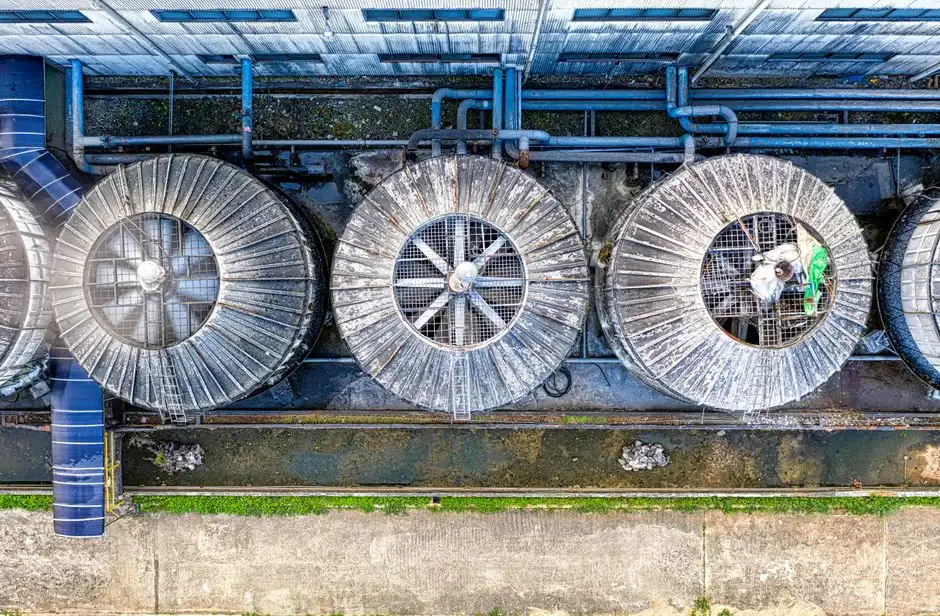
D flotation separates conditioned contaminants by attaching them to gas bubbles and recovering the resulting float from the surface. Aries describes pH adjustment, coagulation, and flocculation as the pretreatment sequence: pH control establishes flocculation conditions, coagulation reduces particle repulsion, and polymer flocculant creates larger flocs. Pressurized recycle then forms microbubbles, which attach to the prepared solids; a sludge-flight system removes the floating material.
Clearwater Industries, April 27, 2026, identifies 30–50-micron microbubbles. Aries describes approximately 30-micrometer bubbles and an approximately 100-psi recycle system. These are supplier-specific mechanism details, not common performance guarantees or proof that either bubble condition will remove a particular Montgomery wastewater contaminant.
Lamella clarification follows a different separation train: flocculation conditions the solids, sludge is recirculated, inclined plates increase effective separation area, and hopper withdrawal removes settled sludge. The plates can support compact clarification, but the complete installation must still accommodate conditioning, recirculation, sludge collection, access, and utilities.
DAF also includes a bottom collection zone for heavier settled solids. Clearwater Industries, April 27, 2026, states that heavier solids settle in that zone and are removed with an auger. Jar or pilot testing should therefore establish whether a target contaminant floats, settles, or divides between the two fractions. Neither supplied source establishes universal dissolved-metal removal performance for DAF or lamella clarification.
DAF versus lamella clarifier: the application comparison
The equipment decision depends on separation behavior, chemical conditioning, auxiliary systems, and sludge consequences—not on a generic removal percentage. DAF is the stronger application match for floatable oils, FOG, paint residues, and conditioned light solids. Lamella clarification is the stronger match when dense solids settle reliably and an integrated flocculation, recirculation, and inclined-plate package suits the site.
| Selection criterion | Dissolved air flotation | Lamella plate clarifier |
|---|---|---|
| Primary mechanism | Microbubble flotation of conditioned solids | Flocculation, sludge recirculation, and inclined-plate settling |
| Controlling targets | Floatable oils, FOG, paint residues, and conditioned low-specific-gravity solids | Dense or reliably settleable solids |
| Conditioning | Requires dependable pH adjustment, coagulation, flocculation, and bubble attachment | Requires controlled flocculation and stable solids recirculation |
| Auxiliary systems | Clean-water startup, pressurized recycle, skimming, float withdrawal, and bottom-sludge withdrawal | Clarifier and recirculation startup, plate-loading control, hopper management, and sludge withdrawal |
| Available supplier specification | HydropureWater’s DAF range covers 4–300 m³/h across 13 models | HydropureWater specifies 20–40 m/h surface loading |
| Materials | Clearwater Industries, April 27, 2026, offers standard 304SS construction with 316SS, polypropylene, and other materials on request | Obtain a separate materials schedule for each proposal |
| Sludge consequence | Produces recovered float plus bottom-settled solids; the split must be established through testing | Produces concentrated settled sludge from hopper withdrawal; expected moisture and volume still require definition |
| Downstream requirement | Evaluate storage and sludge dewatering for each recovered fraction | Evaluate storage and sludge dewatering for hopper sludge |
Neither catalog value determines the Montgomery duty. The surface-loading range is a design parameter to evaluate, and the DAF capacity range is a catalog limit, not a recommendation. Similarly, supplier material claims do not establish compatibility with the actual stream; require a project-specific schedule.
Do not assume floated and settled solids dewater alike. Include recovered-solids volume, expected moisture, polymer or chemical demand, and disposal route in the comparison. A sludge dewatering filter press should be selected only after the solids properties and disposal method are known.
Size the system around peak, cleanup, and batch flows
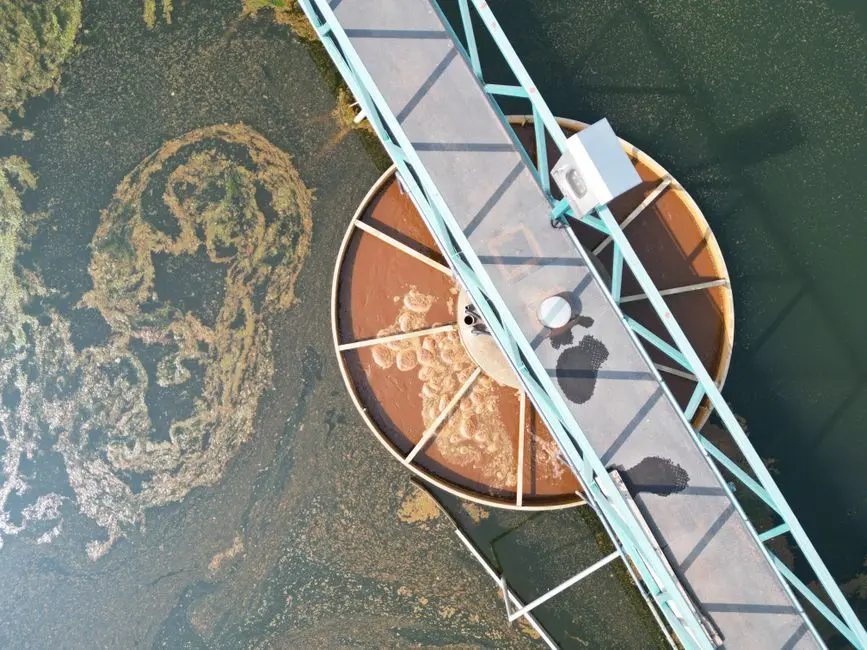
A defensible size follows the plant’s complete hydraulic and contaminant duty. Establish average flow, peak flow, cleanup-discharge duration, batch frequency, and simultaneous-discharge conditions from operating records and the sampling program. Combine those flows with TSS and FOG loading, settleable-solids behavior, flotation results, and confirmed treatment targets. A nominal average flow is only one part of the basis.
| Input required from the factory | How it affects the selection | Supplier response required |
|---|---|---|
| Average and peak flow | Defines continuous hydraulic duty and possible peak treatment demand | State the design flow and the operating envelope used for each quoted configuration |
| Cleanup duration and batch frequency | Identifies hydraulic transients and equalization needs | Explain how the selected configuration handles batch discharges and whether equalization is included |
| TSS and FOG loading | Establishes contaminant mass and likely conditioning demand | Identify the loading assumptions and chemical program used for sizing |
| Jar-test or pilot results | Shows whether flotation or settling is reliable under the tested conditions | Size against observed separation, not generic removal claims |
| Confirmed treatment targets | Defines the required separation outcome | Identify each guarantee, its test condition, and its exclusion |
HydropureWater’s DAF range of 4–300 m³/h across 13 models is not a recommendation for a Montgomery plant. Clearwater Industries, April 27, 2026, describes its COMPACT DAF as a pre-assembled package with one skid for flows of 66 GPM or less and a modular two-skid arrangement for larger flows. Compare that packaging against the clarifier using the measured duty and the same boundary of supply.
For lamella clarification, evaluate the specified 20–40 m/h surface loading together with hydraulic duty and observed settling behavior. Require each bidder to identify every sizing assumption, selected duty point, and batch-handling provision. The broader technical comparison in this fabricated metals DAF versus clarifier guide is useful for organizing those questions, but the Montgomery bid must use local wastewater data and permit terms.
Compare lifecycle cost and operational risk
Comparable DAF and clarifier bids must contain the same influent basis, treatment scope, controls, sludge handling, installation, startup, training, warranty, and local-service assumptions. If the proposals omit different items, their prices do not support a selection. No comparable purchase prices were supplied in the research, so any Montgomery budget must come from like-for-like quotations.
| Cost or risk category | Information to request from both bidders | Decision use |
|---|---|---|
| Capital scope | Tank, conditioning, recycle, controls, instrumentation, sludge withdrawal, installation, startup, training, and warranty | Confirm that the quotations are comparable |
| Operating cost | Expected chemical demand, utilities, maintenance access, replacement items, and operator labor | Compare recurring operating exposure |
| Sludge cost | Recovered volume, expected moisture, storage assumptions, dewatering, and disposal route | Compare downstream handling rather than tank purchase price alone |
| Site risk | Footprint, access, utilities, controls, startup sequence, and service availability | Identify installation and operability constraints |
| Compliance risk | Written permit terms and application-matched performance criteria | Avoid relying on unsupported equipment claims |
HydropureWater advertises a chemical-consumption reduction of up to 30% for lamella clarification. That is a supplier claim, not measured proof for a Montgomery application. Validate it against the tested chemical program and price the actual reagent demand.
Neither DAF nor clarification alone should be assumed to satisfy a Montgomery discharge requirement. Obtain written requirements from the receiving authority and define performance allowances only after the wastewater and treatment objectives are confirmed. Where both oil and heavy solids are significant, ask bidders to price a hybrid DAF-plus-solids-separation arrangement and demonstrate whether it lowers total sludge volume, moisture, handling effort, and disposal cost.
Turn test results into a defensible purchase specification

A test-backed specification converts wastewater behavior into enforceable supplier obligations. Include representative wastewater results, jar-test or pilot data, chemical doses, observed separation, average and peak flows, batch conditions, and TSS and FOG loading. State whether results apply to individual streams, composites, or a specified flow condition; a supplier should not apply one result to an untested cleanup discharge.
- Require the bidder to identify the sizing assumptions, selected flow, contaminant loading, and operating envelope used in the proposal.
- Require general arrangement drawings, dimensions, materials schedule, utilities, duty point, controls, instrumentation, access, and installation requirements.
- Require the startup procedure, operator training, warranty terms, local service capability, exclusions, and remedies.
- Define performance criteria against representative wastewater, including the test method, sampling condition, and remedy if the criterion is not met.
- Define float and settled-sludge withdrawal, storage, expected characteristics, dewatering, and final disposal assumptions.
Connect the selected separator to its chemical and sludge-handling equipment. An automatic chemical dosing package should be specified around the tested pH, coagulation, and flocculation program, including reagent type, dosing range, controls, mixing, and maintenance access. If dewatering is required, evaluate the downstream sludge dewatering filter press against measured sludge properties.
Make the bid boundary explicit. Specify the separation unit, conditioning train, recycle and skimming where applicable, sludge withdrawal, controls, utilities, installation, startup, training, warranty, and performance remedies. Ask each bidder to identify omitted items rather than silently accepting a tank-only scope.
Frequently Asked Questions
Is DAF cheaper than a lamella clarifier for a Montgomery fabricated metals plant?
The supplied research contains no comparable purchase prices, so cost cannot be decided from catalog information. Request both quotations on the same scope: conditioning, separation, controls, sludge handling, installation, startup, training, warranty, and utilities. Then compare chemical demand, footprint, maintenance, recovered-sludge characteristics, and disposal cost.
How should a factory size a DAF or clarifier?
Use representative average, peak, cleanup, and batch flows together with TSS, FOG loading, settling or flotation behavior, and confirmed treatment targets. Catalog capacity ranges are not sizing recommendations. Require each bidder to state its sizing assumptions and explain how its configuration handles batch discharges.
Which equipment should a supplier be asked to demonstrate?
Require application-matched jar-test or pilot results, drawings, project-specific materials schedule, utilities, controls, startup support, warranty terms, local service access, and performance guarantees tied to representative wastewater. Also require the bidder to identify exclusions and remedies rather than offering generic removal claims.
Can a DAF alone meet the sewer permit in Montgomery?
Do not assume it can. Obtain written discharge requirements from the receiving authority, then define performance allowances after the wastewater and treatment objectives are confirmed. A permit-compliant selection may require a hybrid DAF and solids-separation arrangement or additional downstream treatment.
When is a hybrid system practical?
Consider DAF ahead of a solids separator when floatable oil and heavy solids are recurring targets. Use test data to verify the split between floated and settled fractions and confirm whether the arrangement reduces combined sludge volume, moisture, handling effort, and disposal cost.
Related Equipment
- industrial dissolved air flotation system — specifications, capacity range, and technical data
- lamella clarifier for settleable solids — specifications, capacity range, and technical data