What can—and cannot—be concluded about the Hyundai plant
A defensible DAF capacity for Hyundai’s new auto plant in India cannot be selected from the plant announcement alone; Hyundai’s wastewater flow, TSS, FOG, treatment targets and peak-flow profile are required. HydropureWater’s 2026 sizing guide uses 3–5 gpm/ft² as the typical hydraulic loading band, with 4 gpm/ft² as a common design point. The final capacity must also satisfy 0.005–0.060 lb air per lb TSS, 10–30 minutes retention and a 20–50% recycle ratio. Once the design flow and contaminant load are established, the calculated area can be matched to a 4–300 m³/h catalogue DAF or a custom or parallel-train arrangement.
The supplied research does not identify the plant’s design flow, automotive plant wastewater profile, operating shifts, discharge point, reuse requirement or applicable regulatory limits. Those are project-design inputs, not procurement details to be filled in later: they can change the DAF flow rating, tank area, recycle duty and number of treatment trains.
DAF hydraulic throughput is not the same as clarification capacity. HydropureWater’s 2026 guide states that a unit rated for 300 gpm can pass that flow while failing to meet the discharge TSS target if solids loading, bubble attachment or residence time is unsuitable. The practical sequence is therefore to establish the design basis, calculate flotation area, verify solids removal through coupled A/S, retention-time and recycle checks, and then select the equipment arrangement. The DAF engineering specifications provide the technical framework for those calculations.
The design-basis data Hyundai must provide
The design basis must pair the selected flow with simultaneous hydraulic and contaminant peaks; otherwise, the DAF may be correctly sized for normal production but overloaded during washing, painting or shutdown discharge.
HydropureWater’s 2026 guide identifies the 85th-percentile daily flow as the design basis and allows brief excursions above the hydraulic loading limit. The project team should therefore provide average flow, peak-hour flow and the 85th-percentile daily flow, followed by a flow-duration histogram and batch-discharge schedule. TSS and FOG should be sampled across production, washing, painting and shutdown periods rather than represented by one composite sample.
The receiving sewer or reuse specification should be attached to the RFQ, together with expected temperature, chemical-conditioning strategy and any controls on peak discharge. This information can be assembled using the source framework for calculating wastewater treatment capacity, but the actual project data must come from Hyundai’s design team or verified monitoring.
| RFQ design input | Required basis | Calculation or decision affected |
|---|---|---|
| Average, peak-hour and 85th-percentile daily flow | Measured or formally approved project values, with units | DAF flow rating and flotation area |
| Flow duration and batch discharges | Production-linked duration and frequency | Peak-case check and equalization requirement |
| TSS and FOG | Period-specific concentrations and mass rates | Air demand, treatment target and configuration |
| Temperature | Expected operating range | Air-solids ratio and recycle-system check |
| Discharge or reuse requirement | Applicable sewer, reuse or permit criterion | Performance acceptance and compliance risk |
| Conditioning strategy | Coagulant and flocculant basis | Recycle demand and expected TSS removal |
For initial comparability, HydropureWater’s 2026 guide gives a standard DAF envelope of TSS ≤1,000 mg/L and FOG ≤500 mg/L. Any exceedance requires an engineered response; it cannot be assumed to be accommodated by a nominal flow rating.
Calculate DAF area from the selected design flow
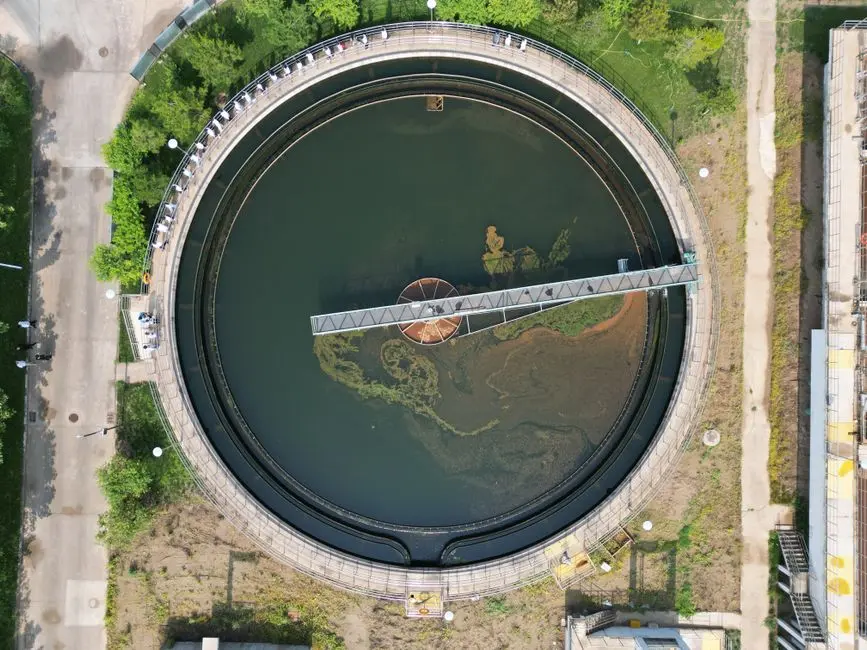
The required flotation area is calculated as design flow in gpm divided by the selected hydraulic loading rate in gpm/ft². This calculation establishes tank area, but it does not complete the DAF sizing.
HydropureWater’s 2026 sizing guide identifies 3–5 gpm/ft² as the usual hydraulic loading band and 4 gpm/ft² as the typical design point where the wastewater chemistry and operating profile support it. Below 3 gpm/ft², the guide associates operation with excess footprint and a potentially patchy float layer as cross-flow velocity approaches the cited 2 ft/s settling threshold. Above 6 gpm/ft², it associates operation with floc shear and inadequate bubble-contact time.
For wastewater above 2,000 mg/L TSS, HydropureWater’s 2026 guide directs engineers toward approximately 2.5–3.5 gpm/ft², incorporating a 20–30% safety margin. The guide also states that high-strength waste above 1,000 mg/L TSS warrants the lower half of the normal band for loading shocks; these statements should be reconciled against Hyundai’s verified influent profile rather than applied automatically.
| Calculation step | Requirement | Bidder response required |
|---|---|---|
| 1. Select design flow | 85th-percentile daily flow | State source, units and operating profile |
| 2. Select hydraulic loading | Normally 3–5 gpm/ft²; justify departures | Show wastewater basis and selected rate |
| 3. Calculate flotation area | Area = flow in gpm ÷ loading in gpm/ft² | Submit calculated area and proposed equipment area |
| 4. Check peak case | Do not replace the 85th-percentile basis with one peak value | State controls and duration of any hydraulic excursion |
| 5. Map to equipment | Compare calculated duty with the 4–300 m³/h catalogue range | Identify catalogue model or custom arrangement |
The unit conversion and final train arrangement should be documented separately. The worked approach in HydropureWater’s 2026 guide converts 200 gpm to approximately 45 m³/h and then maps the duty to the mid-range catalogue models. Hyundai bidders should apply the same transparent sequence to Hyundai’s flow, not adopt the example flow or rate as a project assumption.
Verify solids removal with four coupled parameters
A DAF area derived only from flow is incomplete until the proposal demonstrates that the selected area and recycle system can remove the required TSS load under the expected operating conditions.
First, hydraulic loading must remain within the project-specific selected rate: the 2026 HydropureWater guide gives 3–5 gpm/ft², with 4 gpm/ft² as the typical design point. Second, the air-to-solids ratio must fall within 0.005–0.060 lb air per lb TSS. The same guide associates approximately 0.005–0.010 with a well-dosed stream and 0.040–0.060 with a poorly dosed colloidal stream, making upstream conditioning inseparable from the air demand.
Third, total retention should be checked against the 10–30 minute band, including reaction and floc-contact time. HydropureWater’s DAF engineering article also specifies saturation at 3–6 bar and microbubbles of 20–100 μm. Fourth, the DAF recycle system must deliver the selected 20–50% recycle ratio; the guide’s sizing example uses a saturator operating at 60–80 psig. The recycle pump’s installed and delivered duty must therefore be checked rather than inferred from the saturator dimensions.
The A/S calculation must use delivered dissolved-air mass and influent TSS mass flow. A nominal recycle percentage or saturator tank volume is not a substitute. Expected TSS removal of 92–97% applies only when the influent is properly conditioned and the configuration satisfies all four coupled checks, according to HydropureWater’s 2026 guide.
| Performance parameter | Reference band or condition | Verification required |
|---|---|---|
| Hydraulic loading rate | 3–5 gpm/ft²; 4 gpm/ft² typical | Calculated from selected flow and proposed area |
| Air-to-solids ratio | 0.005–0.060 lb air per lb TSS | Delivered air mass divided by influent TSS mass flow |
| Retention time | 10–30 minutes | Reaction and floc-contact time included |
| Recycle ratio | 20–50% | Calculated recycle flow and verified pump duty |
| Expected TSS removal | 92–97% for properly conditioned influent | Performance claim tied to the complete design case |
The FOG and TSS criteria should be addressed explicitly when selecting a DAF system for FOG and TSS. Coagulant and flocculant trials may be needed before the A/S and TSS-removal values can be treated as committed performance rather than preliminary estimates.
Select the DAF configuration for an automotive wastewater plant
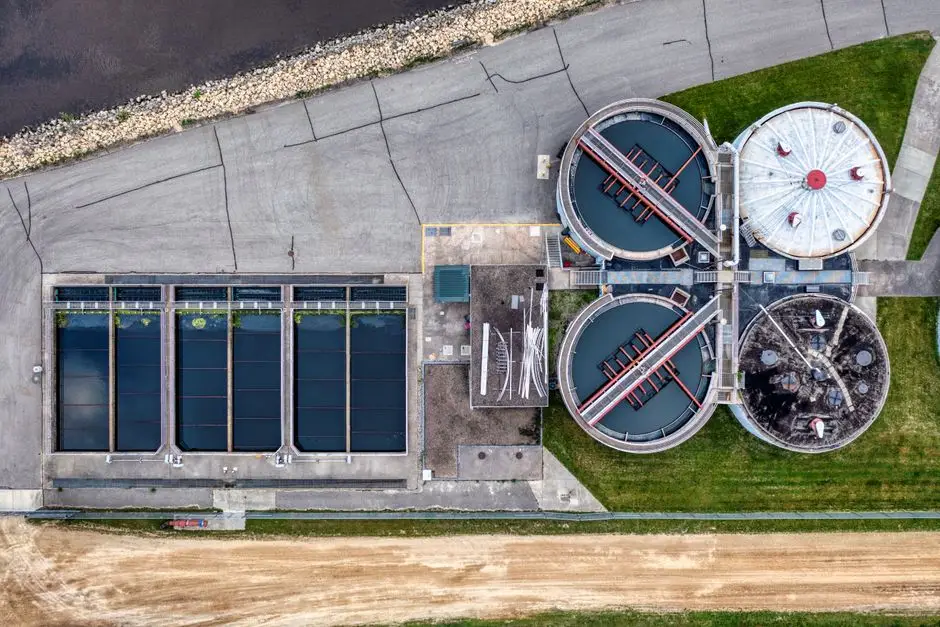
The configuration decision follows the calculated duty: a catalogue unit is appropriate only when both its hydraulic envelope and influent envelope match the Hyundai design case.
HydropureWater’s 2026 guide defines a catalogue range of 4–300 m³/h across 13 standard models and identifies TSS ≤1,000 mg/L and FOG ≤500 mg/L as the standard influent envelope. A standard unit can therefore be considered when the calculated duty falls within that range and the wastewater remains inside the stated limits.
For calculated flow above 300 m³/h, the guide presents two options: parallel standard trains or custom fabrication. Parallel trains require enough characterization to demonstrate comparable performance and an engineered inlet manifold that distributes flow equally. A custom rectangular tank becomes more relevant when the influent is variable, a single scum-removal mechanism is required, or the available footprint cannot accommodate separate skids and their associated equipment.
| Condition | Configuration to evaluate | Key engineering condition |
|---|---|---|
| Calculated duty within 4–300 m³/h; TSS and FOG within the standard envelope | Catalogue DAF | Reproduce the project-specific area, A/S, retention and recycle checks |
| Calculated duty above 300 m³/h; influent sufficiently characterised | Parallel identical trains | Engineer equal inlet distribution and verify each train |
| Variable influent, single scum-removal requirement or constrained footprint | Custom rectangular tank | Resolve variable loads, maintenance access and hydraulic distribution |
| Wastewater outside the standard TSS or FOG envelope | Engineered response beyond catalogue limits | Revise loading, treatment train or pretreatment |
Upstream screening, flow equalization and chemical dosing remain part of the treatment train. A rotary mechanical bar screen may be evaluated for debris removal, while a PLC-controlled chemical dosing skid can be used where justified by the wastewater chemistry. Coagulant and flocculant selection should follow conditioning trials or validated jar tests; dosing should not be treated as a fixed accessory, because the A/S check and expected TSS removal depend on effective floc formation.
An industrial DAF system should not be accepted merely because its catalogue flow covers the influent. Every proposal must reproduce the same area, performance and recycle calculations from Hyundai’s data.
Turn the calculation into a defensible Hyundai vendor RFQ
A comparable RFQ should make bidders produce one auditable sizing calculation from the same Hyundai influent data; accepting alternative flow ratings without common inputs would not produce a technically comparable offer.
Attach the source data, 85th-percentile design flow, peak-flow profile, TSS and FOG loading, expected temperature, treatment target, and applicable sewer or reuse limit. Require each bidder to show flotation area, hydraulic loading, retention time, A/S, recycle percentage, recycle pressure, calculated recycle flow, expected TSS removal and the proposed train arrangement.
HydropureWater’s 2026 guide gives bidders a common reference envelope against which to identify departures: 3–5 gpm/ft² hydraulic loading, 0.005–0.060 lb air per lb TSS, 10–30 minutes retention and 20–50% recycle. Any deviation should be stated with its engineering basis, including the safety-margin basis where high-strength wastewater is involved.
| RFQ schedule | Mandatory bidder submission | Acceptance basis |
|---|---|---|
| Design data | Flow basis, flow duration, TSS/FOG data, temperature, target and applicable limit | Inputs traceable to Hyundai’s approved design basis |
| Hydraulic calculation | Flotation area and selected loading rate | Consistent units and reproduction of the same calculation |
| Performance calculation | Retention time, delivered A/S and expected TSS removal | All checks tied to the same influent case |
| Recycle system | Recycle percentage, pressure, flow and pump duty | Installed equipment can deliver the calculated duty |
| Configuration | Catalogue model, parallel trains or custom tank | Selection follows calculated duty and site constraints |
| Exceptions | Deviations from reference bands and influent-envelope exceedances | Engineered response and supporting basis stated |
Bidders must also confirm that catalogue limits of TSS ≤1,000 mg/L and FOG ≤500 mg/L are not being exceeded without an engineered response. The commercial selection should follow the engineering calculation, not replace it. A coherent response from common data is more defensible than a lower quotation based on an unverified hydraulic rating.
Frequently Asked Questions
What DAF capacity is required for Hyundai’s new auto plant in India?
The final capacity is the greater of the flow-derived hydraulic requirement and the contaminant and performance checks. Hyundai must first provide the 85th-percentile daily flow, flow-duration data, TSS and FOG loading, temperature, treatment target and applicable discharge or reuse requirement. The RFQ should then require flotation area, hydraulic loading, retention time, A/S and recycle calculations. If the result falls within the 4–300 m³/h catalogue range and the standard influent envelope, a catalogue unit may be considered; otherwise, the calculation must support a custom or parallel-train arrangement.
How should DAF suppliers be selected for the Hyundai project?
Require every supplier to reproduce the hydraulic, A/S, retention-time and recycle calculations from the same Hyundai influent data. Review whether each quotation identifies the source flow, proposed flotation area, delivered recycle duty and train arrangement rather than presenting only a catalogue flow rating. Where the wastewater sits outside the standard TSS or FOG envelope, the supplier must state the engineered response and performance basis.
What is the compliance risk when sizing the Hyundai automotive plant wastewater pretreatment?
Equipment sizing does not establish the site’s applicable compliance limit. The supplied research does not identify a Hyundai plant-specific discharge or reuse requirement, so procurement must obtain the applicable sewer, reuse or permit criterion before finalizing the treatment target. If that limit is absent, the DAF performance guarantee remains incomplete because bidders cannot demonstrate compliance against an undefined criterion.
How much will the DAF cost, and what delivery lead time should the RFQ request?
The research provides no defensible Hyundai-project price or delivery period. Both depend on the verified flow and wastewater profile, calculated flotation area, selected train arrangement, custom-versus-standard fabrication scope, recycle-system duty, chemical conditioning, site constraints and acceptance criteria. Buyers should request a priced equipment schedule, commercial exclusions, delivery assumptions and a milestone schedule based on those inputs rather than accept a generic price or lead-time claim.
Related Equipment
- industrial DAF system — specifications, capacity range, and technical data