What wastewater determines the DAF-versus-clarifier choice
The correct choice for transportation equipment factories in Lebanon, New Hampshire, depends on the dominant contaminant in each wastewater stream, not on a single removal percentage. Separate oily production runoff, floor-cleaning discharges, paint-bearing wash water, and stormwater before comparing equipment. SIGMADAF states that industrial wastewater is commonly collected in a homogenization tank because factory effluent can vary considerably, and that separating streams can be practical when their treatment requirements differ. The supplied research does not establish transport-sector wastewater composition in Lebanon, so plant-specific sampling is mandatory.
Request a current wastewater analysis covering TSS, oils and greases, settleable solids, pH, flow rate, and flow variability. Include regulated metals or priority pollutants that apply to the discharge route. Also identify whether the destination is a public sewer, a hauled-waste stream, or an on-site treatment system, and whether downstream biological or membrane processes, zero-discharge requirements, or water-reuse goals constrain the design.
| Wastewater stream | Characteristics to establish | Initial technology direction | Key design issue |
|---|---|---|---|
| Oily production runoff | Free and emulsified oil, grease, TSS, flow variability | Prioritize dissolved air flotation | Floating-oil recovery and chemical compatibility |
| Floor-cleaning discharge | Detergent, dispersed oil, settleable solids, pH | DAF or hybrid treatment after characterization | Emulsification and chemical pretreatment |
| Paint-bearing wash water | Settleable paint solids, total solids, metals, pH | Clarification, possibly preceded by DAF | Solids recovery and paint-stream segregation |
| Stormwater | Runoff volume, grit, oil, episodic pollutants | Hold, segregate, and assess separately | Peak-flow control and spill prevention |
Use the transportation equipment plant pretreatment guide to structure the plant survey, and the DAF selection checklist for FOG and TSS when defining the analytical basis for a DAF offer.
How DAF and clarifiers separate different contaminants
Dissolved air flotation separates contaminants that can be attached to air bubbles and carried to the surface for skimming, while gravity sedimentation removes particles that settle because they are denser than water. A lamella clarifier improves sedimentation by providing inclined plates that increase effective settling area within a compact structure. These mechanisms differ in contaminant physics, so the dominant contaminant—not simply the lowest equipment price—should drive selection.
Common industrial DAF systems use chemical pretreatment and recirculated, pressurized water. When the pressurized recycle enters the flotation tank at atmospheric pressure, bubbles form and attach to suspended material, which rises into a float layer for recovery. Gravity clarifiers require no bubble-generation system; heavier solids settle into a bottom sludge blanket, while surface skimming may collect material that floats.
| Selection factor | Dissolved air flotation | Gravity or lamella clarification |
|---|---|---|
| Primary mechanism | Bubble attachment and surface flotation | Difference in density and settling velocity |
| Best-aligned contaminants | Oil, grease, low-density solids, fine suspended material | Heavy grit and predominantly settleable solids |
| Removed material | Surface float plus collected settled solids in suitable configurations | Bottom sludge, with optional surface skimming |
| Principal operating additions | Recycle pump, air supply, saturation system, skimming, possible chemical dosing | Basin, sludge collection, and associated solids-handling equipment |
| Space and operating burden | More mechanical and utility components | Generally lower operating burden and cost |
The available benchmarks are scope-specific. SIGMADAF reports that conventional primary settling generally does not exceed 60–65% suspended-solids separation and rarely reduces COD by more than 40%; flotation clarification can exceed 90% suspended-solids separation. Ecologix reports a single food-processing stream in which DAF achieved 95% oil-and-grease removal versus 70% for a clarifier. Neither result establishes guaranteed performance for transportation equipment wastewater in Lebanon.
SIGMADAF also describes lamella-packed DAF configurations in which lighter particles separate in the upper section and heavier particles separate through the lamellae as water moves downward. That arrangement differs from a lamella sedimentation unit. The industrial DAF system and high-efficiency lamella clarifier represent different separation principles and should not be treated as equivalent bidders.
Match DAF or a clarifier to each plant stream
A stream dominated by floating oil and low-density residues should begin with DAF evaluation because surface skimming is directly aligned with that contaminant. This is a screening decision, not permission to order a unit: chemical compatibility, emulsification, flow variability, and required oil-and-grease limits still need testing. Ecologix’s food-processing example supports DAF as a candidate for oily streams, but its reported performance must not be transferred to a transportation plant without comparable wastewater data.
Heavy grit and predominantly settleable solids should begin with conventional or lamella clarification. SIGMADAF reports that lamella decanters can have ascent velocities up to five times those of conventional decanters and that their retention times generally do not exceed one hour. For paint-bearing water, determine first whether the solids are genuinely settleable and whether paint constituents alter settling, filtration, or sludge handling.
| Plant condition | Preferred evaluation | Reason | Required verification |
|---|---|---|---|
| Oily washwater with floating residues | DAF | Skimming aligns with low-density contaminants | Chemical program, recovered-oil quality, peak flow |
| Heavy grit or settled paint solids | Conventional or lamella clarifier | Dense material separates by gravity | Settling characteristics and sludge removal |
| Light oils plus heavy solids | DAF with lamella separation or hybrid train | One separation mechanism may not address both fractions | Combined performance and residual solids |
| Variable production discharge | Equalization and homogenization upstream | SIGMADAF identifies homogenization as a common response to variable industrial effluent | Peak and low-flow behavior |
| Water-reuse application | DAF or clarification followed by downstream polishing | Colloids, oils, and detergents can foul downstream equipment | Membrane- or reuse-specific quality targets |
For variable discharges, evaluate industrial wastewater equalization before the treatment unit and separate streams where practical. SIGMADAF identifies homogenization as a common response to changing factory effluent and also describes the removal of larger solids before equalization to protect downstream equipment. If water is reused, upstream clarification must address fouling risk: SIGMADAF states that colloidal material, oils, detergents, and other low-density contaminants can clog or contaminate RO and UF systems if they are not removed first.
Confirm that the proposed lamella clarifier is a sedimentation option rather than a flotation unit. The relevant DAF range covers 4–300 m³/h across 13 standard models; capacity selection still depends on the plant’s verified flow profile and treatment objectives. For additional screening, see the DAF selection checklist for FOG and TSS.
Compare footprint, energy, chemicals, and maintenance
DAF costs more to operate than a clarifier because it adds mechanical and utility demands: a recycle pump, air compressor, saturation system, skimming mechanism, and controls for recycle pressure and flow. A clarifier has fewer active components, but its footprint, sludge-collection needs, and solids-handling requirements must still be included in the site comparison. Purchase price alone is not a complete comparison.
SIGMADAF describes a DAF design basis of 5–7 bar saturation pressure, approximately 10–25% treated-water recycle, and 0.15–0.30 kg air/kg TSS. These are supplier-described design values, not universal specifications. Aries presents a different equipment-specific implementation using approximately 100 psi recirculation pressure and micro-bubbles around 30 µm. The DAF power and capacity guide is useful for comparing the utility basis of competing proposals.
| Evaluation item | DAF questions for bidders | Clarifier questions for bidders |
|---|---|---|
| Utilities | Recirculation flow and pressure, air demand, connected electrical load | Mixing and sludge-collection power, connected electrical load |
| Chemicals | pH control, coagulant, flocculant, feed rate, storage and handling requirements | Whether coagulation, pH adjustment, or flocculant is required |
| Solids handling | Float recovery and collection method; downstream handling | Bottom sludge withdrawal, thickening, and dewatering |
| Maintenance | Pump and compressor service, saturation system, skimmer inspection, controls | Mechanism inspection, basin cleaning, sludge-removal system |
| Site and controls | Access for maintenance, chemical bunding, electrical requirements | Access for sludge removal, basin access, electrical requirements |
Ecologix states that clarifiers generally have lower operating costs, while DAF may be more cost-effective for specific oil-and-grease duties. That is directional evidence, not a site-specific cost estimate. Obtain itemized utility, chemical, labor, maintenance, and sludge-disposal inputs for the Lebanon location.
Sludge characteristics also change the downstream result. SIGMADAF reports flotation sludge blankets of 3–4% solids versus about 1% in primary settling tanks. A denser flotation blanket may change thickening and dewatering requirements. Aries states that pH control, coagulation, and flocculation can lower TSS, oils and greases, BOD, and metal concentrations, so reagent supply, storage, and operator training belong in the comparison. Review the automatic chemical dosing system and plate-frame filter press as possible supporting equipment rather than assuming they belong in every offer.
Build a wastewater characterization and pilot-test plan
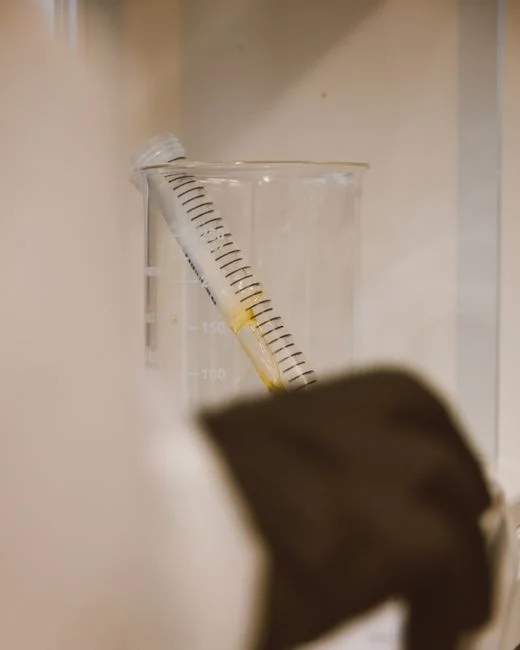
A stage-gated test plan prevents the plant from converting an equipment catalog into an unjustified purchase order. The sequence is characterization, objective setting, bench testing, pilot testing where needed, and full-scale sizing from verified performance.
- Characterize representative operations. Sample normal production, washdown, cleaning, low-flow, and peak-flow periods. Analyze TSS, oils and greases, settleable solids, pH, and constituents regulated for the discharge route. Record flow alongside each sample because the same wastewater may become more difficult to treat when diluted or mixed with clean floor washwater.
- Define treatment objectives. State downstream sewer limits, reuse targets, equipment-protection requirements, and sludge-disposal constraints. Distinguish primary clarification objectives from any biological, membrane, or zero-liquid-discharge objectives.
- Run wastewater jar testing. Aries recommends bench-scale jar testing to determine removal efficiency, flotation characteristics, chemical-program selection, and DAF design variables. The test should compare untreated conditions, candidate chemical conditions, and the settling or flotation behavior of the actual plant samples.
- Pilot where the evidence remains incomplete. Pilot DAF or clarification when jar tests do not establish dependable full-scale behavior. Include variable hydraulic loading and observe actual float recovery, sludge withdrawal, equalization response, and operator workload.
- Size from verified peak-flow performance. Do not select from a generic tank chart. Use the supplier’s test report to establish hydraulic loading, recycle, air demand, chemical dose, and sludge production.
The final specification should identify the pretreatment method, materials of construction, controls, skimming or sludge-removal method, redundancy, maintenance access, electrical supply, installation boundaries, and site requirements. It should also state which performance values are guaranteed under which wastewater and loading conditions. A jar-test report is stronger evidence than a generic removal claim, but it remains bench-scale evidence until a pilot confirms full-scale behavior.
Turn the technical decision into an equipment RFP
A comparable RFP begins with one shared wastewater basis and asks each bidder to expose its sizing and performance assumptions. Otherwise, a low bid may omit equalization, dosing, controls, recycle equipment, sludge handling, installation, or commissioning.
Provide each bidder the characterized wastewater results, flow profile, treatment targets, discharge requirements, available footprint, utility limits, and chemical-handling constraints. Require the proposed process, unit-sizing basis, expected performance for the supplied wastewater, hydraulic and recycle requirements, electrical load, chemical consumption, and sludge yield. Also require the method for demonstrating performance.
| RFP information | Required response | Buyer check |
|---|---|---|
| Wastewater basis | Characterization data, sampling scope, and flow profile used for sizing | Confirm that all bidders used the same data |
| Performance | Expected removal for the supplied wastewater, with test conditions | Separate guarantees from illustrative claims |
| Process scope | Equalization, treatment, dosing, controls, sludge handling, installation, and commissioning | Identify every excluded item |
| Operating inputs | Hydraulic loading, recycle, air, electrical load, chemicals, and sludge production | Compare complete operating demands |
| References | Comparable industrial installations and their wastewater characterization | Reject references without matching stream data |
Treat Ecologix’s 95% oil-and-grease removal and SIGMADAF’s more than 90% suspended-solids separation as cited examples, not guaranteed acceptance values for a Lebanon transportation plant. The DAF selection checklist for FOG and TSS can support the technical schedule, but the acceptance test should be tied to the plant’s characterized wastewater and discharge route.
Frequently Asked Questions
Should a transportation equipment factory in Lebanon choose DAF or a clarifier?
Choose DAF when representative testing shows that floating oil, grease, or low-density solids are the dominant contaminant; start with gravity or lamella clarification when the stream is dominated by heavy, settleable solids. Confirm the choice through transportation equipment plant pretreatment sampling and site-specific testing rather than transferring generic performance claims.
Which option costs less?
Ecologix states that clarifiers generally have lower operating costs, while DAF may be more cost-effective for specific oil-and-grease duties. Request an itemized comparison covering equipment, utilities, chemicals, operator labor, maintenance, and sludge disposal using the plant’s actual flow and wastewater data; the research provides no defensible Lebanon price.
Can DAF and a clarifier be combined?
Yes. A hybrid train can use DAF for floating oils and clarification for heavy solids. Ecologix identifies combined DAF and clarifier treatment as a practical response to complex wastewater, while SIGMADAF describes lamella-packed DAF configurations that address lighter and heavier fractions.
How should equipment be sized and suppliers selected?
Require representative wastewater analysis, jar testing, and pilot testing where needed; then size from verified peak-flow performance. Select suppliers that provide a transparent design basis, a clear performance guarantee, comparable reference installations with their wastewater characterization, and complete scope boundaries. Confirm current discharge and pretreatment requirements with the authority having jurisdiction because the supplied research contains no numerical Lebanon limit.