What Fenton Oxidation Can—and Cannot—Remove
A Fenton oxidation system can treat high-color wastewater by using ferrous iron and hydrogen peroxide to generate hydroxyl radicals in an acidic reactor, but color alone is insufficient for system design. Bench results depend on wastewater chemistry, pH, iron and peroxide dosage, reactor scale and treatment objective. In one UASB-coupled study, 30-minute UV irradiation delivered color removal above 90% and COD removal above 80%; another 100 ml mixed-wastewater test reported maximum COD removal of 78.43% for Fenton and 84.3% for electro-Fenton. These figures are not universal guarantees. A defensible design uses actual-effluent testing and includes clarification and iron-sludge handling.
Classical Fenton chemistry uses Fe²⁺ to catalyze hydrogen peroxide decomposition into hydroxyl radicals that oxidize susceptible organic compounds. The reaction also supports coagulation: iron species can destabilize or precipitate material that contributes to apparent COD reduction. Consequently, a COD change measured across a Fenton-plus-clarification train may combine chemical oxidation with physical separation and should not be attributed entirely to hydroxyl radical oxidation.
Four objectives need separate acceptance criteria:
- Selective color removal: measure the relevant color parameter and identify whether disappearance reflects destruction, transformation or precipitation.
- Detoxification: demonstrate reduced inhibition through toxicity or respirometry testing, not color disappearance alone.
- Biodegradability improvement: measure the change in BOD₅/COD, preferably supported by respirometry or biological treatment data.
- Broader mineralization: require TOC conversion or a defensible carbon balance, with attention to by-products and energy demand.
The distinction is material for procurement. The RSC Advances review dated 24 August 2026 warns that disappearance of a parent compound can conceal incomplete mineralization, toxic intermediates or high energy demand. A supplier guarantee based only on analytical color removal therefore leaves the buyer exposed to biological inhibition, residual COD and unresolved downstream solids handling.
Characterize the Effluent Before Sizing the Reactor
COD cannot determine acid demand, peroxide consumption, iron loading or whether oxidation will improve downstream biological treatment. The design basis must come from the actual effluent, its variability and the treatment objective.
Request color, COD, TOC, BOD₅/COD, pH, suspended solids, iron, alkalinity and sector-specific contaminant data. Include COD and TOC testing where mineralization is required, and identify the organic compounds responsible for color. Repeated sampling across production cycles is necessary because concentration and matrix changes can alter both oxidant demand and equipment fouling.
The supplied examples show why biodegradability must be characterized separately from color and COD. Two cosmetic-wastewater samples reported by the HydropureWater 2026 guide had COD values of 4730 and 2660 mg/L and BOD₅/COD ratios of 0.133 and 0.169, respectively; these were laboratory observations reported from a 2006 ScienceDirect study, not plant recipes. For pharmaceutical wastewater above 15,000 mg/L COD, the same 2026 guide reports that Fenton or electrolytic oxidation alone produced only a slight biodegradability improvement, while a combined Fenton–EOT sequence improved performance, citing Environmental Progress & Sustainable Energy, 2021.
Require the supplier to address scavenging, fouling, competing oxidant demand and maintenance consequences. An industrial DAF pretreatment system may reduce suspended solids, oil and grease and colloidal material before oxidation, but it neither performs the Fenton reaction nor establishes the oxidant demand.
| Input to obtain | Why it affects the Fenton oxidation reactor | Buyer action |
|---|---|---|
| Color and relevant color-producing compounds | Defines the analytical color endpoint and whether color may be transformed rather than destroyed. | Specify analytical method, wavelength and sampling point. |
| COD, TOC and BOD₅/COD | Separates organic-load reduction, mineralization and biological compatibility. | Define whether COD, TOC, biodegradability or a combination is contractual. |
| pH and alkalinity | Controls the Fenton reaction and the acid or base demand for reaction and precipitation. | Profile diurnal and production-cycle variation. |
| Suspended solids, oil and grease | Affects mixing, reagent consumption and downstream iron-solids loading. | Determine applicable pretreatment and solids-separation requirements. |
| Iron and relevant contaminants | Background iron changes reagent balance and the mass of iron sludge. | Include effluent iron in the sludge and dosing calculations. |
| Wastewater matrix and variability | Scavenging and fouling can alter reactive-species demand, chemical use and maintenance. | Test representative production periods rather than one grab sample. |
For broader context on characterization and biological treatment of high-COD trade wastewater, see how factories characterize and treat high-COD trade wastewater.
Build the Treatment Train Around the Fenton Reactor
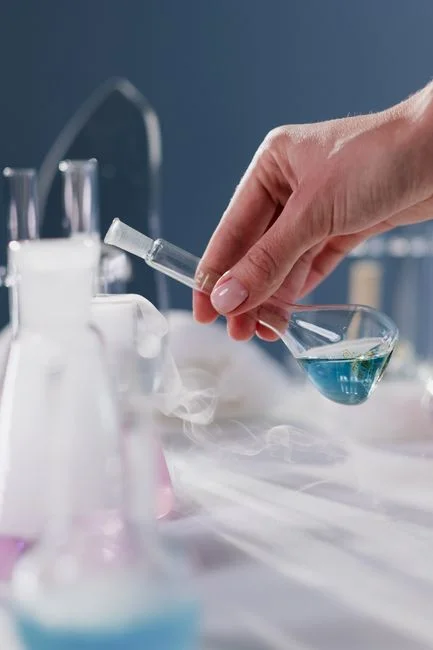
A usable Fenton treatment train has eight linked functions, and each function needs a defined scope in the supplier quotation.
- Equalization and characterization: stabilize flow and composition, verify pH and provide representative samples.
- Applicable solids or oil pretreatment: remove material that would consume reagents or interfere with mixing.
- pH adjustment: establish the reaction condition identified by pilot testing.
- Ferrous-iron and hydrogen peroxide dosing: meter Fe²⁺ and H₂O₂ into the controlled reaction zone.
- Reaction and mixing: maintain the validated residence time, reagent distribution and reactor environment.
- Post-oxidation iron precipitation: adjust the treated water to the tested precipitation condition.
- Clarification and polishing: separate iron hydroxide sludge and residual solids.
- Sludge handling: dewater and route the iron-rich solids to an identified destination.
The chemical skid is the control point, not the treatment train itself. A PLC-controlled chemical dosing system can reproduce a validated sequence of pH adjusters, ferrous iron sulfate, peroxide and other chemicals. It cannot compensate for an incorrect dose or replace reactor mixing, clarification and sludge dewatering.
Conventional Fenton relies on ferrous iron sulfate and hydrogen peroxide. The photo-Fenton process adds UV irradiation to the iron–peroxide reaction. The electro-Fenton process uses an electrochemical cell to support iron-mediated oxidation, while O₃–Fenton introduces ozone into the treatment concept. These alternatives change reagent generation, equipment needs, energy exposure and evidence requirements; they are not interchangeable specifications.
Post-oxidation clarification must account for the iron mass introduced during oxidation. The HydropureWater 2026 commercial guide cites a microwave-assisted Fenton study that neutralized wastewater to pH 8–8.5 to precipitate iron hydroxide flocs before filtration. That condition belongs to that specific study and must not be generalized. A high-efficiency sedimentation tank can be evaluated for solids separation, but the selected clarification method and iron-sludge consistency still require effluent-specific testing.
Downstream dewatering is a separate procurement scope. The iron-sludge dewatering filter press should be evaluated against the sludge properties generated by the selected Fenton conditions rather than assumed from generic filter-press data. See also how to select a DAF system for FOG and TSS.
Compare Conventional, Photo-Fenton and Electro-Fenton Routes
No Fenton route can be selected from laboratory removal percentages alone; the route must match the purchased objective, wastewater matrix, energy demand and iron-solids burden.
| Route | Oxidant or energy approach | Principal advantage | Principal risk or burden | Most defensible evaluation |
|---|---|---|---|---|
| Conventional Fenton | Ferrous iron catalyzes hydrogen peroxide decomposition. | Straightforward reaction chemistry with no irradiation or electrochemical cell. | Chemical demand, pH control, residual peroxide and iron sludge must be managed. | Actual-effluent matrix with chemical consumption and post-oxidation solids separation measured. |
| Photo-Fenton | UV is added to the iron–peroxide reaction. | Can increase hydroxyl-radical generation and improve color and COD removal in selected systems. | Adds reactor, lamp, maintenance and energy considerations. | Compare against conventional Fenton using the same effluent and separated oxidation and coagulation effects. |
| Electro-Fenton | An electrochemical cell is used within iron-mediated oxidation. | Can improve treatment without relying only on externally added peroxide. | Electrode behavior, reactor geometry, matrix effects, fouling and durability determine system performance. | Assess the complete reactor and matrix, not the electrode material alone. |
| O₃–Fenton | Ozone is combined with Fenton chemistry. | Adds an established ozone-based oxidation stage. | Adds ozone-generation, mass-transfer and control requirements. | Validate on the sector wastewater and include downstream by-product and solids effects. |
In a 2013 UASB-coupled study, photo-Fenton treatment with 30 minutes of UV irradiation produced color removal above 90% and COD removal above 80% for domestic, industrial and combined wastewater samples. The same study reported that photo-Fenton improved color removal by up to 34% and COD reduction by up to 40% compared with Fenton; these are study-specific results, not transferable guarantees (Journal of the Taiwan Institute of Chemical Engineers, 2013).
A 2024 Scientific Reports study compared Fenton and electro-Fenton in a 100 ml mixed-wastewater laboratory test. Maximum COD removal was 78.43% for Fenton and 84.3% for electro-Fenton at pH 3, Fe²⁺ 1 mg/L and H₂O₂ 0.3 g/L, as summarized in the HydropureWater 2026 guide. A 2016 study in 化工环保 addressed advanced treatment of color-coated plate production wastewater using O₃–Fenton oxidation with high-gravity technology. Its sector relevance does not establish a universal performance claim.
The RSC Advances review dated 24 August 2026 characterizes EAOP performance as a system property shaped by material, matrix and reactor implementation—not merely an electrode property. Bench testing on actual effluent is therefore the necessary comparison step. For a broader high-COD application, see the Fenton oxidation guide for high-COD wastewater.
Turn Pilot Results into a Procurement Specification
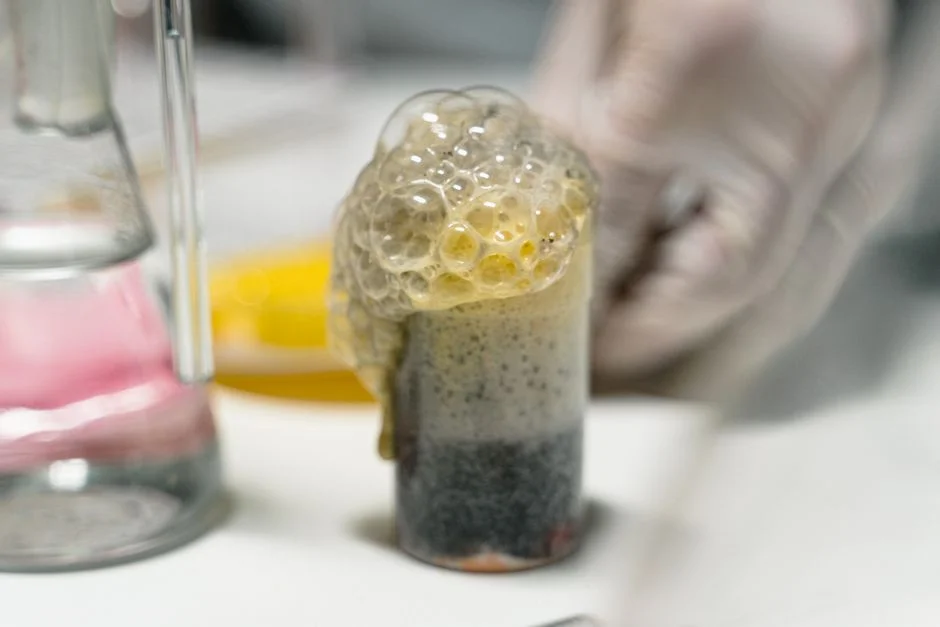
A defensible request for proposal converts the treatment objective into testable equipment, control, operating-cost and acceptance requirements.
Require a wastewater-specific bench or pilot campaign covering pH, Fe²⁺ dose, H₂O₂ dose, reaction time, mixing and solids separation. Every dosage must remain attached to its source and test scope. The supplier should report replicate performance, variability and the analytical method used for color.
If the objective is color reduction, specify the color endpoint and method. If it is detoxification, require toxicity or respirometry evidence. If it is biodegradability improvement, request COD or TOC, BOD₅/COD and biological response data. If it is mineralization, request TOC conversion and, where relevant, transformation-product or carbon-balance evidence.
The equipment specification should define reactor material and the volume basis for that material, mixing arrangement, residence-time control, pH and chemical dosing, instrumentation, electrical requirements, access for maintenance and chemical-safety provisions. It should also state whether pretreatment, oxidation, clarification, polishing, biological treatment, sludge dewatering, controls and commissioning are included.
| Procurement item | Information or deliverable to request | Acceptance basis |
|---|---|---|
| Actual-effluent validation | Representative samples, matrix characterization and route comparison. | Documented analytical methods, raw data and applicable variability. |
| Reactor and controls | Volume basis, material, mixing, residence time, pH control, Fe²⁺ and H₂O₂ metering, instrumentation and safety provisions. | Functional test under stable representative flow and wastewater composition. |
| Complete scope | Named inclusions and exclusions for pretreatment, oxidation, clarification, polishing and sludge dewatering. | Equipment list, P&ID, control narrative and responsibility matrix. |
| Performance acceptance | Color, COD, TOC, biodegradability, toxicity or respirometry endpoints as applicable. | Contractual limit, sampling point, frequency, analytical method and handling of representative-feed variability. |
| Operating inputs | Reagent consumption, iron output, sludge yield, electricity and maintenance requirements. | Measured pilot values or clearly identified engineering estimates with basis. |
| Downstream performance | Iron carryover, clarification performance and biological or discharge outcome. | Site-specific criteria established from the permit and receiving process. |
Set acceptance testing around stable representative effluent rather than borrowing a percentage from another wastewater. Include reagent consumption, iron carryover, sludge generation and downstream performance, because those variables determine whether the oxidation stage is genuinely integrated. Do not contract a color-removal guarantee without stating whether coagulation and clarification are inside that guarantee.
Frequently Asked Questions
Can a Fenton oxidation system reliably remove color from high-strength industrial wastewater?
It can treat color-bearing wastewater, but reliability cannot be inferred from color alone. Pilot the actual effluent across pH, ferrous iron sulfate and hydrogen peroxide conditions, then verify the relevant color endpoint. If the objective is detoxification or biological compatibility, also require respirometry or toxicity data; the RSC Advances review dated 24 August 2026 warns that parent-compound disappearance can conceal incomplete mineralization and toxic intermediates.
How much does a Fenton oxidation system for high color wastewater cost?
The supplied research does not support a universal price range. Request a quotation that separates the reactor and controls from operating inputs such as acid, ferrous iron sulfate, hydrogen peroxide, UV or electricity, and downstream clarification and iron-sludge dewatering. Also request reagent-consumption and sludge-yield assumptions from pilot data so operating cost can be compared with the complete treatment scope.
How should a supplier size the reactor and verify performance?
Color and COD alone cannot size the reactor. Require actual-wastewater characterization, a defined treatment objective and validated chemical demand, then base the volume and residence time on the selected route’s pilot results. During acceptance, test color and the relevant COD, TOC, biodegradability or toxicity endpoint at agreed sampling points under stable representative flow.
What should a buyer check when selecting a Fenton equipment supplier?
Require actual-effluent test data, a complete process scope, iron-sludge provisions, the control philosophy and measurable acceptance criteria. A generic color-removal percentage is insufficient. Confirm whether the quotation includes pretreatment, oxidation, clarification, polishing, sludge dewatering, controls and commissioning, and identify responsibility for gaps between those units.
What compliance risk remains after Fenton treatment?
Check final effluent against the applicable site-specific permit, including color, COD, toxicity and any regulated constituent. The supplied sources do not establish a universal color or COD discharge limit. Also verify downstream iron carryover and sludge classification, because oxidation performance alone does not demonstrate permit compliance or a safe residual-solids route.