Start With the Wastewater, Not the Equipment Label
Semiconductor factories in Eau Claire should choose DAF for wastewater containing significant fats, oils and grease, colloids, or floatable solids that require rapid separation; they should choose a lamella clarifier when the objective is gravity-based settling of heavier solids. Both require wastewater-specific characterization: DAF uses 30–50 micron microbubbles and generally benefits from coagulation and flocculation, while lamella clarifiers use inclined plates and sludge recirculation. A DAF or clarifier followed by UF may provide better protection for reuse and RO systems than either separator alone.
Begin by separating process rinse and wash water, semiconductor reclaim wastewater, floor and trench drains, scrubber or cooling-related streams, and combined plant flows. A blended plant total can conceal a small stream with variable, high solids loading, so request time-series data that capture production and cleaning cycles rather than relying on one composite sample.
| Information to obtain | Why it changes equipment selection |
|---|---|
| Minimum, average, and peak flow | Defines hydraulic capacity and treatment-train configuration. |
| TSS, FOG, particle-size distribution, and settleability | Indicates whether solids are predominantly floatable, conditioned, or settleable. |
| Temperature, pH, conductivity, and actual chemical constituents | Establishes conditioning needs, material compatibility, and treatment constraints. |
| Separation target and downstream process | Defines the required effluent quality for discharge, reuse, UF, or RO. |
The ESWP 2025 conference archive provides useful current technical context, not evidence of performance at an Eau Claire facility. IWC 25-75 addresses semiconductor reclaim wastewater treatment plant operational optimization, while IWC 25-76 addresses brine minimization for battery manufacturing. The broader semiconductor wastewater DAF and clarifier comparison begins with separation objectives and wastewater behavior, because flow rate and industry name alone cannot support equipment selection.
How DAF and Clarifiers Separate Different Solids
DAF separates conditioned solids by attaching microbubbles to them, floating them to the surface, and removing the resulting float with a skimmer; heavier solids fall into a bottom collection zone. Clearwater Industries specifies 30–50 micron microbubbles and states that chemical coagulation and flocculation increase particle size and contact with the bubbles, improving capture and sludge concentration (Clearwater Industries, 2026).
Conventional clarification relies on gravity settling. A lamella clarifier adds inclined plates, reducing the effective settling distance and making the separator more compact. This mechanism generally favors heavier, settleable solids. DAF generally favors floatable, oily, or conditioned low-density solids, although neither mechanism should be assigned solely from a wastewater label.
For a lamella option, the lamella clarifier for heavy settleable solids is described by HydropureWater as having a stated surface-loading range of 20–40 m/h and an integrated arrangement of flocculation, sludge recirculation, and inclined plates. Those values describe the stated equipment configuration; final sizing still requires project-specific wastewater characterization and settling behavior.
| Mechanism | Target solids | Conditioning and operation | Main separation result |
|---|---|---|---|
| DAF | Floatable, oily, colloidal, or mixed solids that can be conditioned into flocs | Chemical coagulation and flocculation are generally important; compressed air and recycle are required | Surface float plus bottom collection of heavier material |
| Lamella clarification | Predominantly heavy solids with stable settling characteristics | Flocculation and sludge recirculation can support performance | Settled sludge and clarified overflow |
Actual capture depends on particle condition, density, size distribution, chemical dose, and hydraulic conditions. Jar testing is therefore needed to determine whether conditioning makes mixed solids floatable, whether they settle reliably, or whether both mechanisms are required in sequence.
Head-to-Head Decision Matrix
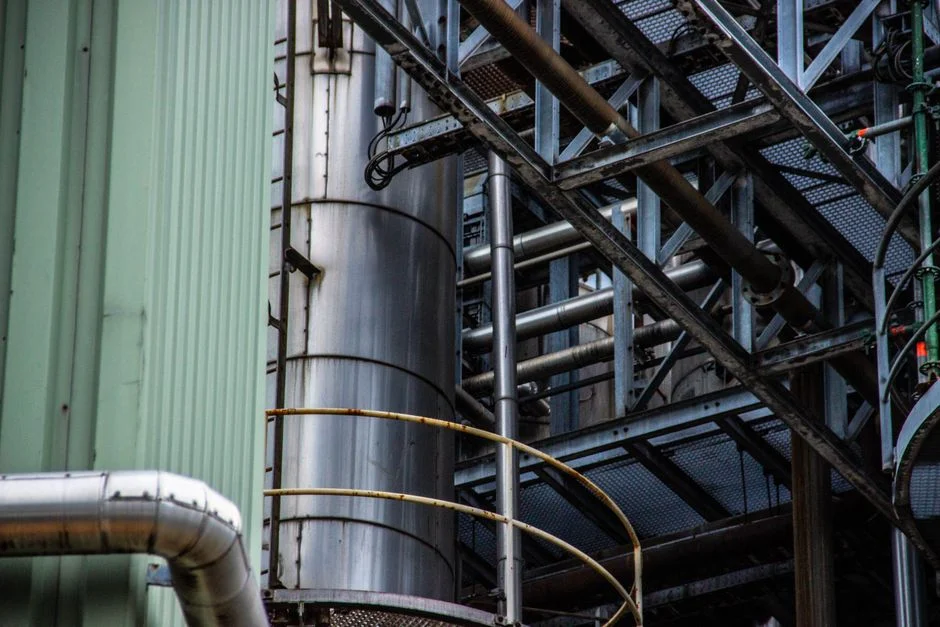
DAF is the stronger candidate when the stream contains oily, floatable, colloidal, or mixed solids that can be conditioned into flocs; clarification is the stronger candidate when solids are predominantly heavy and settleable with stable characteristics. A hybrid should be considered when the stream contains both floatable and heavy material, or when either separator leaves solids or colloids that could compromise downstream membranes.
| Decision factor | DAF | Lamella clarification |
|---|---|---|
| Primary mechanism | Microbubble attachment and flotation | Gravity settling through inclined plates |
| Best initial fit | Oily, floatable, colloidal, or conditioned mixed solids | Heavy, settleable solids |
| Chemical-conditioning dependence | Generally central to particle enlargement and capture | May be required where settling speed is inadequate |
| Footprint | Depends on flotation area and equipment configuration | Inclined plates shorten settling distance and support compact layouts |
| Sludge behavior | Float requires skimming; heavier solids collect at the bottom | Sludge is withdrawn from the bottom and may be recirculated |
| Downstream polishing | Consider UF when residual solids or colloids remain | Consider UF when clarified water still needs membrane protection |
Material selection is part of the process decision. Clearwater Industries states that its standard DAF construction is 304SS, with 316SS, polypropylene, and other materials available by request (Clearwater Industries, 2026). That does not establish that any one alloy is adequate for every semiconductor wastewater; the supplier must review actual water chemistry, cleaning chemicals, temperature, and cleaning practices.
Do not compare equipment on purchase price alone. Request a life-cycle comparison covering chemical consumption, compressed-air demand, sludge handling, operator attention, energy, maintenance, and downstream membrane protection. The industrial dissolved air flotation system and its automatic chemical dosing system should be evaluated as parts of the operating process, not as stand-alone capacity purchases.
Build the Treatment Train Around Reuse and RO Protection
The selected separator should be placed inside a treatment train that begins with collection and segregation, followed by equalization, chemical conditioning where needed, DAF or clarification, sludge withdrawal, optional polishing, and the intended discharge or reuse destination. The key design question is what residual solids, colloids, oil content, or precipitation tendency must be controlled before the next unit.
Place UF after DAF or clarification when suspended solids or colloids could compromise a downstream membrane. HydropureWater lists 0.03 micron PVDF UF membranes, capacity from 2,000–40,000 L/h, automatic backwash, and air scour for RO pretreatment. These specifications support early discussion of the required UF pretreatment for semiconductor reuse, but the actual flow, fouling load, and operating configuration require project-specific data.
The ESWP 2025 technical agenda connects pretreatment directly to membrane performance. IWC 25-17 covers lime/soda-ash softening coupled with cross-flow UF for RO pretreatment, IWC 25-68 addresses dynamic RO, and IWC 25-18 covers UF membranes designed for reduced pretreatment (ESWP, 2025). These papers are relevant planning references, not proof that one configuration will fit a specific facility.
HydropureWater specifies its industrial RO system for recovery rates up to 95%. That figure describes the stated RO equipment capability, not an achievable recovery for every semiconductor stream. Pre-treatment, scaling risk, feed chemistry, and operating conditions must be evaluated before selecting the reverse osmosis water purification system or changing separator technology.
Size and Validate With a Pilot Before Purchasing
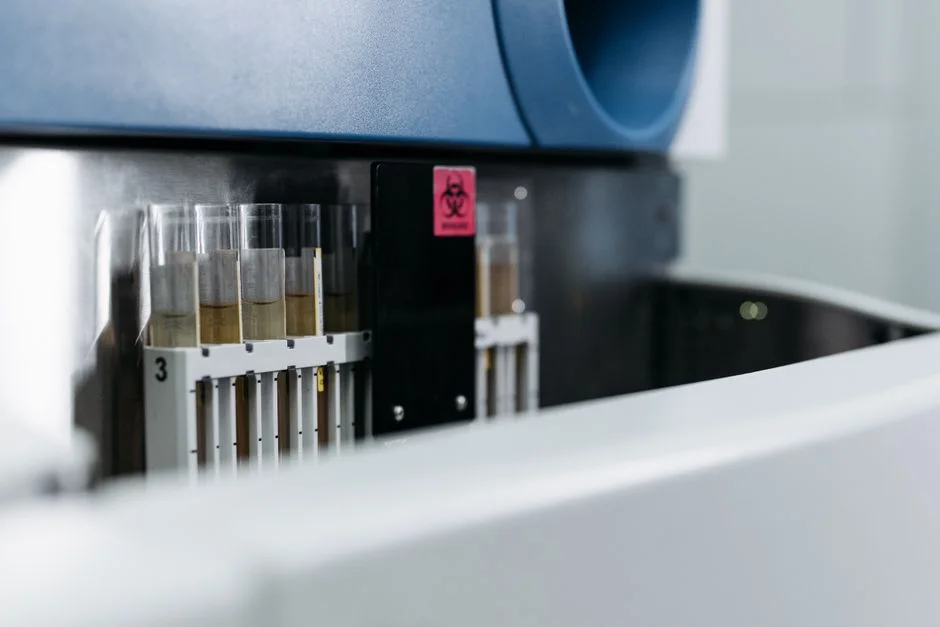
A defensible sizing worksheet starts with design flow, peak factor, solids inventory, removal objective, allowable hydraulic loading, chemical demand, air requirement, sludge handling, available footprint, and utility constraints. These are project inputs, not assumptions to be filled from a general industry range. HydropureWater’s DAF catalog lists 4–300 m³/h across 13 models; that is an example of available standard configurations, not a universal capacity range for semiconductor wastewater.
| Work item | Required output before procurement |
|---|---|
| Wastewater characterization | Flow series, TSS, FOG, particle-size distribution, settleability, temperature, pH, conductivity, and constituent chemistry |
| Jar testing | Coagulant and flocculant behavior, capture results, float or sludge characteristics, and response to composition changes |
| Pilot validation | Hydraulic response, solids capture, chemical consumption, sludge handling, controls, and downstream compatibility |
| Commercial design | Design flow, solids loading, treatment objective, utilities, materials, footprint, installation requirements, and acceptance criteria |
Use the DAF selection checklist for FOG and TSS to structure jar tests around representative wastewater rather than synthetic samples alone. Clearwater Industries describes a Compact DAF configuration with integrated conditioning, sensors, instruments, and a control panel; one skid handles flows of 66 GPM or less, while larger flows use a modular two-skid arrangement (Clearwater Industries, 2026).
For temporary capacity or bypass, WesTech states that mobile DAF units can typically be delivered and brought online within a single day, depending on site readiness and utility availability (WesTech, 2026). Treat that as a deployment condition, not an automatic project schedule.
Define acceptance testing around mass balance, removal performance, float and sludge handling, chemical consumption, controls, maintainability, and downstream compatibility. The equipment should be accepted against the characterized wastewater and agreed operating envelope, not a generic contaminant-removal claim.
Procurement Checklist for Eau Claire Factories
A supplier must state the design basis, treated-water characteristics, flow range, selected materials, pressure-drop and utility requirements, controls, instrumentation, skid dimensions, installation requirements, and warranty scope. These items belong in the technical specification and quotation, not in a sales narrative.
Require an explanation of how the equipment handles peak flows, chemical-feed limits, cleaning cycles, upset conditions, and changes in wastewater that could impair flotation or settling. The industrial wastewater pretreatment guide provides a useful framework for treating the separator, controls, conditioning, and sludge route as one process system.
Confirm electrical service, compressed-air supply, drainage, access, installation requirements, and service responsibilities before treating a mobile or packaged DAF as faster than a permanent installation. WesTech identifies a level, stable surface, power, piping connections, and utilities as deployment dependencies (WesTech, 2026).
Ask for complete performance criteria tied to representative wastewater, including controls response, float or sludge withdrawal, chemical consumption, and downstream compatibility. Evaluate the sludge route and disposal method alongside the separator, since DAF generates surface float while heavier particles collect at the bottom.
Frequently Asked Questions
Is DAF or a lamella clarifier cheaper for semiconductor wastewater in Eau Claire?
There is no defensible purchase-price comparison without a characterized stream and supplier quotation. Compare life-cycle cost for the same treatment objective, including chemicals, compressed air, sludge handling, energy, labor, maintenance, and downstream membrane impacts. Request the design basis, utility consumption, chemical demand, sludge route, warranty, and priced options for each proposed separator.
How should a DAF or clarifier be sized for a semiconductor wastewater stream?
Document average and peak flow, solids loading, FOG, particle-size distribution, settleability or floatability, treatment target, and downstream constraints. Then use those inputs to develop the hydraulic and solids-loading basis and confirm it through jar testing and pilot work. Do not select a model from nominal catalog flow alone.
What should buyers check when selecting a DAF or clarifier supplier?
Require the proposed design basis, treated-water characteristics, material schedule, controls, utilities, skid dimensions, acceptance tests, service scope, and evidence from comparable wastewater. Also ask how the supplier will manage chemical feeds, cleaning cycles, upset conditions, sludge withdrawal, and changes in wastewater composition.
What compliance risk should an Eau Claire factory consider before choosing a treatment train?
The treatment train must reflect the facility’s permit, sewer or discharge requirements, and downstream reuse criteria. Specific local limits were not supplied and should not be assumed; request the current applicable requirements and compare them with the proposed treated-water characteristics. Separator selection alone does not demonstrate compliance.