Is a Belt Filter Press the Right Fit for Biodiesel Wastewater?
A belt filter press can dewater biodiesel wastewater sludge, but only after oil and grease control and polymer conditioning. HydropureWater’s 2026 field data reports 22–28% cake solids and 95–98% solids capture, with CPAM demand commonly 3–8 kg/t DS. A BFP can process feed at approximately 1.5% DS without pre-thickening; DAF or lamella clarification can raise feed to 3–5% DS and roughly halve polymer consumption per cubic metre. Compared with a decanter centrifuge, a BFP generally has lower capital cost and gentler solids handling, while a centrifuge can achieve 28–35% cake solids. Final selection should follow site testing because feedstock variation can shift the optimal polymer dose by 40%.
Biodiesel wastewater sludge is a conditioning-sensitive, non-Newtonian slurry containing suspended solids, glycerol, residual methanol, and emulsified fats, oils, and grease (HydropureWater, 2026). The press does not remove dissolved contaminants or break stable emulsions; it separates conditioned solids from liquid. Source control, FOG management, and reproducible polymer preparation are therefore prerequisites.
HydropureWater’s 2026 article gives the following typical wash-water ranges, not universal plant acceptance limits:
| Parameter | Typical wash-water range | Procurement significance |
|---|---|---|
| COD | 30,000–80,000 mg/L | Characterizes organic load; not a press-sizing value by itself. |
| BOD₅ | 15,000–40,000 mg/L | Indicates biodegradable organic content. |
| Oil and grease | 2,000–10,000 mg/L | Supports an FOG-control decision before conditioning. |
| Suspended solids | 5,000–15,000 mg/L | Requires measured DS for equipment sizing. |
| pH | 2–4 | Requires corrosion review and compatible materials. |
Two sludge streams commonly converge: acid wash at pH 2–4 and caustic wash at pH 9–12. HydropureWater (2026) states that the blended stream typically contains 4–8% total solids before polymer conditioning. If measured feed enters the press below approximately 1.5% DS, plan for a thickening evaluation; if emulsified FOG remains, evaluate a DAF system for biodiesel FOG pretreatment rather than relying on the press to correct it.
The procurement verdict is conditional: a BFP is viable when the plant can control FOG, condition sludge consistently, and manage the resulting cake. It is not a substitute for emulsion breaking, equalization, or source control. Obtain current influent and blended-sludge data before treating any typical range as a design basis.
How the Biodiesel Sludge Dewatering Train Works
The complete train has six controlled stages, because conditioning errors cannot be corrected reliably downstream of the feed well. The flow should be:
- Equalization and source control: balance flow, composition, pH, and temperature; collect representative samples.
- FOG or emulsion control: remove free oil and destabilize emulsified FOG where necessary.
- Solids thickening: increase DS before the press when direct feed is too dilute or polymer demand is excessive.
- Polymer make-down and maturation: prepare CPAM at the specified charge density and molecular weight, then allow the floc to form.
- Belt dewatering: drain and compress the conditioned sludge progressively.
- Cake and filtrate handling: route solids to disposal or recovery and manage filtrate through the plant water balance.
HydropureWater’s 2026 article identifies three pressure zones: gravity drainage, low-pressure wedge, and high-pressure dewatering. In the wedge zone, pressure ramps to roughly 3–5 kN/m linear belt load. The gradual ramp matters because sudden compression can rupture polymer-formed floc and impair solids capture. A closed-loop chemical dosing system is therefore part of the process design, not a convenience accessory.
| Process stage | Required control | Buyer’s acceptance evidence |
|---|---|---|
| FOG control | Emulsion-breaking and oil removal | Measured feed oil content before the press |
| Thickening | Feed DS and hydraulic loading | Representative solids balance |
| Polymer preparation | Charge density, molecular weight, make-down quality | Dose-response and maturation trial |
| BFP dewatering | Progressive pressure, belt tracking and tension | Continuous run with mass balance |
| Filtrate handling | Recirculation limits and equalization impact | Filtrate-solids and water-balance data |
HydropureWater (2026) recommends CPAM with 30–60% charge density and 8–12 MDa molecular weight, followed by 10–15 minutes of floc maturation before the feed well. Its 2026 field data states that automatic dosing can hold consumption within ±5% of the setpoint, compared with ±15–20% for manual systems. If solids concentration is being increased before dewatering, evaluate a lamella clarifier for sludge thickening alongside polymer optimization rather than treating added chemical as the only lever.
Choose the Right Pretreatment for the Press
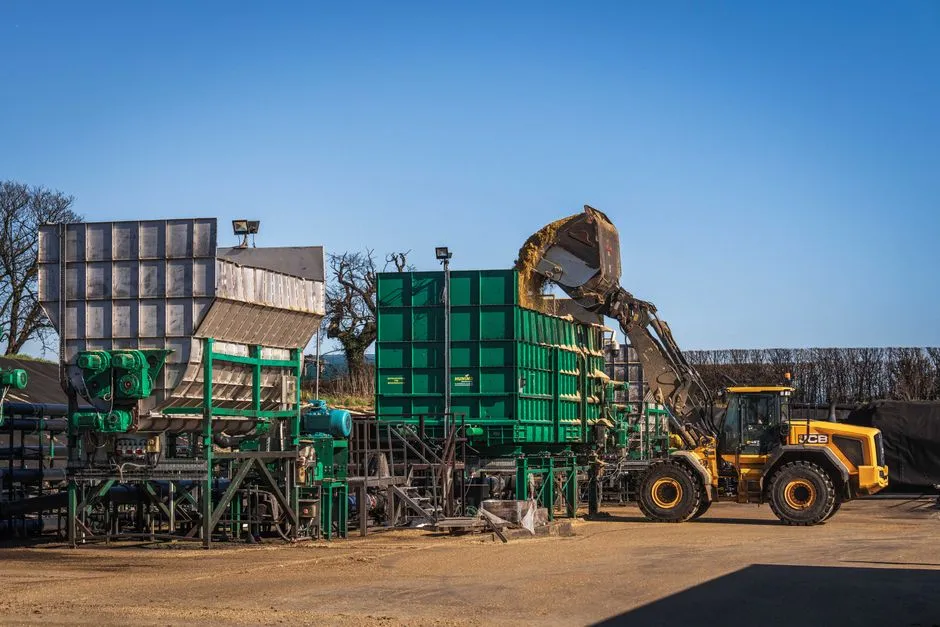
A BFP can handle approximately 1.5% DS without pre-thickening, but below that level cake dryness declines and polymer dose rises sharply, according to HydropureWater’s 2026 field data. Direct feed is defensible only if pilot results demonstrate acceptable dryness, capture, drainage rate, and polymer consumption across representative operating conditions.
The feed-solids decision is straightforward:
- At or above about 1.5% DS: pilot the conditioned sludge directly. Require the supplier to demonstrate sustained hydraulic capacity and acceptable filtrate quality.
- Below about 1.5% DS: evaluate thickening before purchase; the cited source does not establish performance below that limit.
- At approximately 3–5% DS after clarification: DAF or lamella pre-thickening can roughly halve polymer consumption per cubic metre of throughput, based on HydropureWater field data, 2026.
- With stable emulsified FOG: include FOG removal and emulsion stability in pilot work. Higher COD alone does not prove that the sludge is suitable for direct pressing.
HydropureWater’s DAF system covers 4–300 m³/h and is designed for suspended-solids and FOG removal, making it a candidate when emulsified oil is a confirmed pretreatment constraint. Its DAF system for biodiesel FOG pretreatment should be evaluated against measured oil characteristics, flotation performance, and downstream solids handling.
A lamella clarifier is the alternative for space-efficient thickening. HydropureWater’s catalog states 20–40 m/h surface-loading rates and up to 30% lower chemical consumption; these are catalog claims, not project guarantees. The lamella clarifier for sludge thickening should therefore be sized from measured solids loading and checked against the press feed target.
The optimum train depends on feed DS, oil content, emulsion stability, polymer response, hydraulic peak, and cake destination. Do not choose pretreatment from COD alone. The sequence is: verify FOG → establish required press-feed DS → pilot conditioning → compare cake routes → size the selected train.
Compare Belt Press, Centrifuge, and Screw Press Options
HydropureWater’s 2026 comparison identifies the belt press as the lower-capital, floc-tolerant option for lower-throughput biodiesel applications, while the decanter centrifuge produces drier cake and handles sustained high-solids loading. The screw press is constrained by both capacity and raw-sludge performance.
| Decision factor | Belt filter press | Decanter centrifuge | Screw press |
|---|---|---|---|
| Reported cake solids | 22–28% | 28–35% | 20–24% |
| Capital cost | Lower; centrifuge is reported as roughly 2–3× the BFP cost at equivalent hydraulic capacity | Higher | Not quantified in the supplied research |
| Feed-solids position | Reported option when feed does not exceed 5% DS | More compelling above 5% DS with high-solids loading | Raw biodiesel sludge performance is constrained |
| Hydraulic capacity | Application-specific; request a proposal | Application-specific; request a proposal | Roughly 1–5 m³/h |
| Floc handling | Gentle progressive pressure | High instantaneous separating force may be less forgiving of poorly conditioned floc | Not characterized in the supplied research |
| Raw sludge pretreatment | FOG control and conditioning still required | FOG control and conditioning still required | Difficulty handling raw biodiesel sludge without thermal pre-treatment |
All performance and cost entries above are from HydropureWater, 2026. They are comparative source data, not universal guarantees.
The source’s decision rule is specific: the BFP is the reported lower-cost choice for plants below 20,000 m³/yr; a centrifuge becomes more compelling above 25,000 m³/yr or when feeds exceed 5% DS and high-solids loading is required. That rule should be tested against the actual liquid flow, dry-solids load, feedstock variability, staffing, and disposal route.
Do not choose solely by cake dryness. A centrifuge may produce a drier cake, but its separating force can penalize unstable floc. The BFP is generally more forgiving when conditioning is repeatable. Conversely, the screw press’s stated limitation of roughly 1–5 m³/h and its difficulty with raw biodiesel sludge make it a weak candidate for this service without thermal pre-treatment.
Where the project also requires batch dewatering elsewhere, a plate and frame filter press can serve a different duty rather than being treated as a direct substitute for continuous BFP capacity.
Size the System from Feed Solids and Throughput
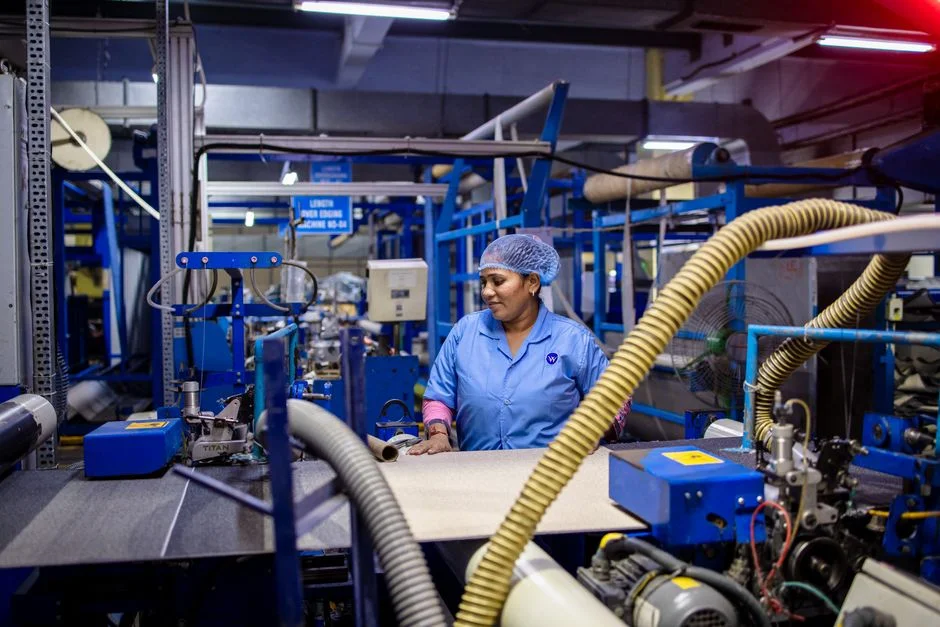
Size the BFP from measured liquid flow to the press and a separate dry-solids load check; average wastewater flow alone is not a defensible basis for procurement. Before requesting a proposal, record flow, feed DS, required cake solids, expected solids capture, FOG, pH, temperature, and polymer response.
HydropureWater’s 2026 field data calls for a 2–4 week pilot using 200–500 L of plant sludge because soybean, rapeseed, used cooking oil, and tallow feeds can shift the optimum polymer dose by 40%. The pilot should run continuously enough to expose feed-distribution, drainage, tracking, wash, and fouling behavior rather than merely selecting a best laboratory jar test.
| Sizing input | Method | Evidence required in the proposal |
|---|---|---|
| Liquid flow | Measure flow actually delivered to the press | Feed and filtrate capacity, including operating reserve |
| Dry solids | Use measured feed DS and throughput | Belt width, solids loading basis, and expected cake mass |
| Cake target | Set from disposal and transport requirements | Target cake solids and solids capture |
| Polymer system | Size for the demonstrated dose range | Make-down capacity, controls, and mixing arrangement |
| Materials | Review sulfate, chloride, pH, temperature, and variability | Recommended wetted metallurgy |
The supplied 2026 reference point is a 2.0 m, 316L stainless BFP rated for 25 m³/h, priced at US$115,000–165,000 equipment-only, plus 12–20% for export freight, civil works, and commissioning (HydropureWater, 2026). Require the quotation to break out equipment, polymer preparation, wash-water boosting, controls, freight, installation, civil work, commissioning, and spares.
The proposal must also identify belt width, feed and filtrate capacities, drive power, polymer make-down size, wash-water demand, controls philosophy, and materials of construction. Include 316L stainless wetted surfaces in preliminary evaluation because HydropureWater’s 2026 guide identifies pitting risk from sulfate and chloride exposure. The final metallurgy should follow a project-specific review, not an assumption that one grade fits every plant.
The automatic chemical dosing system should be sized against the pilot-confirmed dose range. An undersized make-down system can create dose fluctuations and undermine otherwise valid press performance.
Calculate Operating Cost from Polymer, Cake, and Filtrate
Operating cost should be calculated per tonne of dry solids handled, while cake value or disposal cost is calculated per tonne of cake. Mixing those bases produces misleading comparisons. HydropureWater’s 2026 field-data components provide the starting worksheet:
| Cost component | Reported consumption | Reported unit rate |
|---|---|---|
| CPAM | 3–8 kg/t DS | US$4.50–7.20/kg |
| Belt wear and replacement | Cost shown per kg DS handled | US$0.02–0.05 |
| Wash water | 0.5–1.5 m³/t DS | US$1.50–3.00/m³ |
| Power | 8–18 kWh/t DS | US$0.10–0.14/kWh |
| Labor | 0.15–0.35 hr/t DS | US$25–35/hr |
The first worksheet formula is annual DS handled × kilograms of polymer per tonne DS × polymer price. Add energy, wash water, labor, and belt replacement using the same annual DS basis. Build a separate cake-route calculation using expected annual cake mass and the destination’s net charge or credit.
Cake destination changes the result. HydropureWater’s 2026 data lists biogas revenue of US$20–60/tonne of cake, boiler co-firing credits of US$5–15/tonne, and landfill gate fees of –US$40 to –US$90/tonne. These are source-reported values, not guaranteed project receipts. Validate digester capacity, tipping acceptance, transport cost, moisture basis, and regulatory acceptance before assigning revenue.
HydropureWater (2026) also reports that 70–85% of belt-press filtrate may return to upstream equalization, reducing fresh-water demand by 15–25%. Confirm filtrate recycling feasibility from filtrate solids, temperature, contaminant concentrations, and equalization impact; the percentage cannot be transferred directly to another plant.
Polymer price remains a material sensitivity: a ±20% change in polymer price moves the supplied worked example’s annual OPEX by approximately ±US$10,000 (HydropureWater field data, 2026). Request current quotations for polymer, disposal, transport, water, power, and labor, and model each as an input rather than embedding a single price in the equipment specification.
Validate Performance Before Signing the Purchase Order
A purchase order should convert pilot results into measurable operating and acceptance criteria. Visual cake appearance is not an adequate acceptance test because it does not establish mass balance, filtrate quality, or sustained hydraulic capacity.
| Acceptance area | Required evidence | PO treatment |
|---|---|---|
| Dewatering | Measured cake solids and solids capture | Define test method, sampling points, and acceptance values |
| Filtrate | Suspended-solids data and recycle assessment | Define discharge or recycle limits |
| Conditioning | Dose, consumption, and maturation response across representative feedstocks | Require demonstrated dose range and dosing controls |
| Capacity | Continuous hydraulic and dry-solids run | State feed basis, duration, and sampling method |
| Runability | Tracking, tensioning, washing, feed distribution, and spray performance | Include functional commissioning tests |
| Materials | Measured sulfate, chloride, pH, temperature, and variability | Require approved wetted-material recommendation |
Run conditioning trials across representative feedstock conditions because HydropureWater’s 2026 field data reports that soybean, rapeseed, used cooking oil, and tallow feeds can change the optimum polymer dose by 40%. The final proposal must include automatic belt tracking, automatic tensioning, wash-water coverage, sludge-feed distribution, and spray controls. HydropureWater’s 2026 procurement list identifies omitted belt tracking as a common specification error.
Verify that polymer make-down covers the selected dose range and that the wash-water booster skid supports continuous duty. Require a wetted-material recommendation based on measured sulfate, chloride, pH, temperature, and feed variability. HydropureWater’s 2026 guide reports that 304 stainless can pit within 18–24 months in continuous biodiesel wash service; this is a documented design concern, not proof that 316L will eliminate every corrosion mechanism.
Before signature, require spare-belt availability, identifiable wear parts, controls documentation, operator training, commissioning acceptance tests, and local service support. A reference to a plate and frame filter press may support comparison testing for another plant stream, but it does not substitute for a BFP-specific performance guarantee.
Frequently Asked Questions
What is the 2026 capital cost of a belt filter press for biodiesel wastewater?
HydropureWater’s 2026 estimate for a specified 2.0 m, 316L unit at 25 m³/h is US$115,000–165,000 equipment-only, plus 12–20% for export freight, civil works, and commissioning. These are 2026 estimates, not universal quotations. Request a site-specific quotation separating the press, polymer make-down, wash-water skid, controls, freight, civil work, installation, commissioning, and spares.
Can a belt filter press handle raw biodiesel sludge?
HydropureWater’s 2026 field data indicates that a BFP can handle feed down to approximately 1.5% DS without pre-thickening. Below that level, the cited source reports sharply increasing polymer demand and lower cake dryness. Pilot actual plant sludge across representative feedstocks before purchase, because optimal polymer dose can shift by 40%.
How much CPAM does a belt press need for biodiesel sludge?
HydropureWater’s 2026 field data estimates 4–5 kg CPAM/t DS at 50,000 mg/L COD and 22–26% cake dryness, within a broader reported range of 3–8 kg/t DS. Require the supplier to demonstrate the proposed CPAM charge density, molecular weight, make-down arrangement, and maturation time against your measured feed.
Should I choose a belt filter press or a decanter centrifuge?
Choose based on the stated distinction: HydropureWater’s 2026 data reports 22–28% cake solids for the BFP versus 28–35% for a centrifuge, with centrifuge capital cost roughly 2–3 times higher at equivalent hydraulic capacity. The source favors the BFP below 20,000 m³/yr and identifies the centrifuge as more compelling above 25,000 m³/yr or above 5% DS feed. Confirm those boundaries with pilot and mass-balance data.
How do I select a belt press supplier?
Require documentary evidence rather than a general performance statement: representative pilot data, project-specific 316L material review, automatic polymer controls, belt tracking, defined performance guarantees, commissioning tests, spare-belt availability, controls documentation, operator training, and local service support. Ask the supplier to state the guarantee method, acceptance samples, test duration, remedy for failure, and exclusions.