Start with the legal endpoint, not a treatment catalogue
Wastewater from SK On’s expanded Hungarian battery plant should be handled as a permit-controlled, source-segregated system—not as one combined effluent. Separate cathode and anode process water, cleaning wastewater, sanitary sewage, cooling and boiler blowdown, and stormwater; characterize each stream for flow, pH, COD/TOC, NMP, fluoride, metals, TSS, oil and grease, and toxicity where required. A defensible screening sequence is equalization, DAF for suspended solids and emulsified contaminants, biological treatment, and dissolved-ion or reuse polishing only where testing and the permit justify it. Final design must follow the current Hungarian IPPC permit, EIA status, water authorization, discharge route and expansion water balance. Battery manufacturing entered Hungary’s EIA regime in 2024, while battery plants above 15 tons of cells fall within the IED framework being transposed by July 1, 2026.
The legal endpoint should be fixed before equipment is compared. The buyer needs the current IPPC permit, water authorization, EIA documentation and authority comments, discharge agreement, measured flow and pollutant data, stream-segregation plan, and intended reuse schedule. These documents determine whether the expansion can discharge to sewer, surface water, or an internal reuse system, and what monitoring and polishing the selected route requires. The filter press selection for battery manufacturing sludge should be evaluated only after the sludge destination and expected solids characteristics are confirmed.
Greenpeace Hungary reported on 1 March 2023, updated 15 May 2025, that Hungary amended its EIA decree in summer 2024 to cover production of all battery types and components, including cathodes, anodes, electrolyte and separator film, together with waste pretreatment and recycling. It also reported that battery manufacturing with production capacity above 15 tons of battery cells falls within the IED scope, with national transposition required by 1 July 2026 and adoption of the relevant BAT reference document potentially taking up to four years. Until that BAT document is available, site-specific permit interpretation remains central.
| Decision input | Why it must be confirmed | Effect on treatment design |
|---|---|---|
| IPPC permit and EIA status | Defines the authorized installation and applicable conditions | Sets discharge parameters, monitoring and possible treatment obligations |
| Water authorization and sewer agreement | Defines the receiving point and applicable discharge route | Determines final polishing, discharge controls and redundancy |
| Measured stream data | Establishes flow, peaks and contaminant loads | Provides the sizing basis for equalization, DAF, biological treatment and polishing |
| Reuse schedule | Identifies water-quality requirements and return points | May add disinfection, dissolved-ion removal and storage requirements |
Do not import site-specific figures from other Hungarian projects into the SK On Iváncsa case. Corporate reuse figures, Debrecen estimates and other manufacturers’ operating data are benchmarks or contextual examples—not facts about SK On’s wastewater flow, permit limits or expansion capacity.
Map the wastewater streams generated by each production phase
Battery plant wastewater segregation works only when each stream has a measured source-to-discharge balance. The balance should cover process make-up, wastewater generation, segregation, treatment, reuse, concentrates, sludge and final discharge. A single blended concentration cannot size every unit: the cathode and anode coating streams, cleaning wastewater and sanitary sewage have different contaminant patterns and likely different reuse or discharge routes. The battery-plant expansion wastewater design methodology provides a useful structure for documenting that separation.
Cathode and anode coating wastewater requires separate sampling for NMP-related organic load, fluoride from LiPF₆ hydrolysis, metals including nickel, manganese and cobalt, PVDF binder fines, carbon black, TSS and oil. Cleaning wastewater should be characterized across cleaning cycles because batch discharges can create short peaks in pH, COD, fluoride and metals. Sanitary sewage should be managed separately, while cooling-tower and boiler blowdown should be assessed for salinity, treatment chemicals and the quality required for any reuse application.
Stormwater requires a catchment-based assessment. Runoff contacting production or storage areas can carry site-specific contaminants, so first-flush behavior, rainfall response, oil and the ability to isolate clean rainwater should be evaluated. The objective is not to label every rainfall stream as contaminated, but to determine where segregation and controls are required.
| Stream | Primary assessment | Design implication |
|---|---|---|
| Cathode and anode coating wastewater | NMP, COD/TOC, fluoride, metals, TSS, PVDF fines, carbon black and oil | Batch equalization and source-specific organic, solids and fluoride treatment |
| Cleaning wastewater | Flow peaks, pH, COD/TOC, fluoride, metals and toxicity where required | Separate holding or equalization to avoid process shocks |
| Sanitary sewage | Organic load, nutrients, solids and applicable sewer requirements | Appropriate biological treatment and documented discharge route |
| Cooling and boiler blowdown | Salinity, treatment chemicals and reuse quality | Separate recovery or treatment decision; do not blend by default |
| Stormwater and potential clean rainwater | Catchment, first flush, oil and site-specific contaminants | Segregation, first-flush control and discharge authorization |
At least one representative production and cleaning campaign should capture shift-based flows and short solvent or electrolyte peaks. Annual averages can conceal the events that determine equalization volume and pretreatment capacity. Sampling records should identify the production stage, cleaning cycle, time, flow condition and whether the sample came from a batch discharge or continuous stream. Without those records, the equipment supplier is being asked to guess both the contaminant load and the operating envelope.
Build the treatment train around measured contaminant loads
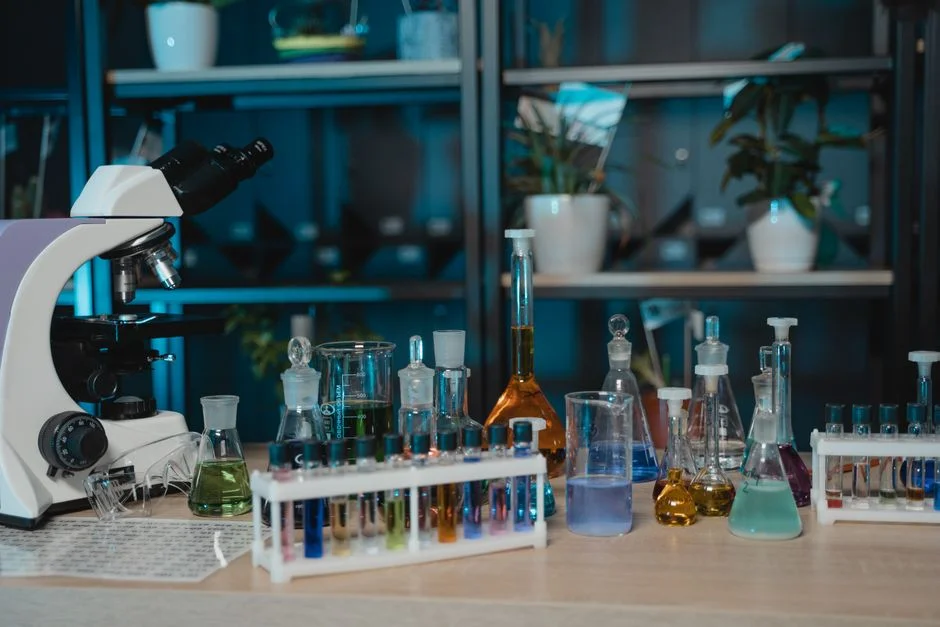
No single device removes suspended solids, emulsified solvents, dissolved organics, fluoride, metals, salts and microbiological contaminants at once. The treatment train should therefore be built in stages and tested against the required endpoint. Equalization is the first control point for hydraulic and batch-load variation, with working volume, mixing, aeration and controlled bypass provisions based on measured campaigns. A DAF unit can then remove TSS, oil, FOG, emulsified NMP and colloidal PVDF or carbon-black fines. For screening, an industrial DAF system for solids, oil and emulsified contaminants can be compared against the calculated peak flow and contaminant load.
HydropureWater’s 2026 analysis states that its DAF range is 4–300 m³/h across 13 models; this is a catalogue range, not a SK On sizing conclusion. The selected unit must follow peak flow, hydraulic loading, recycle, sludge removal and materials compatibility. Where biological treatment and compact membrane solids separation support reuse, an integrated MBR membrane bioreactor can be evaluated. HydropureWater’s 2026 analysis gives an integrated MBR range of 10–2,000 m³/day using submerged PVDF membranes, subject to the measured wastewater characteristics and reuse target.
RO, ion exchange and advanced oxidation should be considered only after the preceding treatment stages have demonstrated what remains. Dissolved fluoride, metals, hardness, total dissolved solids, residual organics and required water quality determine whether polishing is justified. HydropureWater states that industrial RO recovery can reach 95%, subject to feed chemistry and design; that is not a project guarantee. Concentrate and regeneration streams must have a confirmed destination.
| Process step | Primary role | Information required before selection |
|---|---|---|
| Equalization | Absorbs hydraulic and batch-load variation | Flow profile, working volume, mixing, aeration and bypass controls |
| DAF and FOG control | Removes solids, oil, emulsified NMP and colloidal fines | Peak flow, TSS, oil, emulsion stability, sludge volume and compatibility |
| MBR | Biological treatment with membrane solids separation | COD/TOC, biodegradability, nutrients, membrane area, flux, cleaning and reuse quality |
| RO or ion exchange | Removes dissolved ions or residual contaminants where justified | Feed chemistry, target quality, recovery, pretreatment and concentrate route |
| Disinfection and reuse controls | Controls microbiological risk and protects reuse applications | Reuse destination, water-quality specification, sampling and residual-disinfection requirements |
Solvent recovery should be priced as a separate option because its duty depends on actual NMP concentration, recovery target and operating economics. The tender should also cover chemical dosing, odor control, covered sludge handling, chemical-resistant materials, redundancy, backup power, bypass controls and a confirmed disposal route for concentrates and contaminated sludge. The Hungarian battery-plant wastewater permit due diligence should be used to identify missing permit and site data, not to transfer another plant’s design basis.
Use one mass balance to compare reuse and discharge options
Sewer discharge, surface-water discharge and internal reuse must be compared through the same water and pollutant mass balance. For each expansion phase, calculate treatment yield, concentrate volume, sludge generation, residual discharge, storage needs and freshwater demand. A higher reuse percentage can reduce freshwater demand and final discharge while increasing membrane duty, chemical consumption, energy use and concentrate handling. The decision should therefore compare the whole balance, not equipment prices or a single reuse percentage.
HydropureWater’s 2026 Samsung SDI analysis reports a 42% water-reuse rate, equal to 6.24 million tons in 2024, and a 58% target by 2030. These are corporate benchmarks, not SK On commitments or Iváncsa permit values. They show why a reuse strategy should be tied to production water demand and measured effluent quality. The same analysis reports a 60,000 m³/day possible water-consumption estimate for the Debrecen industrial park, as described by Greenpeace Hungary on 1 March 2023, updated 15 May 2025. That figure illustrates Hungary’s water-sensitivity context; it is not an SK On flow.
| Endpoint | What the mass balance must show | Decision test |
|---|---|---|
| Sewer discharge | Discharge volume, pollutant load, sewer acceptance conditions and residuals | Does the permitted discharge and sewer agreement accept the measured effluent? |
| Surface-water discharge | Receiving-water constraints, discharge quality, dilution assumptions and residual concentrates | Does the water authorization support this route and the proposed treatment performance? |
| Internal reuse | Freshwater saving, reuse yield, concentrate, sludge, energy and chemical demand | Is the resulting water quality reliable enough for the intended process? |
The reuse target should be selected only after the expansion water balance identifies where water is actually needed and where treatment variability can affect production. If reuse water returns to cooling, coating or another process, each destination should have a water-quality specification and a fallback arrangement. An RO water purification route may be relevant for dissolved-ion control, but it should be justified by the residual water chemistry and the selected endpoint—not adopted as a generic polishing label.
Turn permit conditions into monitoring and performance guarantees
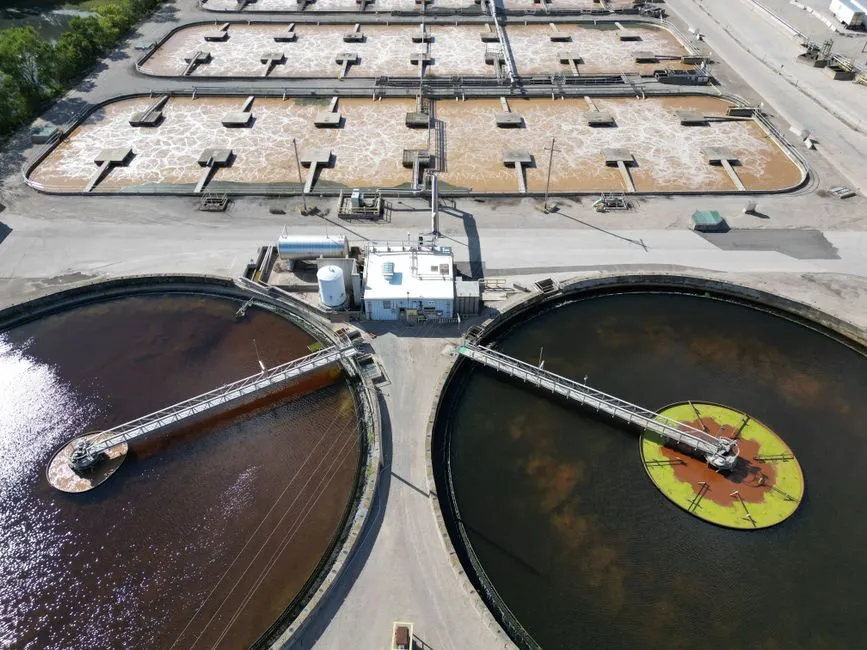
Performance guarantees should be tied to defined sampling points and the authorized discharge point, not to a generic “final effluent” value. The monitoring architecture should include untreated process wastewater, post-DAF effluent, post-MBR effluent, post-polishing water, final discharge and reuse water. This separation makes it possible to assign responsibility for a performance shortfall and to identify whether the cause is pretreatment, biological treatment, polishing, storage or reuse operation.
Flow, pH, COD, TOC, NMP, fluoride, nickel, manganese, cobalt, TSS, oil and grease should be addressed, with toxicity included where the authorization or sewer authority requires it. Each parameter needs a sampling method, frequency, calibration record, approval threshold and escalation process. Continuous instruments should be supplemented by representative laboratory sampling, and the permit limit or sewer condition must be written into the acceptance schedule.
Supplier documentation should include chemical-compatibility evidence, a membrane-cleaning strategy, bypass controls, cybersecurity, critical spares, operator training and staged performance reviews. Pilot work should be required where available data cannot establish full-scale performance across the battery-manufacturing chemical and operating envelope. An automatic chemical dosing system can be specified only with defined duty, chemical inventory, storage requirements, interlocks and monitoring responsibilities.
The procurement package should distinguish what the equipment supplier guarantees from what remains the plant owner’s responsibility. The supplier can guarantee equipment availability, specified process performance at agreed feed conditions and documentation completeness. The owner remains responsible for source control, accurate sampling, chemical supply, sludge and concentrate routes, permit compliance and operating the plant within the agreed envelope.
Set procurement scope and cost boundaries before ordering equipment
The tender should separate civil works, process equipment, membranes, electrical and controls, chemical storage, odor control, sludge handling, monitoring, commissioning, training and long-term spares. It should also identify fixed costs, unit-rate items and exclusions. Permit applications, residual disposal, membrane replacement, chemical consumption and concentrate management should not be left as undefined assumptions that later return to the owner as change orders.
HydropureWater’s 2026 analysis gives an indicative €15 million–€45 million capital-cost range and annual operating costs of 10%–15% of initial investment for an industrial wastewater treatment plant serving high-salinity and organic-solvent loads. These are early-planning benchmarks, not SK On estimates or quotations. A battery-plant tender should request a site-specific price covering the confirmed flow, pollutant envelope, treatment train, solvent-recovery decision, civil works, controls, sludge handling, concentrate disposal and commissioning. The DAF-versus-clarifier tender comparison can support technical pricing, but it cannot supply a SK On budget.
| Cost boundary | Items to identify | Buyer control |
|---|---|---|
| Capital scope | Civil works, equipment, membranes, electrical, controls, storage, odor control, sludge handling and monitoring | Require a clear equipment list and exclusions |
| Operating scope | Energy, chemicals, membrane cleaning, labor, maintenance and analytical support | Request consumption assumptions and unit rates |
| Residual management | Sludge, concentrates, spent media and their confirmed destinations | Do not accept an undefined disposal route |
| Conditional guarantees | Effluent values, flow, feed envelope, recovery, redundancy and permit interface | Make guarantees conditional on measured inputs and authorized conditions |
Do not freeze the treatment design until the IPPC permit, water authorization, EIA status, sewer or surface-water conditions and authority interpretation of the expansion are available. A defensible bid is one that links equipment capacity and guarantees to confirmed site data, not one that merely presents a treatment catalogue. If those inputs remain open, the bid should state assumptions, exclusions, hold points and the tests needed to close each gap.
Frequently Asked Questions
What wastewater treatment capacity will SK On’s expanded Hungarian plant need?
No SK On Iváncsa wastewater flow or expansion capacity is confirmed in the supplied research. The required capacity must be calculated from measured source flows, including production peaks, cleaning campaigns, sanitary sewage, cooling and boiler blowdown, stormwater and the intended reuse schedule. Ask bidders to submit their flow derivation and identify which values remain provisional.
Should the expansion use one combined wastewater plant or separate treatment trains?
Separate treatment trains or at least separate equalization and pretreatment should be evaluated. Cathode and anode coating wastewater, cleaning wastewater, sanitary sewage, cooling and boiler blowdown and stormwater have different contaminant profiles and compliance destinations. A combined stream can be acceptable only when the water balance, measured chemistry and authority conditions demonstrate that the duty and endpoint remain compatible.
How much does industrial wastewater treatment cost for a battery plant in Hungary?
Use HydropureWater’s 2026 indicative range of €15 million–€45 million in capital cost and 10%–15% of initial investment for annual operating cost only for early planning. These are not SK On estimates or quotations. Require a site-specific price with separate line items for civil works, treatment equipment, membranes, controls, chemical storage, sludge and concentrate management, solvent recovery if included, commissioning and long-term spares.
Which measurements should a wastewater-equipment supplier require before selecting DAF, MBR or RO?
Require representative flow profiles, pH, COD/TOC, NMP, fluoride, metals, TSS, oil and grease, toxicity where applicable, and the chemical and operating envelope for the expansion. DAF, MBR and RO should then be selected against calculated peak flow and measured contaminant loads, with pilot work where full-scale performance cannot be established from existing data.
What permits and BAT requirements must be checked before procurement in 2026?
Check the current IPPC permit, EIA status and authority comments, water authorization, sewer or surface-water agreement, discharge conditions, monitoring schedule and the competent authority’s interpretation of the expansion. Greenpeace Hungary, updated 15 May 2025, reported that IED transposition is required by 1 July 2026 and that the relevant BAT document may take up to four years to be adopted. Consequently, environmental counsel and the relevant Hungarian authorities should confirm the applicable requirements before equipment is ordered.