What treatment strategy fits a Delhi factory?
Delhi manufacturers generally treat high-COD trade waste through a staged train: source control and segregation, equalization, oil and solids removal, biological or advanced COD reduction, clarification or membrane filtration, and reuse or compliant disposal. The right train depends on wastewater composition, COD, toxicity, flow variability and reuse targets. Delhi’s filtered water supply is 4540 MLD against demand of 6540 MLD, while demand could reach 14,797 MLD by 2045 at the DJB norm, according to the Scientific Reports study A circular economy framework to mitigate water scarcity and river pollution in Delhi, India. Recovery is therefore relevant, but reuse cannot replace pretreatment or verified effluent quality.
Start the engineering decision with four inputs: wastewater flow, COD and its variability, pollutant composition, and the intended discharge or reuse route. Trade waste is not interchangeable with domestic sewage. Industrial streams may contain oils, dyes, surfactants, metals, salts or process inhibitors that alter biological and membrane performance.
A generic COD-removal percentage is not a design basis. The final configuration should follow site-specific analysis, production-cycle sampling and the applicable consent conditions for the factory. The high-COD trade-waste treatment guide provides a useful reference for comparing source control, pretreatment and biological or advanced treatment stages.
Delhi’s water-security context strengthens the business case for industrial water reuse, but it does not define a factory’s compliance limit or reuse quality. Reuse should be tied to the intended process function and confirmed by analysis of the treated stream.
Characterize the effluent before selecting equipment
Equipment selection should begin with a production-linked sampling plan, not a single laboratory result. Composite samples must cover normal production, batch dumps and cleaning cycles so that the design reflects the wastewater that the treatment train will actually receive.
Record flow, COD, BOD, pH, suspended solids, oil and grease, temperature and conductivity alongside any process chemicals that may be present. Test COD variability and identify dilution from cooling or wash water. Where toxicity, salinity, refractory organics or specific metals are suspected, include tests capable of establishing their effect on the selected biological or membrane process.
The MDPI study Electrocoagulation: A Promising Method to Treat and Reuse Mineral Processing Wastewater with High COD treated wastewater from a Pb/Zn sulfide mineral flotation plant with an initial COD of 424.29 mg/L. It identified anode material, current density, initial pH and additives as key operating controls. That is a technical reference point, not a Delhi factory design guarantee. Electrical conductivity, ionic composition and pH can alter coagulation and electrocoagulation performance, so bench or pilot testing should precede full-scale procurement where those conditions are uncertain.
For procurement, require the supplier to define the guarantee basis: influent COD range, hydraulic load, operating hours and receiving-sewer or reuse criteria. A guarantee that omits these boundaries cannot be evaluated consistently.
| Design input | What the supplier should receive | Why it affects selection |
|---|---|---|
| Hydraulic profile | Flow measurements across production, washing and shutdown periods | Determines equalization, hydraulic capacity and peak-load treatment |
| COD and BOD | Composite results with sampling frequency and production-cycle coverage | Defines organic loading and biological treatment demand |
| Oil, grease and solids | Concentrations and nature of floating or settleable material | Identifies the need for source separation and DAF or clarification |
| pH, conductivity and temperature | Range, not only average values | Controls chemical dosing, coagulation and biological performance |
| Toxicity and process chemicals | Identification of dyes, surfactants, metals, salts and inhibitory compounds | Determines biological suitability and the need for advanced treatment |
| Final route | Applicable consent conditions and intended reuse application | Sets the treated-water and sludge-handling outcomes |
The DAF versus clarifier comparison illustrates why contaminant form and operating objective must be separated before equipment is selected.
Build a treatment train from source control to final polish
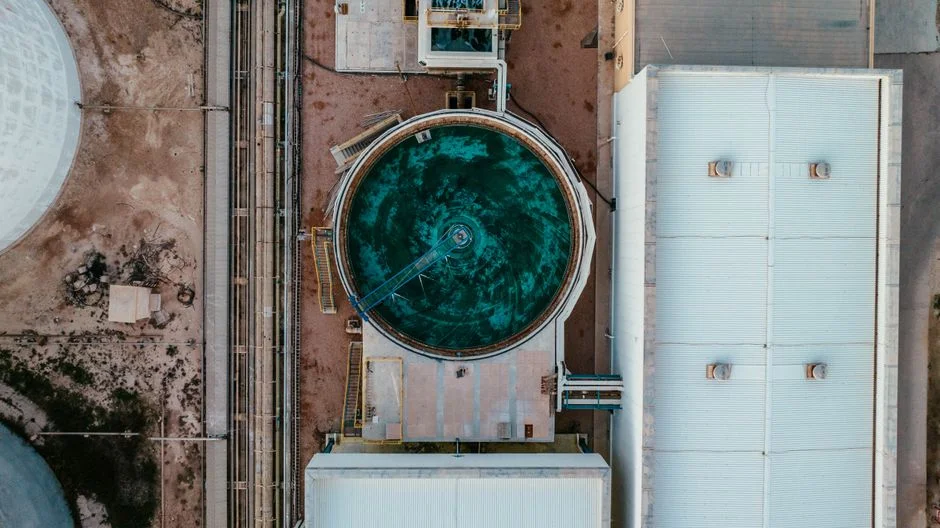
A reliable train removes the largest treatment barriers in sequence: reduce and segregate the load at source, stabilize the flow, remove material that would interfere with later stages, reduce biodegradable COD, separate biomass or remaining solids, and polish the water to its final use.
- Segregate and minimize. Keep high-strength process and cleaning streams separate from dilute cooling or wash flows. Recover raw materials where practical and balance the wastewater profile before combining incompatible streams.
- Equalize and protect. Equalization, screening and chemical dosing should stabilize flow, suspended material and pH before biological treatment or membrane systems. Equalization does not reduce COD; it prevents short-duration loads from determining the entire plant capacity.
- Remove oil, solids and colloids. Position DAF ahead of sensitive biological or membrane stages where suspended solids, oil and grease, FOG or colloidal matter is present. Its primary role is solids recovery and protection of downstream equipment, not independent elimination of all dissolved COD.
- Reduce soluble COD. Use biological treatment where the wastewater is biodegradable and the process constituents will not inhibit it. Where refractory or toxic COD remains, evaluate advanced oxidation, electrocoagulation or another validated process against site data. The electronics assembly COD removal guide illustrates why industrial composition must guide the choice.
- Separate solids. Use MBR when biological treatment and membrane solids separation are required together. The MBR wastewater treatment system is specified for near-reuse-quality effluent, filtration below 1 μm and capacities from 10 to 2,000 m³/day.
- Polish for the intended use. Use UF where the required outcome is removal of bacteria, colloids and suspended solids without chemicals, including polishing or RO pretreatment. The referenced UF specification accepts up to 300 ppm turbidity and covers 2,000 to 40,000 L/h.
- Define reuse and disinfection last. Specify reuse quality, disinfection, monitoring and residual management only after the receiving or reuse requirements are established.
| Train stage | Primary function | Equipment or action | Downstream dependency |
|---|---|---|---|
| Source control | Reduce and separate the load | Stream segregation, material recovery, flow balancing | Prevents avoidable hydraulic and COD loading |
| Equalization and screening | Stabilize flow and remove gross solids | Equalization tank, screening, pH and chemical dosing | Protects biological and membrane systems |
| Physical pretreatment | Recover oil, FOG, colloids and solids | Industrial DAF system or suitable clarification | Reduces interference with downstream separation |
| COD reduction | Remove biodegradable COD or treat refractory compounds | Biological treatment, advanced oxidation or electrocoagulation | Determines the required polishing load |
| Solids separation | Separate biomass or remaining suspended solids | MBR, secondary clarification or validated filtration | Controls solids entering reuse or RO |
| Polishing and reuse | Meet the intended water-quality function | UF, RO where needed, disinfection and monitoring | Protects reuse equipment and receiving use |
Advanced oxidation should be assessed through the Fenton oxidation working-principle guide, while any zero-liquid-discharge concept should follow reliable pretreatment rather than substitute for it.
Compare the main COD and solids-removal options
DAF, MBR, UF and electrocoagulation solve different problems, so they should be selected by target contaminant and required outcome rather than compared as interchangeable COD-removal devices.
DAF is a physical pretreatment option for suspended solids, oil and grease, FOG and colloidal material. The referenced industrial DAF system covers 4–300 m³/h and is intended for industrial pretreatment. Its limitation is that it does not independently remove all dissolved COD.
MBR combines biological treatment with membrane separation and is appropriate when a compact process and controlled solids inventory are required. Its central limitation is biological sensitivity: unsuitable industrial constituents can inhibit treatment or damage the system. UF is principally a barrier for suspended solids, colloids and bacteria; it does not remove dissolved refractory COD and normally functions as polishing or membrane pretreatment.
Electrocoagulation may be considered for high-COD or mineral-processing streams after site testing. The MDPI study’s initial COD of 424.29 mg/L and its identified controls—anode material, current density, initial pH and additives—show why a supplier’s generic removal claim is not enough.
| Option | Target contaminant or outcome | Primary benefit | Principal limitation | Best fit and required pretreatment |
|---|---|---|---|---|
| DAF | Suspended solids, oil and grease, FOG, colloids | Recovers solids and protects downstream processes | Not a complete dissolved-COD solution | Industrial pretreatment where oil or solids are present; requires controlled pH and coagulant dosing where applicable |
| MBR | Biodegradable COD plus membrane solids separation | Combines biological treatment and solids control | Sensitive to inhibitory industrial constituents | Factories requiring biological conversion and compact solids separation; requires characterization and removal of interfering constituents |
| UF | Suspended solids, colloids and bacteria | Chemical-free filtration barrier | Does not remove dissolved refractory COD | Polishing or RO pretreatment; requires upstream solids and colloid control |
| Electrocoagulation | Selected high-COD or mineral-processing streams | Can couple coagulation and electrolysis | Performance depends on site chemistry and operating controls | Streams for which bench or pilot testing confirms viability; requires controlled pH, conductivity and anode selection |
MBR and UF are therefore not substitutes. The MBR versus conventional activated-sludge guide provides context for the biological decision, while the DAF or clarifier selection guide addresses solids-recovery functions.
Plan for reuse, sludge handling and operating reliability
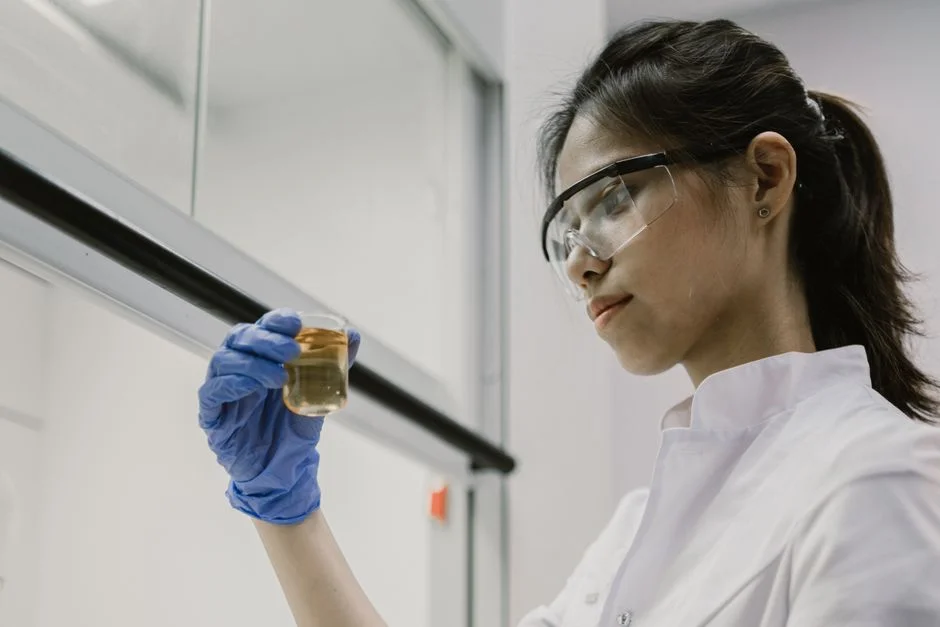
Reuse quality should be defined by process function. Equipment washing, cooling, landscaping and process feed have different contaminant controls and operating requirements; they should not be treated as interchangeable uses of one treated-water stream.
Consider RO only where dissolved salts or other contaminants must be removed. Adequate biological treatment, solids separation and colloid control must precede it to protect the membranes. This also explains why industrial pretreatment cannot be separated from the factory’s zero-liquid-discharge or industrial water reuse decision: residual salts and concentrated sludge remain part of the system boundary.
Include sludge dewatering in the design because physical pretreatment and biological treatment create a concentrated solids stream rather than eliminating it. The filter press selection for industrial sludge provides relevant guidance for equipment evaluation, while the MVR evaporator field guide addresses mechanical vapour recompression issues relevant to concentrated streams.
The Scientific Reports Delhi study treats wastewater reuse, non-revenue water reduction, rainwater harvesting and groundwater recharge as complementary interventions. It estimates that combined measures could raise total supply to about 14,928 MLD by 2045. This supports strategic reuse planning, but factory-level decisions still require process-specific water quality and applicable compliance review.
Monitor COD, flow, pH, key pollutants and reuse-water quality with enough frequency to detect drift before it affects biological treatment, membranes or the receiving system. Treat monitoring data as an operating input to the design, not an optional addition after commissioning.
Questions to ask before ordering an ETP
A credible quotation must state the wastewater and performance boundaries under which the supplier is willing to stand behind the equipment.
- What is the design influent COD range, flow profile, operating-hours basis, expected treated-water quality and guarantee condition?
- Has the supplier supplied pilot data or a validated bench study for the actual wastewater, especially where refractory COD, toxicity, salinity or variable chemistry is involved?
- Does the quotation include equalization, pretreatment, biological treatment, polishing, disinfection, sludge dewatering, controls, commissioning and operator training?
- What consumables, sludge handling, membrane replacement and maintenance access are required over the operating life?
- Which consent conditions apply, where will the treated water go, and does the proposed reuse destination support the specified quality?
NITI Aayog’s Urban Wastewater Scenario in India, published in 2022, reported that only 28% of India’s estimated 72,368 MLD urban wastewater was treated in 2020-21. Those municipal statistics do not establish industrial discharge limits, but they reinforce the need for properly planned and operated treatment. The India sewage-treatment expansion reference should be read in that context rather than treated as a factory compliance specification.
Compare lifecycle terms rather than purchase price alone. Ask what is excluded, which consumables affect operating cost, how performance is measured, who owns sludge, and what happens if the influent falls outside the guaranteed range. No generic equipment specification can replace the factory’s applicable consent or discharge requirements.
Frequently Asked Questions
How do manufacturers in Delhi, India treat trade waste and high-COD effluent in 2026?
They generally use source segregation and minimization, equalization, oil and solids removal, biological or advanced COD reduction, membrane or clarification, and final polishing. DAF may precede biological or membrane treatment where oil and solids are present; MBR combines biological treatment with membrane separation; UF provides solids and colloid control; and electrocoagulation or advanced oxidation requires validation for refractory or toxic COD. The final train must follow site analysis, reuse objectives and applicable consent conditions.
What determines the cost of an industrial effluent treatment plant for high-COD wastewater?
Cost depends on wastewater flow, COD range and variability, toxicity and composition, required treated-water quality, reuse route, operating hours and sludge handling. Buyers should request a written scope covering pretreatment, biological or advanced treatment, polishing, controls, dewatering, commissioning, consumables and maintenance. No defensible price can be stated without the site data and performance guarantees.
Should a Delhi factory choose DAF, MBR or UF?
Choose DAF when the immediate objective is recovery of oil, grease or solids and protection of downstream equipment. Choose MBR when biological COD reduction must be combined with membrane solids separation. Choose UF when the required result is filtration of suspended solids, colloids and bacteria without chemicals, often as polishing or RO pretreatment. These functions are frequently sequential rather than competing alternatives.
What information should a supplier provide before equipment sizing and quotation?
Request composite wastewater analysis covering flow, COD, BOD, pH, suspended solids, oil and grease, temperature, conductivity, toxicity and identified process chemicals. Ask for the design influent range, hydraulic load, operating hours, pilot or bench evidence, treated-water guarantee, receiving conditions, sludge route and full equipment scope. A local compliance review should also confirm the discharge or reuse pathway before the final specification is accepted.
How can a buyer reduce supplier-selection and compliance risk?
Use site testing to resolve uncertain chemistry, require guarantees with explicit influent and operating boundaries, review reference operating data, and compare maintenance and consumables rather than price alone. Confirm the treated-water destination and applicable consent conditions with the relevant authority. The chemical-plant sewer pretreatment reference illustrates the compliance interface, but site-specific requirements remain controlling.