
Choose from the wastewater profile, not hotel occupancy
The appropriate hotel and resort wastewater treatment in Singapore is a segregated, decentralized treatment train selected from measured peak and seasonal flows, wastewater composition, available space and the intended discharge or reuse route. Sanitary sewage usually suits biological treatment, while kitchen wastewater may require DAF pretreatment for fats, oil and grease. A buried A/O package plant handles 1–80 m³/h; MBR provides advanced solids separation for reuse-oriented applications at 10–2,000 m³/day. The final design must also address site conditions, sludge handling, controls, maintenance and acceptance testing.
Occupancy is an input to flow estimation, not a defensible plant capacity. The first task is to map sanitary sewage from guestrooms, public toilets and staff facilities separately from kitchen wastewater, laundry wastewater, pool backwash, and spa or mineral-water discharges. These streams differ in composition and timing; forcing them into one undifferentiated biological train can conceal overloaded pretreatment stages and unreliable reuse performance.
Ask operations for measured daily flow and peak-hour flow, or estimates with a stated basis. Record occupancy patterns, conference and event loaders, seasonal variation, kitchen discharge windows, laundry schedules and planned property expansion. The Singapore hotel wastewater system guide gives the same selection sequence: profile the streams, establish the peak basis, then select the treatment train.
| Hotel stream | Selection issue to resolve | Required operating information |
|---|---|---|
| Sanitary sewage | Suitability for biological treatment and downstream solids separation | Daily and peak-hour flow; occupancy and event patterns |
| Kitchen wastewater | Fats, oils and grease loading and short discharge peaks | Discharge duration, flow profile and grease characteristics |
| Laundry wastewater | Fibres, lint, detergent effects and discharge timing | Laundry schedule, batch flows and process chemistry |
| Pool backwash, spa or mineral water | Compatibility with ordinary domestic-sewage treatment | Water chemistry, source, volume and intended route |
Do not assume pool backwash, spa water or mineral-water discharges can pass through an ordinary domestic-sewage plant. The Sustainability study Sustainable Resort Infrastructure: Wastewater Utilization in Thermal Spa Complexes (2026) examined chemical precipitation of ammonium ions in mixed mineral and domestic wastewater and struvite production; that work shows why mineral chemistry requires specialist assessment rather than an occupancy-based assumption.
Define the effluent destination before selecting equipment. Sewer discharge, irrigation, toilet flushing, laundry and cooling reuse are not interchangeable: each changes the required treatment, monitoring and operating arrangements. The Journal of Environmental Management paper Environmental synergies in decentralized wastewater treatment at a hotel resort (2022) supports segregated decentralized flows and connects treatment design with water-resource management, including reuse.
Match each stream to its treatment duty
A/O contact oxidation is appropriate for sanitary sewage when the duty suits an integrated decentralized plant; the treatment sequence should then address solids separation and disinfection. It is not a substitute for checking hydraulic peaks, biological loading, solids handling and the final effluent route.
Kitchen wastewater needs a separate fats, oils and grease assessment. The supplied 2026 equipment guide cited by the Singapore hotel wastewater system guide gives a DAF range of 4–300 m³/h across 13 models with automatic skimming. That range is an equipment-selection boundary, not proof that any model handles a given kitchen. The supplier must reconcile the selected unit with flow, concentration, discharge duration and downstream hydraulic impact.
Laundry wastewater also deserves separate review because fibres, lint and detergents may affect biological treatment or reuse performance. The practical response may be targeted pretreatment, flow balancing or a separate assessment, depending on measured characteristics.
Introduce membrane solids separation where the reuse objective or footprint requirement justifies it. The supplied MBR wastewater treatment system range is 10–2,000 m³/day, with submerged PVDF membranes and filtration below 1 μm. These are catalog parameters from the supplied 2026 equipment guide, not project-specific guarantees.
Use UF only where a defined solids, colloid or bacteria-removal barrier is needed before sensitive treatment or reuse. The supplied 2026 guide gives a range of 2,000–40,000 L/h, 0.03 μm PVDF membranes, automatic backwash and air scour. It should be specified as a process barrier with a stated duty—not added simply because membrane equipment is available.
| Treatment duty | Applicable stream or decision | Supplied 2026 guide parameter |
|---|---|---|
| DAF pretreatment | Kitchen wastewater containing fats, oils and grease | 4–300 m³/h; 13 models; automatic skimming |
| A/O biological package | Suitable sanitary-sewage duty | 1–80 m³/h; biological treatment, sedimentation and disinfection |
| MBR | Advanced solids separation, compactness or reuse-oriented duty | 10–2,000 m³/day; submerged PVDF; filtration below 1 μm |
| UF | Specific solids, colloid or bacteria-removal barrier | 2,000–40,000 L/h; 0.03 μm PVDF; automatic backwash and air scour |
Compare buried A/O packages with MBR
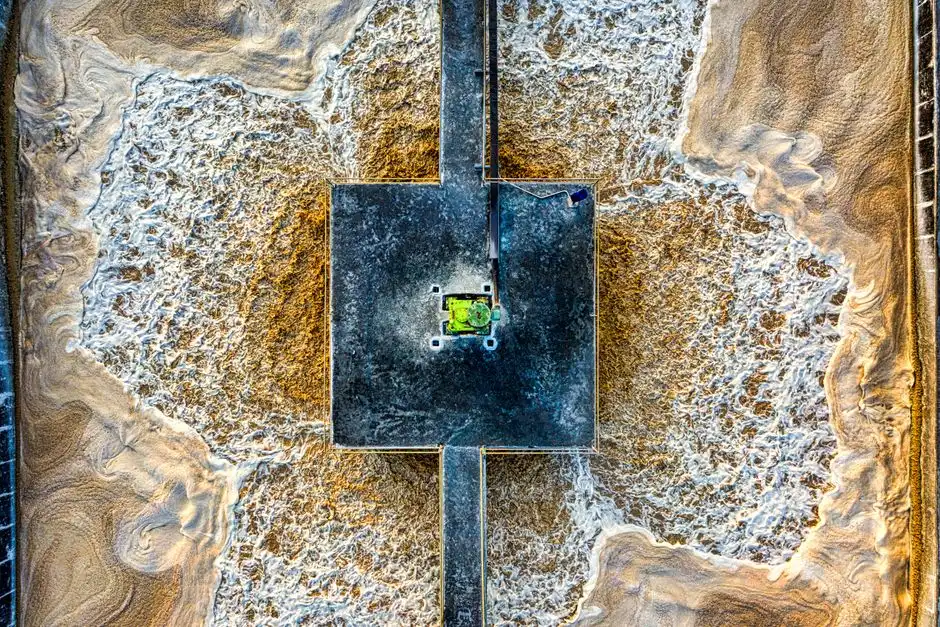
The WSZ underground integrated sewage treatment plant combines anoxic/aerobic contact oxidation, sedimentation and disinfection in one buried package, handles 1–80 m³/h and is designed for hotels and other decentralized applications, according to the supplied 2026 equipment guide.
A buried installation can preserve the area above grade, but “below-grade” does not mean “site-ready.” Every proposal must resolve excavation, structural loading, groundwater, access covers, pumps, controls, odour, lifting and sludge removal. A hotel operation also needs a maintenance route that does not require major disruption to guest or resort areas. The buried A/O package sewage treatment plant should therefore be assessed as a complete civil, mechanical and operating arrangement.
MBR combines activated-sludge treatment with submerged PVDF membrane filtration. Its supplied range is 10–2,000 m³/day, making it relevant where advanced separation or a compact installation is important. HydropureWater’s 2026 MBR catalogue states a 60% smaller footprint than conventional systems; that claim should be checked against the selected configuration, surrounding equipment, access clearances and site constraints rather than repeated as a universal project outcome.
| Evaluation item | Buried A/O package | MBR |
|---|---|---|
| Supplied 2026 equipment range | 1–80 m³/h | 10–2,000 m³/day |
| Core treatment | Anoxic/aerobic contact oxidation, sedimentation and disinfection | Activated sludge with submerged PVDF membrane filtration |
| Main site issue | Excavation, structural loading, groundwater, access and lifting | Membrane cleaning, replacement planning and aeration |
| Selection driver | Integrated decentralized treatment and below-grade installation | Advanced separation, compactness or reuse-oriented duty |
| Required verification | Hydraulic, biological, controls, civil and maintenance access | Hydraulic, biological, membrane, aeration, controls and maintenance access |
Neither option automatically satisfies the project. Compare hydraulic and biological loading, maintenance access, utility demand, membrane or aeration requirements, controls, expansion provisions and operator capability. If the sanitary duty fits an integrated package and the site accommodates it, the buried A/O arrangement is a practical starting point. If advanced separation, footprint or reuse quality is decisive, evaluate the submerged membrane bioreactor engineering guide alongside site-specific flow and effluent data.
Size for peaks, events and seasonal demand
Average daily flow is insufficient evidence of treatment capacity. Every bidder should reconcile the proposed design flow with peak-hour, event-driven and seasonal flows; otherwise, a short kitchen discharge or laundry surge can exceed the duty assumed from annual water use.
State the treatment train’s peak and seasonal operating basis in the tender documents. This should include conference occupancy, kitchen discharge windows, laundry schedules, seasonal occupancy and planned expansion. The design basis should identify whether these conditions occur simultaneously and how the plant responds. It should also distinguish hydraulic capacity from biological and solids-removal capacity.
Concentrated flows should be balanced or treated before entering the main biological process, or allocated to a separately sized pretreatment train. DAF can address a defined kitchen pretreatment duty, while equalisation may control short-term hydraulic peaks. Neither measure should be used without site-specific flow and composition data.
- Establish measured or reliably estimated daily flow.
- Derive peak-hour, event and seasonal profiles for each relevant stream.
- Identify coincident peaks and separate pretreatment duties.
- Check hydraulic loading, biological capacity, equalisation and duty-standby arrangements.
- Confirm that future demand can be added through the proposed modularity.
Treat published equipment ranges as selection boundaries, not final sizing values. The packaged MBR selection guide for hotels emphasizes the need to compare bidders against peak-hour and seasonal data rather than average daily flow. Actual capacity must be checked against verified site flows and the selected process configuration.
Resolve Singapore site, reuse and operating constraints
Site constraints must be resolved before the package configuration is frozen. Confirm footprint, excavation access, landscaping requirements, vehicle routes, equipment-lifting access and expansion space. For odour-sensitive or visually prominent areas, require the supplier to state whether the installation is covered, buried or odour-controlled, and how maintenance can occur without disrupting hotel operations.
Request the proposed flow diagram, hydraulic profile, control philosophy, alarm list, duty-standby arrangement, power requirement and maintenance-access plan. A buried installation still requires accessible pumps, controls and sludge-removal provisions. An MBR additionally requires membrane cleaning access, a replacement plan and confirmation of aeration requirements.
Define the legal discharge or reuse route and the proposed effluent objectives. Irrigation, laundry, toilet flushing, cooling reuse and sewer discharge impose different requirements and must not be treated as interchangeable. The hotel resort wastewater treatment options provides tropical-resort planning context, but Singapore-specific discharge and reuse requirements must be established for the property rather than inherited from another jurisdiction.
Define ownership before award. State whether the hotel or a service contractor will handle routine operation, laboratory sampling, compliance reporting, spare parts and emergency response. This division should appear in the supplier brief and service scope, together with responsibility for odour response, alarm handling and backup operation.
Sludge is part of the operating boundary. Require the proposal to identify who removes it, its destination, dewatering frequency and backup arrangements during equipment failure or high-load conditions. The decentralized wastewater treatment planning guidance illustrates why infrastructure and operating arrangements should be resolved as one chain; the technical proposal must therefore connect process selection with site access and owner responsibilities.
Use a two-stage supplier evaluation
Technical and compliance fit must be screened before lifecycle value, maintainability and commercial price are compared. Both stages need the same verified hotel-specific inputs; otherwise, bidders may solve different problems or fill missing data with incompatible assumptions.
Require each bidder to state the selected process, design flow, treatment objectives, unit dimensions, utilities, control sequence, sludge route, commissioning tests, maintenance scope and warranty. The bidder should also identify the intended effluent destination and proposed effluent objectives. A proposal without these items cannot be compared consistently.
Separate the commercial schedule into civil works, pumps, tanks, controls, pretreatment, disinfection, sludge handling, commissioning and training. List utility demands, replacement items, routine service frequency and exclusions. Low equipment price can otherwise conceal costs transferred to the hotel or incomplete treatment scope.
| Evaluation stage | Documents the bidder must provide | Decision purpose |
|---|---|---|
| Technical and compliance screen | Design flow, process, objectives, drawings, utilities, controls, sludge route, destination | Exclude processes that do not fit verified site requirements |
| Lifecycle and commercial review | Itemised scope, maintenance, replacement items, exclusions, warranty, training and service responsibility | Compare complete installed and operating commitments |
Define sludge removal, destination, dewatering frequency and backup arrangements before contract award. For MBR, also require membrane cleaning, replacement and aeration plans. A plate-and-frame filter press may form part of a proposed sludge-dewatering route, but its inclusion must follow the agreed sludge characteristics and handling plan rather than act as a default accessory.
Evaluate ownership explicitly. The same verified flow data, wastewater profile, reuse target and site constraints should appear in every compliant bid. This creates an auditable comparison rather than allowing technical omissions to be hidden by commercial terms.
Define commissioning and acceptance before award
Acceptance conditions must convert general equipment claims into measurable site-specific tests. The contract should define test flow conditions, effluent objectives, automatic-control response, alarm handling, sampling points and required documentation.
Require commissioning under agreed site-specific flow conditions rather than relying only on factory capacity claims. Reconcile every proposed capacity with the hotel’s measured peak and seasonal flows before accepting the proposal. Test controls, alarms, sampling and operating modes as an integrated installation.
Handover records should identify trained-personnel responsibilities, routine tasks, consumables, alarm response and maintenance schedules. The operating plan should also cover sludge withdrawal, membrane cleaning where applicable, spare-parts arrangements and emergency response.
Any proposal that omits the intended effluent destination, treatment objective or operating responsibility carries unresolved compliance or lifecycle risk. The acceptance package should therefore show the complete chain: streams entering the plant, pretreatment and balancing, biological treatment, solids separation, disinfection, final route, operating owner and maintenance access.
The 2026 Singapore hotel wastewater system guide provides the source context for this approach. Its process-specific conclusions remain subject to verification against current permits, influent testing and the final equipment proposal.
Frequently Asked Questions
Can hotel occupancy be used to size a resort sewage treatment plant?
No. Occupancy can support an initial flow estimate, but it does not establish peak-hour, event-driven or seasonal capacity. Require the bidder to reconcile the selected treatment train with measured daily flow, peak-hour flow, kitchen discharge periods, laundry schedules and future expansion.
Which system should be selected: a buried A/O package or an MBR?
Start with the wastewater profile, verified peak flow, reuse objective and site constraints. A buried A/O package is a practical starting option for a suitable sanitary-sewage duty; an MBR becomes more relevant where advanced separation, compactness or reuse-oriented treatment is decisive. The supplied 2026 ranges—1–80 m³/h for the WSZ package and 10–2,000 m³/day for MBR—are selection boundaries, not final project capacities.
How should bids be compared when one supplier quotes a lower equipment price?
Compare complete installed and lifecycle scope, not the package price alone. Request separate pricing for civil works, pumps, tanks, controls, pretreatment, disinfection, sludge handling, commissioning and training, together with utilities, replacement items, service frequency and exclusions. Screen technical fit first so the commercial comparison is made between complete proposals.
What should a buyer request before accepting a wastewater treatment supplier?
Request the process description, design-flow reconciliation, flow and hydraulic drawings, utility requirements, control and alarm list, sludge route, commissioning tests, maintenance plan, ownership matrix, warranty and site-specific acceptance objectives. Reject any bid that leaves the effluent destination, treatment objective or operating responsibility unresolved.