
Start with the hotel's wastewater streams, not the treatment brand
A Singapore hotel or resort in 2026 requires a decentralized treatment train sized for separate sewage, kitchen, and laundry flows, utilizing biological treatment, solids removal, and final disinfection. A buried A/O package plant serves as a practical default for compact, landscaping-sensitive sites, while an MBR system is preferable where high-quality reuse or a smaller footprint is required. Kitchen, laundry, and other high-strength streams may need DAF or another pretreatment stage. Final selection must follow measured flows, Singapore discharge requirements, reuse targets, and site constraints rather than occupancy alone.
Start by separating the wastewater streams that have different contaminant profiles and discharge schedules. Sanitary sewage normally includes guestrooms, public toilets, and staff facilities. Kitchen wastewater requires its own assessment for fats, oils, and grease, while laundry wastewater may carry fibres, lint, and detergents. Pool backwash water and spa or mineral-water discharges should not be assumed to fit ordinary domestic-sewage design conditions.
The Journal of Environmental Management paper, Environmental synergies in decentralized wastewater treatment at a hotel resort (2022), supports considering segregated wastewater flows in decentralized resort systems. Its relevance is process-specific: concentrated kitchen or laundry flows can be treated or balanced separately rather than forcing every discharge through one undifferentiated biological train. The paper also connects decentralized treatment with water-resource management, making reuse planning part of the treatment brief.
Build the design basis from measured or reliably estimated daily flow, peak-hour flow, and seasonal variation. Include occupancy patterns, conference or event loaders, kitchen discharge periods, laundry operating schedules, and any planned expansion. Request these documents from the hotel’s operations team:
- Water bills and verified discharge records.
- Kitchen equipment schedules, grease-trap records, and discharge times.
- Laundry output, linen volumes, and operating hours.
- Pumping records, drainage plans, and stormwater separation details.
- Existing discharge permits and environmental approvals.
- Proposed reuse points for toilet flushing, laundry, irrigation, or cooling.
The intended destination changes the treatment and monitoring scope. Sewer discharge, irrigation, toilet flushing, laundry, or cooling reuse each impose different objectives, and the supplier must state which route the proposed design supports. The approach to hotel wastewater system selection for a coastal property also applies to Singapore sites, though the applicable discharge route and regulatory requirements must be confirmed for the specific property.
Build a treatment train around flow, contaminants and reuse goals
A defensible treatment train separates incompatible duties before combining biological, solids-separation, and disinfection stages. The sequence should be developed from the hotel’s wastewater profiles, hydraulic peaks, and intended effluent use rather than from a generic package specification.
- Control solids at the inlet. Use coarse screening or solids control where guest debris, hair, lint, or other fibrous material could enter pumps and downstream equipment.
- Pre-treat concentrated kitchen wastewater. Route grease-rich flows through appropriate FOG and oil-and-grease removal before they reach biological treatment.
- Apply biological treatment to the sanitary stream. The WSZ buried A/O package treatment plant combines anoxic and aerobic contact oxidation, sedimentation, and disinfection in one below-grade package.
- Select membrane treatment by required effluent quality. Use an MBR wastewater treatment system where advanced solids separation, compact installation, or reuse-oriented treatment justifies the additional process complexity.
- Add disinfection and reuse-specific polishing. The required degree of solids, colloid, and pathogen removal depends on the final destination and reuse application.
| Process option | Specified scope | Procurement relevance |
|---|---|---|
| DAF pretreatment | 4–300 m³/h across 13 models, with automatic skimming, according to the supplied 2026 equipment guide | Consider for hotel kitchen wastewater containing FOG, oil and grease |
| WSZ A/O package | 1–80 m³/h; anoxic/aerobic contact oxidation, sedimentation and disinfection, according to the supplied 2026 equipment guide | Integrated biological treatment for sanitary wastewater |
| MBR system | 10–2,000 m³/day; submerged PVDF membranes and filtration below 1 μm, according to the supplied 2026 equipment guide | Advanced solids separation where reuse quality or footprint is important |
| UF system | 2,000–40,000 L/h; 0.03 μm PVDF membranes, automatic backwash and air scour, according to the supplied 2026 equipment guide | Consider where membrane-based solids or colloid removal is required before reuse or sensitive downstream treatment |
The sequence above is not a rule that every stream must pass through every technology. A kitchen DAF unit can precede the sanitary treatment train, while an MBR can replace conventional solids separation within the main biological process. Review domestic sewage COD removal methods as part of the biological and pretreatment review.
Spa and mineral wastewater require a separate technical assessment. The Sustainability study, Sustainable Resort Infrastructure: Wastewater Utilization in Thermal Spa Complexes (2026), addressed chemical precipitation of ammonium ions in mixed mineral and domestic wastewater and struvite production. Its treatment of a mixed mineral system indicates that mineral-water chemistry may require specialist design.
Compare package plants, MBR and segregated pretreatment
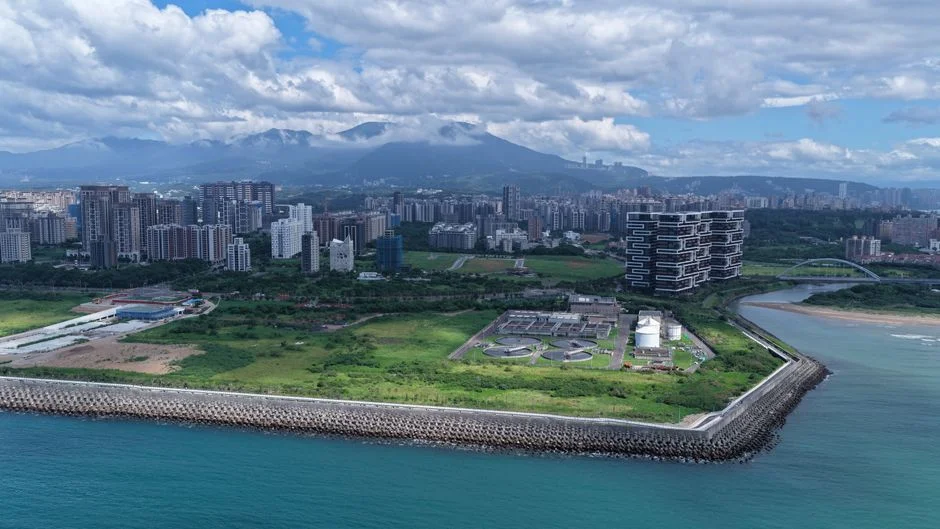
The strongest architecture matches the wastewater profile, peak-flow control, footprint, reuse requirements, and operating model. No single technology is automatically the correct choice for a Singapore hotel.
| Decision factor | Buried A/O package plant | MBR system | Segregated pretreatment |
|---|---|---|---|
| Primary application | Integrated biological treatment, sedimentation and disinfection | Biological treatment with membrane-based solids separation | Removal or balancing of kitchen, laundry or other concentrated flows |
| Space and installation | WSZ range is 1–80 m³/h and supports below-grade installation with landscaping above, according to the supplied 2026 equipment guide | Specified MBR range is 10–2,000 m³/day; the catalog states a 60% smaller footprint than conventional systems | Requires additional plant or piping, with the extent determined by the selected stream |
| Effluent capability | Package treatment suitable for the defined sewer or reuse objective | Near-reuse-quality effluent below 1 μm, according to the supplied 2026 equipment guide | Improves the condition of concentrated streams entering downstream treatment |
| Key selection issue | Hydraulic loading, biological capacity, maintenance access and below-grade construction | Membrane maintenance, aeration, controls, replacement planning and effluent requirements | Stream segregation, pretreatment loading, controls and integration with the hotel drainage network |
Choose a buried A/O package plant when a compact, fully integrated decentralized treatment train is preferred and the sanitary wastewater can be handled within its specified hydraulic range. Choose MBR when advanced separation, footprint, or reuse-oriented effluent is the deciding requirement. The MBR catalog’s 60% footprint comparison and below-1 μm filtration claim must be checked against the selected configuration.
Choose segregated pretreatment when kitchen, laundry, or another concentrated stream varies materially from domestic sewage. This protects the downstream biological process while allowing reuse trains to be specified independently. It also prevents average daily flow from hiding a short kitchen discharge peak or concentrated laundry load.
For larger properties or phased development, compare modular MBR capacity against a package installation. Require each bidder to address peak-hour and seasonal data, not merely average daily flow. The broader comparison in hotel wastewater treatment options for tropical resorts provides useful site-planning context, but Singapore-specific discharge and reuse assumptions must be established separately.
Design for Singapore site constraints and operational resilience
Equipment selection becomes an installation risk if site constraints are left until after the process has been chosen. Confirm the available footprint, excavation access, landscaping requirements, vehicle routes, equipment-lifting access, and space for future expansion before freezing a package configuration.
Where odour-sensitive or visually prominent areas are affected, require the supplier to explain whether the proposed equipment is covered, buried, or odour-controlled and how access will be maintained without disrupting guest areas or resort operations. Also request the proposed flow diagram, hydraulic profile, control philosophy, alarm list, duty-standby arrangement, power requirement, and maintenance-access plan. A buried installation does not replace the need for access covers, pumps, controls, and sludge removal.
Define sludge management before contract award. The proposal should identify who removes sludge, where it goes, how frequently it is dewatered, and what backup method applies during equipment failure or a high-load event. For an MBR system, require access for membrane cleaning, a replacement plan, and confirmation of the aeration and control requirements.
Commissioning must reflect the hotel’s actual operating conditions. Require site-specific testing of the selected treatment train, including agreed flow conditions, controls, alarms, and discharge or reuse objectives. The operating plan should identify trained personnel, routine tasks, consumables, response to alarm conditions, and handover records. General equipment claims do not demonstrate that the complete installation will meet the hotel’s requirements.
Resilience also requires a clear operating boundary: state whether the hotel or a service contractor owns routine operation, laboratory sampling, compliance reporting, spare parts, and emergency response. That division should appear in the supplier brief and service scope.
Use a decision framework that produces a complete supplier brief
Use a two-stage procurement process: first screen for technical and compliance fit, then assess lifecycle value, maintainability, and commercial clarity. Both stages need the same verified hotel-specific inputs; otherwise bidders will solve different problems or fill the gaps with assumptions.
Prepare one bidder pack containing:
- Measured and estimated daily flows, peak-hour flows, and seasonal or event profiles.
- Wastewater stream diagrams and contaminant information.
- Site plans, drainage layouts, available footprint, and access constraints.
- Intended discharge and reuse priorities.
- Applicable Singapore discharge or reuse requirements.
- Operating assumptions, expansion plans, and maintenance expectations.
Ask every bidder to state the selected process, design flow, treatment objectives, unit dimensions, utilities, control sequence, sludge route, commissioning tests, maintenance scope, and warranty. A compliant quotation should identify the legal discharge or reuse route and the proposed effluent objectives.
Compare total installed and lifecycle requirements, not equipment price alone. The commercial schedule should separate civil works, pumps, tanks, controls, pretreatment, disinfection, sludge handling, commissioning, and training. It should also state utility demands, replacement items, routine service frequency, and exclusions that could transfer significant cost or responsibility to the hotel.
Make acceptance measurable by defining the test flow conditions, effluent objectives, automatic-control response, alarm handling, sampling points, and required documentation. Reject any proposal that does not reconcile its stated capacity with the hotel’s peak and seasonal flows. Technical fit comes first: only compliant proposals should proceed to lifecycle and commercial evaluation.
The final selected system should answer a documented chain: which streams enter the plant, how they are balanced or pretreated, what biological and solids-removal processes are used, how the effluent is disinfected, where it goes, and who operates and maintains it. This chain is more useful than a generic package description because it can be tested against the property’s actual operating and compliance risks.
Frequently Asked Questions
What is the cheapest wastewater treatment system for a small Singapore hotel?
There is no universal lowest-cost configuration based on occupancy alone. Compare package options only after obtaining measured flow, wastewater composition, available space, and reuse targets. Request itemised quotations covering treatment, civil works, pumping, controls, pretreatment, sludge handling, commissioning, and training so that differences in scope are visible.
Should a Singapore resort choose an A/O package plant or an MBR system?
A buried A/O package is the more practical starting option when the sanitary treatment duty is suitable for an integrated decentralized plant and below-grade installation is acceptable. MBR becomes more relevant when advanced solids separation, compactness, or reuse-oriented effluent is important. Make the final choice from verified peak and seasonal flows, effluent requirements, and maintenance capacity.
Can hotel wastewater treatment equipment be installed below ground?
The WSZ series is designed for below-grade installation with landscaping above. A Singapore proposal must still resolve excavation, structural loading, groundwater, access, odour, lifting, and maintenance requirements; below-grade installation alone is not proof that the site design is workable.