What Wastewater System Does a Wellington Hotel or Resort Need?
A Wellington hotel or resort needs sewer connection where practical; otherwise, its treatment route depends on peak sewage flow, available footprint, discharge conditions and reuse objectives. A compact biological plant may suit conventional on-site treatment, while an MBR system may be relevant where finer solids separation or high-quality reuse is required. The final specification must address seasonal occupancy, odour, noise, maintenance and Wellington consent conditions. The supplied research provides no Wellington-specific peak-flow factors or current numerical consent thresholds, so a supplier should not nominate equipment from average occupancy alone.
Start with four routes: connect to sewer; install conventional on-site biological treatment; use higher-grade treatment for reuse; or combine dedicated pretreatment with biological treatment. The first step is establishing where the wastewater will go and what performance the receiving environment or reuse application requires.
That distinction matters for a Wellington property. The Guardian reported on 19 February 2026 that millions of litres of raw sewage entered the ocean in Wellington. That event is a local operational-risk signal, not a source of design criteria or discharge limits. It demonstrates the consequences of failure and the value of specifying maintenance, alarms and overflow protection properly.
For a structured comparison, see hotel wastewater treatment options for 2026 and packaged A/O and MBR systems for hotels. Neither should replace a site-specific flow survey, treatment assessment and consent check.
The Four Site Conditions That Determine the Treatment Route
Treatment route is determined by the wastewater stream, peak and off-peak loading, land available, receiving route and the property’s operational limits—not by nominal guest count alone.
Separate domestic sewage from kitchen, laundry and other high-strength streams before comparing equipment. A combined wastewater plant must accommodate the relevant organic and hydraulic loads, while segregated pretreatment may protect downstream biological treatment or produce a stream suitable for reuse. The supplied research does not provide a universal flow-per-guest factor or a current Wellington pretreatment standard, so the designer needs measured site data and the applicable local requirements.
Innoflow’s hotel case studies show how site conditions change the architecture. The Sands on Onetangi, Waiheke Island, required a compact system for highly fluctuating flows from seasonal occupancy, with treated water reused for irrigation. Daniels Summit Lodge in Utah had to accommodate large flow fluctuations and a restaurant expansion. These examples demonstrate why annual-average occupancy is an inadequate design basis.
Reuse is decision-changing. Irrigation, toilet flushing and other applications require their water-quality objectives and restrictions to be defined before selecting a process. By contrast, a West Virginia resort selected on-site treatment to support a direct-discharge permit and avoid clearing trees for a large drainfield. Treatment performance alone did not determine approval; the discharge route and permit conditions shaped the solution.
| Site question | Information the design team needs | Likely decision effect |
|---|---|---|
| Can the property connect to sewer? | Connection location, authority requirements and practical construction access | Sewer route may remove the need for a standalone treatment plant |
| What streams enter the system? | Blackwater, greywater, kitchen and laundry flows | Determines whether segregation or dedicated pretreatment is needed |
| What are peak and minimum flows? | Occupancy, events, restaurant service, laundry and future expansion | Defines hydraulic and organic design capacity |
| Where will treated water go? | Land application, irrigation reuse, direct discharge or another approved route | Sets effluent objectives and consent pathway |
| What space and access are available? | Footprint, burial depth, landscaping, maintenance access and neighbour proximity | Influences packaged biological treatment or MBR selection |
Packaged A/O Treatment or MBR for a Wellington Hotel?

Packaged A/O and MBR systems serve different design priorities: the former provides a compact biological treatment package, while the catalogue MBR option provides finer solids separation and a smaller footprint than conventional systems.
The WSZ packaged A/O system combines anoxic and aerobic biological contact oxidation, followed by sedimentation and disinfection, in one buried package. Its catalogue treatment capacity is 1–80 m³/h. It can be installed below grade with landscaping above, or mounted on a trailer for mobile deployment. Review the underground packaged sewage treatment plant specification as one catalogue option rather than as proof of site suitability.
The MBR catalogue specification covers 10–2,000 m³/day. It uses submerged PVDF membrane filtration with filtration below 1 μm and occupies 60% less space than conventional systems, according to the supplied product research. That makes it relevant where land is constrained or the reuse concept requires finer solids separation. The MBR wastewater treatment system should nevertheless be evaluated against the required effluent quality, hydraulic loading and maintenance regime.
| Comparison point | WSZ packaged A/O | MBR catalogue system |
|---|---|---|
| Process description | Anoxic and aerobic biological contact oxidation, sedimentation and disinfection in one package | Submerged PVDF membrane filtration |
| Published capacity | 1–80 m³/h | 10–2,000 m³/day |
| Solids separation | Sedimentation within the packaged process | Membrane filtration below 1 μm |
| Footprint | Buried package; landscaping may cover the installation | 60% smaller footprint than conventional systems |
| Deployment | Below grade or trailer-mounted for mobile deployment | Site-specific system arrangement |
| Key procurement focus | Peak flow, footprint, odour, maintenance access and required effluent quality | Effluent target, membrane operation, cleaning, module replacement and footprint |
The evidence supports a shortlist, not an automatic selection. Neither catalogue establishes compliance with a particular Wellington consent condition because the supplied research contains no site-specific numerical limit or approval. A compliant 2026 proposal must connect the selected technology to the consented route.
Size the Plant Around Peak Demand, Not Average Occupancy
Hotel wastewater sizing should use the highest credible simultaneous loading, not annual-average occupancy, because guest rooms, restaurants, events, laundry and staff facilities do not all produce wastewater at a constant rate.
Build the flow dataset from occupied rooms; event and restaurant periods; kitchen operation; laundry; staff accommodation; and planned expansions. Document both peak and off-peak periods, and identify known events that could create short-duration overloads. If future reuse is planned, include the additional treatment and storage implications of each reuse route.
Innoflow’s Waiheke Island example documents highly fluctuating flows arising from seasonal occupancy. Its Daniels Summit Lodge example shows that restaurant expansion changed treatment requirements at an existing mountain resort. These cases support designing around operating changes rather than relying on a fixed occupancy-derived factor.
A further Innoflow example installed a two-phase on-site treatment system to meet specific flow requirements and produce high-quality effluent for landscape irrigation. This approach allows for scaling where flow or reuse objectives develop in stages, although each phase still needs a defined hydraulic and organic basis.
Request the following from the designer:
- A peak-hour and peak-day wastewater flow schedule based on the property’s actual operating pattern.
- Hydraulic and organic loading calculations, including kitchen and laundry contributions.
- The proposed treatment capacity, installed redundancy and any phased expansion arrangement.
- Effluent targets linked to the chosen discharge or reuse route.
- A clear description of whether blackwater, greywater and commercial streams are combined, segregated or treated in phases.
The supplied research does not support adding a universal hotel wastewater flow-per-guest factor. If a supplier applies one, ask for the source, occupancy assumptions, peaking logic and whether restaurant, laundry and reuse flows are included.
Protect Guests, Neighbours and the Receiving Environment
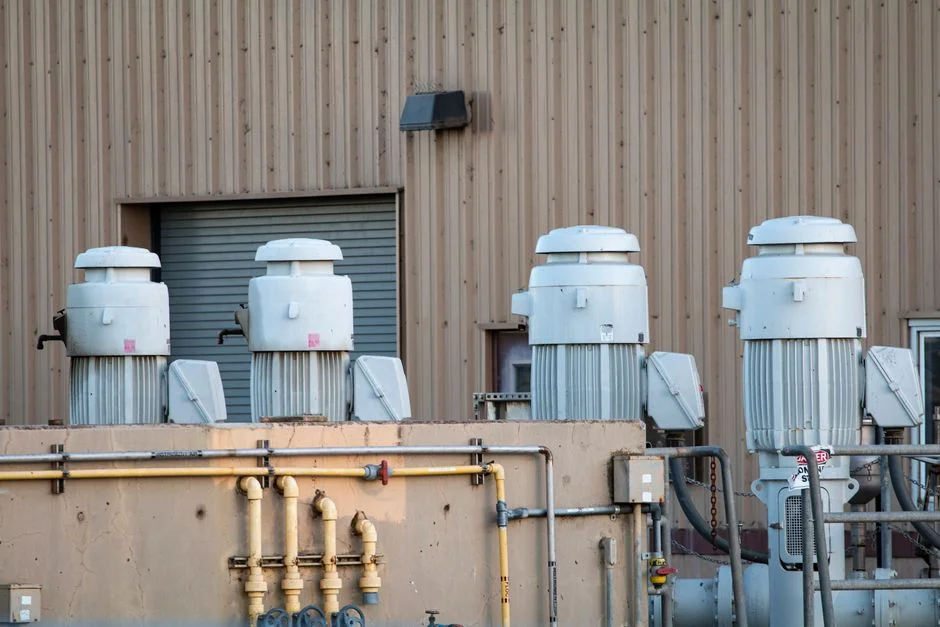
Odour, noise, appearance and safe maintenance access are treatment-system design requirements, not optional upgrades.
Innoflow’s resort examples describe systems selected as silent and odourless, including an installation near guest balconies and another fitted beneath an existing staircase. A temporary mobile system was also used after Hurricane Tomas destroyed a plant in St. Lucia, allowing the resort to reopen before the Christmas season. These cases show that footprint, replacement strategy and operational continuity can materially affect the concept.
Maintenance performance also affects guests. A 2021 LAUTECH Journal of Engineering and Technology study examined 15 resort hotels in southwest Nigeria and surveyed 425 staff and tourists. It found that recreational facilities were poorly maintained and created dissatisfaction, demonstrating the operational consequence of underperforming post-construction services.
For Wellington, specify odour control, ventilation requirements, noise limits and any screening or burial arrangement during procurement. Provide safe access for inspection, sludge or solids removal, cleaning and component replacement without disrupting guest areas. Training should cover routine checks, alarms, response procedures and the boundary between operator tasks and specialist maintenance.
The Guardian’s 19 February 2026 report on the Wellington raw-sewage spill illustrates the consequences of wastewater-system failure, but it does not establish any site-specific design criterion. For coastal, stream-adjacent or otherwise sensitive properties, the designer should establish the receiving environment and consent pathway before finalising the process train.
Build a Compliance and Supply-Scope Checklist
A compliant proposal must connect treatment capability to the property’s approved disposal or reuse route, and it must assign commissioning, maintenance and performance responsibilities in writing.
- Confirm the approval pathway. Ask the designer to obtain written confirmation of the relevant council and receiving-authority requirements for the selected property. The supplied research contains no current numerical Wellington consent limit.
- Define the destination. State whether the route is sewer connection, direct discharge, land application, irrigation reuse or another treatment arrangement, then obtain the conditions attaching to that route.
- Identify the streams. Confirm the origin, treatment and destination of blackwater, greywater, kitchen and laundry wastewater.
- Review the design basis. Require peak-flow data, hydraulic and organic calculations, treatment objectives, footprint and redundancy requirements.
- Define performance tests. Specify commissioning tests, sampling points, acceptance criteria and responsibility for correcting deficiencies.
- Define operations. Require operator training, preventive maintenance schedules, alarm provisions, access arrangements and spare-parts availability.
- Test resilience. Address overflow protection, power interruption, high-flow events and service access before equipment purchase.
The West Virginia resort case in Innoflow’s research shows how permitting can shape equipment selection before purchase: the system was selected to support a direct-discharge permit and avoid tree removal for a large drainfield. The 2021 LAUTECH study reinforces why maintenance responsibility must remain visible after handover. Further process detail is available in hotel wastewater pretreatment and reuse strategy.
| Document to request | Acceptable scope | Buyer check |
|---|---|---|
| Site-specific design report | Measured flows, loading calculations, process selection and proposed footprint | Does it use peak demand rather than average occupancy? |
| Consent pathway | Named authority, route and site-specific conditions | Is treatment performance tied to the approval? |
| Performance commitment | Commissioning tests, sampling and acceptance criteria | Are responsibilities and remedies defined? |
| Maintenance schedule | Routine tasks, frequency, operator competency and response times | Can the site team safely access all service points? |
| Supply and support schedule | Spare parts, alarms, controls, training and specialist support | Are replacement lead times and responsibilities stated? |
Frequently Asked Questions
What does an on-site sewage treatment system cost for a Wellington hotel?
The supplied research contains no verified Wellington hotel system price, so a defensible quotation cannot be based on a generic figure. Request separate pricing for design and consent support; pretreatment; the selected treatment package; pumps and controls; installation; commissioning tests; training; scheduled maintenance; sludge or filter handling; and consumable or replacement items. Ask whether transport, excavation, landscaping and off-site disposal are included, and obtain the stated
Frequently Asked Questions
What is the cheapest suitable wastewater treatment system for a small Wellington hotel?
For small-scale hotel operations in the Wellington region, a secondary treatment system utilizing an Aerated Wastewater Treatment System (AWTS) is generally the most cost-effective solution. These systems typically range in capital cost from $15,000 to $30,000 depending on the daily flow volume, which is significantly lower than advanced membrane-based alternatives.
While lower in initial expense, these systems require mandatory quarterly servicing by a qualified technician to ensure compliance with Wellington City Council and Greater Wellington Regional Council discharge standards. Operational costs are primarily driven by electricity usage for aeration pumps and periodic sludge removal, typically required every 3 to 5 years.
Should a Wellington resort choose packaged A/O treatment or an MBR system?
The choice between Anoxic/Oxic (A/O) and Membrane Bioreactor (MBR) systems depends on your site’s discharge sensitivity and spatial constraints. An A/O system is robust and easier to maintain for remote sites, but it requires a larger land area for the subsequent land application field to handle higher nutrient loads.
An MBR system is recommended if your resort is located near sensitive ecological zones, such as Wellington’s coastal or riparian areas, where high-quality effluent is mandated. MBR systems produce effluent with significantly lower Total Suspended Solids (TSS) and Biological Oxygen Demand (BOD) levels, often allowing for smaller land application fields, though they carry higher energy demands and membrane replacement costs every 5 to 7 years.
How do I size an on-site wastewater system for seasonal hotel occupancy?
Sizing must be based on the peak design flow, calculated using the AS/NZS 1547:2012 standard, which typically allocates 150 to 200 liters per person per day for hotel guests. You must account for the maximum occupancy during the summer peak season, rather than the annual average, to prevent system failure or non-compliant discharge during high-load periods.
If your occupancy fluctuates significantly, consider installing a system with flow equalization tanks. These tanks buffer the hydraulic surge during peak times, preventing the "washout" of biological solids from the treatment process during low-flow periods, ensuring the bacteria remain healthy and the treatment remains consistent year-round.
What should I ask a wastewater treatment supplier before requesting a quote?
You should request documented evidence of the system's performance against the specific nitrogen and phosphorus discharge limits set by the Greater Wellington Regional Council for your catchment. Ask for a comprehensive maintenance schedule, including the expected frequency of desludging and the cost of replacement parts, such as aeration blowers or membrane modules.
Additionally, confirm that the supplier provides a performance guarantee that the system will meet the effluent quality standards specified in your resource consent. Ask for references for similar-sized hospitality projects in the Wellington region to verify the system’s reliability under local climate conditions, particularly regarding high rainfall events which can affect soil absorption capacity.
Does installing an on-site wastewater system guarantee compliance in Wellington?
No, installing a system does not automatically guarantee compliance. You must obtain a resource consent from the Greater Wellington Regional Council if your discharge exceeds the permitted activity rules, which are strictly enforced based on the volume and chemical composition of the effluent.
Compliance is an ongoing obligation that requires regular effluent quality testing, adherence to the specific conditions of your consent, and the maintenance of a site-specific Operation and Maintenance (O&M) manual. Failure to maintain the system or exceed discharge limits can lead to abatement notices or significant fines under the Resource Management Act.