Which Treatment System Fits a Jakarta Hotel or Resort?
A Jakarta hotel or resort generally needs a decentralized biological treatment system for sanitary sewage, with pretreatment when kitchens, laundry, spas, pools, or other concentrated streams are present. The usual 2026 options are a buried anoxic/aerobic packaged plant or an MBR system when tighter polishing, reuse potential, or a smaller footprint justifies added complexity. Significant oil, grease, solids, or food waste may also require screening or DAF pretreatment. Selection depends on verified peak flow, wastewater characteristics, discharge or reuse route, land availability, sludge handling, and applicable Indonesian requirements.
Make the selection in three steps. First, define whether the duty is ordinary sanitary sewage or a mixed hotel wastewater stream. Second, choose the biological architecture: a buried integrated A/O sewage treatment package for a conventional biological solution, or an MBR membrane bioreactor for hotel wastewater when membrane separation, compactness, or reuse readiness justifies the additional process complexity. Third, add pretreatment only where the source data demonstrates the need.
This distinction matters because a green-hotel label does not define a treatment train. A Jakarta case study by Ardiansyah and Iskandar in IOP Conference Series: Earth and Environmental Science, 2021, identifies water efficiency and waste management among the operational components of green-hotel management. The same study describes hotel compliance through multiple management and environmental dimensions rather than one isolated facility feature. A separate review by Alkotdriyah in NHI Hospitality International Journal, 2024, reports that green-hotel practices in Java and Bali still have room for improvement.
The available research does not establish a universal Jakarta hotel wastewater flow rate, effluent limit, or mandatory technology. Those items must be verified against the property, its intended discharge route, and current requirements confirmed by the responsible authority and a local environmental consultant. The broader decision framework is illustrated in this hotel wastewater technology selection guide.
Map Every Wastewater Source Before Choosing Equipment
Equipment selection should begin with a source-by-source flow inventory, because mixing concentrated kitchen, laundry, pool, or spa wastewater with ordinary sanitary sewage can change both the pretreatment duty and the biological loading.
- List every source. Include guest-room sewage, staff accommodation, kitchens and restaurants, laundry, spas, pools, cooling and washdown, laboratories, and any hospitality-process discharge.
- Keep concentrated streams identifiable. Characterize food- and grease-bearing wastewater, laundry effluent, and pool or spa water separately where practical. Record their operating hours and discharge frequency.
- Establish the sanitary baseline. Measure or professionally estimate average daily flow and peak-hour flow, including occupancy changes and event periods.
- Identify upstream risks. Look for suspended solids, rags, plastics, fibrous debris, grease, oil, cleaning chemicals, and disinfectants that could impair pumps, membranes, or biological treatment.
- Fix the final-use route. Decide whether the treated flow will enter a municipal sewer, receive permitted discharge, support irrigation or toilet flushing, or serve another reuse application.
Fine screening should be considered where rags, plastics, or fibrous material could damage downstream equipment. The supplied GX Series rotary mechanical bar screen is specified for continuous-duty fine screening at municipal and industrial headworks and includes a self-cleaning brush discharge mechanism. Its suitability for the property still depends on the size, type, and loading of the debris.
Where the hotel wastewater contains substantial FOG, oil and grease, suspended solids, or colloidal matter, evaluate DAF before the biological stage. The supplied DAF range covers 4–300 m³/h across 13 models. That range identifies available equipment capacity; it does not prove that DAF is appropriate for the hotel. The design must demonstrate that the characterized loads warrant the additional unit.
Water efficiency and waste management should be reviewed together, as Ardiansyah and Iskandar emphasize in their 2021 Jakarta green-hotel case study. Alkotdriyah’s 2024 review also supports treating waste management as an operational improvement area rather than assuming that green-hotel implementation is already complete.
Compare Packaged A/O, MBR, and Pretreatment Options
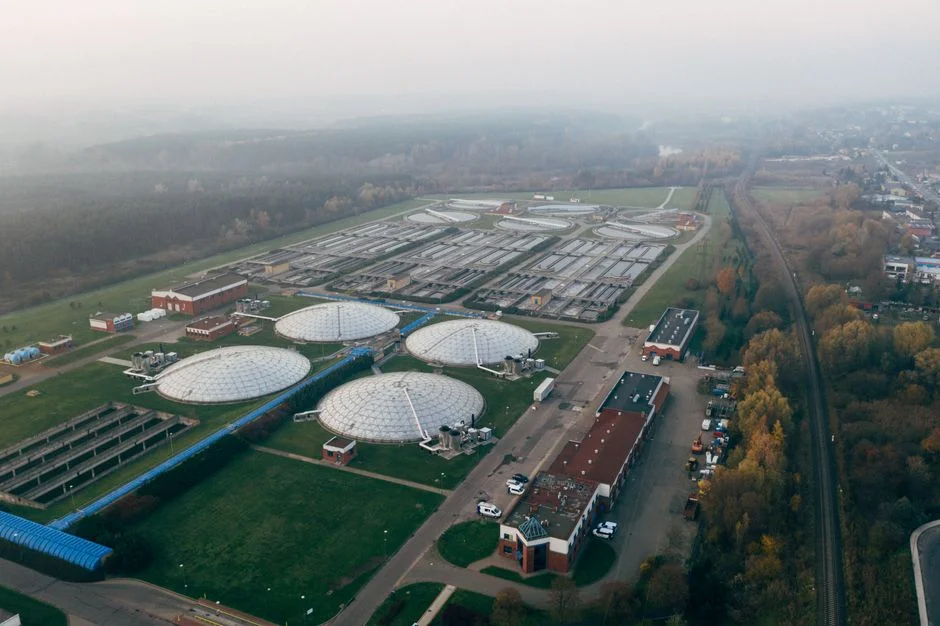
The WSZ packaged A/O system combines anoxic/aerobic biological contact oxidation, sedimentation, and disinfection in one buried package; its catalog capacity is 1–80 m³/h, operation is fully automated without an operator, and landscaping can remain above the unit. The MBR combines activated-sludge treatment with submerged PVDF membrane filtration; its catalog capacity is 10–2,000 m³/day, filtration is specified below 1 μm, and the manufacturer states a 60% smaller footprint than conventional systems.
| Option | Process role | Catalog envelope | Best fit when | Key qualification |
|---|---|---|---|---|
| WSZ packaged A/O | Anoxic/aerobic biological contact oxidation, sedimentation, and disinfection in one below-grade package | 1–80 m³/h | A conventional buried biological solution is sufficient and the property can support below-grade installation | Verify site conditions, controls, maintenance access, and the vendor’s full-automation and no-operator claims |
| MBR | Activated sludge combined with submerged PVDF membrane filtration | 10–2,000 m³/day | Membrane separation, compactness, or reuse readiness justifies added process complexity | Sub-1 μm filtration does not by itself establish reuse suitability or local approval |
| Fine screening | Removes suspended solids, rags, plastics, and fibrous debris before pumps and biological processes | Application depends on the selected screen and wastewater analysis | Debris loading creates a documented equipment-protection or maintenance risk | Screen selection must follow particle type, size, and flow |
| DAF pretreatment | Removes floatable or separable loads before biological treatment | 4–300 m³/h across 13 models | Characterization confirms FOG, oil and grease, suspended solids, or colloidal loads | Hotel suitability must be demonstrated with property wastewater data |
Use the selection logic directly: choose WSZ where a compact, conventional buried biological process satisfies the duty; choose MBR where membrane separation or reuse readiness justifies the added complexity; and add pretreatment based on source characterization. Do not use a municipal DAF application as proof that DAF suits a hotel—the application must be demonstrated by the property’s wastewater data.
Residual solids must also have a route. The supplied plate and frame filter presses span filtration areas of 1–500 m², with manual, hydraulic, or fully automatic PLC operation. Use dewatering only if the selected biological process creates a sludge stream that the hotel cannot manage through its ordinary waste route. For a broader view of integrated plant selection, see this integrated wastewater treatment process guide.
Size the System from Peak Flow and Operating Conditions
Size the treatment train from measured or professionally estimated flow and verified wastewater characteristics, not from the number of guest rooms alone.
| Sizing input | What the buyer must obtain | Why it affects equipment selection |
|---|---|---|
| Average daily sanitary flow | Measured flow or a documented professional estimate | Establishes the base hydraulic and organic loading |
| Peak-hour flow and duration | Occupancy-driven profile plus event, meal-period, and laundry effects | Determines equalization, transfer-pump duty, and treatment capacity |
| Separate source flows | Kitchen, laundry, pool, spa, washdown, and other process flows | Defines whether segregation and pretreatment are required |
| Wastewater analysis | BOD, COD, suspended solids, FOG where relevant, pH, and temperature | Defines biological loading, pretreatment needs, and operating constraints |
| Site and reuse constraints | Available footprint, utilities, discharge route, and intended reuse application | Determines packaged architecture, controls, and downstream treatment |
The supplied WSZ catalog covers 1–80 m³/h, the MBR catalog covers 10–2,000 m³/day, and the DAF catalog covers 4–300 m³/h. These are available catalog envelopes, not design capacities for a particular hotel. The process designer must reconcile peak demand, peak-flow concentration, hydraulic retention, biological loading, pretreatment duty, and selected unit capacity.
No Jakarta hotel unit-consumption factor is supplied in the research, so none should be assumed. Ask for the sizing calculations and operating assumptions behind every proposed unit. For MBR specifically, require the bid to explain membrane cleaning, fouling control, standby strategy, membrane replacement, and the impact of those activities on available treatment capacity. The domestic sewage treatment equipment guide provides a useful structure for comparing the design basis across equipment options.
Plan for Discharge, Water Reuse, and Residual Sludge
The treatment decision is incomplete until the final destinations of both treated water and residual solids are defined.
First, identify the intended effluent route: municipal sewer connection, permitted discharge, irrigation, toilet flushing, cooling, or another reuse application. Obtain the applicable Jakarta and Indonesian requirements from the responsible authority and local consultant. The supplied research does not provide numerical effluent limits for this case, so a generic limit should not be inserted into the equipment brief.
Second, treat water-reuse claims as application-specific. The MBR catalog specifies filtration below 1 μm and the manufacturer states a 60% smaller footprint than conventional systems. Those are equipment claims, not proof that the resulting water is approved for a particular reuse. Suitability depends on the complete treatment train, intended application, public-health requirements, local approval, and any additional treatment or disinfection required.
This is a design workstream, not a sustainability label. Ardiansyah and Iskandar’s 2021 Jakarta case study identifies water efficiency and waste management as distinct components of green-hotel management, while Alkotdriyah’s 2024 review finds continuing room for improvement in Indonesian green-hotel practices. Those findings support treating reuse and residual management as operating requirements rather than promotional claims.
Third, define the residual-solids route before award. The supplier should state who removes screenings and biosolids, where they are stored temporarily, their permitted destination, and whether dewatering is needed. Clarify whether filter-press equipment is included or separately priced, and include MBR membrane bioreactor module maintenance, cleaning, and replacement responsibilities in the scope.
Turn the Selection into a Supplier Request
A comparable supplier request should contain the site data needed to design the system and the commercial boundaries needed to compare bids.
- Site and wastewater basis: source-by-source flow diagram, wastewater analysis, average and peak flow, available footprint, utility constraints, discharge route, reuse objective, and expected sludge route.
- Technical proposal: process flow, duty table, sizing calculations, pretreatment and biological process selection, controls scope, installation method, commissioning plan, and performance responsibilities.
- Operations and service: O&M tasks, routine attendance, laboratory instrumentation, operator training, spare parts, warranty, and local service support.
- Scope boundaries: collection piping, civil work, pretreatment, biological treatment, disinfection, sludge handling, dewatering, utilities connections, and consumables listed separately.
Require each bidder to identify exclusions and assumptions in writing. The WSZ claims of full automation, no operator requirement, and below-grade installation are vendor specifications to verify against the hotel’s controls architecture, maintenance access, electrical supply, odor-management requirements, and operating responsibility.
Do not compare prices using the supplied evidence because no verified Jakarta hotel equipment price, installation cost, or lead time is available. Request a site-specific commercial offer that states exclusions, taxes, civil works, commissioning, start-up consumables, warranty, and the payment schedule. Technical scope must be equal before quotations are compared; otherwise, a lower equipment price may simply exclude pretreatment, controls, civil work, or sludge handling.
Frequently Asked Questions
How should a Jakarta hotel size its wastewater treatment system?
Size it from verified average and peak flows plus source-specific wastewater characteristics, not guest-room count alone. The supplied WSZ catalog covers 1–80 m³/h and the MBR catalog covers 10–2,000 m³/day. Ask each bidder to show the duty calculation, including peak-flow concentration and the selected process’s operating basis. No Jakarta hotel unit-consumption factor is provided in the research, so it must be established from measured data or a documented professional estimate.
How do I choose a supplier for a hotel wastewater treatment package?
Select a supplier that can demonstrate the exact treatment train for the hotel, its sizing basis, installation method, local service capability, controls, commissioning, and O&M support. Do not accept a generic unit without a hotel-specific process flow and duty table. Also ask who performs routine service, provides spare parts, responds to faults, and trains the hotel’s operating team.
Does an MBR with sub-1 μm filtration make hotel wastewater suitable for reuse?
No automatic approval follows from the membrane specification alone. Ask whether the complete proposed MBR train is approved for the specific reuse application, such as toilet flushing or irrigation, and what additional treatment, disinfection, monitoring, and local permissions apply. The catalog’s below-1 μm filtration supports a high-quality treatment objective, but it does not replace application-specific design or approval.
What should a buyer request before accepting the wastewater treatment price?
Request a site-specific quotation with an itemized scope covering equipment, pretreatment, biological treatment, controls, civil work, collection piping, installation, commissioning, sludge handling, O&M, consumables, spare parts, warranty, and local service. The supplied research contains no verified Jakarta hotel equipment price, installation cost, or lead time, so a defensible budget cannot be stated without a quotation. Require exclusions, assumptions, delivery timing, and validity period in writing.
What compliance information is needed for a Jakarta hotel wastewater system?
Request written confirmation of the discharge route, applicable Jakarta and Indonesian requirements, sampling plan, responsible parties, and the authority or local consultant’s review basis. The supplied research does not provide numerical effluent limits or a universal Jakarta standard. Do not accept an equipment catalogue as the compliance basis; the proposed process and final effluent route must be assessed for the actual site.