
Frankfurt Hotel Wastewater Decision Starts with the Property
A Frankfurt hotel or resort in 2026 should select a treatment train around seasonal occupancy, wastewater strength, available footprint and the approved discharge or reuse route—not a universal machine. A buried packaged A/O plant can suit compact, automatic, low-impact installation. An MBR becomes the stronger candidate where finer solids separation or reuse-oriented effluent is required and its added process complexity is acceptable. Screening and targeted pretreatment may protect biological treatment. The final specification needs occupancy data, flow and wastewater analysis, permit conditions, soil information, utility requirements and site access.
Room-night data provides only the first layer of the design basis. The project brief should distinguish occupied rooms, day-use facilities and staff accommodation, then add wastewater estimates for restaurants, kitchens, laundry, swimming pools, conference areas and irrigation. Guest count alone will not establish the required treatment capacity.
The discharge route determines the treatment objective. Establish whether the hotel will connect to the municipal sewer, obtain a permitted direct discharge, send effluent to an on-site reuse system, or use another approved route. That decision affects the required treatment, disinfection, monitoring and documentation.
Record the usable footprint, excavation access, vehicle-loading route, noise-sensitive guest areas, landscaping, utility connections and electrical supply. Also document whether future expansion, seasonal events or increased water reuse are credible project requirements. ClearFox identifies property growth, relocation and changing needs as reasons to consider modular treatment approaches in its hotel and resort wastewater guidance published in 2026.
Before comparing equipment, resolve these inputs with the hotel’s technical team, project engineer and discharge authority. A supplier should be quoting against the same property conditions, rather than selecting a treatment package before the sewer route and reuse objective are known.
How Seasonal Occupacity Changes the Treatment Requirement
Conference, wedding, holiday and weekend peaks should be treated as hydraulic design cases rather than reduced to annual-average occupancy. Request peak-day and peak-hour flows, identify how long each peak lasts, and compare every supplier’s capacity on the same duty basis. Low-season operation matters as well: a system selected only for maximum demand may be poorly matched to the loads it sees for most of the year.
Wastewater characteristics can change independently of occupancy. Food-service flows may contain grease and oil; laundry flows may carry detergents and other chemicals; pool discharges may have different chemistry and timing from guest-room wastewater. These streams should be characterized separately rather than combined into a generic “hotel sewage” assumption.
ClearFox states in its 2026 hotel and resort wastewater guidance that properly selected systems maintain performance during conference and wedding surges and quiet off-season lulls. That is a supplier requirement to test in the quotation: the supplier should explain the duty basis, expected variability and controls used to protect treatment performance.
Automatic operation can reduce the burden on hotel staff, while optional remote monitoring can support early intervention. ClearFox also identifies automatic operation and optional remote monitoring as features intended to keep staff focused on guests rather than routine plant operation. For the hotel wastewater technology selection for variable occupancy, this means assessing operator workload alongside treatment performance.
Ask for peak-day flow, peak-hour flow, expected expansion and event schedules before comparing quoted capacities. Also ask the supplier to state which flows were used for sizing and how seasonal or event loading was represented. A capacity figure without its design basis is not comparable.
Packaged A/O, MBR or Pretreatment: Which Treatment Fits?
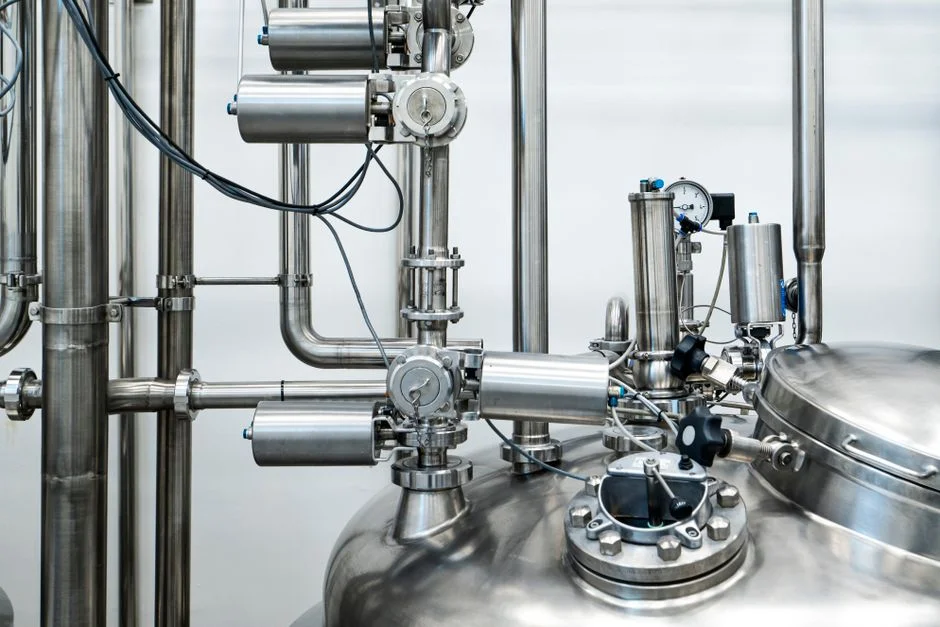
The WSZ packaged option combines anoxic and aerobic biological contact oxidation, sedimentation and disinfection in a single buried package. ClearFox specifies fully automated operation and a capacity range of 1–80 m³/h. Its below-grade installation allows landscaping above the plant, while a trailer-mounted configuration provides a mobile deployment option.
The underground integrated sewage treatment plant is therefore relevant where compact automatic treatment, limited visual impact and a conventional biological treatment objective are the main priorities. It is not automatically the preferred choice merely because the property is a hotel.
The MBR combines activated sludge with submerged PVDF membrane filtration. ClearFox specifies filtration below 1 μm, a footprint 60% smaller than conventional systems, and availability from 10–2,000 m³/day in its 2026 product information. An MBR membrane bioreactor merits comparison where fine solids separation or reuse-oriented effluent is central to the project.
That comparison must include the whole process, not only the membrane module. Ask suppliers to confirm aeration, sludge handling, controls, membrane maintenance, cleaning access, standby strategy and installation requirements. The comparison of packaged A/O, MBR and DAF for hotels provides a useful framework, but Frankfurt discharge and reuse conditions must remain the governing inputs.
Pretreatment is a source-specific layer rather than a default substitute for biological treatment. The GX rotary mechanical bar screen is described by ClearFox as suitable for continuous-duty fine screening and for protecting downstream pumps, valves and biological processes from rags, plastics, solids and fibrous debris.
DAF belongs only where the relevant stream contains oil, grease, floatable material or suspended solids that justify its use. ClearFox states that its dissolved air flotation equipment can remove suspended solids, FOG, oil and grease, and colloidal material. Ordinary hotel sewage should not be assumed to require DAF without wastewater analysis.
| Option | Documented configuration or scope | Best-supported procurement question |
|---|---|---|
| Packaged WSZ A/O | Anoxic/aerobic contact oxidation, sedimentation and disinfection in one buried package; fully automated; 1–80 m³/h | Does the package meet the approved treatment objective and seasonal duty basis within the available excavation and landscaping constraints? |
| MBR | Activated sludge with submerged PVDF membrane filtration below 1 μm; 60% smaller footprint than conventional systems; 10–2,000 m³/day | Do fine-solids separation or reuse requirements justify the membrane, controls, maintenance access and associated site provisions? |
| Rotary mechanical screening | Continuous-duty fine screening to protect downstream pumps, valves and biological processes | Which debris types are present, and what screen opening and duty basis match the measured flow? |
| DAF | Treatment for suspended solids, FOG, oil and grease, and colloidal material where present in the relevant stream | Does stream-specific analysis show constituents that DAF can remove more effectively than the proposed alternative? |
Build a Treatment Train Around the Wastewater Sources
The practical sequence is source characterization followed by screening where required, biological treatment, solids separation, final disinfection where required, and reuse preparation where required. Each stage should have a defined purpose and expected output. Omitting a stage is as important as including one: disinfection should not be duplicated if it is already incorporated in the packaged treatment or is unnecessary for the approved route.
Protect downstream equipment first where the wastewater contains rags, plastics, solids or fibrous debris. The GX rotary mechanical bar screen provides a pretreatment reference for continuous-duty fine screening and for reducing the burden on pumps, valves and biological processes.
Keep kitchen and food-service flows separate during design. If analysis identifies grease, oil or floatable material, assess DAF for that stream. The dissolved air flotation system can remove suspended solids, FOG, oil and grease, and colloidal material, but suitability depends on the wastewater analysis rather than the hotel category alone.
Add disinfection only where the approved treatment objective or downstream reuse route requires it. Where disinfection is required, the UV sterilizer treatment option should be assessed against the specified reuse application, flow, water quality and maintenance requirements.
Require the supplier to explain the function, expected output and maintenance duty of every stage. This prevents a proposal from becoming a list of disconnected equipment. It also gives the operator a clear operating sequence: identify what enters each stage, what should leave it, and what requires routine inspection or service.
For the hotel team, operator training should be included in the handover scope. The training should cover normal operation, alarm response, sampling, basic maintenance and the operational limits of the treatment train.
Compliance, Reuse and the Frankfurt Site
The project must identify the applicable German and Frankfurt discharge or sewer requirements for the property. The supplied research provides no numeric effluent limit, so no concentration threshold should be assumed in an equipment specification. The buyer should obtain the permit status and applicable conditions directly from the authority or client before selecting a process.
Request the indirect-discharge or direct-discharge conditions, monitoring requirements and any water-reuse specification. These documents should be included in the supplier’s design basis. A quotation should identify which regulatory and client-supplied criteria its proposed treatment train is intended to satisfy.
For reuse, define the application before choosing the equipment. Irrigation, toilet flushing, process water and other uses have different effluent-quality objectives and downstream risks. Ask whether MBR or another polishing process is necessary to meet the stated application, rather than using “water reuse” as an unspecified performance claim.
Frankfurt site constraints also affect installation and guest experience. Record noise-sensitive rooms, odour-sensitive areas, access routes, landscaping and available power. ClearFox identifies low-odour FBBR treatment and containerized, underground or precast installation as approaches that protect the guest experience in its 2026 hotel wastewater guidance. These features remain relevant to comparison, but site suitability must be demonstrated.
Require confirmation of the excavation and installation method, electrical supply, control system, sludge handling, service access and replacement or expansion strategy. For an underground package, verify whether the proposed installation can be reached safely for inspection and maintenance. For an MBR, verify membrane access and cleaning arrangements.
The procurement file should also distinguish what must be demonstrated during factory testing from what must be verified after installation. Compliance claims should be tied to the identified discharge or reuse conditions, and the supplier should identify the required commissioning tests and operating records.
Turn the Technical Brief into a Supplier Quote
A comparable quotation starts with one design-input pack. It should contain average and peak flow, wastewater characterization, the discharge route, the reuse objective, a site plan, soil information, utility details, installation constraints and confirmed expansion assumptions. Keep these inputs consistent when sending the brief to multiple suppliers.
Ask each supplier to state the proposed process train, duty basis, treatment capacity, footprint, automation, installation method, commissioning requirements and operating support. Require the treatment objective to be expressed against the approved discharge or reuse conditions. Where a supplier proposes A/O, MBR or pretreatment, ask which part of the measured wastewater basis drives that selection.
Clarify the quoted scope: screening, biological treatment, clarification, disinfection, controls, sludge handling, ancillary equipment, installation and commissioning. Undefined exclusions can make nominally comparable bids materially different.
Use ClearFox’s 2026 commercial features as reference points rather than accepting them as proof of suitability: factory-tested delivery, ready-to-connect systems, space-constrained installation, automatic operation, optional remote monitoring and potential relocation. Ask for the project-specific implications of each feature and supporting documentation.
Rental or leasing should be raised only when a temporary, seasonal or bridge-to-permanent installation is genuinely needed. ClearFox offers rental and leasing for those scenarios in its 2026 hotel and resort guidance. It is an alternative project structure, not evidence that a temporary plant will satisfy the permanent permit or reuse objective.
| Request to suppliers | Required response | Reason for comparison |
|---|---|---|
| Design basis | Average, peak-day and peak-hour flows; wastewater analysis; permit conditions; reuse objective | Confirms that capacity and process selection relate to the same property conditions. |
| Process and equipment scope | Treatment stages, duty, footprint, controls, maintenance and exclusions | Exposes differences between a complete train and isolated equipment packages. |
| Installation | Excavation, access, utilities, commissioning, testing and handover requirements | Identifies site and project-delivery costs that may not be visible in the equipment price. |
| Operations | Automatic controls, monitoring, training, service support and sludge handling | Defines the continuing workload assigned to hotel staff. |
| Commercial model | Purchase, rental or leasing scope; relocation or expansion assumptions | Matches the supply model to the operating and construction programme. |
Frequently Asked Questions
How much does a wastewater treatment system cost for a Frankfurt hotel?
The supplied research provides no credible project pricing for Frankfurt hotels. Cost therefore cannot be stated responsibly without the verified average and peak flows, wastewater analysis, treatment objective, footprint and installation scope. Request a quotation that separates equipment, pretreatment, controls, installation, commissioning, sludge handling, training and optional reuse equipment, and require the capacity and duty basis to be stated.
Should a Frankfurt hotel choose MBR or a packaged A/O plant?
Choose MBR for closer evaluation when fine solids separation or reuse-oriented effluent is central to the approved treatment objective. A packaged A/O plant can be more suitable for compact, automatic treatment when the site, treatment objectives and sewer conditions permit it. The comparison should include the complete process, maintenance access, controls and project-specific footprint—not membrane specifications alone.
What information does a hotel wastewater supplier need for an accurate quotation?
Provide average and peak-day and peak-hour flows, wastewater characteristics, permit conditions, the reuse application and required effluent quality, site constraints, utilities and expansion plans. Also include the site plan and access requirements. Ask the supplier to show which input supports each major equipment selection so the technical basis can be reviewed.
Is DAF necessary for hotel wastewater?
No. DAF is not a default requirement for ordinary hotel sewage. It should be considered only for a relevant stream containing oil, grease, floatable material or solids that analysis shows would benefit from DAF. Characterizing kitchen and food-service flows separately is the practical way to determine whether it belongs in the train.