Why Integrated Wastewater Treatment Plants Are Critical for Industrial Facilities
An integrated wastewater treatment plant (WWTP) combines primary, secondary, and tertiary treatment stages into a compact, automated system to remove 92–98% of contaminants (COD, BOD, TSS) before discharge or reuse. The WSZ underground integrated wastewater treatment system achieves 95% COD removal at 50–500 mg/L influent via anoxic/aerobic (A/O) biological contact oxidation, followed by sedimentation and chlorine dioxide disinfection. These systems are ideal for industrial facilities requiring <10 mg/L TSS effluent to meet China GB 8978-1996 or US EPA NPDES permits, with footprints 60% smaller than conventional plants.
Industrial facility managers face severe risks of non-compliance. A 2024 environmental audit of a semiconductor fabrication plant in Shanghai resulted in a $120,000 fine for consistently exceeding Total Suspended Solids (TSS) limits. The investigation by the China Ministry of Ecology and Environment revealed that 80% of the violations stemmed from an outdated, manually operated primary clarifier that could not handle hydraulic surges. This scenario is common in facilities where space is at a premium and conventional wastewater treatment infrastructure is physically or economically unfeasible.
Compliance standards have tightened globally. Under China GB 8978-1996, industrial facilities must often reach <70 mg/L COD and <10 mg/L TSS for Grade A discharge. The US EPA NPDES permits frequently mandate <30 mg/L BOD and TSS, while the EU Urban Waste Water Directive 91/271/EEC requires <25 mg/L BOD. Integrated systems address these requirements by replacing sprawling concrete lagoons with modular, high-rate reactors. This shift reduces CAPEX by minimizing civil engineering costs and lowers OPEX through automated process control, eliminating the need for 24/7 on-site staffing.
How Integrated Wastewater Treatment Plants Work: Step-by-Step Process
The operational logic of an integrated WWTP is to maximize contaminant contact time within a minimized physical volume. The process flow is engineered to handle influent variability while maintaining stable effluent quality through a sequence of physical, biological, and chemical stages. The following steps outline the process.
- Influent Screening: Raw wastewater first enters through rotary mechanical bar screens (GX Series). These units remove >95% of debris larger than 3 mm, such as plastics and rags, protecting downstream centrifugal pumps from cavitation and clogging. Technical specs include 0.5–2 mm screen spacing and a hydraulic loading of 1–5 m³/m²·h.
- Primary Treatment (Grit Removal): In the WSZ Series, aerated grit chambers settle sand and heavy inorganic gravel at a settling velocity of 0.2–0.4 m/min. According to 2024 EPA benchmarks, effective grit removal at this stage accounts for a 50–70% reduction in primary TSS, preventing abrasive wear on secondary treatment blowers and membranes.
- Secondary Treatment (Biological): This is the core of the system. Using anoxic/aerobic (A/O) contact oxidation, the system facilitates 92–97% COD removal. Key engineering parameters include a Hydraulic Retention Time (HRT) of 4–8 hours, Mixed Liquor Suspended Solids (MLSS) maintained at 3–5 g/L, and Dissolved Oxygen (DO) levels of 2–4 mg/L in the aerobic zone. This stage converts dissolved organic matter into biological floc.
- Tertiary Treatment (Sedimentation): High-efficiency lamella clarifiers use inclined plates to reduce the footprint of the sedimentation stage. By maintaining a surface loading rate of 20–40 m/h, these units reduce effluent TSS to <10 mg/L. Sludge recirculation protocols improve flocculation efficiency by approximately 30% compared to static clarifiers.
- Disinfection: The final liquid stream is treated via chlorine dioxide generators. A dosage of 0.5–2 mg/L ensures a 99.9% microbial kill, meeting WHO guidelines for non-potable reuse in cooling towers or industrial irrigation.
- Sludge Handling: Residual biomass is processed through plate-and-frame filter presses, which dewater sludge to 20–30% solids. This reduces the total waste volume by 70–90%, significantly lowering off-site disposal costs.
| Treatment Stage | Equipment/Process | Key Technical Parameter | Removal Efficiency (Typical) |
|---|---|---|---|
| Pretreatment | Rotary Bar Screen | 0.5–2 mm spacing | >95% large solids |
| Primary | Aerated Grit Chamber | 0.2–0.4 m/min velocity | 50–70% TSS |
| Secondary | A/O Biological Tank | MLSS: 3–5 g/L; DO: 2–4 mg/L | 92–97% COD/BOD |
| Tertiary | Lamella Clarifier | Surface loading: 20–40 m/h | Effluent TSS <10 mg/L |
| Disinfection | ClO₂ Generator | Dosage: 0.5–2 mg/L | 99.9% Pathogens |
Integrated vs. Conventional Wastewater Treatment: Efficiency, Footprint, and Cost Comparison
Procurement teams must balance the initial CAPEX against long-term OPEX and land value when evaluating wastewater infrastructure. Integrated systems, particularly the MBR membrane bioreactor for near-reuse-quality effluent, offer a distinct advantage in high-density industrial zones where land costs exceed $500/m². The WSZ Underground series is designed for facilities that require "invisible" treatment, allowing the surface to remain available for parking or logistics.
The WSZ system provides the optimal ROI, balancing a moderate CAPEX with the lowest OPEX ($0.15–$0.25/m³) among integrated options. In contrast, conventional Activated Sludge (AS) plants require large, open-air aeration tanks and secondary clarifiers that generate odors and require significant buffer zones. MBR systems take this a step further by replacing the secondary clarifier with membrane filtration, allowing for MLSS concentrations of 8–12 g/L—nearly triple that of conventional systems—which dramatically accelerates the MBR membrane bioreactor process and efficiency data.
| Metric | WSZ Underground (A/O) | MBR Integrated System | Conventional A/O Plant |
|---|---|---|---|
| COD Removal (%) | 95% | 98% | 85–90% |
| TSS Removal (%) | >90% | >99% | 80–85% |
| Footprint (m²/m³·d) | 0.15–0.25 | 0.05–0.10 | 0.40–0.60 |
| Energy Use (kWh/m³) | 0.3–0.5 | 0.8–1.2 | 0.2–0.4 |
| CAPEX ($/m³·d) | $1,200–$1,800 | $2,000–$4,000 | $800–$1,200 |
| Automation Level | High (Full PLC) | Very High (Remote Monitored) | Low to Moderate |
While MBR systems have a higher CAPEX and energy demand due to membrane scouring aeration, they are the only viable solution for facilities targeting direct non-potable reuse. For standard discharge compliance, the WSZ system provides the optimal ROI.
How to Select the Right Integrated Wastewater Treatment System for Your Facility
Selecting a system requires a multi-variable decision framework. Procurement teams should not select based on CAPEX alone, as 2025 wastewater treatment plant cost breakdowns show that energy and chemical consumption often account for 60% of the 10-year Total Cost of Ownership (TCO).
- Define Effluent Requirements: If the goal is meeting China GB 8978-1996 for municipal sewer discharge, a WSZ A/O system is sufficient. If the goal is "Class IV" surface water quality or cooling tower makeup, an MBR system is required to ensure TSS and turbidity remain near zero.
- Assess Footprint Constraints: Evaluate available land. If the facility is land-locked, an underground WSZ system utilizes sub-grade space. If the treatment plant must be located on a rooftop or within a container, the high-density MBR is the preferred choice.
- Evaluate Automation Needs: Facilities with limited technical staff should prioritize fully automated systems with PLC-based chemical dosing. The automatic chemical dosing for pH adjustment and coagulation ensures the system reacts to influent spikes without manual intervention.
- Characterize Influent: High-strength industrial waste (e.g., food processing or chemicals) may require DAF pretreatment for high-TSS industrial wastewater to prevent the biological stage from being overwhelmed by fats, oils, and grease (FOG).
- Verify Vendor Compliance: Ensure the manufacturer provides certifications for ISO 9001 and local standards like HJ 2015-2012 for industrial wastewater facilities.
Procurement Checklist:
- Influent Profile: COD, BOD, TSS, pH, FOG, and Heavy Metals.
- Target Discharge Standard (e.g., NPDES, GB 8978).
- Available Footprint (m²) and height restrictions.
- Power Availability (Voltage/Phase) for blowers and pumps.
- 5-Year OPEX Budget (Energy, chemicals, membrane replacement).
Common Challenges in Integrated Wastewater Treatment and How to Solve Them
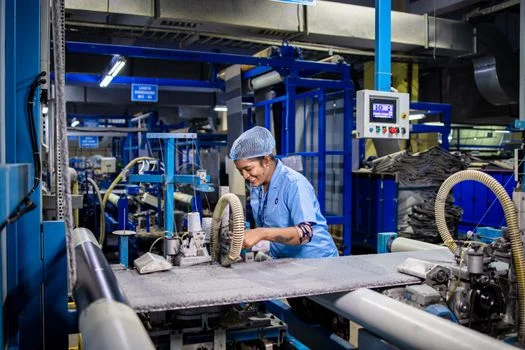
Even the most advanced integrated systems face operational hurdles due to the dynamic nature of industrial production. Effective management requires understanding the "Fix-at-Source" logic for common process failures.
Problem 1: Membrane Fouling in MBR Systems
Cause: Excessive MLSS concentrations (>12 g/L) or inadequate scouring aeration.
Fix: Increase scouring aeration to 0.2–0.4 Nm³/m²·h. If transmembrane pressure (TMP) exceeds 30 kPa, perform a Chemical-In-Place (CIP) cleaning using 0.5% NaOCl for organic fouling or 1% citric acid for inorganic scaling.
Problem 2: Sludge Bulking in A/O Systems
Cause: