A wet limestone FGD scrubber selection guide starts from a measured removal target, not from a vendor catalog. Wet limestone units remove 95–99% of sulfur dioxide (SO₂) by spraying limestone (CaCO₃) or lime (Ca(OH)₂) into the flue gas. Absorbed SO₂ becomes calcium sulfite (CaSO₃), then gypsum (CaSO₄·2H₂O), a stable solid sold into wallboard.
Wet limestone scrubbers reach 98%+ removal at liquid-to-gas (L/G) ratios of 5–15 L/m³. Dry spray dry absorbers (SDA) deliver 85–92% removal at lower capital cost. The permit line is usually EPA NSPS (≤0.15 lb SO₂/MMBtu) or the EU Industrial Emissions Directive (≤200 mg/Nm³). Most plants we size on bituminous coal land on the wet side of that split.
Wet Limestone FGD Scrubber Selection Guide
Pick wet limestone when inlet SO2 needs 98–99% removal and makeup water is available. Hold the slurry at pH 5.0–6.0 and an L/G ratio of 5–15 L/m³. Plants above about 2.0% fuel sulfur, or any unit that must show 99% removal, should stay with wet limestone rather than a dry absorber.
40 CFR Part 60, Subpart Da does not set one SO2 number for every boiler. The same paragraph also allows 520 ng/J (1.20 lb/MMBtu) heat input plus a 90 percent reduction for solid-fuel units commenced on or before 28 February 2005. According to 40 CFR 60.43Da, those limits are 30-day rolling averages except where paragraph (c) applies.
Earlier notes called 0.15 lb/MMBtu an 87% cut from a 1978 limit of 1.2 lb/MMBtu. Both numbers are still alternative limits in the current text, not a repealed ceiling and its replacement. A unit commenced after 3 May 2011 follows 60.43Da(l) instead. It must meet 130 ng/J (1.0 lb/MWh) gross energy output, 140 ng/J (1.2 lb/MWh) net energy output, or a 97 percent reduction.
Missing the permitted line has a posted price. As of the 23 September 2026 eCFR display, 40 CFR 19.4 sets that civil penalty at $124,426 per day. The citation is 42 U.S.C. 7413(b), for penalties assessed on or after 8 January 2025. The prior window, from 27 December 2023 until that date, was $121,275 per day, so notes citing penalties exceeding $100,000 per day still point the right way.
Air Markets Program Data (AMPD) still feeds ESG and credit-rating models, so a multi-day exceedance is not only a fine. A lime or limestone wet train is the hardware that takes raw gas to the outlet the permit names. On bids we review, counsel writes the 0.15 lb/MMBtu option into the permit even when the rule offers alternatives.
Wet Limestone Scrubber SO2 Removal Efficiency
Wet limestone scrubber SO2 removal efficiency is 98–99% at an L/G of 5–15 L/m³ when the slurry stays in the design pH band. Spray dry absorbers sit lower, at 85–92%, because gas-liquid contact is poorer. A 500 MW coal-fired unit burning 3% sulfur bituminous coal generates roughly 2,000 ppm SO₂ in raw flue gas. Hitting 0.15 lb/MMBtu (about 130 mg/Nm³) on that gas needs about 99% removal.
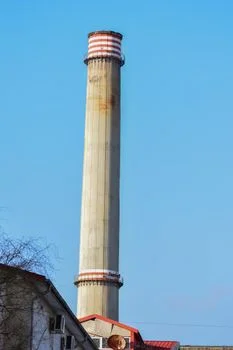
Wet limestone-gypsum scrubbers are the industry benchmark at 98–99% removal, and they produce 90–95% purity gypsum that meets ASTM C472 for wallboard. The trade-off is water. Chlorides and heavy metals leave through FGD scrubber blowdown wastewater treatment, which has to be in the plot plan, not an afterthought. Towers we performance-test on high-sulfur coal usually hold 98% once chlorides climb, not the 99.5% end of the nameplate range.
Wet lime scrubbers react slightly faster than limestone because Ca(OH)₂ is more reactive. They hold 97–99% removal at a higher operating pH (6.0–7.0 vs. limestone's 5.0–6.0). Reagent cost is the catch: lime runs $120–150 per ton versus $20–40 for limestone. Lime is most attractive on smaller boilers, where a smaller vessel offsets the reagent bill.
Directive 2010/75/EU, also cited as IED 2010/75/EU, does not use one SO2 ceiling for every large combustion plant. According to Annex V, coal and lignite limits are 400 mg/Nm³ from 50 to 100 MW, 250 mg/Nm³ from 100 to 300 MW, and 200 mg/Nm³ above 300 MW. The reference state is dry gas at 273.15 K and 101.3 kPa, corrected to 6% oxygen. The familiar ≤200 mg/Nm³ line is the coal and lignite band above 300 MW.
Waste incineration is a different table. Half-hourly SO2 limits on that annex are 200 mg/Nm³ in every period and 50 mg/Nm³ in 97% of periods.
Older solid-fuel plants capped at 1,500 operating hours per year can sit at 800 mg/Nm³ under Annex V, so duty cycle belongs in the selection file. Most waste-to-energy absorbers we size are drawn to that 50 mg/Nm³ daily number, not to the utility coal band.
| Technology Type | SO₂ Removal Efficiency | Typical Application | Byproduct Value |
|---|---|---|---|
| Wet Limestone | 98% – 99.5% | High-sulfur coal, large utility plants | High (Gypsum) |
| Wet Lime | 97% – 99% | Medium-scale industrial boilers | Moderate |
| Seawater FGD | 90% – 95% | Coastal power plants | None (Discharged) |
| Dry Scrubber (SDA) | 85% – 92% | Low-sulfur coal, waste-to-energy | Low (Landfill) |
| Circulating Dry (CDS) | 93% – 97% | Small to mid-scale, water-scarce areas | Low |
FGD Scrubber Working Principle Limestone Slurry
The limestone-slurry absorber neutralizes SO₂ in three stages: absorption, neutralization, and oxidation. SO₂ must dissolve before any solid reagent can react. The balanced equation for the limestone-gypsum process is the design basis for reagent and air. Most plants we size for wallboard keep the oxidation stage ahead of the filter so the cake is gypsum.
SO₂ (g) + CaCO₃ (s) + ½O₂ (g) + 2H₂O (l) → CaSO₄·2H₂O (s) + CO₂ (g)
In the absorption zone, SO₂ dissolves into water droplets to form sulfurous acid (H₂SO₃), which reacts with dissolved limestone to form calcium sulfite (CaSO₃). Calcium sulfite forms hard scale that plugs spray nozzles, so modern absorbers use an enforced oxidation design. Compressed air injected into the sump converts sulfite into calcium sulfate dihydrate (gypsum). Wet systems need 1.02–1.05 mol CaCO₃ per mol SO₂, while dry systems often run at 1.5–2.0 because gas-liquid contact is poorer.
Hot flue gas (120–180°C) enters the absorber, often through a prescrubber that cools the gas and pulls chlorides. Spray headers atomize slurry into 1–3 mm droplets, and the gas rises counter-currently for a 3–5 second residence time. Before discharge at 50–60°C, the gas crosses mist eliminators that drop entrained droplets. The gypsum slurry is then dewatered, and high-efficiency fabric filters for FGD gypsum dust collection take the final dust step.
| Parameter | Wet Limestone Scrubber | Spray Dry Absorber (SDA) |
|---|---|---|
| Reagent Stoichiometry (Ca/S) | 1.02 – 1.05 | 1.5 – 2.0 |
| Liquid-to-Gas (L/G) Ratio | 5 – 15 L/m³ | 0.1 – 0.5 L/m³ |
| Pressure Drop (ΔP) | 0.7 – 1.5 kPa | 1.2 – 2.5 kPa |
| Gas Residence Time | 3 – 5 seconds | 10 – 15 seconds |
| SO₂ Removal Efficiency | 98% – 99%+ | 85% – 92% |
Seawater FGD Scrubber Coastal Power Plant
A seawater FGD scrubber coastal power plant uses the bicarbonate alkalinity of seawater instead of purchased limestone. According to Mitsubishi Power data carried in plant literature, seawater FGD reaches 90–95% removal with zero reagent purchase. The absorber needs a very high seawater flow, plus aeration basins that restore pH and dissolved oxygen before ocean discharge. Coastal units we have reviewed miss the discharge pH long before they miss the SO2 number.
Seawater fits a coastal site with a once-through cooling flow and a sulfur load that 90–95% removal can cover. It is a poor fit inland, or where the discharge permit will not accept the spent seawater. In arid regions, dry scrubbers or circulating dry scrubbers (CDS) win because they use about 80% less water than wet systems. The trade-off is a 93–97% removal ceiling and a low-value calcium sulfite waste.
Readers comparing routes outside wet limestone can use the wider fgd scrubber page for the family of designs. That page owns the generic term. This page stays on the wet limestone choice.
Five Checks Before You Freeze the Process
Selection starts with inlet SO₂ and the compliance margin, not with vessel diameter. A plant burning 3.5% sulfur coal almost always needs a wet limestone unit to hit 99% removal for EPA compliance. A plant on low-sulfur sub-bituminous coal may find a dry scrubber cheaper on CapEx and simpler on waste. Most plants we size for a 20-year life pick wet limestone once sulfur sits above 2.0% and a wallboard taker is within a day's haul.
Step 1 is the inlet load. Calculate the maximum SO₂ mass flow at peak boiler load, not at the annual average. Above 95% removal, wet scrubbing becomes the lead candidate. Step 2 is fuel flexibility: if the boiler will swing coal grades or cofire biomass, wet slurry keeps the widest window.
Water and plot space are step 3. Wet units need room for slurry prep and dewatering, so a tight plot or scarce water pushes the choice to SDA or CDS. Step 4 is the byproduct market. Local wallboard buyers for FGD gypsum can offset 5–10% of annual O&M.
Total cost of ownership is step 5. A 500 MW plant must weigh the $50M+ CapEx of a wet system against higher long-term reagent costs of a dry unit across a 20-year life. For the gas-path sequence, read How Does an FGD Scrubber Work? Engineering Process, Efficiency Data & Industrial Selection Guide 2025. Supplier scope sits in FGD Scrubber Manufacturer: High-Efficiency Wet Limestone Systems.
- Peak SO₂ mass flow at maximum boiler load, plus the minimum stable load.
- Highest fuel sulfur and the lowest sulfur the boiler will actually fire.
- Permit form: lb/MMBtu, lb/MWh, or mg/Nm³, and the averaging period.
- Makeup-water quality and the chloride limit the gypsum buyer will accept.
- Plot space for slurry preparation, oxidation air, and dewatering.
- Byproduct path: wallboard sale at 90–95% purity, or landfill.
- ID fan margin for a wet pressure drop of 0.7–1.5 kPa.
| Selection Factor | Choose Wet Limestone | Choose Dry/SDA |
|---|---|---|
| Fuel Sulfur Content | > 2.0% Sulfur | < 2.0% Sulfur |
| Water Availability | Abundant | Limited/Arid |
| Byproduct Goal | Commercial Sale (Gypsum) | Landfill Disposal |
| Space Availability | Large Footprint Required | Compact Footprint |
| Removal Requirement | 98% – 99%+ | < 92% |
Use a simple decision tree from there. A coastal site prioritizes seawater FGD. High-sulfur coal with a high capacity factor prioritizes wet limestone. A small unit on low-sulfur fuel and limited water prioritizes dry scrubbing paired with fabric filters for FGD particulate compliance. That pairing covers particulate after the dry absorber, which the dry tower does not finish on its own.
FGD Scrubber Troubleshooting Gypsum Scaling
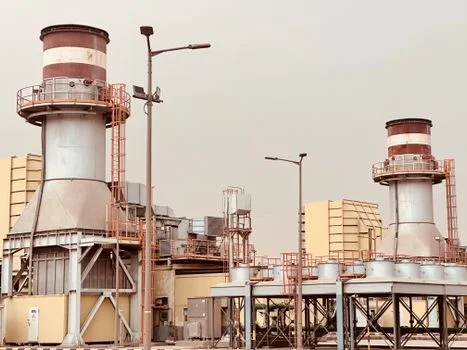
Gypsum scaling inside the absorber is the usual efficiency killer, and it typically costs 10–20% of SO₂ removal once it fouls packing and spray nozzles. Scale starts when the slurry is supersaturated with calcium sulfate. Hold pH between 5.0 and 6.0. Above 6.0, sulfite-to-sulfate conversion slows and localized scale forms.
A PLC-controlled chemical dosing system for FGD pH and reagent optimization is the reliable way to stay inside that window. Reagent carryover, where slurry slips past the mist eliminators, drives rapid ID fan corrosion. The usual fix is spray nozzle pressure in the 0.5–1.0 bar range. Droplets that are too small entrain, and droplets that are too large lack surface area.
If gypsum purity falls below 90%, oxidation is the suspect. Verify oxidation-air flow at 1.5–2.0 times stoichiometric demand so calcium sulfite converts to sulfate. Most plants we size for forced oxidation run air at the lower end of that band until purity holds. A pressure drop above 1.5 kPa across the absorber points to fouled mist eliminators or packing.
Trigger automated high-pressure backflush on differential-pressure setpoints so gas passages stay open. A sudden SO₂ slip at the outlet usually means a reagent feed-pump failure or a CEMS drift. Recalibrate the Continuous Emissions Monitoring System before you change chemistry. Plant crews we work with on absorber audits see most slip events trace back to feed-pump issues rather than chemistry.
Blowdown solids are a separate problem from the SO2 reaction. Suspended solids often drop in a settler, and the lamella clarifier working principle describes that solids step. Dissolved organics, if a biological plant is in the same bid, follow an mbr working principle and should not be sized as part of the absorber. Do not borrow either design curve to predict SO2 removal.
CapEx, Reagent, and Payback
Wet limestone CapEx in 2025 runs $100–$250 per kW for plants above 400 MW. Smaller industrial plants (<400 MW) sit higher on a normalized basis, at $250–$1,500 per kW, because air-pollution control does not scale in a straight line. Dry scrubbers cut initial CapEx by 20–30%. They carry higher long-term OpEx from reagent use.
Annual O&M for wet systems typically lands at $2–$8 per kW. Reagent is the main driver: limestone at $20–$40 per ton versus lime at $120–$150 per ton. Magnesium hydroxide for specialized duties climbs to $300–$400 per ton. Wet systems claw some of this back through gypsum sales, and commercial-grade material sells for $10–$20 per ton in the US and EU.
ROI comes mostly from avoided penalties, not from gypsum revenue. For a 500 MW plant, $50M CapEx plus $2M annual O&M is weighed against $10M+ in potential annual EPA fines and the option to keep burning cheaper high-sulfur fuel. Under 2024/2025 penalty rates, payback runs 5–7 years assuming capacity factors above 70%. On 500 MW estimates we build, reagent, not fan power, sets where inside the $2–$8 per kW band the plant will land.
| Cost Category (2025 USD) | Wet Limestone (>400MW) | Dry Scrubber (>200MW) |
|---|---|---|
| Capital Cost (CapEx) | $100 – $250 / kW | $40 – $150 / kW |
| Annual O&M Cost | $2 – $8 / kW | $4 – $10 / kW |
| Reagent Cost (per ton) | $20 – $40 (Limestone) | $120 – $150 (Lime) |
| Byproduct Revenue | $10 – $20 / ton | None (Disposal Cost) |
| Typical ROI Period | 5 – 7 Years | 4 – 6 Years |
Who This Fits, and the Data to Send
Engineers who open this wet limestone FGD scrubber selection guide usually already hold a fuel contract and a draft permit. The fit is a high-sulfur or fuel-flexible boiler with makeup water, plot space, and a path to sell or landfill gypsum. A coastal plant with seawater and a 90–95% removal need should look at seawater instead. A small unit on low-sulfur fuel and tight water should look at dry scrubbing.
Send flue gas flow, sulfur content, and stack limits for a sized Flue Gas Desulfurization (FGD) Scrubber System recommendation and budget number, or request a quote with your feed-gas data for a specific proposal. Include peak and minimum load, not a single average. Most packages we see stall because the gas flow is given at one load only.
Frequently Asked Questions
What is the optimal pH for a wet limestone FGD scrubber?
The optimal pH range for a wet limestone FGD scrubber is 5.0 to 6.0. Below 5.0, SO₂ absorption falls because the droplet has too little alkalinity to neutralize the acid. Above 6.0, calcium sulfate scaling risk rises and can plug spray nozzles and packing. Automated dosing holds that window to ±0.1 across normal load swings, which is where most plants we size for high-sulfur coal actually run.
How does the liquid-to-gas ratio affect removal?
The L/G ratio, in liters of slurry per cubic meter of gas, sets the surface area available for SO₂ absorption. Wet limestone systems run at 5–15 L/m³. Raising L/G improves removal but increases pump parasitic load and can push mist carryover if nozzles are worn. The right setting balances L/G against fuel sulfur so net plant heat rate stays inside the boiler budget.
Can the wet tower remove HCl, HF, and mercury as well as SO₂?
Yes, wet units can capture up to 90% of HCl and HF, plus a large fraction of oxidized mercury (Hg²⁺). The same tower also removes 50–80% of fly ash that escapes the upstream ESP or baghouse. Those co-benefits are real, but they do not replace a dedicated particulate device when the permit is written on dust. Most plants we size still keep the baghouse or ESP upstream and treat the scrubber as the acid-gas step.
What is the difference between forced oxidation and natural oxidation?
Natural oxidation lets calcium sulfite oxidize slowly on the oxygen already in the flue gas, and it produces a hard-to-dewater sludge. Forced oxidation uses dedicated blowers to inject air into the absorber tank and drives 99%+ conversion to large gypsum (CaSO₄·2H₂O) crystals that filter easily. Forced oxidation is the standard on new coal-fired units we see. Most plants we size for wallboard sales will not accept the sludge from natural oxidation.
How much water does a wet limestone absorber consume?
A wet limestone absorber recycles most of its process water, but evaporative loss and blowdown typically run 0.5–1.5 m³ per MWh. The rate moves with inlet gas temperature and with chloride loading in the slurry. That water demand is why dry scrubbers and CDS remain the default where makeup water is scarce or expensive. Most plants we size in arid sites drop wet limestone at the water screen, before they compare reagent price.