The treatment route Budapest manufacturers should evaluate
In 2026, Budapest manufacturers generally treat high-COD trade waste through source segregation and characterization, physical or chemical pretreatment where needed, biological treatment, and monitored final polishing or discharge. Solids, oil and grease, pH and toxicity can determine whether biological treatment can accept the stream, so COD alone is insufficient for design. Budapest’s public wastewater works use physical, biological and chemical methods. At South Pest, an FCR upgrade demonstrated COD discharge of 57 mg/L and BOD discharge of 14 mg/L against actual influent values of 452 mg/L and 226 mg/L, respectively. Equipment selection should follow measured wastewater characteristics, receiving-sewer requirements and a staged biological treatment design.
A workable factory route is:
- Segregate and characterize each stream. Do not combine dilute cooling water, cleaning wastewater and concentrated process effluent before their hydraulic and contaminant effects are understood.
- Equalize and pretreat. Use screening, grit or solids removal, oil and grease separation, and chemical conditioning where testing shows that pH, colloids or emulsified oil require it.
- Remove biodegradable organics biologically. Select the reactor configuration and loading from measured COD, BOD, flow variability, nutrients, toxicity and equalization performance.
- Polish according to the destination. Additional clarification or membrane treatment should be tied to sewer-discharge permit conditions or a defined reuse quality—not assumed to be necessary.
- Verify performance by monitoring. Establish sampling points, analytical methods, operating records and escalation procedures before discharge.
Budapest Sewage Works states that it applies physical, biological and chemical methods to wastewater treatment, but that municipal practice does not mean an industrial trade stream can be discharged untreated (FCSM, “Wastewater Treatment,” accessed 2026). The northern Hungarian plains study by the Laboratory Waterworks in Debrecen likewise emphasizes rigorous laboratory analysis before treated wastewater is released into water bodies (Water, 2024).
| Design field | Information required | Decision affected |
|---|---|---|
| Production and cleaning cycles | Representative samples across operating conditions | Equalization, reactor loading and pretreatment |
| COD and BOD | Concentration and temporal variation | Biodegradable load and biological capacity |
| TSS and settleability | Suspended-solids concentration and characteristics | DAF, clarification and sludge handling |
| Oil and grease | Free, emulsified and soluble fractions | Source control and separation |
| pH and toxicity | Measured values and response to treatment | Chemical conditioning and biological suitability |
| Flow, nutrients and destination | Peak flow, nitrogen and phosphorus, sewer permit or reuse objective | Hydraulic design and final polishing |
The 2026 high-COD trade-waste treatment route provides a useful comparative framework, but the route still has to be verified against the factory’s actual wastewater and the applicable sewer authorization.
Why COD alone does not determine the right system
The South Pest actual influent contained COD of 452 mg/L, BOD of 226 mg/L, total phosphorus of 8.60 mg/L and TSS of 106 mg/L, demonstrating that wastewater capacity cannot be specified from COD alone (Organica Water, “South Pest, Hungary – Innovative Solutions for Wastewater Treatment,” accessed 2026).
COD measures the oxidation demand of a broad oxidation-test sample; BOD represents the oxygen consumed through biological oxidation. Soluble biodegradable organics therefore drive biological loading, while settleable solids, colloids and emulsified oil affect physical separation and can overload clarifiers, membranes or biological systems. These are different design problems and should not be collapsed into one COD calculation.
Hydraulic variation is a separate constraint. A wastewater can have an acceptable average COD but a production slug or cleaning discharge that exceeds the equalization, pretreatment or biological system’s instantaneous capacity. The equalization requirement must therefore be based on flow and contaminant profiles across normal production, shutdown, cleaning and upset conditions—not on one laboratory composite.
Request a sampling plan that separates at least these operating states: normal production, maximum production, batch discharge, cleaning and abnormal conditions. Record flow at the sampling point and pair each laboratory result with its operating period. For a first comparison of solids-removal concepts, the pretreatment limits faced by industrial vehicle plants illustrates why physical treatment and biological treatment need distinct performance criteria.
| Measured parameter | What it tells the designer | Incorrect selection if omitted |
|---|---|---|
| COD | Total oxidation demand | Oversized or undersized biological capacity |
| BOD | Biological oxygen demand | Wrong aeration and biomass assumptions |
| Flow profile | Hydraulic peaks and slug loads | Inadequate equalization or peak capacity |
| TSS and settleability | Clarifier, DAF and sludge loads | Solids carryover and poor dewatering |
| Oil and grease | Floatable and emulsified contaminant load | Biofilm fouling, foaming and separation failure |
| pH and toxicity | Chemical and biological compatibility | Excess chemical use or inhibited biology |
The discharge destination closes the design loop. The supplied research does not establish a universal Budapest trade-waste COD limit. Selection must therefore use the factory’s sewer-discharge permit, receiving-sewer requirements, any process-water reuse specification and the capacity of the downstream treatment route.
Pretreat the waste before biological treatment
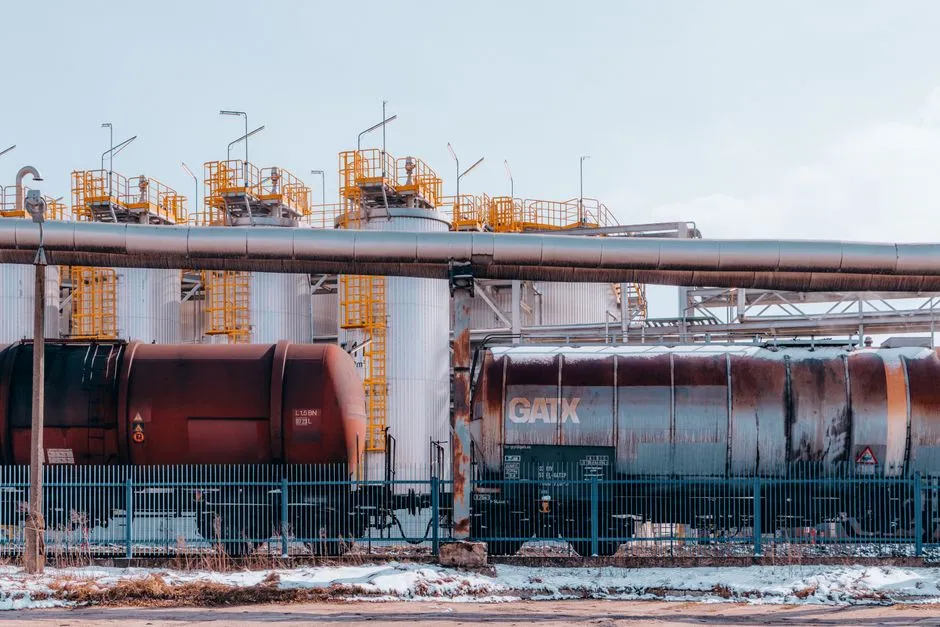
DAF is a physical pretreatment option for suspended solids, FOG, oil and grease, and colloidal material; it should be selected to remove material that could interfere with downstream biological treatment. An industrial DAF pretreatment system is available in 13 models with capacities from 4 to 300 m³/h, according to the supplied product information (HydropureWater, accessed 2026).
That capacity range is equipment information, not a selection rule for a Budapest factory. The required capacity depends on measured flow, solids capture, oil loading, equalization operation and the pretreatment performance guaranteed at the incoming wastewater matrix. The DAF versus clarifier selection guide sets out the comparison with another solids-removal approach.
DAF does not, by itself, guarantee biological treatment of a high-COD stream. Its principal role is to remove floatable and settleable material before that load reaches the reactor. A soluble biodegradable COD load still requires biological treatment and adequate aeration.
Electrocoagulation may be relevant where testing shows that coagulation or destabilization is needed, but it should not be presented as a demonstrated Budapest industrial solution. Researchers investigated electrocoagulation for mineral-processing wastewater with an initial COD of 424.29 mg/L to assess treatment and reuse potential; the study was not a Budapest factory demonstration (Water, 2023).
Chemical dosing should follow jar testing. The research does not establish a universal chemical dose for Budapest trade wastewater. Use the automatic chemical dosing system only after tests identify the required correction and establish control logic tied to measured flow and water chemistry.
| Decision gate | Evidence required | Proceed only when |
|---|---|---|
| Source control | Stream audit and drain mapping | Concentrated leaks and cross-connections are identified |
| FOG removal | Representative oil and grease analysis | Removal requirements and residual loading are defined |
| Solids removal | TSS, settleability and oil-associated solids data | DAF or clarification duty is supported by measured loads |
| Chemical conditioning | Jar tests with the actual wastewater | Dose, pH control and residual effects are quantified |
| Biological acceptance | BOD, COD, pH, toxicity and nutrient data | Loading and pretreatment performance are suitable for the selected reactor |
Before selecting an MBR or biological reactor, set measurable pretreatment guarantees for TSS, oil and grease and any agreed fouling indicators. Otherwise, the membrane or biological system inherits upstream variability and the supplier may misattribute that risk to the final stage.
What Budapest’s biological treatment evidence shows
South Pest’s FCR retrofit shows that biological performance can improve within a constrained footprint without interrupting municipal service. Three biological reactors were upgraded in phases while the facility remained operational and without violating effluent consents (Organica Water, “South Pest, Hungary – Innovative Solutions for Wastewater Treatment,” accessed 2026).
| Parameter | Design influent | Actual influent | Design limit | Actual discharge |
|---|---|---|---|---|
| COD | 737 mg/L | 452 mg/L | 60 mg/L | 57 mg/L |
| BOD | 381 mg/L | 226 mg/L | 20 mg/L | 14 mg/L |
| Total phosphorus | 14 mg/L | 8.60 mg/L | 1 mg/L | 0.70 mg/L |
| TSS | 140 mg/L | 106 mg/L | 35 mg/L | 9.40 mg/L |
The same case reports an average 50% reduction in effluent total nitrogen, more than 50% lower aeration requirement and 25% lower sludge production relative to conventional activated sludge (Organica Water, accessed 2026). These are site-specific retrofit findings, not universal guarantees for a factory system.
The FCR solution enabled the facility to treat 80,000 m³/day and was selected against a projected 40% increase in biological load over five years. Neither capacity nor load factor should be transferred to a factory without a separate hydraulic and contaminant balance. Fixed-film or enhanced biological capacity is an option for evaluation, not a substitute for site-specific characterization and receiving-sewer approval.
For procurement, ask whether the supplier is offering a combined MBR biological treatment system or another biological configuration, and require the basis of its sizing calculation. The supplier should identify the design flow, applied organic loading, oxygen requirement, sludge production assumptions, equalization dependence and pretreatment limits.
The South Pest evidence supports three defensible conclusions: phased implementation can protect continuity of service; biological loading and sludge handling must be considered together; and measured discharge performance is more useful for evaluation than a generic reactor description. It does not establish that the same process will meet a factory’s permit without pretreatment, equalization and source control.
Choose polishing for the reuse and discharge objective

Compliant sewer discharge, process-water reuse and near-reuse-quality effluent are different objectives. Each requires a different acceptance test, sampling regime and equipment specification. A clarification step may be sufficient for the first objective; reuse requires a defined quality, application and operational reliability case.
The supplied combined MBR biological treatment system information describes a combined activated-sludge and submerged-membrane configuration for near-reuse-quality effluent, with filtration below 1 μm, a footprint 60% smaller than conventional systems and capacities from 10 to 2,000 m³/day (HydropureWater, accessed 2026). These are supplier specifications; they are not independent performance evidence for a Budapest application.
Ultrafiltration is a physical separation barrier. The supplied ultrafiltration system information states that it removes bacteria, colloids and suspended solids without chemicals, accepts turbidity up to 300 ppm and is primarily suited to pretreatment or solids-sensitive downstream processes (HydropureWater, accessed 2026). It does not destroy COD. If the objective is biological COD and BOD removal, membrane filtration should follow or integrate with an appropriate biological process.
| Final objective | Evidence required | Equipment decision |
|---|---|---|
| Permitted sewer discharge | Applicable permit, receiving-sewer limits and representative feed data | Biological treatment plus clarification or polishing only where the specification requires it |
| Process-water reuse | End-use quality, variability and recovery requirement | Stage-specific treatment and monitoring tied to the reuse application |
| Near-reuse-quality effluent | Defined analytical quality across operating conditions | Membrane-based biological treatment or defined biological-plus-membrane train |
Do not finalize membrane capacity before equalization, pretreatment performance and biological variability are established. Membrane loading must reflect the feed matrix and operating envelope. Discharge compliance remains a matter of the applicable permit and receiving authority; a generic product claim does not replace either.
Build a procurement-ready treatment specification
A factory bid package should turn the treatment route into measurable obligations. Each supplier should state the design flow, equalization volume, feed-water matrix, treatment objective and expected operating envelope. If those inputs are missing, the offer should identify them as exclusions or assumptions rather than presenting a guaranteed process.
Performance guarantees need a defined test protocol: sampling locations, sampling frequency, laboratory methods, operating steady state and treatment of outliers. COD and BOD should be reported in mg/L. Energy, sludge-production and maintenance claims should be presented separately, so a lower operating-cost claim is not confused with a stronger discharge guarantee.
The complete process flow should show pretreatment, biological treatment, polishing, controls, alarms, bypass arrangements, duty and standby provisions and sludge handling. The industrial sludge dewatering guide is relevant where filter-press performance and residual sludge handling must be defined; an industrial plate-and-frame filter press should be evaluated against measured sludge characteristics rather than selected from solids concentration alone.
| Bid requirement | Supplier response needed | Acceptance basis |
|---|---|---|
| Design basis | Flow, equalization, feed matrix and operating envelope | Supplier calculation and stated exclusions |
| Process performance | Guaranteed COD, BOD, TSS and other required parameters | Defined protocol and sampling frequency |
| Pretreatment | Solids, FOG, pH and chemical-control requirements | Representative-wastewater test |
| Mechanical reliability | Duty/standby arrangement, bypass, alarms and maintenance access | Equipment schedule and controls narrative |
| Residuals | Sludge generation, dewatering and disposal route | Measured or explicitly qualified assumptions |
| Compliance | Permit-related design review and compliance responsibility | Applicable permit and authority requirements |
Utility-scale figures provide context only. FCSM states that North-Pest and South-Pest jointly have a nominal capacity of 235,000 m³/day, while South-Pest has 80,000 m³/day of biological and nutrient-removal capacity (FCSM, “Wastewater Treatment,” accessed 2026). These municipal values are not factory equipment-sizing inputs.
Require a site trial or representative-wastewater test before finalizing chemical dosing, aeration, membrane loading or sludge-dewatering assumptions. This is the most important control against transferring a generic process design onto an untested industrial matrix.
Frequently Asked Questions
How do manufacturers in Budapest, Hungary treat trade waste and high-COD effluent in 2026?
They generally segregate and characterize each stream, equalize and pretreat solids or oil, remove biodegradable organics biologically, add polishing only where the sewer-discharge permit or reuse objective requires it, and verify compliance through monitoring. The sequence must be sized from measured flow, COD, BOD, TSS, pH, oil and grease, nutrients and toxicity—not COD alone.
Can DAF replace biological treatment for high-COD wastewater?
No. DAF is primarily a solids, floatable-oil and colloidal-matter removal step. It can protect downstream biological and membrane equipment, but it does not provide biological COD and BOD removal unless the process package includes an appropriate reactor and the measured performance supports the applicable discharge objective.
What should a buyer request when comparing MBR equipment?
Request the design flow, organic and hydraulic loading basis, membrane configuration, pretreatment limits, equalization assumptions, operating envelope, cleaning requirements, sludge handling and a test protocol for COD, BOD and other specified parameters. Membrane capacity should not be fixed before representative wastewater testing establishes feed variability and biological performance.
How should cost and budget be evaluated for a trade-waste treatment system?
Compare the complete scope—equalization, pretreatment, reactor, polishing, controls, utilities, chemical consumption, sludge handling, monitoring and maintenance—rather than compare equipment prices in isolation. No supported quotation or universal price is provided in the research, so request a site-specific budget using the measured wastewater profile, flow, treatment objective and permit requirements.
Which supplier and compliance risks should be checked before ordering?
Check whether the supplier has defined the feed matrix, supplied an operating envelope, identified exclusions, and accepted performance under a documented sampling and analytical protocol. The contract should also allocate responsibility for permit interpretation, authority submissions, demonstration testing and corrective action. A generic claim that a system produces “reusable” water is not enough; acceptance criteria should match the factory’s actual reuse or sewer-discharge objective.